Tokyo Asakusa One-day Itinerary 2026: Guide to Asakusa and Tokyo Skytree, Tokyo's Traditional Charm and Modern Marvels
I updated this article in January 2026 to incorporate my findings from this research, along with the latest information for 2026.
Another reason for updating the article is the growing interest in tours that allow visitors to enjoy sightseeing spots and Japanese traditional culture. As these tours gain popularity, Magical Trip's tour, which ranked #1 among all tours on Tripadvisor, has been receiving numerous applications.

If you're planning to visit the Asakusa area, try joining the "Asakusa Cultural Walk & Matcha Making Tour" where local guides who are experts in Japanese culture and Asakusa's attractions will show you around. Being able to explore while listening to explanations about history and traditions makes the experience several times more enjoyable than going around by yourself.
For those who love retro neighborhoods, we also recommend these two tours. Both tours allow you to fully experience Japanese traditions, and since knowledgeable guides will provide detailed explanations about Japanese culture and traditions, you can completely immerse yourself in Japanese culture.
・Yanaka Historical Walking Tour in Tokyo's Old Town
・Tokyo Sumo Morning Practice Tour in Ryogoku
We hope you'll have a wonderful time experiencing everything Ueno has to offer by joining a Magical Trip tour!
Introduction
Asakusa, one of Tokyo's most iconic tourist destinations, is a beloved spot where traditional townscapes coexist with Tokyo Skytree, a modern symbol of the city. Sensō-ji, Asakusa's historic shrine, and Tokyo Skytree are approximately a 20-minute walk apart, making it possible to visit both efficiently in a single day.
A recommended plan that lets you savor the best of both areas is to experience Asakusa's traditional culture in the morning, then head to Tokyo Skytree in the afternoon and evening to enjoy Tokyo's contemporary cityscape.
In this Asakusa Itinerary 2026, we introduce a specific model course that lets you enjoy unique experiences and local specialties around Asakusa and Tokyo Skytree all in one day.
One-day Itinerary to Enjoy Asakusa and the Tokyo Skytree Area
To cover both Asakusa and Tokyo Skytree in a single day, the recommended route is to explore Asakusa in the morning and then make your way toward Tokyo Skytree in the afternoon, strolling along the Sumida River as you go.
Below is a practical, time-based plan that lets you fully enjoy both Asakusa's traditional culture and the modern Tokyo Skytree — use it as your guide for a perfect day out.
The Charm of Asakusa: Strolling Through a Downtown Area with Edo Atmosphere
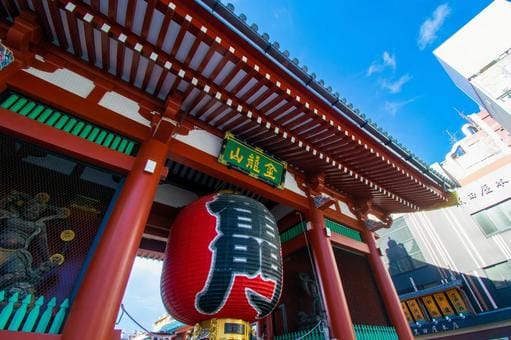
Asakusa is an area where the atmosphere of the Edo period remains particularly strong in Tokyo.
Kaminarimon Gate and Nakamise Street are symbolic places of Asakusa. When you pass through the Kaminarimon Gate with its giant red lantern hanging, you'll find the lively Nakamise Street stretching before you.
This shopping street, which has continued since the Edo period, is always bustling with people, and I'm sure you'll be overwhelmed by its energy. Every time I walk down this street, I get excited because I make new discoveries.
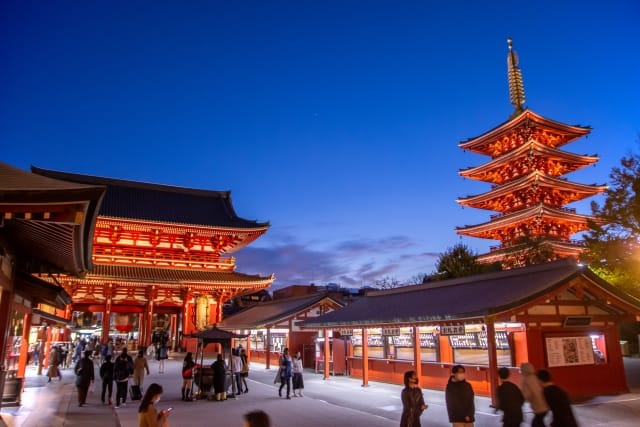
Sensoji Temple is known as the oldest temple in Tokyo. The majestic main hall and five-storied pagoda are symbols of traditional Japanese architectural beauty. The large incense burner in front of the main hall is always enveloped in the smoke of worshippers' prayers, creating a sacred atmosphere.
I especially like Sensoji Temple at dusk. The sight of the five-storied pagoda wrapped in soft light is indescribably beautiful.
Taking a rickshaw ride through the old townscape is also a unique experience in Asakusa. While listening to the fun commentary of the rickshaw puller, you can discover the charms of back alleys that you might not usually notice.
Asakusa Hanayashiki is a small amusement park where you can experience a retro world. Known as Japan's oldest permanent amusement park, its retro atmosphere is charming.
Sumida Park is a beautiful park right next to Sensoji Temple. It's wonderful to walk along the riverside while enjoying seasonal flowers. The cherry blossoms in spring are especially spectacular, and the reflection of the cherry blossoms on the water surface is truly a breathtaking sight.
Enjoying Edo Flavors on Nakamise Street
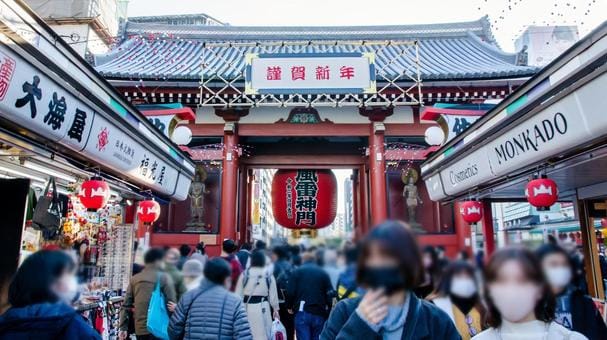
What I look forward to every time in Asakusa is enjoying traditional Tokyo sweets and light meals on Nakamise Street.
Hot "ningyo-yaki" is one of the specialties of Nakamise Street. These are small baked sweets in the shape of dolls, filled with plenty of sweet bean paste. When you bite into a freshly baked ningyo-yaki, the crispy outside and moist inside spread in your mouth, making you smile involuntarily.
Rice crackers are also a must-try specialty of Nakamise Street. It's exceptional to taste freshly baked rice crackers at shops where the savory aroma of soy sauce wafts. The crispy texture and the perfect saltiness that spreads in your mouth are so good that I can't help eating several pieces.
In the surrounding area, there are also restaurants where you can enjoy Tokyo's specialty, monjayaki. Monjayaki is a flour-based dish known as a taste of downtown Tokyo. The unique style of cooking it yourself on an iron plate and eating with a small spatula will be a fresh experience for foreign tourists.
Unique Experiences Around Sensoji Temple
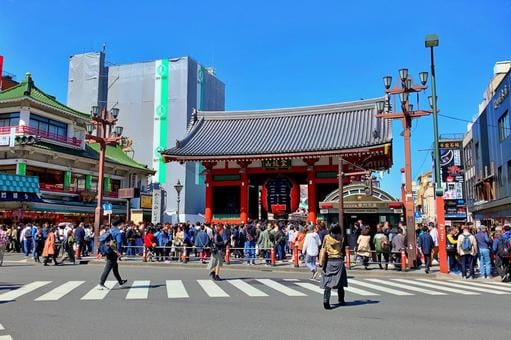
Around Sensoji Temple, there are various places where you can have unique experiences besides traditional temple visits. Here are some experiences I especially recommend:
First, the view from the observation deck of the Asakusa Culture Tourist Information Center is not to be missed. From this observation deck in this modern building, you can see Sensoji Temple, the five-storied pagoda, and even Tokyo Skytree in the distance.
Enjoying a town walk in rented kimono is also a unique experience in Asakusa. I tried it once, and walking on the stone-paved alleys wearing a kimono really made me feel like I had traveled back to the Edo period.
Taking commemorative photos in kimono is also popular, and if you post them on social media, your friends will surely be envious.
Riding a rickshaw will also be an unforgettable experience. Skilled rickshaw pullers will guide you through the back alleys and historical spots of Asakusa while providing fun commentary.
Lastly, I also recommend the Sumida River cruise. The view of Tokyo from the water is completely different from that on land. The cruise is especially spectacular during the cherry blossom season in spring or during the fireworks festival in summer.
When I took the cruise last summer, I was breathless at the beauty of the fireworks reflected on the water surface. The sight of Tokyo Skytree viewed from the boat was also different from that on land and was a fresh experience.
The Allure of Tokyo Skytree: Symbol of Future Tokyo
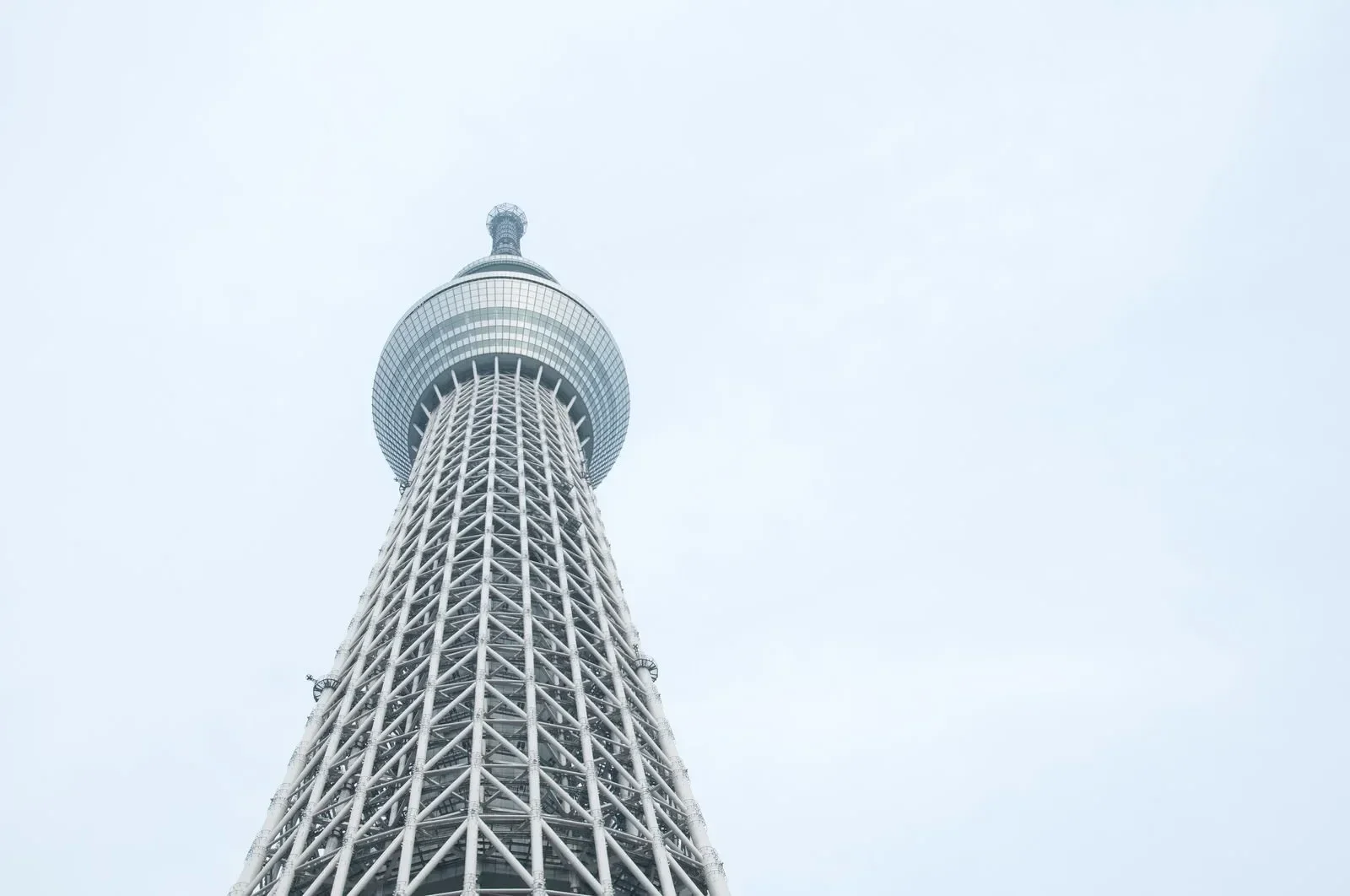
Tokyo Skytree, completed in 2012, is the world's tallest self-supporting broadcasting tower, watching over Tokyo with its overwhelming presence.
When I first looked up at Tokyo Skytree up close, I was speechless at its height and beauty. The height of 634 meters has an overwhelming impact beyond imagination.
The charm of Tokyo Skytree is not just its appearance. The 360-degree panoramic view from the Tembo Deck is breathtakingly beautiful. On a clear day, you can see not only the cityscape of Tokyo but also as far as Mount Fuji.
Shopping and dining at the attached shopping mall "Solamachi" is also one of the great pleasures of visiting Tokyo Skytree. Here, fashion shops and restaurants reflecting Japanese trends are gathered.
Website: https://www.tokyo-skytree.jp/en/
Spectacular Viewpoints Only Available at Skytree
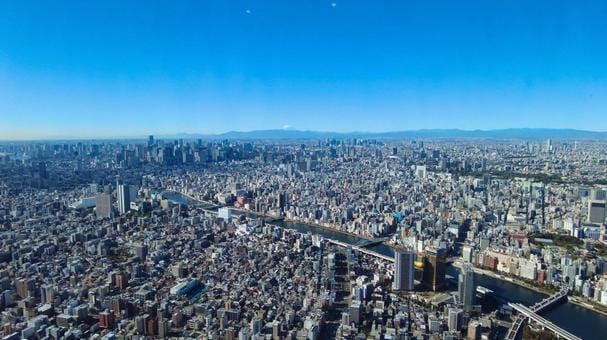
The view from Tokyo Skytree's observation deck is truly spectacular. Even after visiting many times, I'm always captivated by its magnificence. Let me introduce you to the special views that can only be enjoyed here.
The most impressive thing is that you can see Mount Fuji and the Tokyo cityscape at the same time. On a clear day, when you stand on the Tembo Deck, you can see the majestic figure of Mount Fuji in the far western direction.
Enjoying Tokyo's illumination at dusk is also a unique experience at Skytree. As the sun begins to set, the city lights gradually start to come on, and the sight of Tokyo beginning to shine is spectacular.
What I recommend is going up to Skytree about an hour before sunset. The contrast between the changing colors of the sky and the gradually brightening city lights is very beautiful.
Also, from Skytree, you can enjoy a "treasure hunt" of looking for Tokyo's major landmarks. On a clear day, you can find buildings and places representing Tokyo, such as Tokyo Dome, the skyscrapers of Shinjuku, the Imperial Palace, and Tokyo Tower.
I look forward to finding new landmarks every time. Especially when I guide friends visiting Tokyo for the first time, this "treasure hunt" is very exciting.
Enjoying Gourmet Food and Shopping at Solamachi
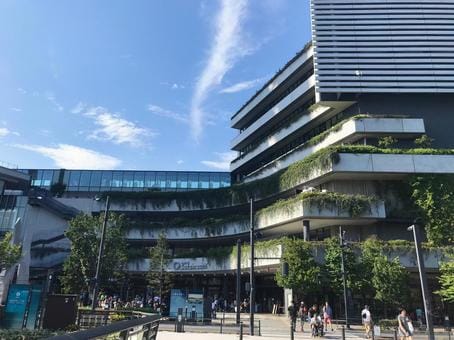
Tokyo Solamachi, the commercial facility spreading at the foot of Tokyo Skytree, is an ideal place to enjoy gourmet food and shopping.
First, the food court where various restaurants are gathered is a wonderful place to enjoy famous Japanese dishes all at once.
The souvenir shops selling limited Skytree goods are also places you must visit. The uniquely designed goods that can only be obtained here are perfect as souvenirs for friends and family.
Shopping for trendy Japanese fashion is also a big attraction of Solamachi. From famous brand shops to pop-up stores of young designers, a wide range of fashion items are available.
Please enjoy your time at Solamachi to conclude your Skytree sightseeing.
Walking Route Connecting Asakusa and Tokyo Skytree
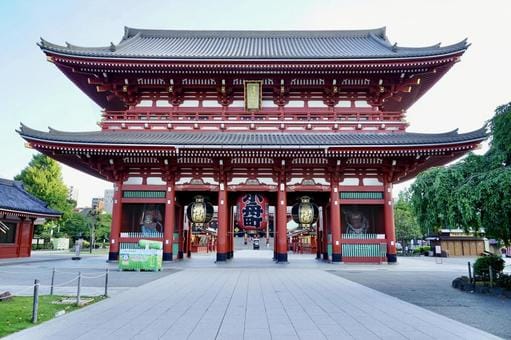
The walking route connecting Asakusa and Tokyo Skytree is a wonderful course where you can enjoy the atmosphere of the Edo period and modern Tokyo at once. I would like you to experience this route that I have walked many times.
First, start from Asakusa Station. As soon as you exit the station, you'll see the Kaminarimon Gate with its giant red lantern, and passing through it, you'll find the lively Nakamise Street stretching before you.
After passing through Nakamise Street, you'll arrive at the main hall of Sensoji Temple. The majestic main hall and five-storied pagoda welcome visitors with their unchanged appearance since the Edo period. The atmosphere of the temple grounds, where incense smoke lingers, makes you forget the hustle and bustle of the modern world.
After leaving Sensoji Temple, head to Sumida Park. The riverside promenade is a pleasant space where time flows slowly. Especially in spring, you can enjoy a magnificent row of cherry trees.
On the way, I recommend enjoying the local atmosphere on Orange Street. This street is lined with shops and eateries that local people use daily.
The walk along the Sumida River towards Skytree takes about 20 minutes. During this time, you can enjoy the contrast between the Tokyo cityscape visible across the river and the gradually approaching Skytree.
Finally, at Solamachi, you can enjoy modern shopping and gourmet food. I recommend having dinner here to conclude the day.
This route can be covered in about 1.5 to 2 hours walking leisurely from Asakusa Station to Skytree. However, if you want to enjoy the sights and food along the way, I recommend taking half a day to leisurely explore.
This route, where you can experience Tokyo's history and culture from the Edo period to the present day at once, can be said to be the essence of Tokyo sightseeing.
How to Enjoy Each Season
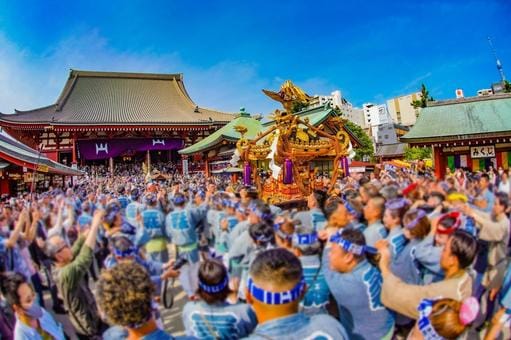
The Asakusa and Tokyo Skytree area is full of charm in every season. I look forward to visiting this area every season, and I'd like to introduce you to unique ways to enjoy each season.
Spring's main attraction is the cherry blossom festival at Sumida Park. The sight of many cherry trees in full bloom is spectacular, and the riverside promenade is crowded with cherry blossom viewers. My recommendation is cherry blossom viewing on a yakatabune boat. The contrast between the fully bloomed cherry blossoms viewed from the river and Tokyo Skytree towering behind them is a spectacular sight.
At night, the cherry blossoms are illuminated, creating a fantastic atmosphere. I still vividly remember the memory of enjoying night cherry blossoms on a yakatabune boat with my friends last year.
The biggest events in summer are the Sanja Festival and the Sumida River Fireworks Festival. The Sanja Festival is the grand festival of Asakusa Shrine, held every May. The sight of portable shrines parading through the town is full of energy, just like in the Edo period. The Sumida River Fireworks Festival, held in late July, is a summer tradition in Tokyo where about 10,000 fireworks color the night sky.
In autumn, you can enjoy viewing the autumn leaves at Sensoji Temple and Sumida Park. Especially, the scenery of trees turning red and yellow with the five-storied pagoda of Sensoji Temple in the background is a sight that condenses the beauty of Japanese autumn.
Asakusa in winter is full of energy with the bustle of the year-end and New Year. The New Year's Eve bell ringing at Sensoji Temple is a particularly impressive event.
Listening to the bell rung 108 times on New Year's Eve while welcoming the new year is a traditional Japanese custom. I once went to listen to the New Year's Eve bell with my friends, and the experience of welcoming the new year in a solemn atmosphere became an unforgettable memory.
This area, where you can make new discoveries every time you visit and experience the charm of each season, can truly be said to be a tourist spot that can be enjoyed all year round.
Access Information
Access to the Asakusa and Tokyo Skytree area is very convenient. Here are the main stations and lines:
You can access Asakusa Station via the following lines:
1. Tokyo Metro Ginza Line
2. Toei Subway Asakusa Line
3. Tobu Skytree Line
On the other hand, the nearest station to Tokyo Skytree is "Tokyo Skytree Station" on the Tobu Skytree Line.
My recommendation is to first get off at Asakusa Station, enjoy Sensoji Temple and Nakamise Street, and then head to Skytree on foot or by bus. It's about a 20-minute walk from Asakusa Station to Skytree, but I suggest walking on a nice day as you can enjoy the downtown scenery along the way.
Access from Tokyo's major stations is also easy. For example, from Tokyo Station to Asakusa Station takes about 20 minutes on the Tokyo Metro Ginza Line, and from Shinjuku Station, it takes about 30 minutes by transferring from the Toei Shinjuku Line to the Asakusa Line.
Tokyo's public transportation is very well-developed, so you can easily access the Asakusa/Skytree area from any direction.
However, trains get crowded during morning and evening rush hours, so it's better to avoid these times if possible.
Also, Japanese trains are famous for running on time. I recommend checking the timetable and allowing plenty of time for your journey.
Perfect One-Day Asakusa & Skytree Itinerary 2026
9:00 AM: Breakfast Around Asakusa
Asakusa Kagetsudō Melon Bread
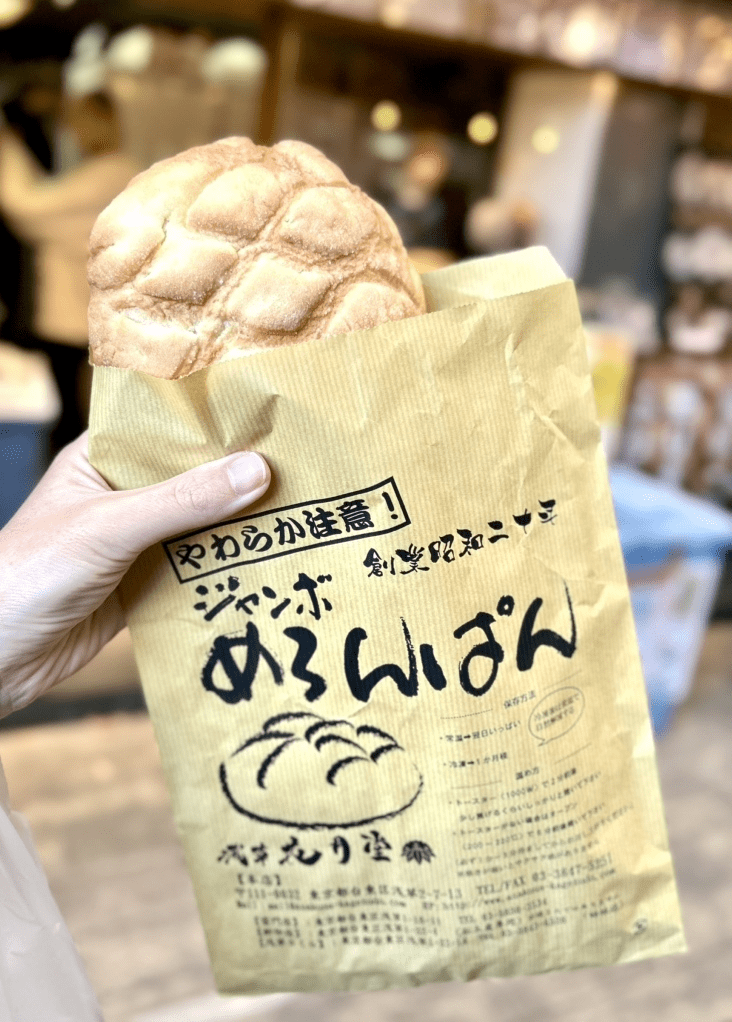
Asakusa Kagetsudō's Jumbo Melon Bread is a beloved local specialty that sells up to 3,000 pieces a day, making it a hugely popular treat among tourists visiting Asakusa. Melon Bread is a classic Japanese sweet bread made by placing a sweet biscuit dough on top of a round, soft bread roll and baking them together.
What I personally love about this shop's Melon Bread is its satisfying size — roughly as big as an adult's palm. The crispy biscuit dough and fluffy bread complement each other perfectly, and with every bite, a rich, warm aroma of wheat fills your mouth.
Asakusa Kagetsudō is just about a 3-minute walk from Sensō-ji, so be sure to stop by for a delicious breakfast before your temple visit.
- Address: 2-7-13 Asakusa, Taito-ku, Tokyo
- Hours: Weekdays from 11:00 / Weekends & Holidays from 10:00 ※ Closes when sold out
- Closed: No regular holidays
- Phone: 03-3847-5251
- Website: https://asakusa-kagetudo.com/
Ume to Hoshi
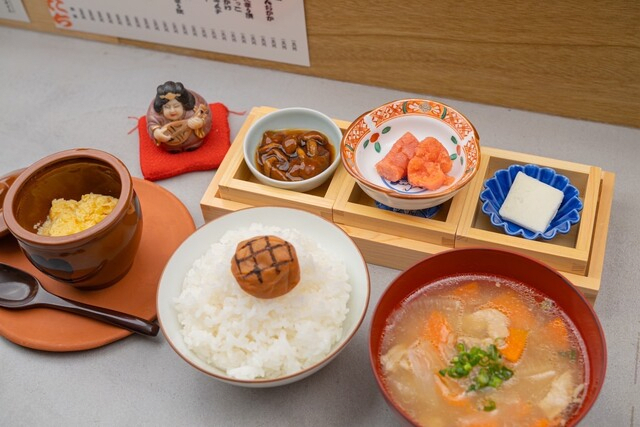
"Ume to Hoshi" is a Japanese restaurant where you can enjoy a traditional Japanese breakfast menu featuring freshly cooked white rice, Umeboshi (pickled plums), and Tonjiru (Pork Miso Soup).
Umeboshi are known for their refreshing aroma and perfectly balanced sourness, making them a classic Japanese side dish that pairs wonderfully with the natural sweetness of freshly cooked rice. Tonjiru, a rich miso soup in which the deep flavors of pork and vegetables meld together, is both healthy and satisfying — the ideal start to your day.
At "Ume to Hoshi," the side dishes served alongside the Umeboshi are decided by drawing an Omikuji (fortune slip), so make sure to enjoy this uniquely playful dining experience.
- Address: 2-2-4 Asakusa, Taito-ku, Tokyo
- Hours: 9:00–17:00
- Closed: Mondays (if a public holiday, closed the following day instead)
- Phone: 03-4400-8620
- Website: https://ume-hoshi.jp/
SUKE6 DINER
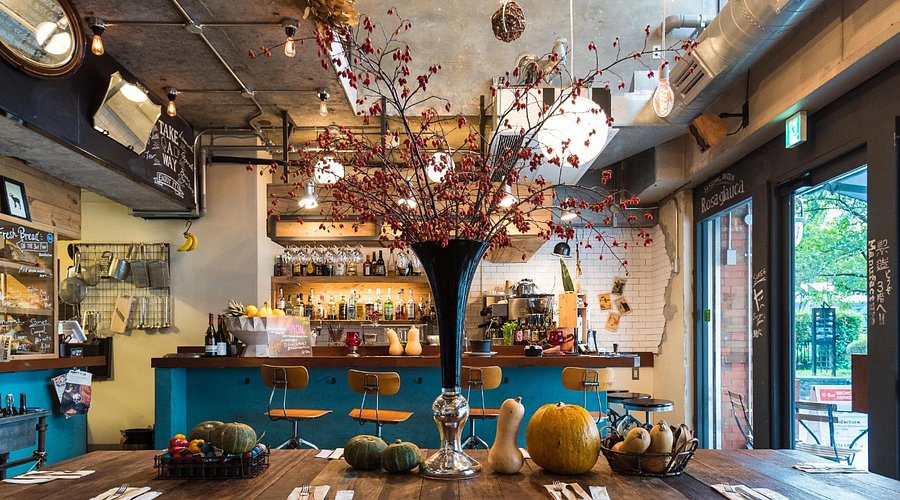
SUKE6 DINER is a casual diner serving Western-style breakfasts such as sandwiches, English breakfasts, and freshly baked breads including bagels.
Among the wide variety of menu options, my top recommendation is the limited-quantity French Toast. Its gentle, comforting flavor directly showcases the richness of egg and milk, while a beautifully toasted golden crust adds just the right accent.
SUKE6 DINER's relaxed atmosphere — featuring exposed concrete walls accented with lush greenery — is another reason for its popularity. The menu is available in English as well, so visitors who don't speak Japanese can feel completely at ease when they stop by.
- Address: 1-11-1 Hanakawado, Taito-ku, Tokyo
- Hours: 8:00–18:00
- Closed: Wednesdays
- Phone: 03-5830-3367
- Website: https://www.epietriz.com/restaurants/suke6-diner
10:00AM: Visit Sensō-ji Temple & Explore the Grounds
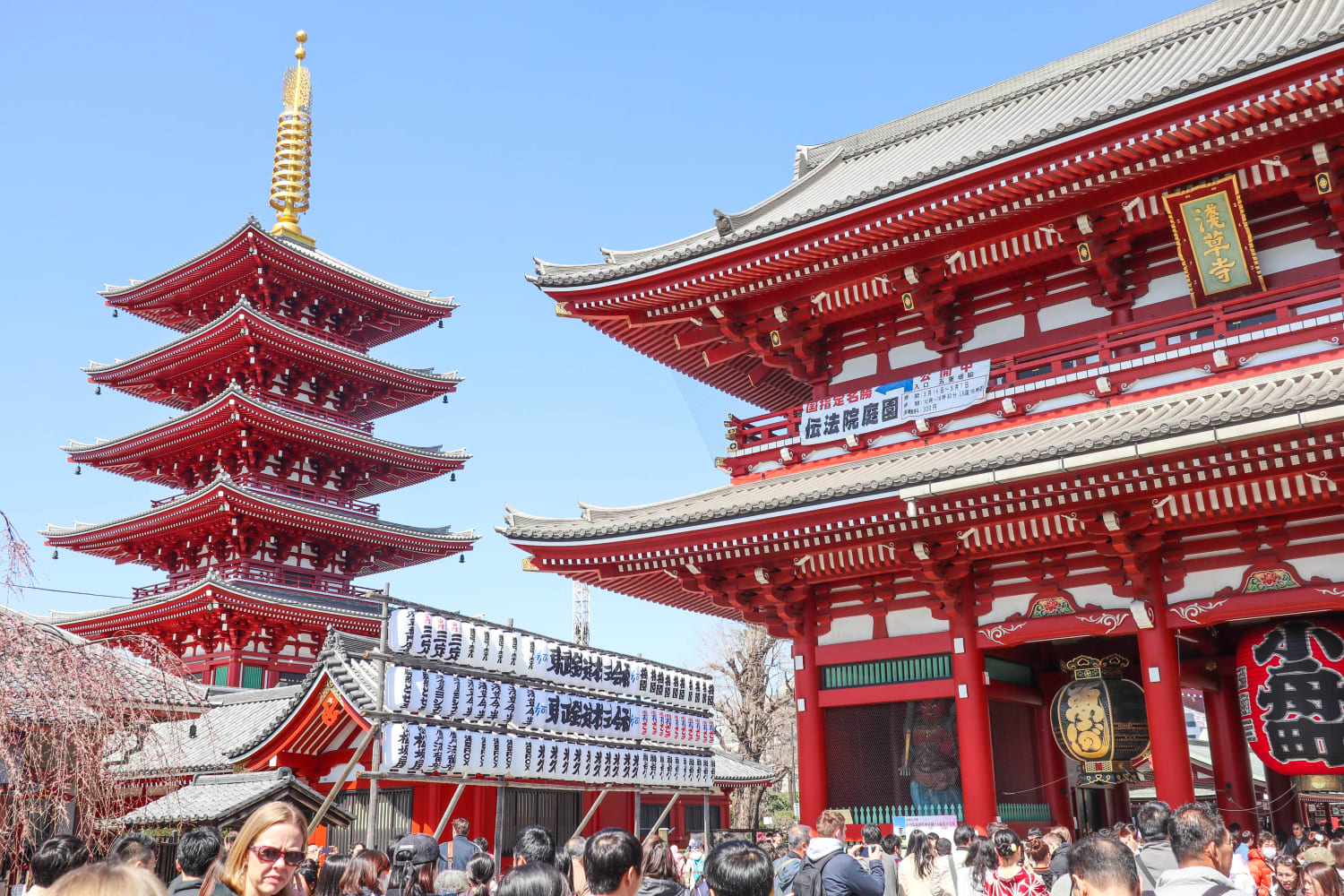
For your Asakusa Itinerary 2026, visiting Sensō-ji around 10:00AM is highly recommended. Sensō-ji is one of Tokyo's most popular tourist attractions, and it tends to get increasingly crowded as midday approaches. This time of day is also ideal because many of the shops along Nakamise Shopping Street — perfect for street food and souvenir hunting — are just opening up.
Passing through Kaminari-mon Gate, the iconic symbol of Asakusa, you will find the main hall and five-story pagoda standing in quiet grandeur, offering a vivid sense of the deep history of Sensō-ji, Tokyo's oldest temple.
The rows of vermilion-colored shrine buildings at Sensō-ji are truly breathtaking, making it one of the best places to experience the traditional side of Tokyo, one of the world's great cities.
After paying your respects at the main hall, take your time strolling through the temple grounds to admire the many examples of traditional temple architecture found throughout the complex.
Be Sure to Check the Proper Etiquette Before Praying at the Main Hall!
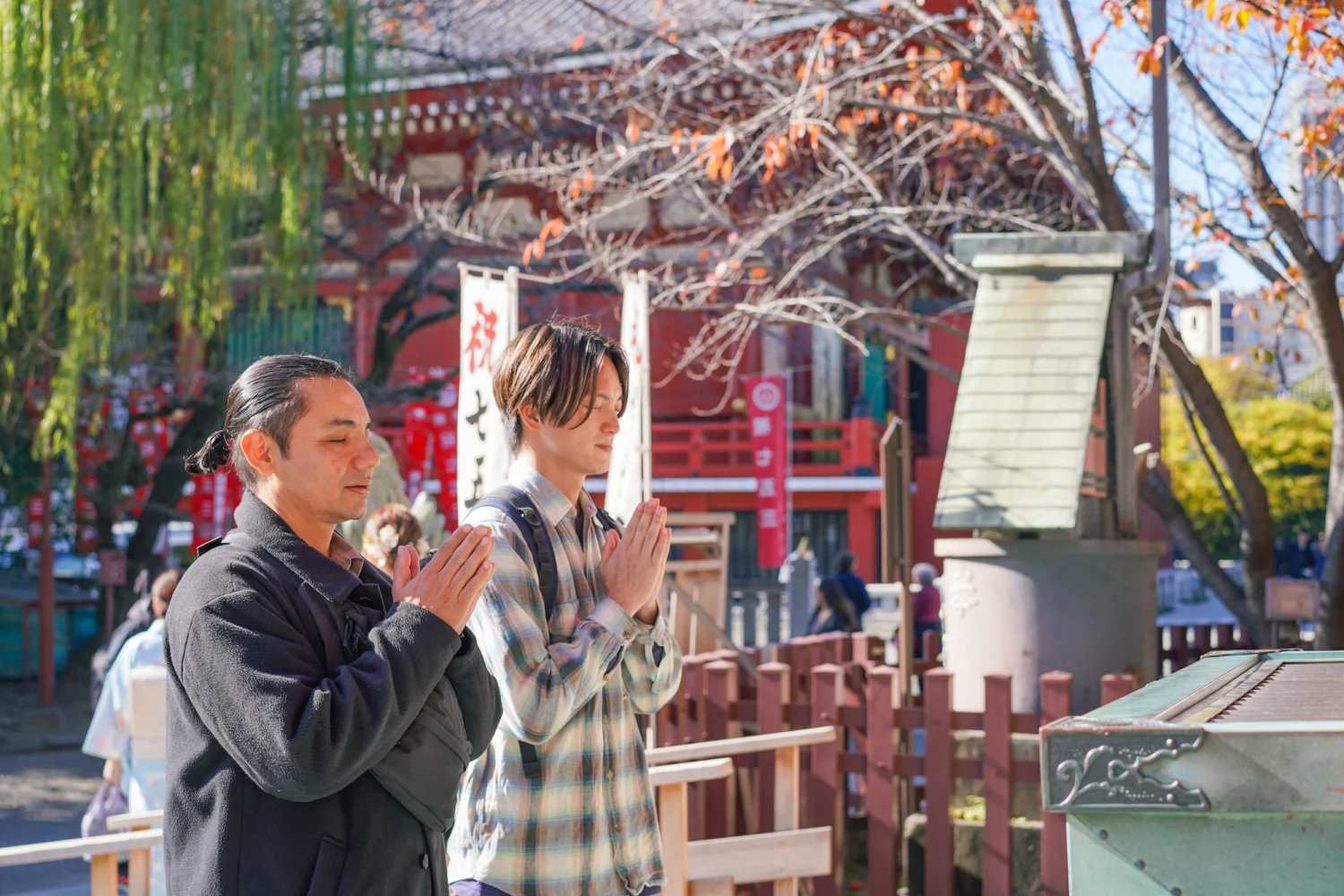
There are customs unique to Japanese temples to observe when visiting Sensō-ji. If this is your first time visiting a Japanese temple, or if you feel uncertain about the etiquette, it's a good idea to familiarize yourself with the basic steps beforehand.
At the temizuya (purification fountain), hold the ladle with your right hand and rinse your left hand, then switch to your left hand and rinse your right. Next, take the ladle back in your right hand and pour water into your left palm to rinse your mouth. Finally, tilt the ladle upright so the remaining water runs down the handle to clean it before setting it back.
At the main hall, gently toss your offering into the offertory box, then press your palms together quietly and offer your prayer. Unlike at Shinto shrines, note that you should not clap your hands loudly at a Buddhist temple.
If You're Unsure About Temple Etiquette, or Want to Learn More About History and Tradition While Sightseeing, Let a Local Guide Show You Around!
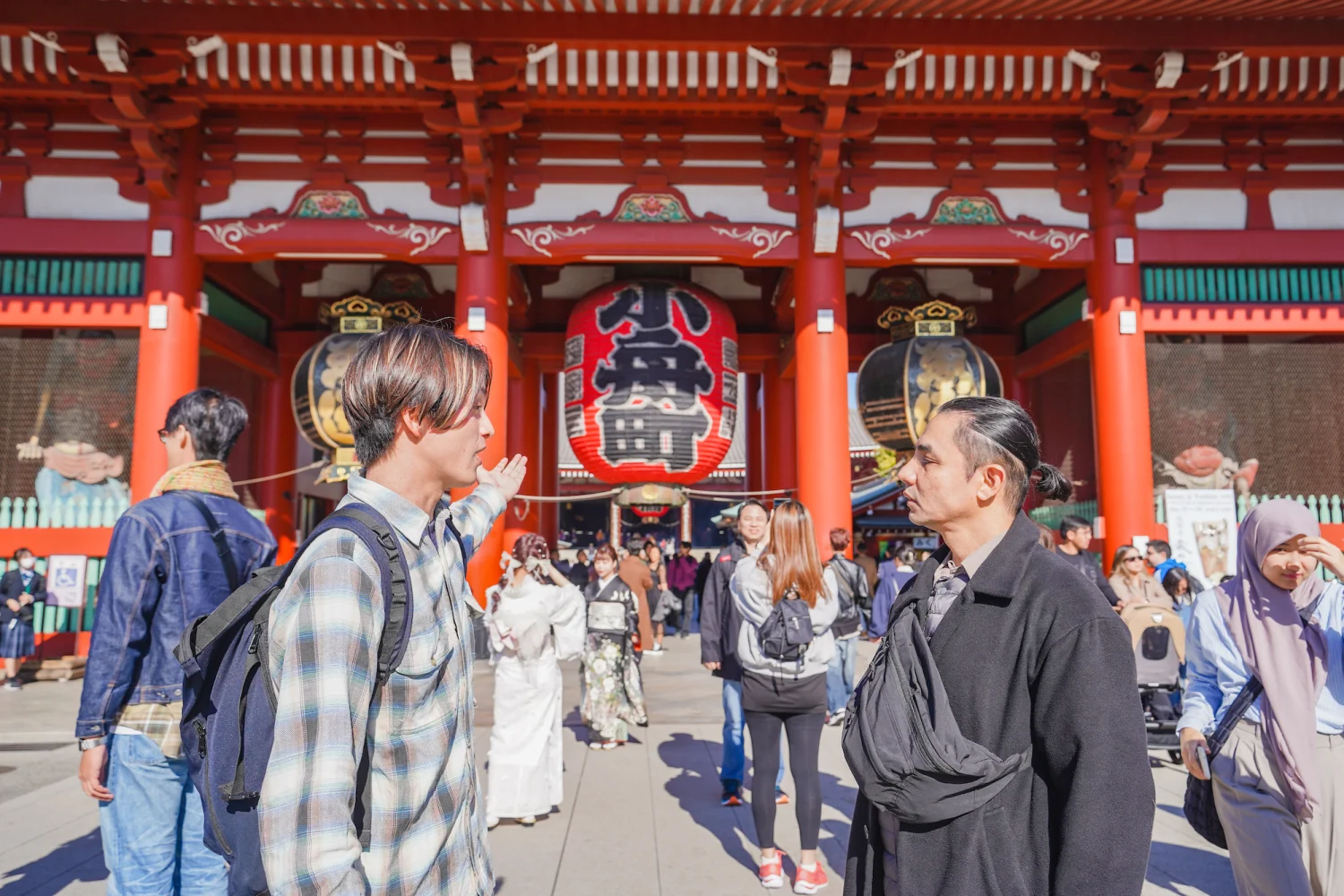
If you feel uncertain about temple etiquette, a guided tour of Sensō-ji with a local guide is a wonderful option. The "Asakusa Cultural Walk & Matcha Making Tour" offers a truly immersive Japanese cultural experience, combining a visit to Sensō-ji with matcha tasting and Asakusa's local cuisine.
What I personally love about this tour is that an English-speaking guide accompanies you, allowing you to learn the proper etiquette for visiting the temple as well as the deeper history of Sensō-ji. The guide will also take you efficiently to all the must-see spots within the expansive temple grounds, so you won't miss a thing.
This tour can accommodate vegetarian and vegan dietary needs. Please let them know about any dietary requests at least one day before your tour date.
Information:
- Meeting point: In front of Kaminarimon Police Box, Senso-ji
- Tour area: Around Senso-ji
- Start time: 11:00AM onwards
Bathe in the Smoke of the Jōkōro Incense Burner for Blessings of Good Health and the Fulfillment of Your Wishes
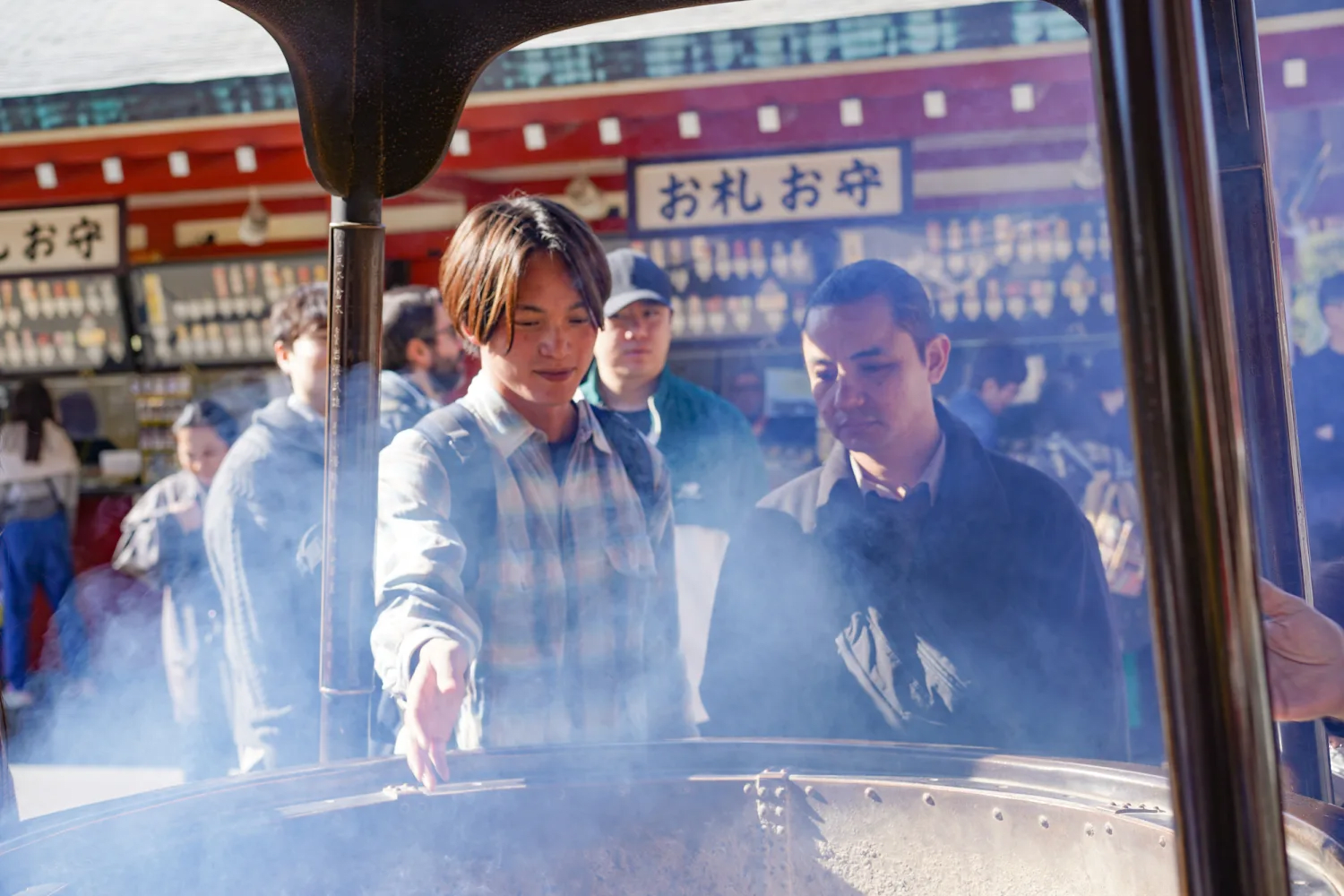
In front of the main hall at Sensō-ji stands a large incense burner called the Jōkōro, from which fragrant smoke continuously rises. It is believed that cleansing yourself in the smoke of the Jōkōro brings blessings of good health, and you will often see worshippers fanning the smoke toward themselves with their hands.
It is said that directing the smoke toward whichever part of your head or body concerns you will bring healing to that area, so try gently fanning it in your direction. There is no need to stand in the smoke for a long time — a few light waves of your hand is more than enough.
Why not try this age-old custom for yourself and get a true feel for Japan's traditional spiritual practices?
12:00PM: Enjoy Street Food Along Nakamise Shopping Street and the Arcades Around Sensō-ji
Asakusa Menchi
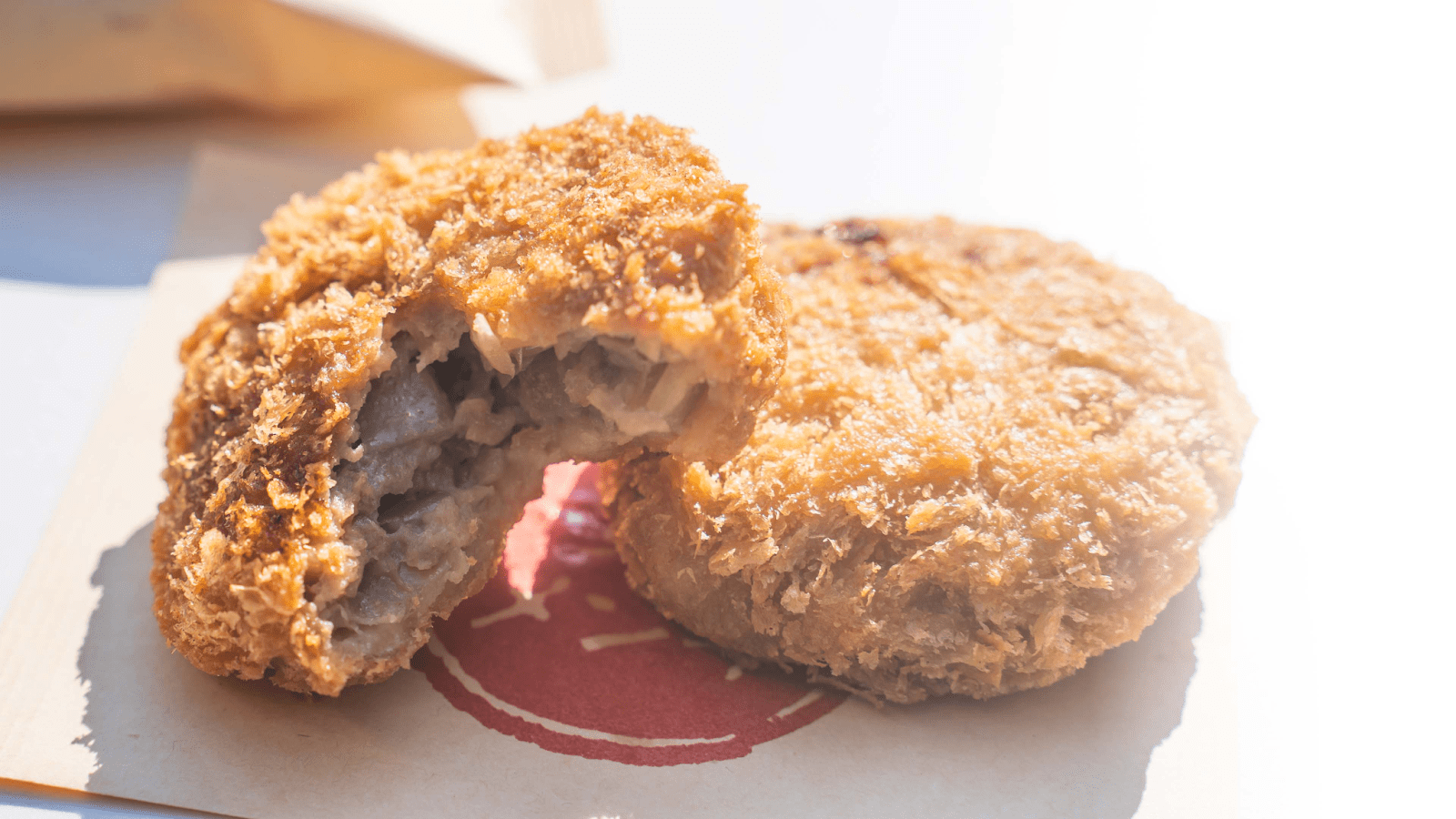
Asakusa Menchi is one of Asakusa's signature street foods — a menchikatsu (minced meat cutlet) beloved for its crispy coating and rich, juicy interior.
Made from a blend of domestic brand pork and Japanese black wagyu beef, each bite of this menchikatsu releases a flood of savory juices that fills your mouth with deep, satisfying flavor. What I love most is that each piece is fried to order, so you always get it at its absolute freshest and most delicious.
Bite into a piping-hot menchikatsu right on the spot and enjoy one of Asakusa's most distinctive street food experiences in a neighborhood lined with stalls and snack shops.
Information:
- Address: 2-3-3 Asakusa, Taito-ku, Tokyo
- Hours: 10:00–19:00 (until sold out)
- Closed: No regular closing days
- Phone: 03-6231-6629
- Website: https://asamen.com/
Monjayaki
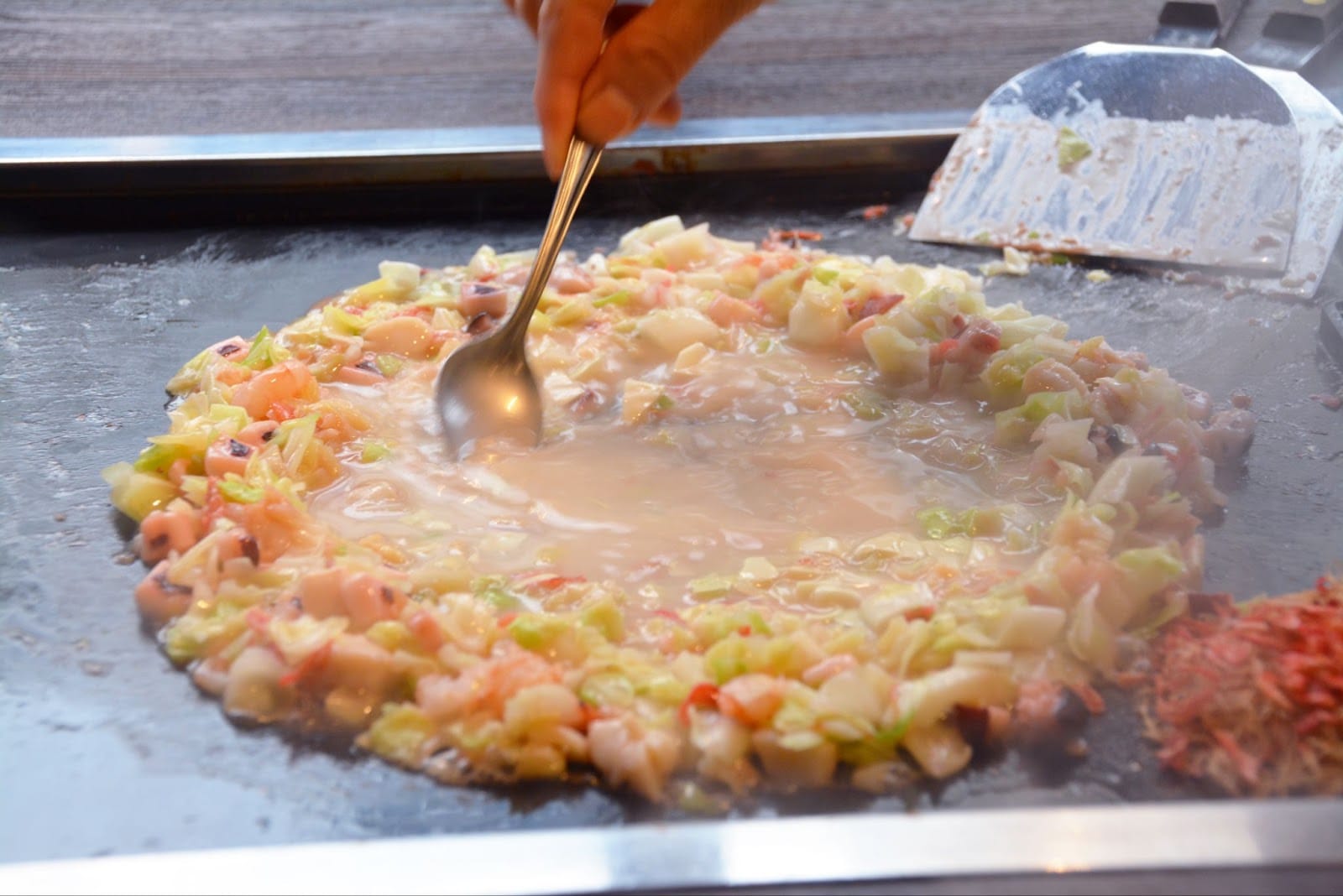
Monjayaki is one of Tokyo's most beloved regional dishes, and specialty restaurants can be found scattered through the shopping arcades around Asakusa.
Monjayaki is made by mixing a thin, water-based wheat flour batter with finely chopped cabbage, seafood, and other ingredients, then cooking it all on a hot iron griddle. It has a higher water content than okonomiyaki, giving it a smooth, almost runny texture, and is eaten directly off the griddle in small bites using a dedicated small spatula.
What I enjoy most about monjayaki is the wide variety of toppings available, from mentaiko (spicy cod roe) and cheese to pickled plum. At long-established monjayaki restaurants in Asakusa, the staff often cook the dish for you right at your table, so sit back and enjoy watching the traditional cooking process unfold right before your eyes.
Asakusa Monja Monro
Information:
- Address: 1-41-2 Asakusa, Taito-ku, Tokyo
- Hours: 11:00–23:00 (L.O. Food 22:00 / Drinks 22:30)
- Closed: No regular closing days
- Phone: 03-6284-7111
- Website: https://monroe.tokyo/
Asakusa Monja Zenya
Information:
- Address: 1-21-9 Asakusa, Taito-ku, Tokyo
- Hours: 10:30–23:00
- Closed: No regular closing days
- Phone: 03-6802-7444
- Website: https://kano-corp.tokyo/shop/
Mochi (Chewy Rice Cake)
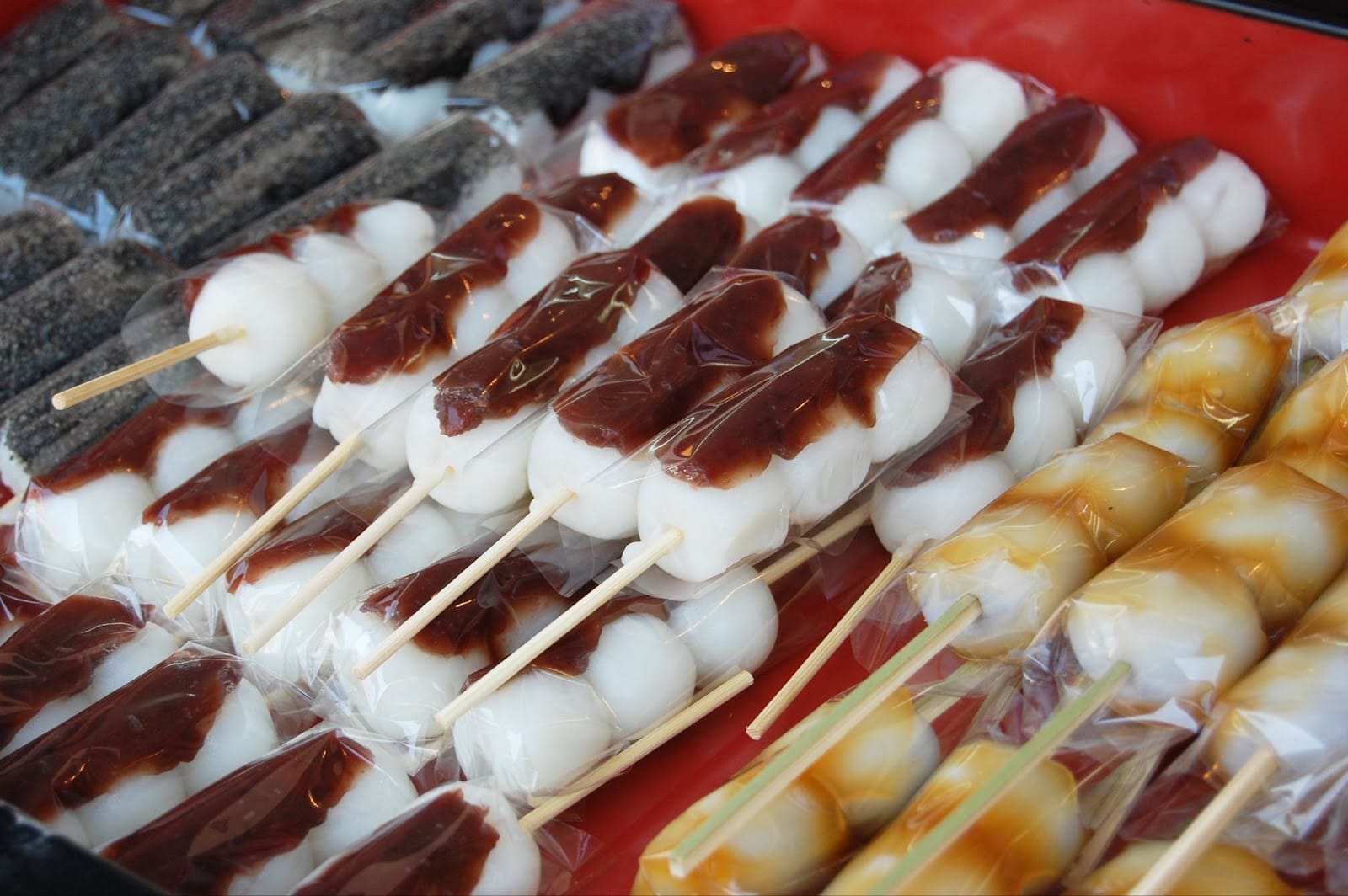
The area around Asakusa is home to many long-established shops specializing in mochi — one of Japan's most iconic traditional sweets.
Mochi is a traditional food made by pounding glutinous rice into a chewy, elastic texture, and is typically enjoyed coated in kinako (roasted soybean flour) or anko (a sweet paste made from azuki beans).
At shops that serve freshly made mochi, you can savor the natural sweetness of the rice that spreads the moment it melts on your tongue, along with its wonderfully smooth texture. Some shops also offer unique variations such as warabi-mochi, made from bracken starch, so be sure to try a few different types while you are there.
Hanbei Mochi
Information:
- Address: 1-15-3 Asakusa, Taito-ku, Tokyo
- Hours: 9:00–17:00
- Closed: Wednesdays
- Phone: 080-2883-2067
- Website: https://hanbei.ltd/mochishop/
Matcha Sweets Shop SAWAWA Asakusa
Information:
- Address: 2-2-10 Asakusa, Taito-ku, Tokyo
- Hours: 10:00–18:00
- Closed: Unknown
- Phone: 03-6231-6044
- Website: https://www.telacoya.co.jp/company/shop_detail/shop_detail-293/
Kibi Dango
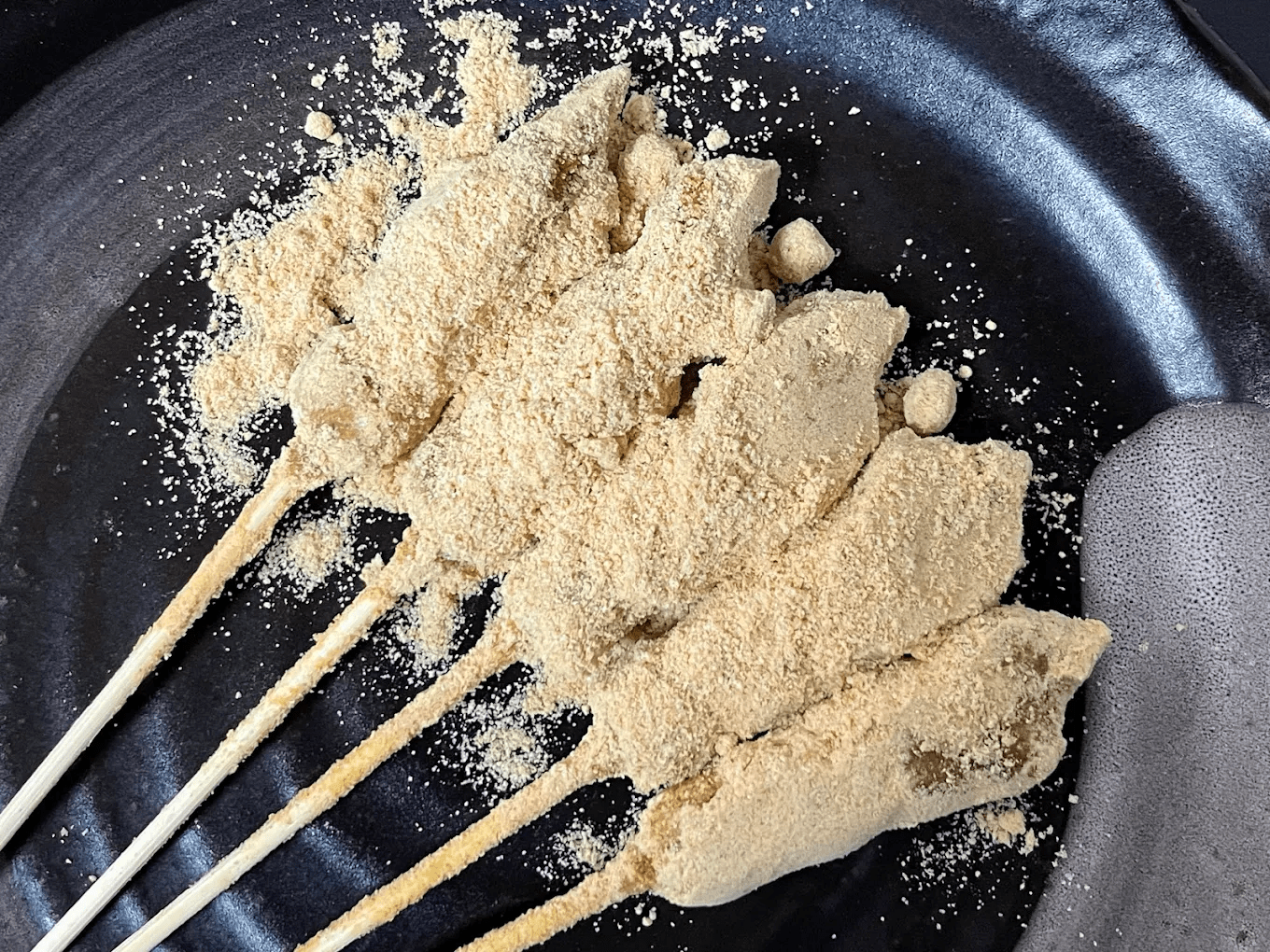
Kibi Dango is a traditional Japanese sweet made from a blend of glutinous rice and millet flour, beloved since the Edo period when Nakamise Shopping Street first flourished. Four small, round Kibi Dango, each about 1cm in diameter, are skewered together and dusted with kinako (roasted soybean flour), offering a simple yet refined sweetness and a satisfying chewy texture. Freshly made and still warm, Kibi Dango is soft with a light mouthfeel — a treat you'll finish before you know it.
In summer, pair it with cold matcha, and in winter, with warm amazake (a traditional Japanese fermented drink made from rice koji) — the perfect way to enjoy this classic snack alongside Japan's most iconic traditional beverages.
Kibidango Azuma
- Address: 1-18-1 Asakusa, Taito-ku, Tokyo
- Opening Hours: 9:00–19:00
- Closed: No regular closing days
- Phone: 03-3843-0190
- Website: https://aduma.tokyo/kibidango/
Anmitsu
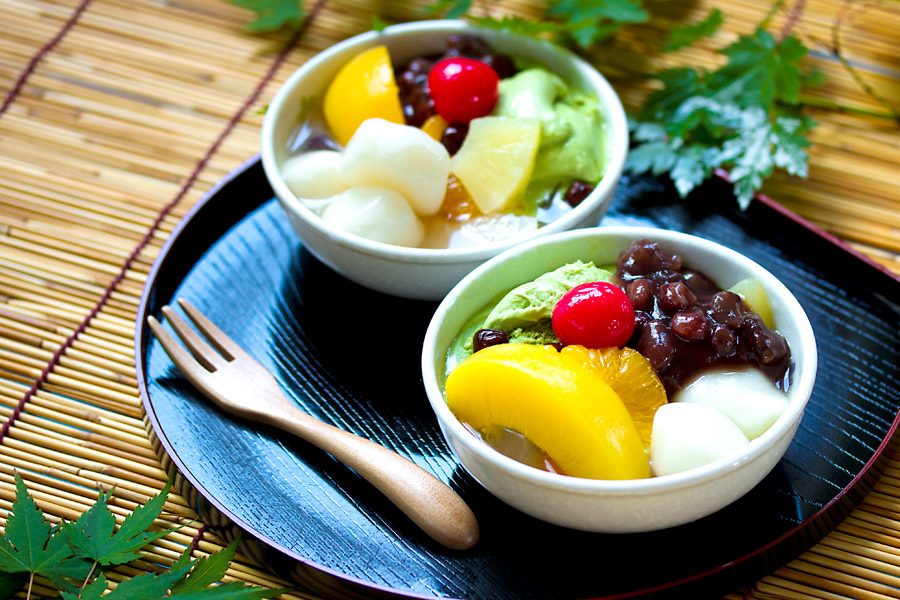
Anmitsu is a traditional Japanese dessert featuring ingredients such as agar jelly, mochi, sweet red bean paste, and fruit, all drizzled with kuromitsu (black sugar syrup).
At Asakusa's traditional sweet shops, you can enjoy beautifully presented, colorful Anmitsu featuring matcha-flavored agar jelly and pink mochi. Some shops even offer a luxurious version topped with matcha ice cream, making it a popular choice not only among Japanese locals but also among international visitors eager to savor authentic Japanese sweets.
One of the things I love most about Anmitsu is the interplay of textures — the clean snap of the agar jelly, the chewy pull of mochi, and so much more. Why not treat yourself to this taste of Japanese tradition as a dessert after lunch? It's an experience well worth adding to your Asakusa Itinerary 2026.
Asakusa Izumi
- Address: 1-8-6 Asakusa, Taito-ku, Tokyo
- Opening Hours: 11:30–18:00 (Last order 17:30)
- Closed: No regular closing days
- Phone: 03-5806-1620
- Website: https://www.asakusa-izumi.co.jp/
Umezono
- Address: 1-31-12 Asakusa, Taito-ku, Tokyo
- Opening Hours: [Weekdays] 10:00–17:00 / [Weekends & Holidays] 10:00–18:00
- Closed: Irregular Wednesdays, twice a month
- Phone: 03-3841-7580
- Website: https://www.asakusa-umezono.co.jp/
01:30PM: Stroll Along the Sumida River and Sumida Park While Enjoying Street Food
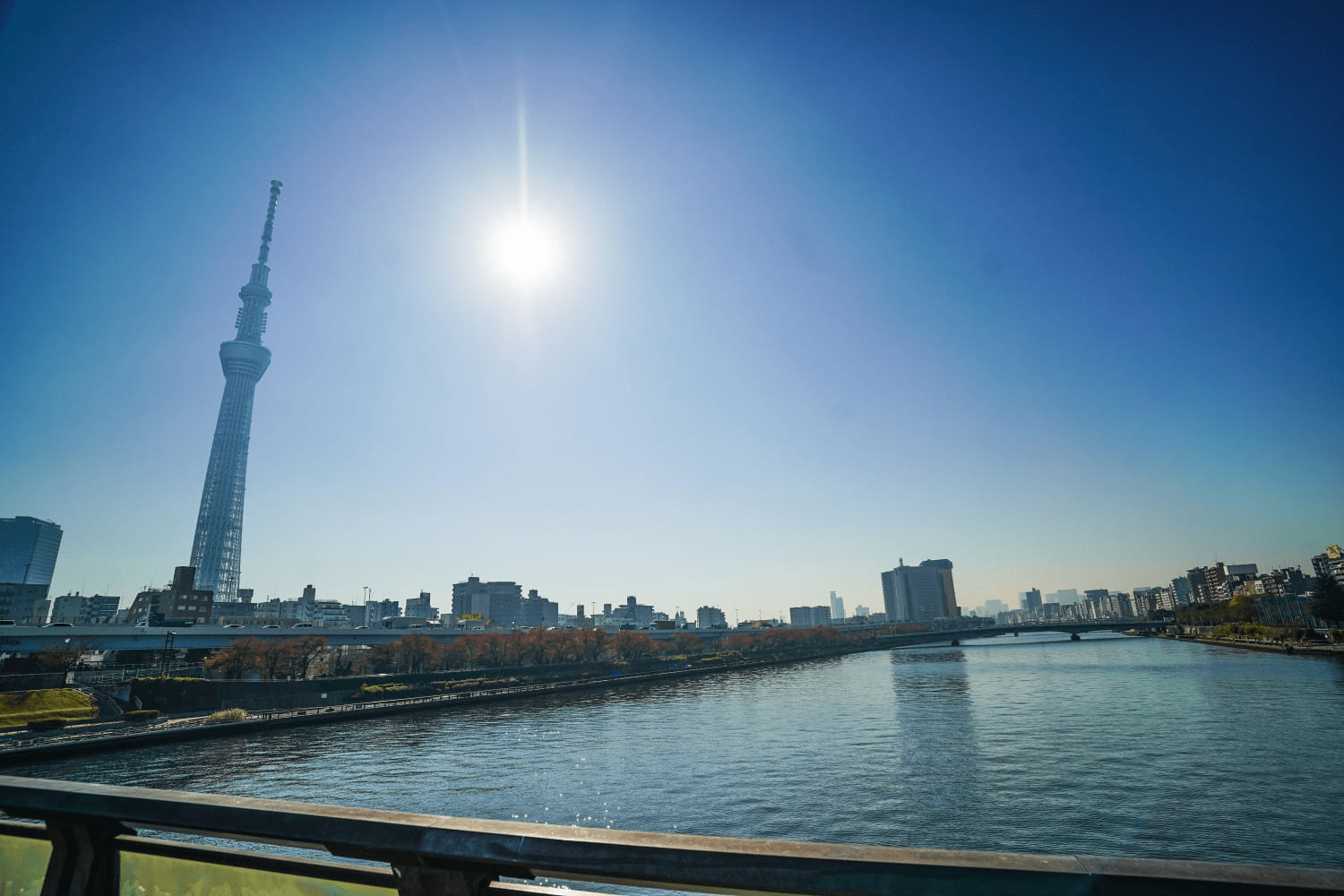
While snacking your way through the Asakusa area, make your way toward Tokyo Skytree with a leisurely walk along the Sumida River. This walking route takes about 20 minutes and offers a relaxed pace with open, riverside scenery stretching out before you.
Sumida Park lines both banks of the Sumida River, giving you the chance to rest on a bench or the grassy lawn while snapping photos with Asakusa's townscape and Tokyo Skytree as your backdrop. Personally, I especially recommend shooting from one of the bridges spanning the Sumida River, where you can capture Tokyo Skytree, the flowing river, and the surrounding greenery all in one frame.
As you make your way from the Asakusa area to Tokyo Skytree, savor the journey itself — taking in the blend of urban streetscapes, natural scenery, and the towering silhouette of Tokyo Skytree along the way. It's a highlight in its own right on any Asakusa Itinerary 2026.
Don't Miss the Mysterious Asahi Beer Sculpture — Perfect for a Photo Stop!
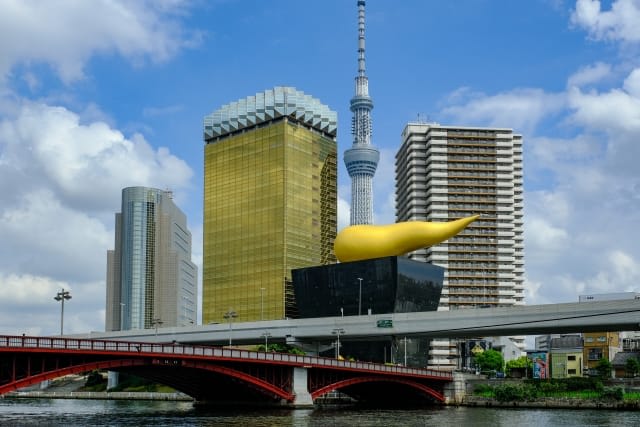
On your way from the Asakusa area to Tokyo Skytree, you'll spot a golden, strangely shaped sculpture gleaming along the Sumida River. This flame-inspired artwork stands beside the Asahi Breweries headquarters building, symbolizing the company's passion as it leaps forward into a new era.
This one-of-a-kind golden sculpture appears almost out of nowhere amid the modern Tokyo skyline and Tokyo Skytree — make sure to snap a photo as a memorable keepsake from your Tokyo stroll.
02:30PM: Ride to the Top of Tokyo Skytree and Gaze Down Over the City
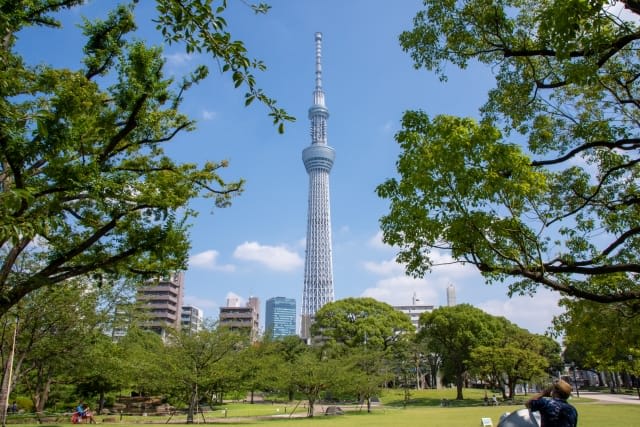
Once you arrive at Tokyo Skytree, head up to the observation deck and take in the breathtaking panorama of Tokyo spreading out below. The observation facilities include the Tembo Deck at 350 meters and the Tembo Galleria at 450 meters, both offering sweeping 360-degree views.
From Tokyo Skytree's observation deck, you can see the dense skyline of Japan's capital, the historic landmark of Tokyo Tower, and — on a clear day — even Mount Fuji in the distance. Around 2:30PM, the sun is high and bright, bathing the city in light and making the urban landscape look almost like a miniature model — ideal conditions for stunning photos.
Advance tickets for the observation deck are available at a better price than tickets purchased on the day. Once your travel plans are confirmed, it's a good idea to buy your tickets in advance through the official website below.
- Address: 1-1-2 Oshiage, Sumida-ku, Tokyo
- Opening Hours: [Weekdays] 10:00–22:00 / [Holidays] 9:00–22:00 (Last entry one hour before closing) ※Hours may vary during consecutive holidays
- Closed: No regular closing days
- Phone: 0570-55-0634
- Admission (Adult ※Child pricing varies by age):
- - [Tembo Deck + Tembo Galleria (Advance)] Weekdays ¥3,100 / Holidays ¥3,400
- - [Tembo Deck only (Advance)] Weekdays ¥2,100 / Holidays ¥2,300
- - [Tembo Deck + Tembo Galleria (Same-day)] Weekdays ¥3,500 / Holidays ¥3,800
- - [Tembo Deck only (Same-day)] Weekdays ¥2,400 / Holidays ¥2,600
- Website: https://www.tokyo-skytree.jp/
04:00PM: Enjoy a Cruise Along the Sumida River at Dusk
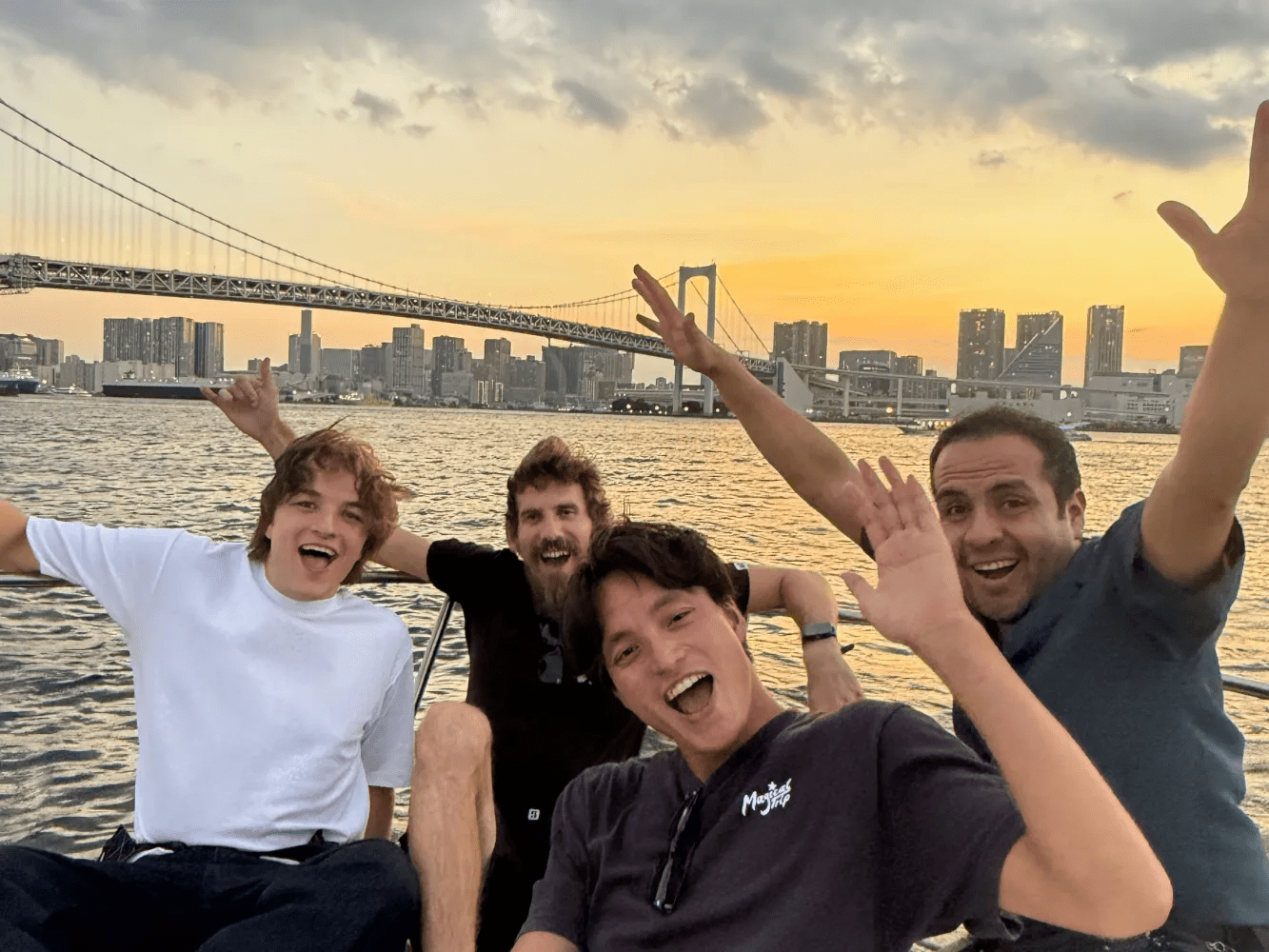
After soaking in Tokyo's panoramic views from Tokyo Skytree, treat yourself to a private cruise along the Sumida River and experience the magic hour from the water.
On the "Tokyo Private Night Cruise from Asakusa: Stunning City Lights & Skyline Views," you'll be treated to the iconic Tokyo skyline shaped by landmarks including Tokyo Skytree, Tokyo Tower, and Rainbow Bridge.
From the deck of the boat, why not enjoy local food and drinks picked up in Asakusa while photographing the bridges and high-rise buildings as they gradually light up around you — a truly special experience not to be missed on your Asakusa Itinerary 2026.
- Meeting Point: Kaminarimon Police Box
- Tour Area: Asakusa area, along the Sumida River
- Start Time: From 16:00
07:15PM: Go Bar-Hopping on Hoppy Street
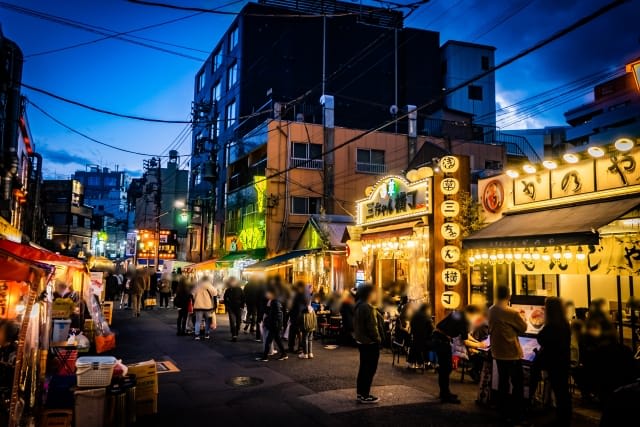
To wrap up the day, head to Hoppy Street — a strip that still carries the nostalgic atmosphere of old Asakusa — and enjoy bar-hopping while soaking in the local vibe. Hoppy Street is a drinking district located to the west of Sensō-ji, lined with izakayas (Japanese-style bars) that exude a retro, timeless character.
Hoppy is a low-alcohol, beer-flavored beverage. On Hoppy Street, you can enjoy Hoppy, sake, and other drinks alongside classic Japanese bar snacks. The street's signature dish is beef sinew stew (gyusuji nikomi), and the rich, deeply savory beef pairs perfectly with the refreshing taste of Hoppy.
Soak up the unique atmosphere where local regulars and tourists drink side by side, and be sure to experience the kind of izakaya cuisine that is truly one of a kind in Japan.
- Address: Asakusa, Taito-ku, Tokyo
- Opening Hours: Varies by establishment
- Closed: Varies by establishment
- Phone: Varies by establishment
- Website: None
Before Bar-Hopping, Take in Sensō-ji at Night
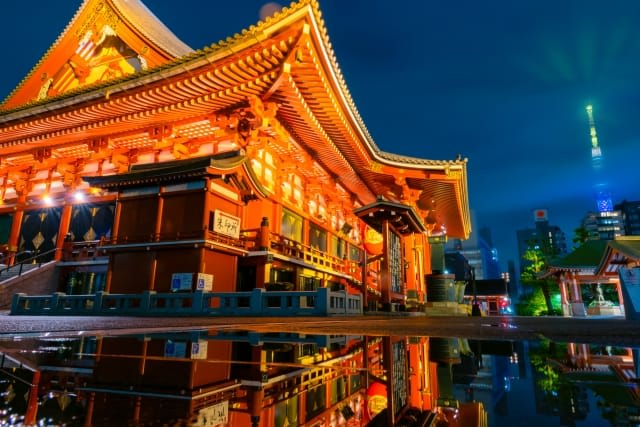
Before making your way to Hoppy Street, consider stopping by the illuminated Sensō-ji at night, where a magical atmosphere quite different from the daytime awaits you.
Sensō-ji is lit up every evening from sunset until around 23:00, and the sight of the main hall, Kaminari-mon Gate, and the five-story pagoda emerging from the darkness is truly spectacular.
Since Hoppy Street is only about a five-minute walk from Sensō-ji, make sure to photograph the historic shrine glowing golden in the night before moving on to bar-hopping — a perfect final flourish for your Asakusa Itinerary 2026.
Areas to Visit Along with Asakusa/Skytree
Here, I'll introduce areas to visit along with Asakusa and Skytree.
Ueno
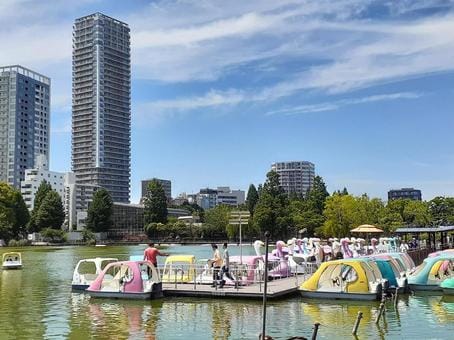
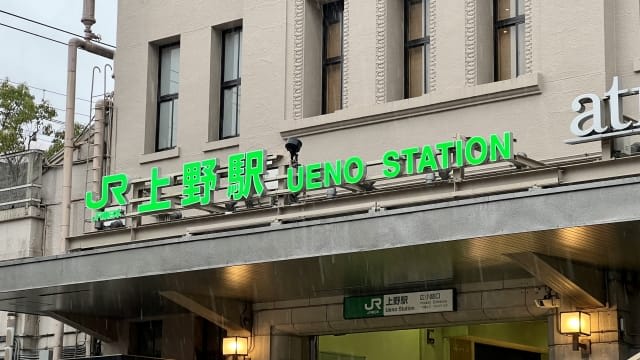
Ueno is located in the same downtown area of Tokyo as Asakusa and Skytree, and it's an attractive place where culture and nature are in harmony. I've been captivated by Ueno's charm since my student days, and it's still a favorite place I frequently visit.
Ueno Park is an urban oasis where you can enjoy the beauty of all four seasons. The cherry blossom season in spring is especially spectacular, with about 1,000 cherry trees in full bloom. The autumn foliage is also magnificent, and walking under trees that have turned red and yellow is a wonderful experience that calms the heart.
Ueno Zoo is known as the oldest zoo in Japan, but pandas are by far the most popular attraction.
Ameyoko (Ameya Yokocho) is a lively shopping street that developed from a black market after World War II. The approximately 500-meter street is packed with all kinds of shops, including food stores, clothing stores, and general stores.
The unique atmosphere of this area, where cultural facilities, nature, and downtown atmosphere are fused, makes you feel the diversity of Tokyo. After experiencing the Edo atmosphere in Asakusa and the futuristic feel at Skytree, you can have a deeper Tokyo experience by touching Japanese culture and nature in Ueno.
Access:
・About 5 minutes from Asakusa Station to Ueno Station on the Tokyo Metro Ginza Line
・About 15 minutes total from Skytree to Ueno Station: Take the Tobu Skytree Line to Asakusa Station, then the Tokyo Metro Ginza Line to Ueno Station
Akihabara
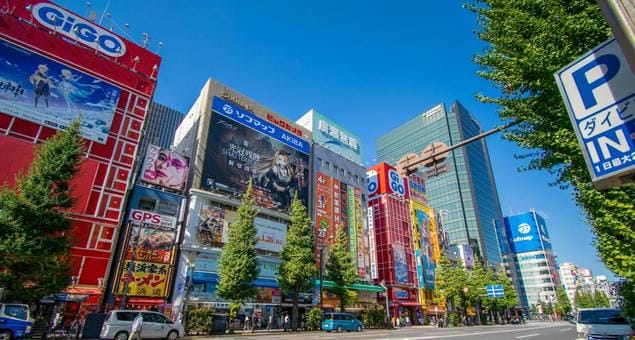
Akihabara is known as an electric town, but it's also famous as the center of Japanese pop culture. It's a place where you can experience modern Japanese culture, completely different from Asakusa and Tokyo Skytree.
The electric town is synonymous with Akihabara, packed with the latest gadgets and electronic products. You can find everything from electronic components for DIY projects to retro electronics.
Recently, shops where you can experience the latest technologies like VR and drones have been increasing, making it an irresistible place for technology enthusiasts.
Akihabara is also known as a holy land for anime and manga. Large anime shops and figure shops line the streets, allowing you to fully enjoy Japanese pop culture.
When I find nostalgic character goods, I can't help but feel like a kid again. It's not uncommon to see cosplayers on the streets as well.
Maid cafes are a unique experience in Akihabara. When I first went there invited by a friend, I was bewildered by its unique atmosphere, but now I enjoy it as part of Akihabara culture. Staff dressed in maid costumes serve you as if they've jumped out of an anime world.
Some cafes even offer game or song performances, providing more entertainment than just a regular restaurant.
Access:
・About 8 minutes from Asakusa Station to Suehirocho Station on the Tokyo Metro Ginza Line, then a 5-minute walk
・About 20 minutes total from Skytree: Take the Toei Asakusa Line to Asakusa Station, then the Tokyo Metro Ginza Line to Suehirocho Station
Nihonbashi
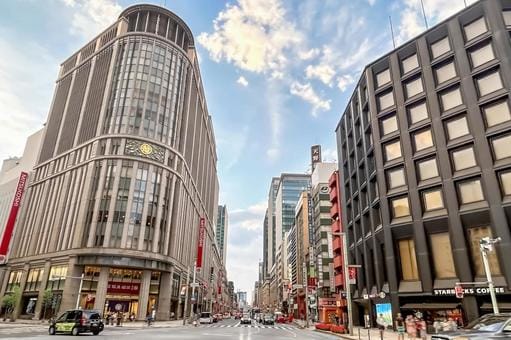
Nihonbashi is an area with a long history as the center of commerce and culture in Tokyo.
Nihonbashi itself is a historical bridge known as the starting point of Japan's roads since the Edo period. The current bridge is a stone arch bridge built in 1911, and its beautiful appearance has become one of Tokyo's symbols.
When you see the marker at the center of the bridge indicating the origin of Japan's road network, you can really feel that this is the center of Japan's road system.
The long-established department store "Mitsukoshi" is a representative high-end shopping spot in Nihonbashi. Since its opening in 1904 as Japan's first department store, it has continued to reign as the center of Japanese commerce.
What I particularly like is the food floor in the basement. There are so many delicious items lined up, from specialties from all over Japan to Japanese sweets carefully made by artisans, that it's hard to decide what to choose.
The Bank of Japan Head Office is a Western-style building constructed in the Meiji era, and its dignified appearance gives a unique atmosphere to the Nihonbashi streetscape. The red brick exterior and dome-shaped roof are characteristic, giving an impression like an old European castle.
Recently, redevelopment of the Nihonbashi area has been progressing, creating a unique landscape where skyscrapers and historical buildings coexist. Especially the nighttime illuminated streetscape is fantastic, symbolizing the fusion of modern and traditional Tokyo.
Access:
・About 30 minutes from Asakusa Station to Nihonbashi Station on the Tokyo Metro Ginza Line
・About 20 minutes from Skytree to Nihonbashi Station on the Toei Asakusa Line
Frequently Asked Questions about Asakusa/Skytree
Finally, I'll answer frequently asked questions about the Asakusa and Skytree area.
What Are the Visiting Hours for Sensoji Temple?
The main hall opening hours are as follows:
・April to September: 6:00 AM to 5:00 PM
・October to March: 6:30 AM to 5:00 PM
On the other hand, the grounds of Sensoji Temple are open 24 hours a day. This means that even if you can't visit the main hall, you can always stroll around the temple grounds.
My recommendation is early morning visits. Especially in summer, if you visit right at 6:00 AM when it opens, there are fewer tourists, and you can pray in a relaxed atmosphere.
Also, during the New Year's period (from New Year's Eve to around January 3rd), it's open all night. Listening to the New Year's Eve bell while welcoming the new year is one of Japan's traditional customs.
If you want to take photos, early morning is also recommended. The five-storied pagoda illuminated by the morning sun or the temple grounds wrapped in morning mist are truly spectacular scenes. Especially when Nakamise Street is still quiet, you can capture the quiet side of Asakusa that you can't see usually.
However, opening hours may differ during festivals and events. I recommend checking the official website for the latest information before your visit.
Do I Need to Book Tickets for Tokyo Skytree in Advance?
Let me explain about purchasing tickets for Tokyo Skytree, including my own experiences.
First, same-day tickets are sold, but you might have to wait for a long time during busy periods. When I first visited Tokyo Skytree, I bought a same-day ticket but ended up waiting for over 30 minutes. It can get very crowded, especially on weekends, holidays, and during tourist seasons.
Therefore, I recommend booking in advance on the official website. Since my second visit, I always book in advance, and the big advantage is being able to enter smoothly without waiting.
Advance booking is strongly recommended especially if you want to enjoy the view at dusk or the night view. When I visited at dusk, the view was spectacular, and the gradually changing Tokyo cityscape became an unforgettable memory.
However, pre-booked tickets cannot be refunded except in case of closure due to bad weather, so it's important to allow flexibility in your schedule. Also, it may still be crowded during peak seasons even with advance booking, so I recommend allowing plenty of time.
Which Is Better, Tokyo Skytree or Tokyo Tower?
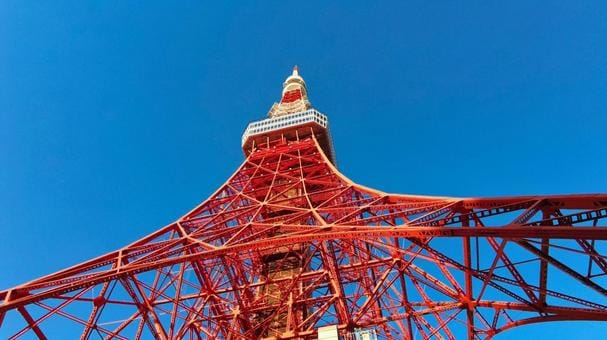
Both Tokyo Skytree and Tokyo Tower are representative observation towers of Tokyo, but they each have different charms. I've visited both many times, and each time I make new discoveries and feel that they both have irresistible charms.
The charm of Tokyo Skytree is its higher and wider observation deck and the latest facilities. Also, the view of Mount Fuji on clear days seems better from Skytree. The surrounding facilities like Solamachi are also well-developed.
On the other hand, the charm of Tokyo Tower lies in its classic atmosphere and convenient access from the city center. Tokyo Tower also has high historical value.
Personally, I think the most enjoyable way is to visit both and compare them. I've even made greedy sightseeing plans where I enjoyed Tokyo's vast scenery from Skytree during the day and enjoyed Tokyo Tower's romantic atmosphere at night.
Also, the impression of the scenery changes greatly depending on the season and time of day, so it's well worth visiting multiple times. For example, from Skytree, you can overlook the changing seasons like spring cherry blossoms and autumn foliage, while Tokyo Tower is especially beautiful with its night illumination.
The Asakusa and Tokyo Skytree area is a condensed version of Tokyo's charm, where traditions continuing from the Edo period are fused with cutting-edge technology.
At Sensoji Temple and Nakamise Street, you can experience Japanese traditional culture with over 400 years of history, while from Skytree, you can overlook the appearance of futuristic Tokyo.
When visiting Tokyo, please use this article as a reference to spend a fulfilling time in the Asakusa/Skytree area!