Kyoto in February 2026: Setsubun, Plum Blossoms & Winter Highlights
Since its publication in August, this article has served as a guide for many international visitors planning their trips to Kyoto. Travelers considering a February visit have been using this article to incorporate events into their itineraries and explore tour options through Magical Trip.
We're updating this article now, as February 2026 approaches, to help visitors make the most of their Kyoto experience. We've improved the layout to make it more user-friendly, allowing visitors to easily check event locations and details while exploring the city.
Kyoto is a city where complex layers of culture and history intertwine, making it challenging for tourists to fully appreciate its historical sites and culture on their own.
At the end of the article, I'll also share my experiences with two tours I took during my visit to Kyoto between August and October: the "Kyoto Night Foodie Tour" (Ranked #6 among all tours on TripAdvisor in 2024) and the "4.5-hour Kyoto Historical Highlights Bike Tour with UNESCO Zen Temples," including their highlights and key features!

Introduction
Winter in Kyoto is a special season where you can enjoy the charming scenery woven by tranquility and tradition. In February, the ancient capital is enveloped in severe cold, and while there are fewer lively events, it has a quiet and unique appeal.
From historical events like the Setsubun Festival and Hatsuuma Festival to snow landscapes and early-blooming plum blossoms, experiences unique to Kyoto's winter await you.
While warm clothing is essential, you can leisurely enjoy the winter atmosphere of Kyoto with fewer tourists.
In this article, I'll introduce events and attractions you can enjoy in Kyoto in February 2026. I'll guide travelers to a journey where you can fully savor the culture of good old Kyoto and the beauty of the changing seasons!
As many events have not been announced at the time of writing this article, I plan to update it regularly. If you're planning to visit Kyoto in February 2026, I highly recommend you bookmark this page.
2026 Year-round Event Schedule in Kyoto↓
・Kyoto: List of Events & Festivals for 2026
 Takashi Nakadomari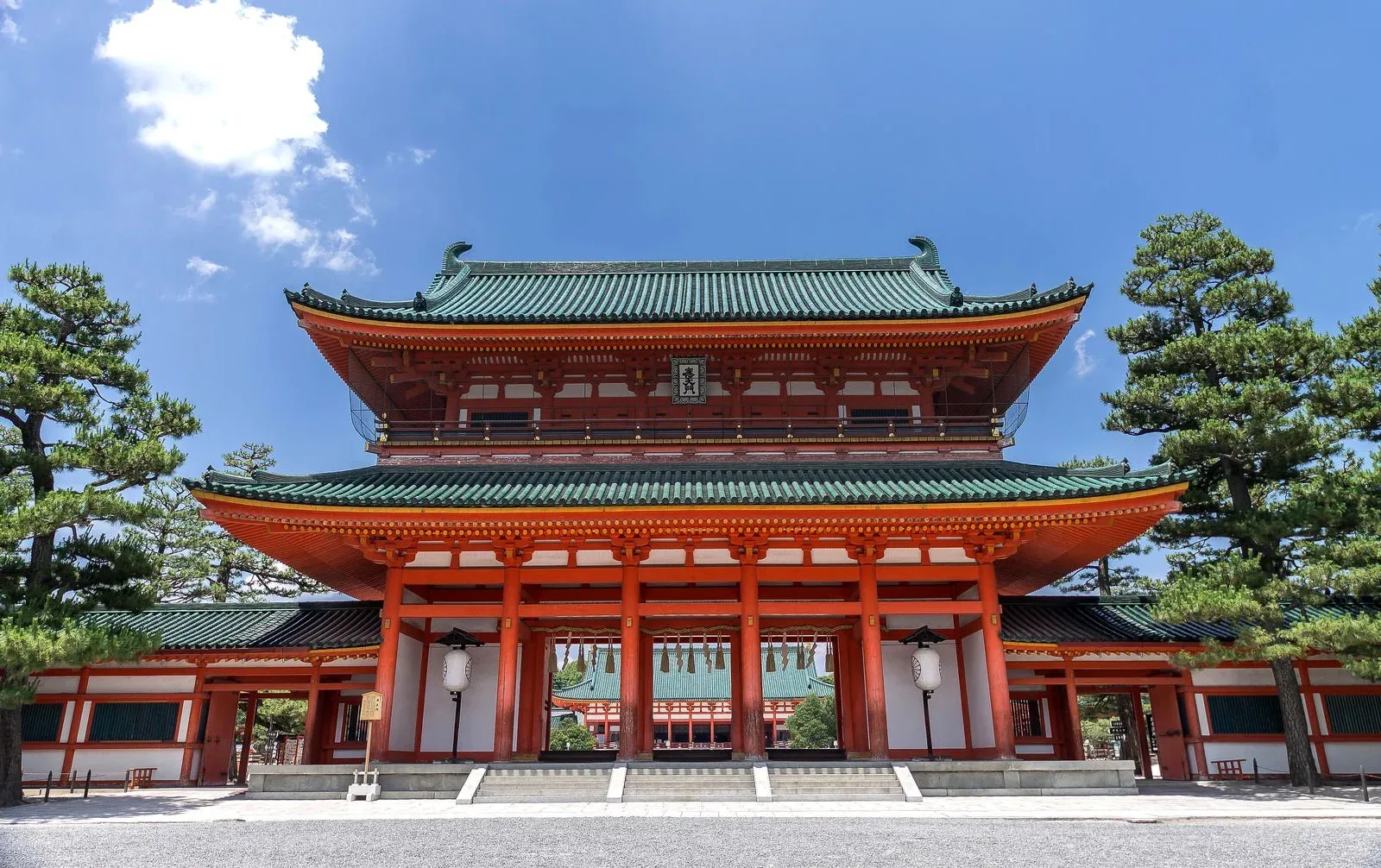
Table of Contents
・Traditional Events in Kyoto in February 2026
・Natural Attractions in Kyoto in February 2026
Traditional Events in Kyoto in February 2026
While not as numerous as in autumn, spring, or the New Year period, Kyoto in February has several notable traditional events that have been passed down for generations.
Setsubun Festival
Setsubun Festival at Yasaka Shrine
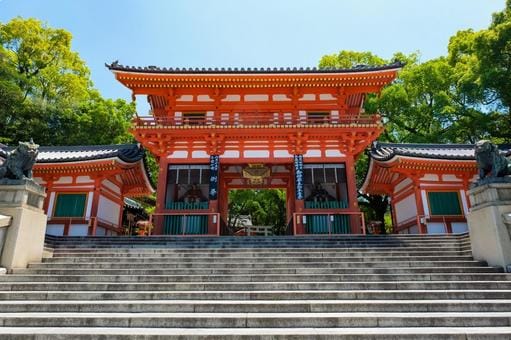
At the grounds of Yasaka Shrine, mamemaki (bean-throwing) is performed. This is a ritual where roasted soybeans are scattered while chanting "Oni wa soto, fuku wa uchi" (Demons out, fortune in), to ward off evil and invite good luck.
What particularly moves me is the dance performance and bean-throwing by geiko and maiko. This scene allows you to feel the essence of Kyoto's traditional culture.
Opportunities to see geiko and maiko up close are actually not that common. At the Setsubun Festival, you can closely appreciate the beauty of their gorgeous kimono, kanzashi (hair ornaments), and elegant movements, experiencing a time that encapsulates the essence of Kyoto.
Additionally, fukumame (lucky beans for Setsubun) are distributed at the Setsubun Festival. Fukumame have been believed since ancient times to have the power to ward off evil spirits and invite good fortune, and there is a custom of taking them home to wish for good health throughout the year.
Why not bring home not just visible experiences, but also traditional Japanese wishes in a tangible form?
By participating in the Setsubun Festival, you will be able to feel firsthand the depth of Kyoto's traditional culture and the Japanese sensibility that celebrates the changing of seasons. This Kyoto event in February 2026 is truly unforgettable.
<Information>
Date: February 2nd & 3rd, 2026
Access: About 5-10 minutes walk east along Shijo Street from Hankyu Railway "Kawaramachi Station" or Keihan Railway "Gion-Shijo Station"
Admission: Free
Website: https://www.yasaka-jinja.or.jp/en/
Setsubun Festival at Yoshida Shrine
Source:Souda Kyoto Ikou
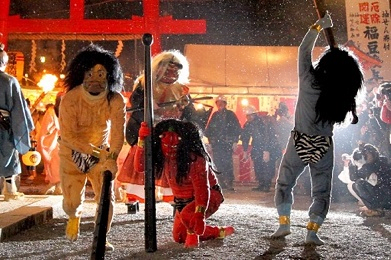
When it comes to Setsubun in Kyoto, Yoshida Shrine is the place that comes to mind.
What captivates me every time is the ancient Tsuina Ceremony.
In the Tsuina Ceremony, demons appear and roam around the shrine grounds, are cornered, and finally driven out beyond the torii gate.
Even first-time visitors can intuitively understand that "Setsubun is an event to ward off evil and invite good fortune," while also experiencing the solemn tension unique to Shinto rituals.
Since you can follow the flow visually, you should be able to enjoy it even without knowing the cultural background.
Furthermore, on the day, Karo-sai is also held, where old talismans are offered and prayers are made in a giant fire furnace, and the entire shrine grounds are enveloped in a special atmosphere marking the turning point of the year.
With lively food stalls to enjoy as well, this is recommended for those who want to experience Japanese Setsubun through both culture and hands-on experience. As a Kyoto event in February 2026, this festival offers an authentic glimpse into Japanese traditions.
<Information>
Date: February 1st, 2nd & 3rd, 2026
Access: 20 minutes walk from Keihan Railway Main Line "Demachiyanagi Station"
Admission: Free
Website: https://www.yoshidajinja.com/index.html
Setsubun Festival at Mibu-dera Temple
Source:Official website
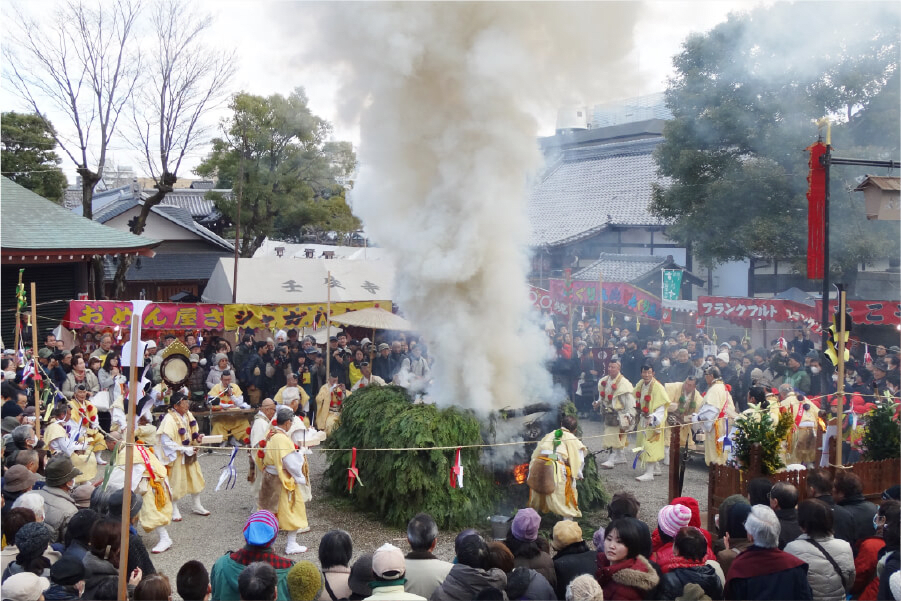
At the Setsubun Festival of Mibu-dera Temple, Mibu Kyogen: "Setsubun" is performed.
Mibu Kyogen is a silent drama where masked performers tell stories without dialogue, using only bells, drums, and flutes.
It is said to have originally begun as a way to convey Buddhist teachings to many people in an easy-to-understand manner.
Another unique custom of this temple that you can experience during the Setsubun period is the dedication of Hōraku, unglazed ceramic plates. Visitors write their age and wishes on the Hōraku and offer them to the temple.
The dedicated Hōraku are later dropped from the stage and broken (in April). It is believed that when the plates break, misfortune is dispelled and good fortune is brought.
I also dedicate a Hōraku every year. Even if I cannot be present at the moment they are broken, I am left with a sense of relief that I have entrusted my prayers for protection from evil.
This is recommended for those who want to experience both prayer and traditional performing arts in Kyoto. This remarkable Kyoto event in February 2026 combines spirituality with cultural heritage.
<Information>
Date: February 2nd - 4th, 2026
Access: 10 minutes walk from Hankyu Railway "Omiya Station"
Admission: Free (Hōraku plates are 500 yen each)
Website: https://www.mibudera.com/index.html
Setsubun Festival at Suga Shrine
Source:Google Maps
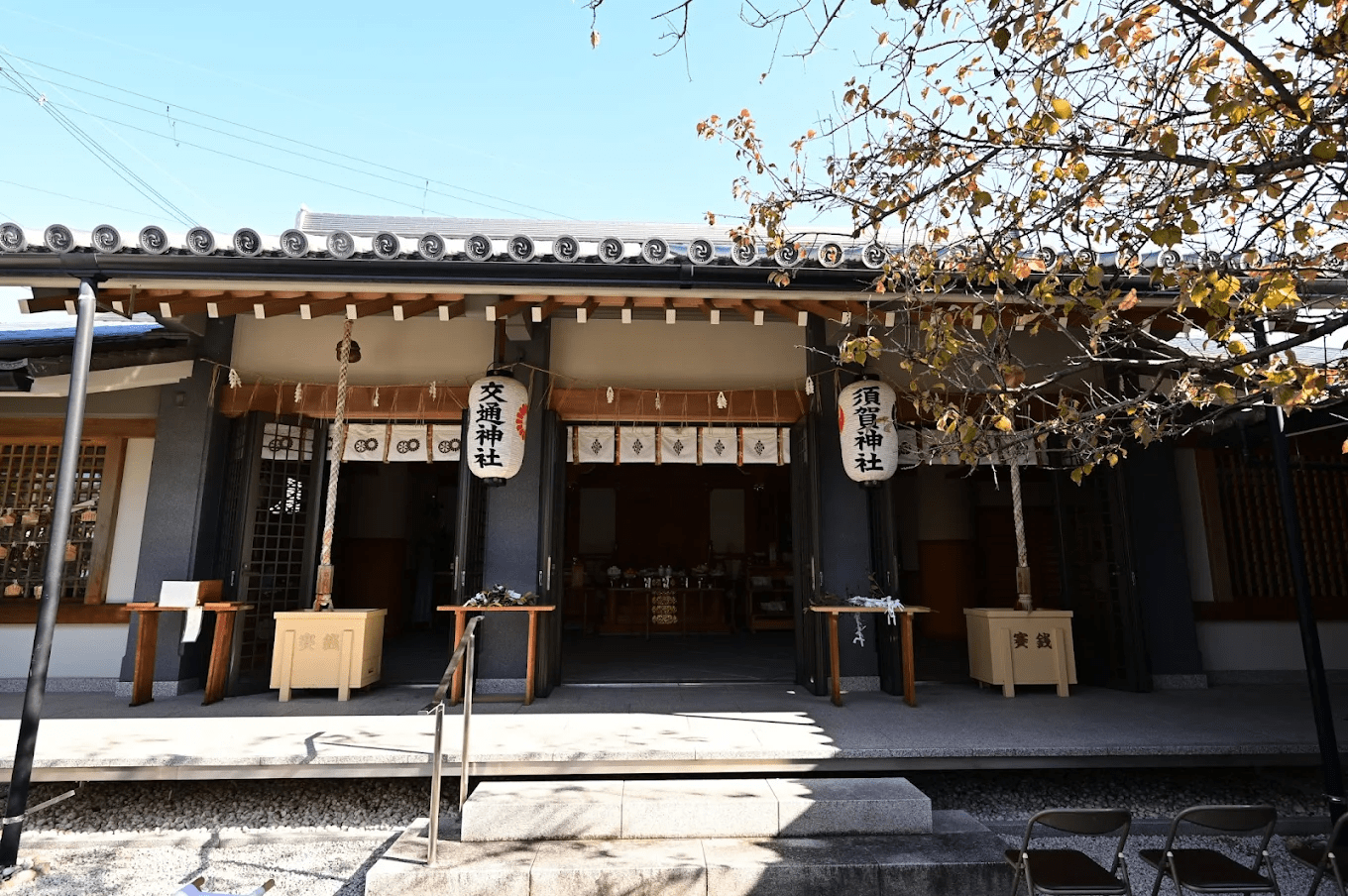
At the Setsubun Festival of Suga Shrine, you can enjoy bean-throwing and unique customs related to matchmaking.
On the shrine grounds, bean-throwing is performed by people dressed as Okina and Ouna (traditional elderly couple figures), symbols of longevity and family happiness, creating a gentle and warm atmosphere.
Another highlight is "Kesobumi," a matchmaking charm that appears only during the Setsubun period. Kesobumi means love letter.
Kesobumi are purchased from "letter sellers" dressed in the attire of ancient nobility with their faces covered by cloth, and it is said that if you keep it hidden in a drawer without showing it to anyone, it will lead to a good romantic connection.
Every year, I also purchase a Kesobumi after the bean-throwing and quietly entrust my wishes to it, secretly tucking it away in the back of my closet.
This is recommended for those who want to experience both the lively Setsubun and Kyoto's unique matchmaking culture. Don't miss this charming Kyoto event in February 2026.
<Information>
Date: February 2nd & 3rd, 2026
Access: 5 minutes walk from Kyoto City Bus "Kumano Jinja" bus stop
Admission: Free
Website: https://ja.kyoto.travel/tourism/single02.php?category_id=9&tourism_id=137
Heian Shrine Setsubun Festival
Source:Official X
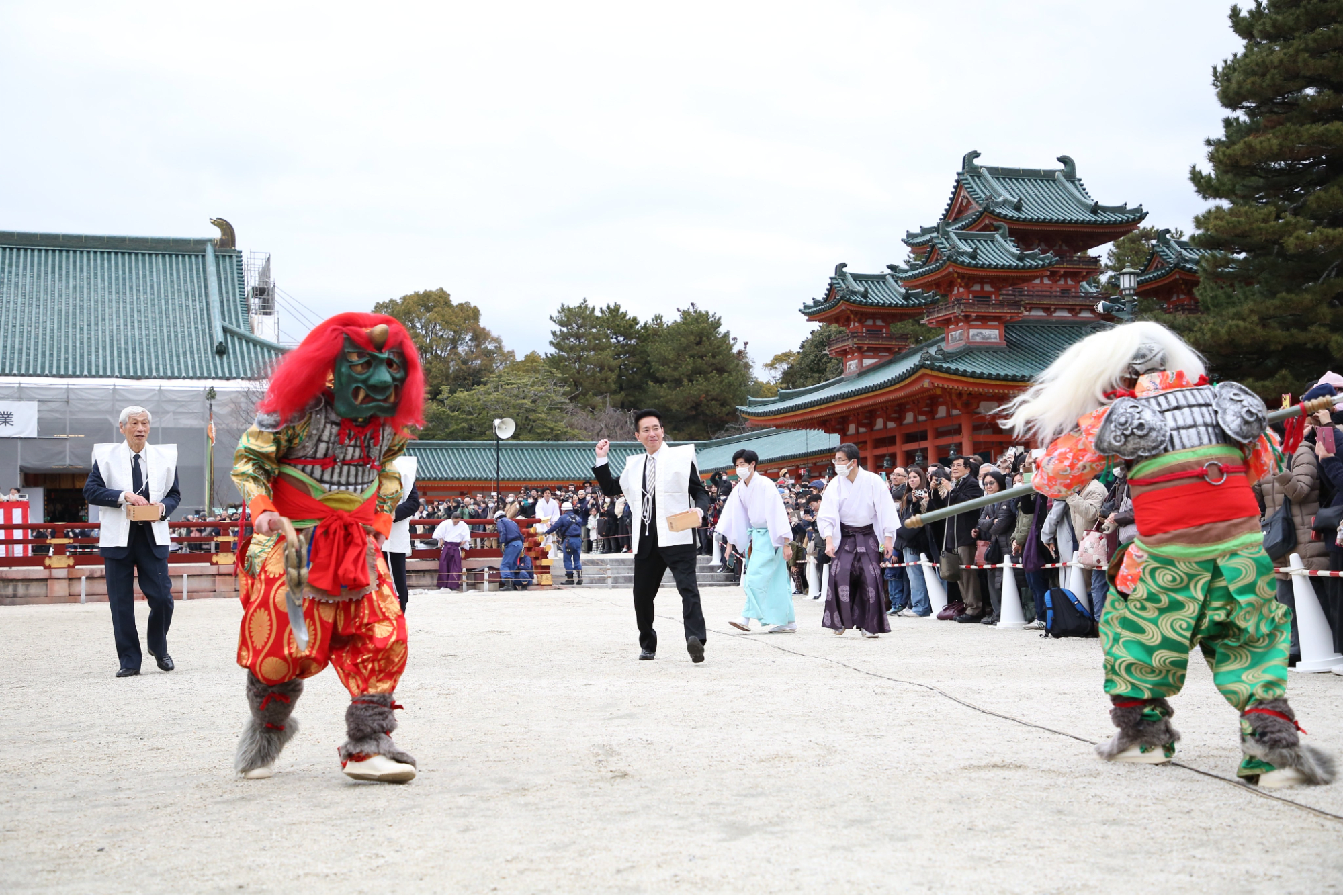
The Setsubun Festival at Heian Shrine features religious rituals that continue from morning until evening.
My personal recommendation is the "Oni Dance and Bean Throwing" that begins at 3:00 PM. Demons appear from the Otenmon Gate and stride boldly through the spacious shrine grounds, startling people as they go. After performing the "Oni Dance" at the main worship hall, the demons are driven out of the grounds through the bean-throwing ritual.
The demons are played by Kyogen actors (traditional Japanese comic-theatre performers), so the powerful presence and skilled performance are highlights worth seeing. Following this, bean throwing takes place at the main worship hall. The sight of people rushing forward all at once, stretching out their hands to catch the beans, is a visible manifestation of the Japanese custom of "receiving good fortune."
This Kyoto event in February 2026 is recommended for those who want not only to observe Japanese religious rituals but also to experience the atmosphere firsthand.
<Information>
Date: February 3, 2026
Access: 10-minute walk from Exit 1 of Higashiyama Station on the Tozai Subway Line
Admission: Free
Website: https://www.heianjingu.or.jp/
Fujinomori Shrine Setsubun Festival and Tsuina Ceremony
Source:Official website
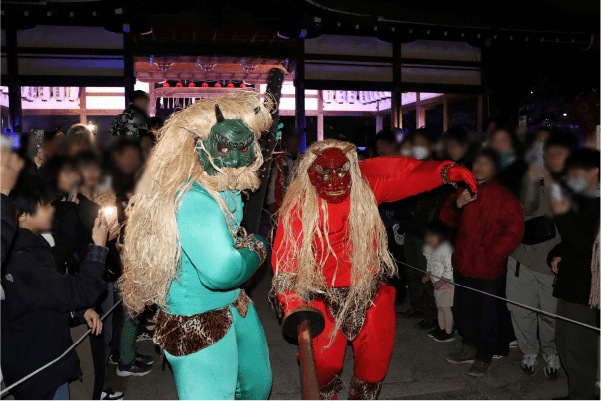
The Setsubun at Fujinomori Shrine takes place at night.
Around 8:00 PM, the Red Demon and Blue Demon appear amid dramatic lighting and powerful sound effects. The Red Demon and Blue Demon emerge from the shrine approach and dance wildly, coming close to the audience, creating an intense and thrilling atmosphere.
The Tsuina Ceremony held at this shrine features professional-level effects including lighting, sound, and smoke, making it enjoyable like a show. The subsequent bean throwing becomes even more exciting as it includes a lottery with luxurious prizes.
Free amazake (a sweet fermented rice drink) is also served, and every year I look forward to enjoying this drink while immersing myself in the local excitement and savoring the Setsubun experience.
This Kyoto event in February 2026 is recommended for those who want to experience a powerful, authentically Japanese festival on a winter night.
<Information>
Date: February 3, 2026
Access: 5-minute walk from JR Fujinomori Station
Admission: Free
Website: https://fujinomorijinjya.or.jp/
Hatsuuma Festival at Fushimi Inari Shrine (February 6, 2026)
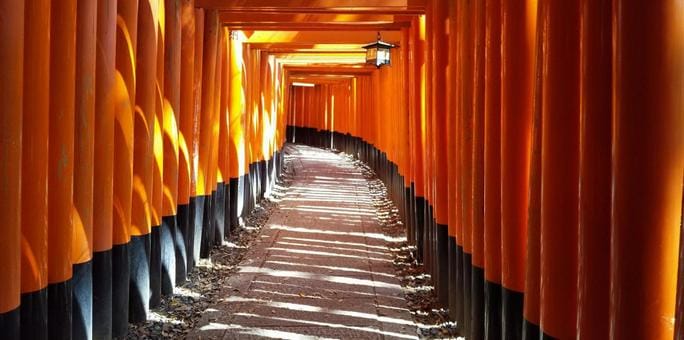
The Hatsuuma Festival at Fushimi Inari Shrine is known as a traditional festival that is a feature of winter in Kyoto. I look forward to this festival every year and am fascinated by its unique atmosphere.
This festival is held on the "first day of the horse" when the deity of Fushimi Inari Shrine is said to have descended. It's scheduled for February 6, 2026. On the day of the festival, the shrine is enveloped in a solemn atmosphere, and a majestic Shinto ritual is conducted by the priests of Fushimi Inari Shrine.
The charm of the Hatsuuma Festival lies not only in its mystical atmosphere but also in the sight of worshippers praying earnestly. Many people visit to pray for business prosperity and family safety, and the sight of them praying with serious expressions is impressive.
Of particular note is the "Shirushi no Sugi" (Sign Cedar). This is a special amulet given for 1,500 yen, believed to bring good luck for business prosperity and family safety. I also receive this "Shirushi no Sugi" every year and pray for happiness throughout the year.
During the festival, the shrine precincts are filled with a unique scent and excitement. The famous "Senbon Torii" (thousands of red torii gates) creates an even more mystical atmosphere on the day of the festival. Walking between the torii gates gives you a strange feeling as if you've wandered into another world.
When visiting Kyoto, I recommend you visit Fushimi Inari Shrine on this special day.
<Information>
Date: February 1, 2026
Access: Right next to JR Nara Line "Inari Station", or 5 minutes walk from Keihan Main Line "Fushimi Inari Station"
Admission: Free
Website
If you are interested in Fushimi Area, check the article below! I summarized how and where you can enjoy Fushimi as much as possible.
 Takashi Nakadomari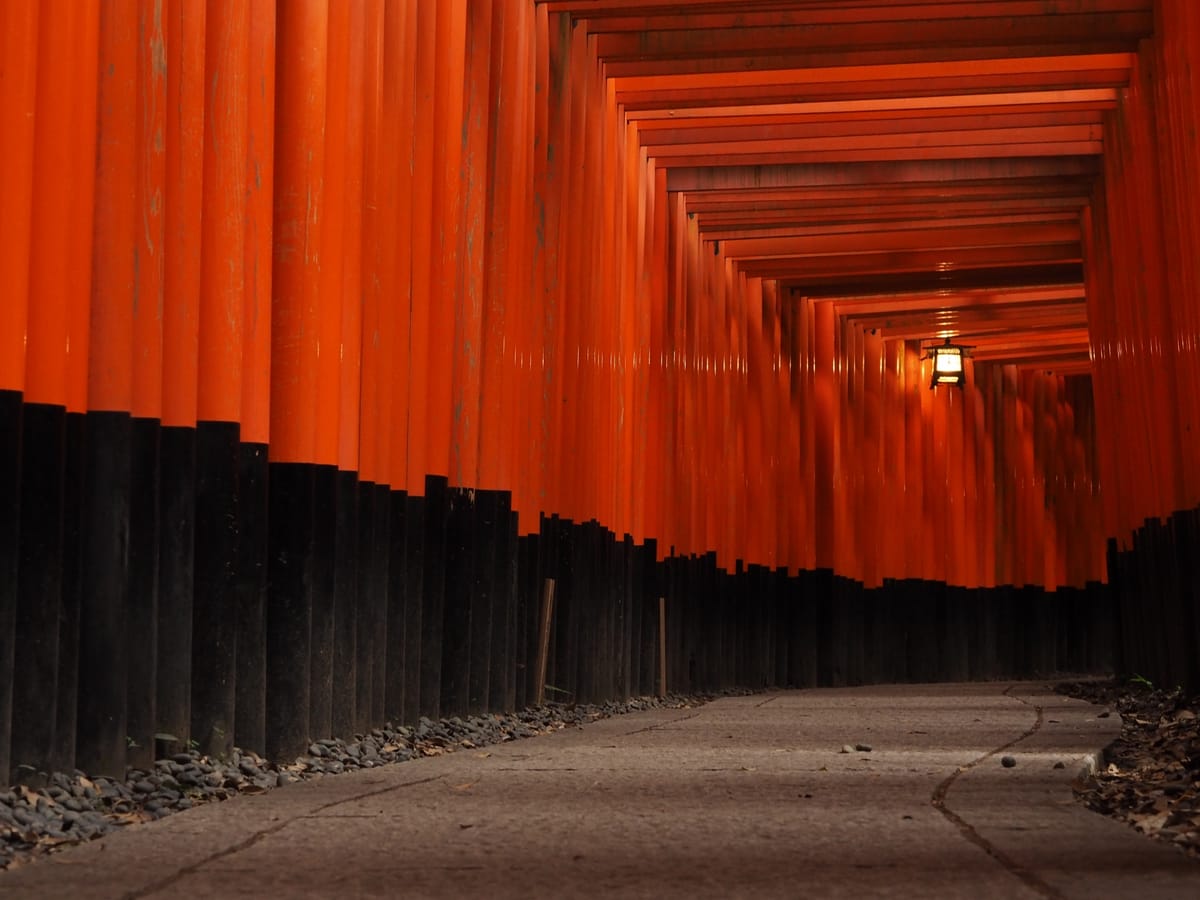
If you are interested in Fushimi Inari Taisya Shrine, check the article below! I summarized in more details and how I felt there.
 sena kanda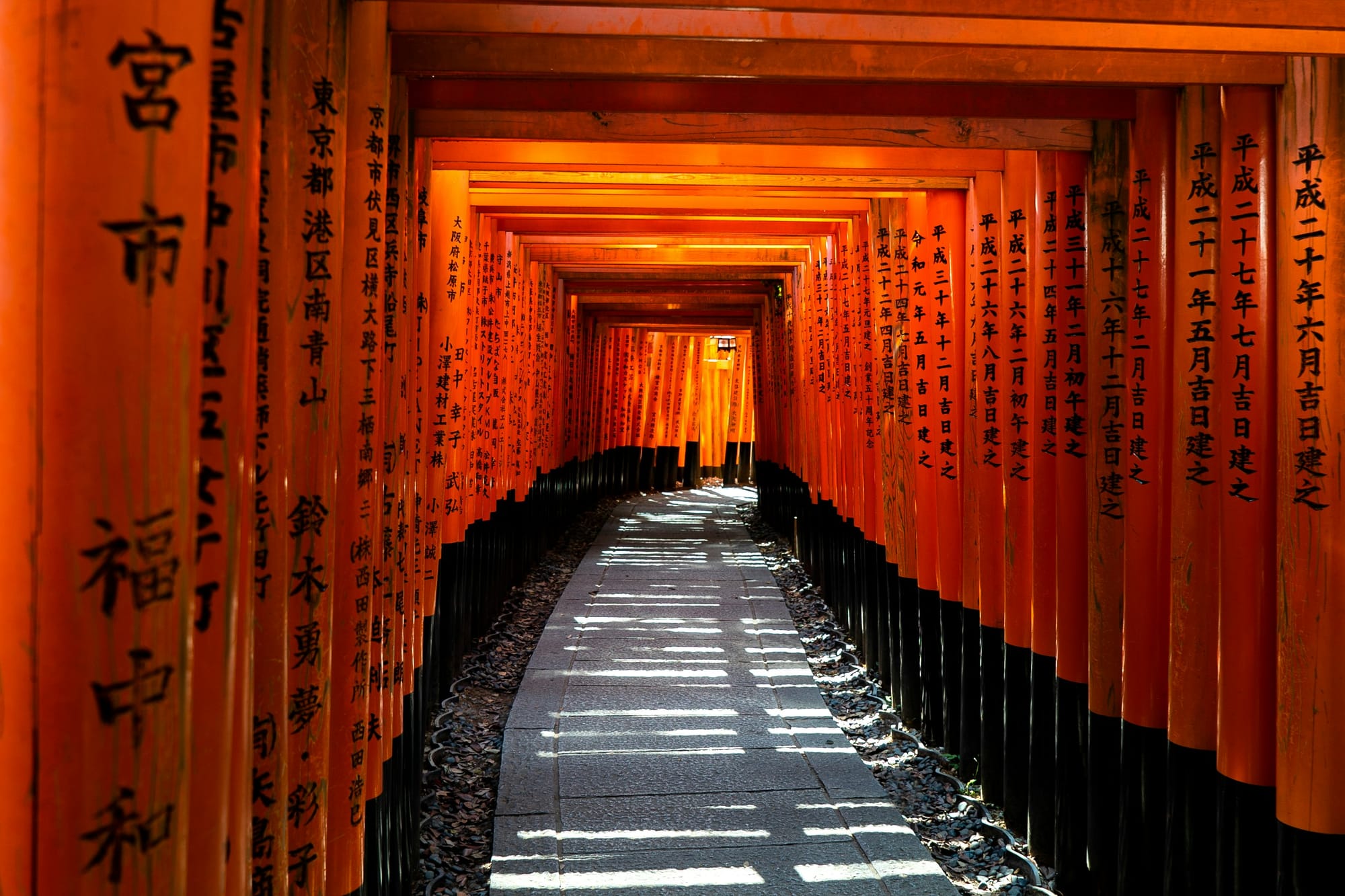
Godairiki-son Ninnoe at Daigoji Temple
Source: Soda Kyoto Ikou
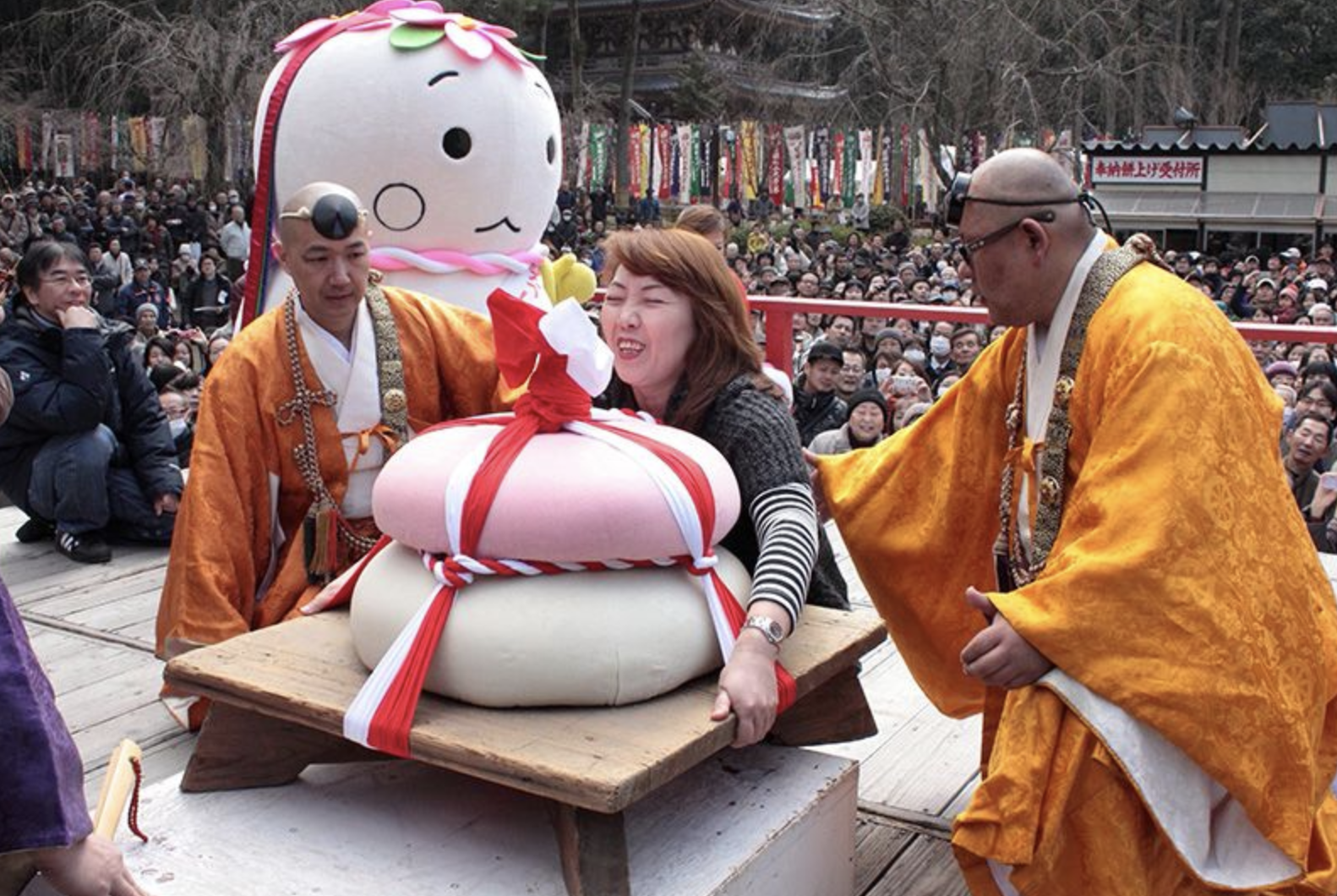
The Godairiki-son Ninnoe at Daigoji Temple is known as a unique traditional event that is a feature of winter in Kyoto. I experienced this event for the first time a few years ago and was deeply impressed by its power and spirituality.
This event is a traditional festival celebrating the Five Great Bodhisattvas, which are symbols of five powers believed to fulfill people's wishes.
The central part of the event is a ritual called "Mochinage Chikara Hono" (Offering of Strength by Lifting Mochi), which is not just a test of strength but an act with deep spiritual meaning.
In the "Mochinage Chikara Hono", participants lift surprisingly large mirror-shaped mochi (rice cakes) weighing 90kg for women and 150kg for men, competing for the longest lifting time.
The participants don't just lift heavy mochi; they seriously engage in the act as an offering of their strength to the gods and Buddhas.
The precincts of Daigoji Temple, where the ritual takes place, are enveloped in a solemn atmosphere. The enthusiasm of the worshippers and the sight of participants exerting their strength create a unique tension in contrast to the temple's tranquility.
<Information>
Date: February 23, 2026
Access: From JR Kyoto Station, take the Kyoto Municipal Subway Karasuma Line, transfer to the Tozai Line at Karasuma Oike Station, get off at Daigo Station on the Tozai Line, exit from Exit 2, and walk about 15 minutes
Admission: 1,000 yen
Website
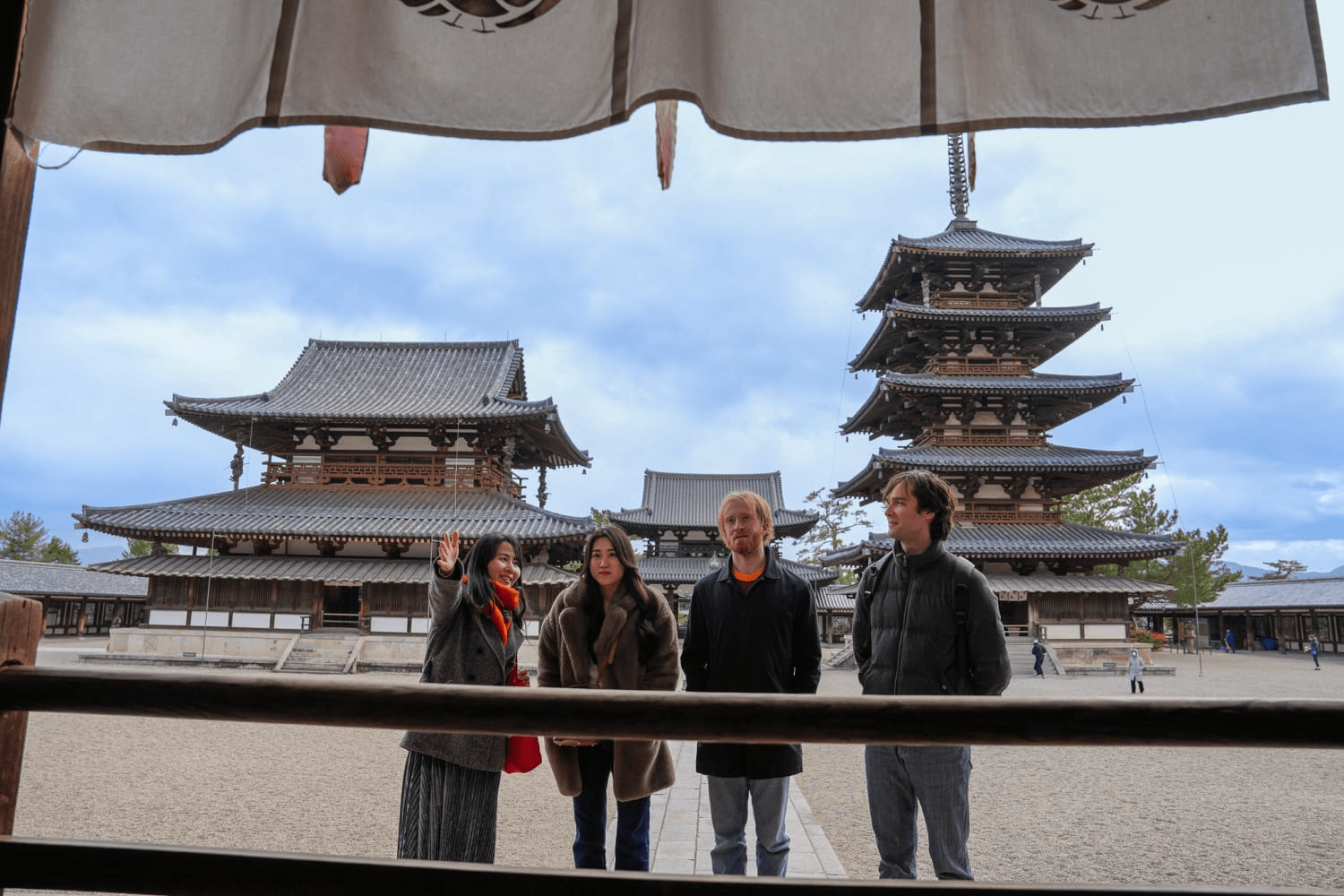
With a guidance from a local guide, you can enjoy winter events in Kyoto more!
Check the guided tours below if you're interested.
・Ultimate Kyoto Tours Guide 2026: Best Seasonal Experiences for Spring Cherry Blossoms, Summer Festivals, Autumn Foliage & Snowy Landscape
Jonangu Shrine Nanakusa-gayu Day
Source:Souda Kyoto Ikou
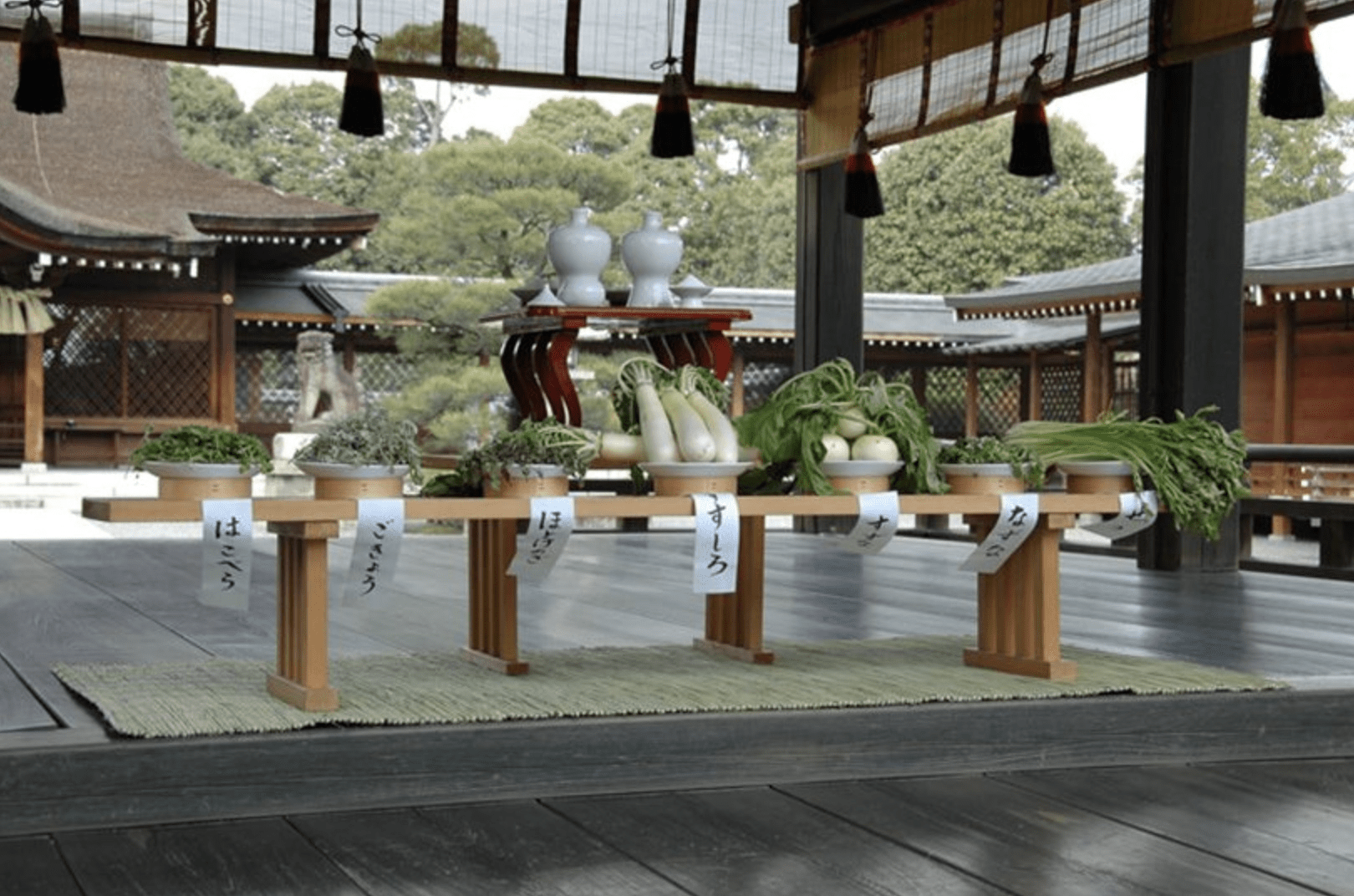
At Jonangu Shrine, a special event is held where visitors can enjoy Nanakusa-gayu (seven-herb rice porridge) while praying for good health and protection from illness.
On the day, the seven spring herbs are first offered before the deity, and prayers are made for the health and longevity of worshippers. Afterward, Nanakusa-gayu cooked with these seven herbs is served to visitors.
The porridge has a gentle saltiness with a soft aroma of young greens, warming the body during the cold season. I have come to look forward to enjoying this Nanakusa-gayu after worship as one of my winter pleasures.
Many people visit seeking Nanakusa-gayu, and the shrine grounds are filled with the lively atmosphere of early spring.
【What are the Seven Spring Herbs?】
- seri (Japanese parsley)
- nazuna (shepherd's purse)
- suzuna (turnip)
- suzushiro (daikon radish)
- hotokenoza (henbit)
- gogyō (cudweed)
- hakobera (chickweed)
<Information>
Date: February 11, 2026
Access: 15-minute walk from Takeda Station on the Subway or Kintetsu Railway
Admission: Nanakusa-gayu 500 yen
Website: https://www.jonangu.com/
Sanzen-in Temple Hatsuuma Daikon-daki
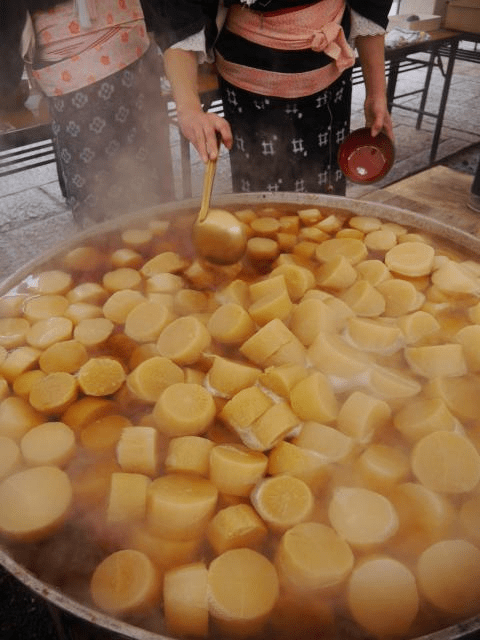
At Sanzen-in Temple, "Daikon-daki (daikon stew)" is held every year in early February.
The daikon radishes, organically grown in local Ohara fields, are blessed during the temple's fire ritual before being slowly simmered in large cauldrons. On the day, the stew is served to worshippers, and the custom of Daikon-daki is to partake of this daikon while wishing for health and good fortune throughout the year.
Every year during this season, I make it a point to visit Sanzen-in Temple first thing in the morning (around 9:00 AM). Ohara is colder than central Kyoto, and early mornings are quite chilly. However, the daikon I receive after putting my hands together in prayer in the quiet temple grounds is the most deeply satisfying.
If you want to experience special winter hospitality unique to Kyoto, please try the "Daikon-daki" at Sanzen-in Temple during this Kyoto event in February 2026.
<Information>
Date: February 7–11, 2026
Access: 10-minute walk from "Ohara" Kyoto Bus stop
Admission: 700 yen
Website: https://www.sanzenin.or.jp/index.html
Yotsugi Jizō-son Taisai Grand Festival
Source:Souda Kyoto Ikou
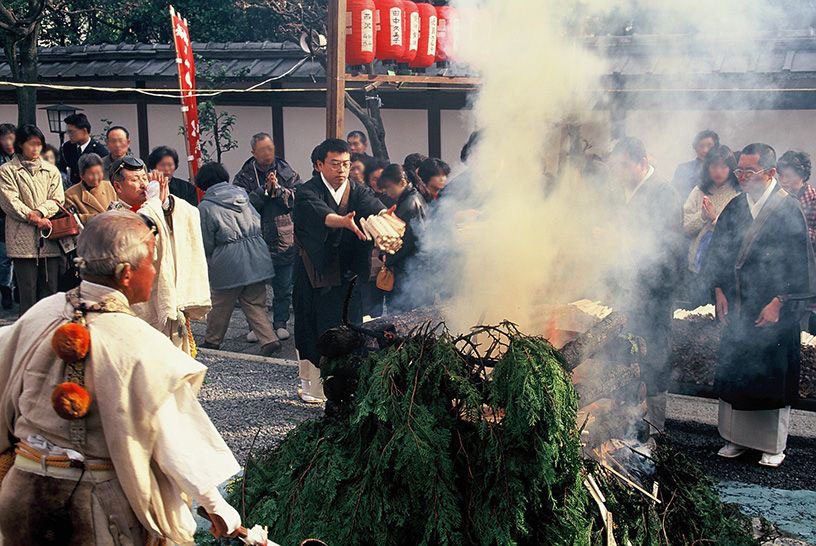
At Jōtoku-ji Temple, the "Yotsugi Jizō-son Taisai" is held every year on February 8.
The Jizō enshrined on the temple grounds (a Buddhist deity who watches over children and families) has long been revered for prayers related to conception, safe childbirth, blessed heirs, and family business prosperity.
This day is called "Ichiyoku-nichi Kudoku-bi," a special day believed to bestow the merit equivalent to one hundred million days in a single day.
During the religious service, prayers and fire rituals are conducted by monks, and worshippers put their hands together in prayer. On the temple grounds, takoyaki (octopus balls), hot dogs, and kasu-jiru (a warm soup made with sake lees) are served free of charge.
Rather than being a large-scale event aimed at tourists, this is a local annual observance where community members gather.
If you want to experience the warm, local atmosphere, please join this Kyoto event in February 2026.
<Information>
Date: February 8, 2026
Access: 2-minute walk from "Kawaramachi-Gojo" stop on Kyoto City Bus lines 4, 7, or 205
Admission: Free
Website: https://tusyoji.wixsite.com/tusyojinokai/yotugijizou
Natural Attractions in Kyoto in February 2026
February in Kyoto is a charming season where you can feel the arrival of spring amidst the harshness of winter.
The charm of Kyoto at this time is that you can enjoy the contrasting natural expressions of snow landscapes and early-blooming plum blossoms simultaneously.
Snow Landscapes
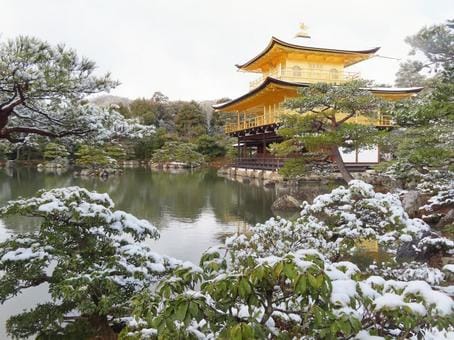
From January to early February, it sometimes snows in Kyoto. While it doesn't snow every day, if you're lucky, you might see Kyoto wrapped in a silver world.
In particular, the snow scenes of famous temples and shrines like Kiyomizu-dera and Kinkaku-ji are spectacular.
The view from the stage of Kiyomizu-dera covered in white snow is like another world. Walking on snow-covered stone pavements and exploring the quiet precincts gives you a strange feeling as if time has stopped.
I can't forget the snow scene at Kinkaku-ji either. The sight of the golden pavilion shining in the white silver garden is truly a spectacular view.
On snowy days, Kyoto shows a completely different face from usual. Even usually crowded tourist spots are enveloped in silence when covered in snow, giving a deeper flavor.
While it might be difficult to plan a trip specifically for snowy days, if it snows during your stay, I recommend you go out. Walking through the snow-covered streets and temples of Kyoto will surely become a lifetime memory.
However, it gets very cold on snowy days, so make sure to dress warmly. Also, be careful when walking as the roads can be slippery.
If you are interested in Kinkakuji, check the article below! I summarized in more details and how I felt there.
sena kanda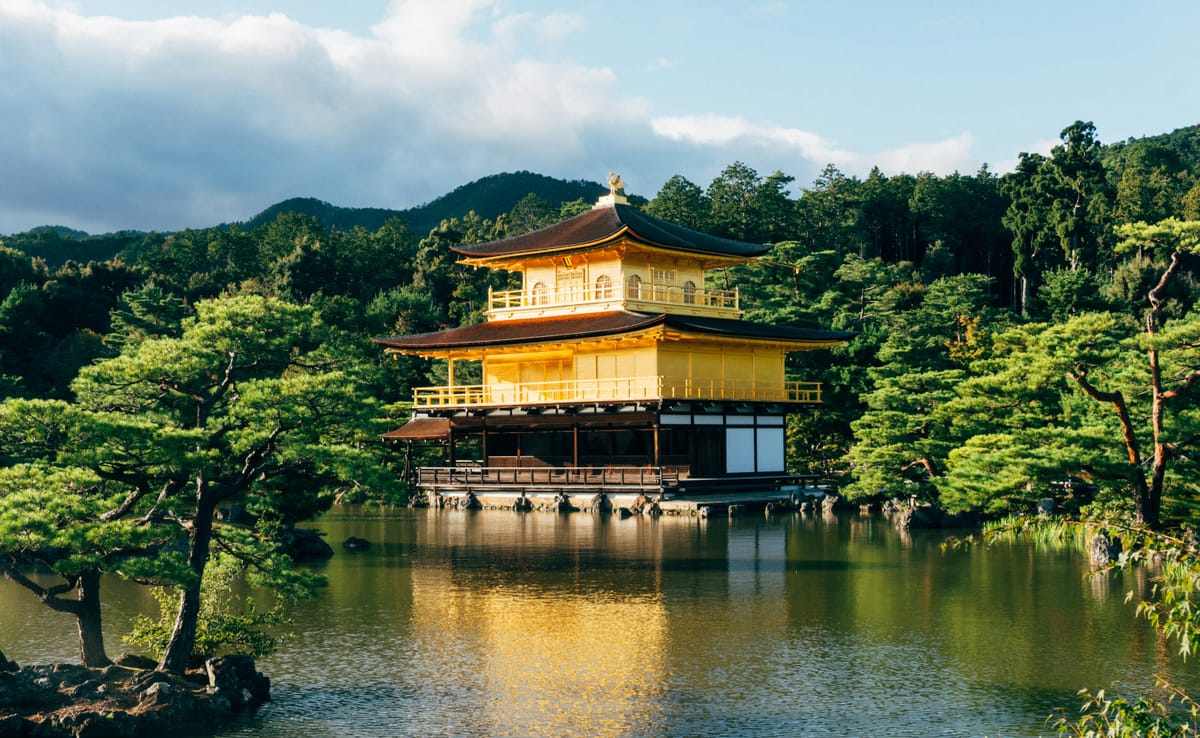
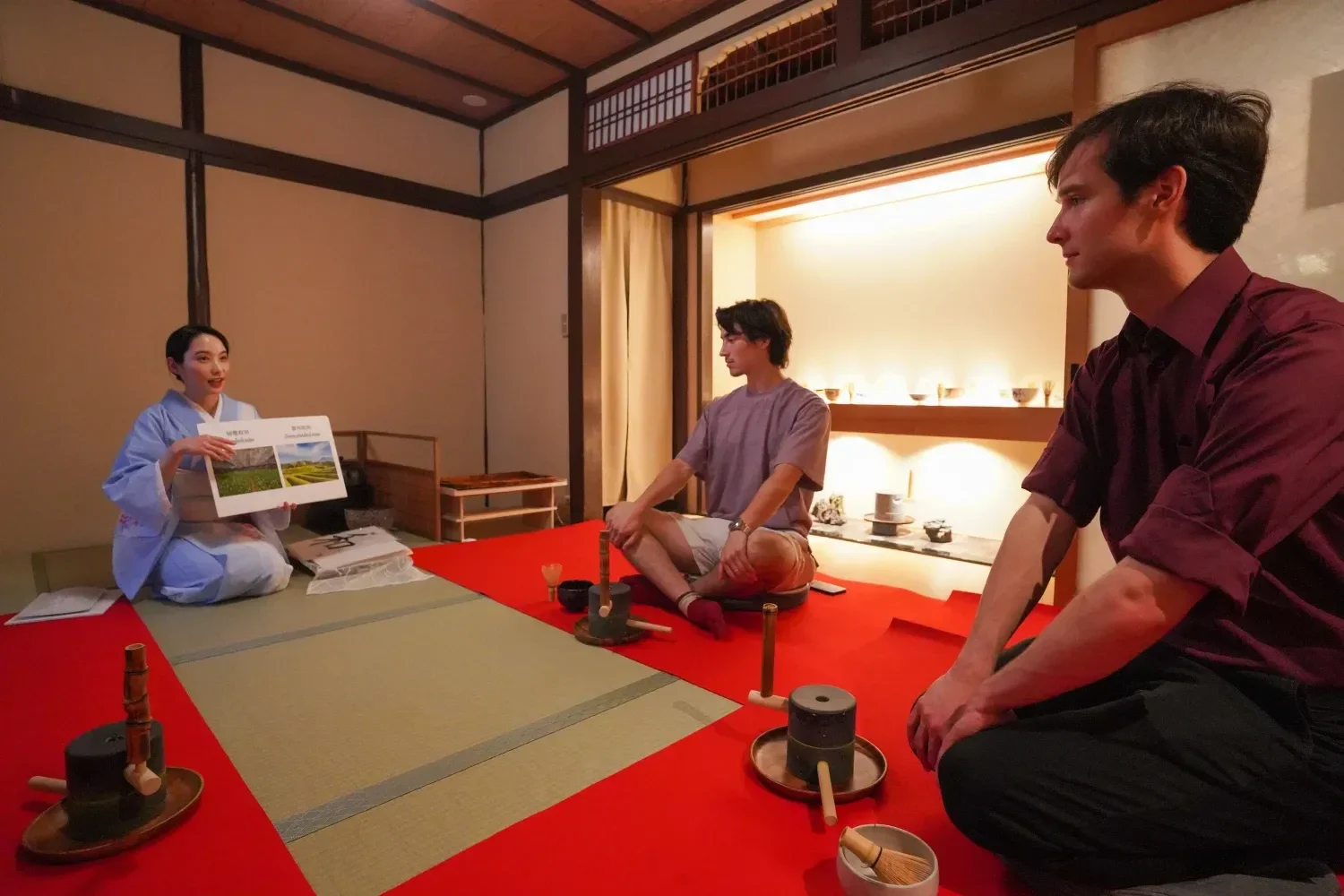
February is the perfect time to fully experience the traditions of Kyoto, a city renowned for its historical significance. If you want to dive deeper into Kyoto's traditions, we recommend booking a Magical Trip tour in advance.
On these tours, knowledgeable guides who are experts in Kyoto's culture will show you the highlights and must-see events.
Plus, by gaining a deeper understanding of Kyoto's traditions and culture during the tour, you'll be able to appreciate the rest of your time in Kyoto even more.
・Kyoto Tea Ceremony & Kiyomizu-dera Temple Walking Tour
・Kyoto Gion Tea ceremony & Wabi-sabi Walking Tour
Weeping Plum Blossoms at Jonangu Shrine (Mid-February 2026)
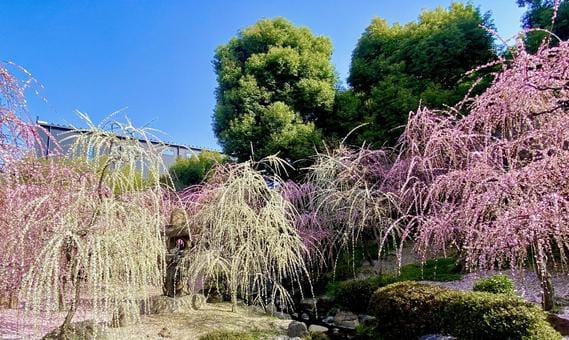
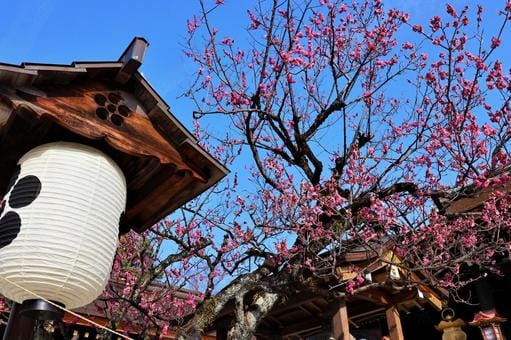
In mid-February in Kyoto, plum blossoms begin to bloom, heralding the arrival of spring amidst the winter cold. Among them, the weeping plum blossoms at Jonangu Shrine are particularly beautiful and have become one of my annual pleasures.
Jonangu Shrine is famous for its "weeping plum blossoms," and the "Weeping Plum and Camellia Festival" is held for about half a month from mid-February every year. The sight of over 150 plum trees and over 400 camellia trees in full bloom is spectacular.
When I first saw the weeping plum blossoms at Jonangu Shrine, I was captivated by their beauty. The sight of white and pink plum blossoms blooming in a weeping manner, as if snow or cherry blossoms were falling towards the ground, is indescribably beautiful.
Walking through the garden filled with the scent of plum blossoms makes you forget the winter cold. Also, the red flowers of camellias blooming alongside the plum blossoms create a colorful landscape.
However, there is a 1,000 yen fee to enter the plum blossom garden. But considering its beauty, I feel it's well worth the price.
The weeping plum blossoms at Jonangu Shrine are one of Kyoto's hidden gems that make you feel the transition from winter to spring.
<Information>
Date: Around mid-February 2026
Access: Get off at Takeda Station on the Kyoto Municipal Subway Karasuma Line, take Kyoto City Bus South 3 or Special South 3 (bound for Jonangu) from Takeda Station West Exit for about 10 minutes, get off at Jonangu Higashiguchi bus stop, and walk about 5 minutes
Admission: 1,000 yen
Website
Plum Blossom Festival at Kitano Tenmangu Shrine (February 25, 2026)
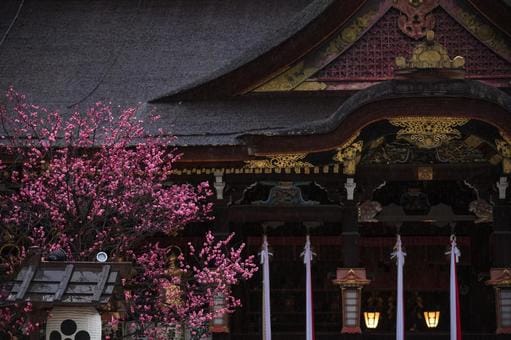
The Plum Blossom Festival at Kitano Tenmangu Shrine is known as a beautiful festival that is a feature of winter in Kyoto.
This festival is a plum-related event associated with Sugawara no Michizane, who is enshrined at Kitano Tenmangu Shrine. Because Michizane loved plums very much, we offer sweets and other items with plum blossoms.
On the day of the festival, the shrine precincts are filled with the scent of plum blossoms and crowded with many worshippers. The sight of people in kimono coming and going amidst the blooming plum blossoms is like a scene from a historical drama.
What's particularly impressive is the tea ceremony by geishas and maikos, which is set up from around 10:00 AM. The sight of geishas and maikos in their gorgeous kimonos elegantly preparing tea is spectacular.
The use of the tea ceremony costs 3,000 yen, but I feel it's worth it as it's not easy to meet geishas and maikos. The time spent enjoying tea with geishas and maikos while admiring the plum blossoms is truly a luxurious experience unique to Kyoto.
If you visit Kyoto in February 2026, I recommend visiting Kitano Tenmangu Shrine on this special day.
<Information>
Date: February 25, 2026
Access: From Kyoto Station, take Kyoto City Bus Line 50 for about 35 minutes and get off at "Kitano Tenmangu-mae". It's right there. From the Gion area, I recommend taking the Keihan Electric Railway to Demachiyanagi Station, then taking Kyoto City Bus Line 203 for about 20 minutes and getting off at "Kitano Tenmangu-mae"
Admission: 3,000 yen (for tea ceremony participation)
Website
Two Recommended Tours to Fully Experience Kyoto
Here are two special tours by MagicalTrip that let you fully experience Kyoto's charm.
Kyoto Night Foodie Tour
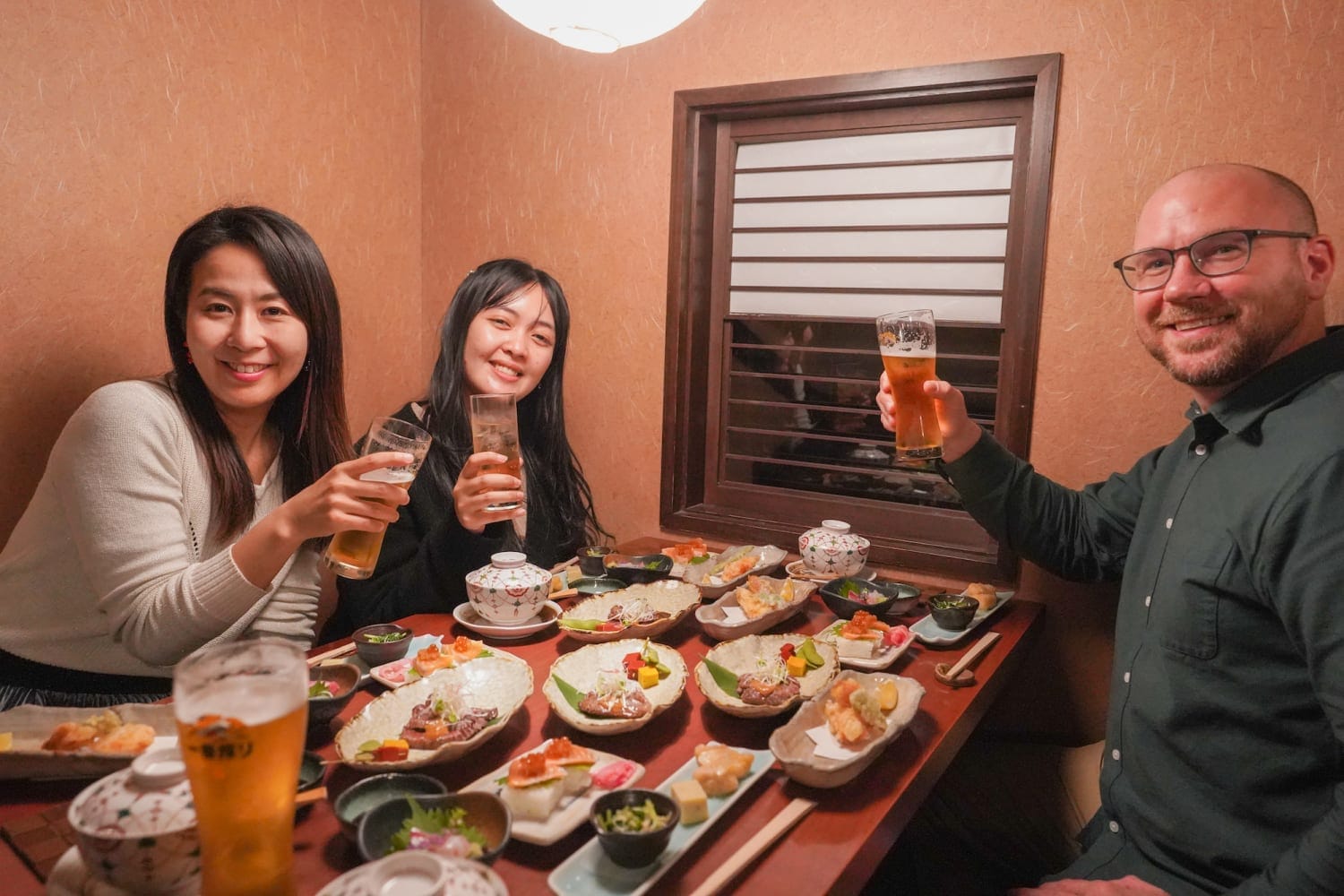
This popular evening food tour ranked 6th on TripAdvisor in 2024. For $136.80, you'll spend 3 hours visiting 3 carefully selected establishments in the Pontocho and Gion districts.
From traditional dishes like Kyoto vegetables and yuba to desserts, each restaurant offers a full course with drinks included (choice of 3 types of local sake tasting or soft drinks).
The tour includes a stroll through Gion's atmospheric townhouses and tea house districts, with the possibility of encountering maiko (apprentice geisha) if you're lucky. With detailed explanations from an English-speaking guide, you'll deepen your understanding of Japanese food culture. Vegetarian options are available (fish stock used), but vegan and gluten-free options are not accommodated.
Photos taken during the tour will be emailed to you later, and cancellation is free up to 24 hours in advance. Additional orders are possible at the final establishment.
For more details: Kyoto Night Foodie Tour
4.5-hour Kyoto Historical Highlights Bike Tour with UNESCO Zen Temples
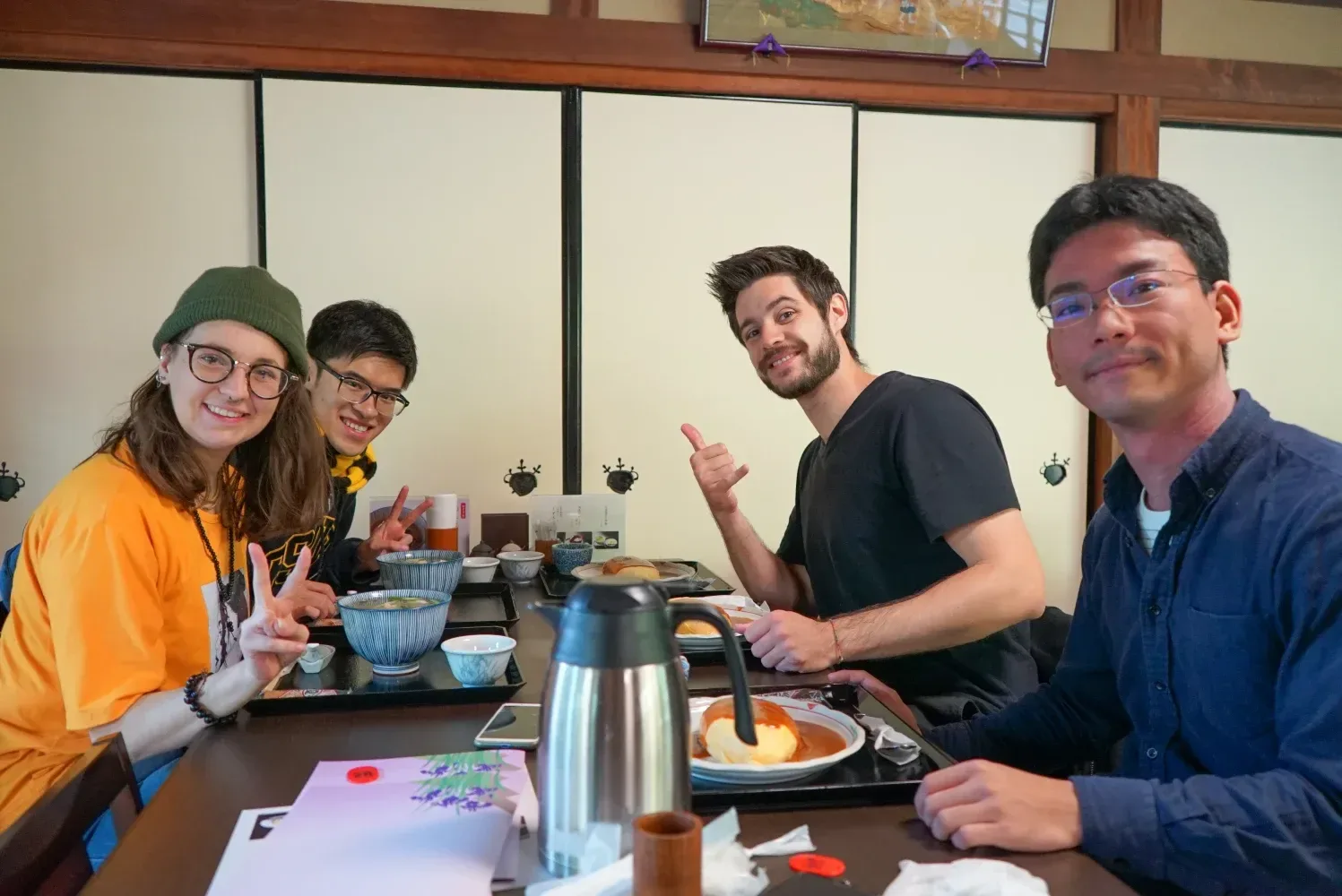
This small-group bicycle tour with an English-speaking guide is available for $82.08. The tour efficiently covers major temples including UNESCO World Heritage sites Kennin-ji and Nanzen-ji. Includes a traditional Kyoto cuisine lunch in a traditional Japanese house (vegetarian options available with advance notice).
The approximately 12.6km course includes local favorites like cycling along the Kamo River. Rental bicycle, helmet, and insurance are included, and no experience is necessary for those 150cm or taller. Tour photos will be sent afterward, and full refunds are available for cancellations made 24 hours in advance.
For more details: 4.5-hour Kyoto Historical Highlights Bike Tour with UNESCO Zen Temples
These two tours offer different attractions - nighttime food culture and historical exploration - and provide perfect experiences for those wanting to touch the essence of Kyoto in limited time. Please consider taking these tours!
February in Kyoto is a charming season where you can feel the arrival of spring amidst the harshness of winter.
The scenery woven by traditional events passed down from ancient times and the beauty of nature, such as snow landscapes and plum blossoms, provides a special experience that cannot be tasted elsewhere.
When visiting Kyoto in February 2026, I recommend preparing warm clothing and comfortable walking shoes, and leisurely walking through the city.
You'll surely be able to fully enjoy the unique charms of winter in Kyoto, such as temples and shrines enveloped in silence, Kinkaku-ji reflecting in the snow landscape, and gardens filled with the scent of plum blossoms!
Check more about guided tours to make your winter trip to Kyoto more memorable.
・Ultimate Kyoto Tours Guide 2026: Best Seasonal Experiences for Spring Cherry Blossoms, Summer Festivals, Autumn Foliage & Snowy Landscape