Kyoto in April 2026: Cherry Blossoms, Traditional Festivals & Hidden Temple Openings
I updated this article because a lot of new information has been released in preparation for the April event. This article summarizes the latest information as of January 2026.
I've also included highlights of various locations and events in Kyoto based on my extensive exploration of Kyoto's tourist attractions from August to October, when I thoroughly investigated the city.
Kyoto is a city where complex layers of culture and history intertwine, making it challenging for tourists to fully appreciate its historical sites and culture on their own.
At the end of the article, I'll also share my experiences with two tours I took during my visit to Kyoto between August and October: the "Kyoto Night Foodie Tour" (Ranked #6 among all tours on TripAdvisor in 2024) and the "4.5-hour Kyoto Historical Highlights Bike Tour with UNESCO Zen Temples," including their highlights and key features!

Introduction
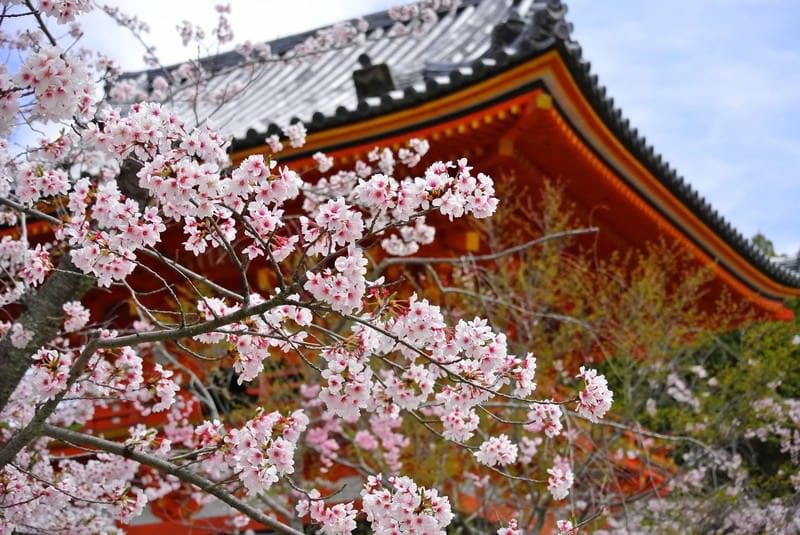
April in Kyoto is a season when cherry blossoms bloom magnificently, enveloping the entire city in spring splendor. With daytime temperatures around 20 degrees Celsius, and nights just slightly cool, it provides ideal conditions for sightseeing.
Kyoto, the ancient capital with over a thousand years of history, is dotted with historic temples and shrines, preserving the quintessentially Japanese atmospheric streetscapes to this day. The city's charm lies in its ability to engage all five senses through traditional Japanese culture and seasonal changes. The sight of people in traditional Japanese attire walking about, creating an elegant atmosphere, is a scene unique to Kyoto.
In April, visitors can enjoy not only the harmony between beautiful cherry blossoms and historic streetscapes but also traditional festivals and performing arts passed down through generations.
This article will provide detailed information about April highlights in Kyoto, including basic information, event schedules, and access to venues.
2026 Year-round Event Schedule in Kyoto↓
・Kyoto: List of Events & Festivals for 2026
 Takashi Nakadomari
Table of Contents
-Traditional Events in Kyoto for April 2026
-Natural Attractions in Kyoto's April
A Special Experience Only Available in Kyoto in April
Miyako Odori
Source:Official website
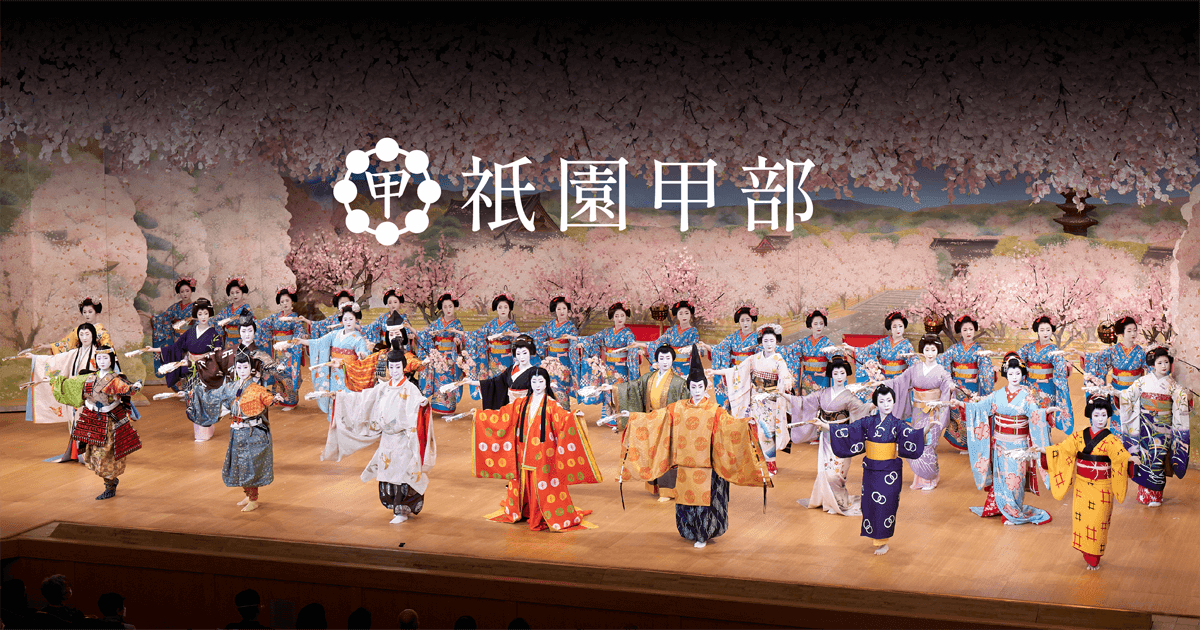
Miyako Odori is a signature spring dance performance in Kyoto, featuring all the geiko and maiko of Gion Kobu. Since its inception in 1872, this Kyoto event in April 2026 continues to be performed annually throughout the month of April.
The greatest highlight is its scale and splendor. Gion Kobu is the largest geisha district, with the most geiko and maiko, resulting in scenes with many performers on stage. The layering of movement and color creates overwhelming brilliance and power.
When the curtain call "Yo–i–ya–sa!" echoes as the signal for the performance to begin, scenes flow seamlessly from start to finish once the curtain rises.
The spring scenery created by the gorgeous costumes and stage design is so vivid that the lingering impression stays with you long after the performance ends. This is the perfect show for those who want to truly feel they have "experienced spring in Kyoto."
<Information>
Dates: April 1 – April 30, 2026
Access: 8-minute walk from Keihan Railway "Gion-Shijo" Station Exit 6 / 10-minute walk from Hankyu Railway "Kyoto-Kawaramachi" Station Exit 1
Admission: 7,000 yen (First-class seat with tea ticket) / 6,000 yen (First-class seat) / 4,000 yen (Second-class seat)
Website: https://miyako-odori.jp/miyako/
Kyo Odori
Source:Kyoto Miyagawacho
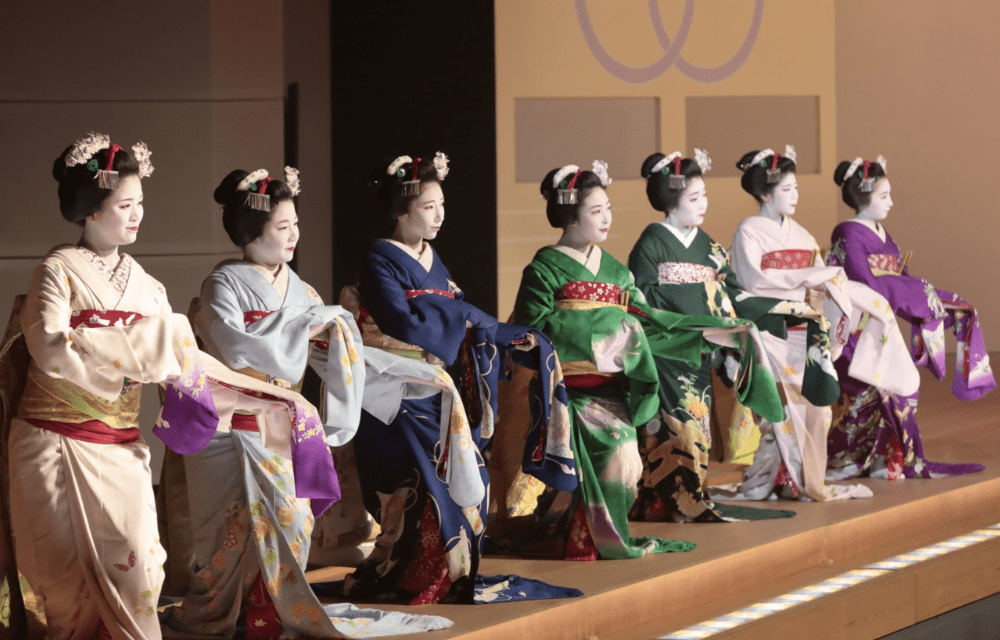
Kyo Odori is a spring performance featuring all the geiko and maiko of Miyagawa-cho. Said to be second in scale only to Gion Kobu, it has an excellent reputation for its high level of stage production. Since its beginning in 1950, this Kyoto event in April 2026 has been performed every spring for over 70 years.
Many programs are based on classical works and Kyoto's seasonal traditions. You can feel the essence of Kyoto not only through the dance movements but also through the color coordination of costumes and the elaborate stage design.
The performance concludes with the famous "Miyagawa Ondo," where all the geiko and maiko dance together for the finale. I was so moved by this finale—the moment when the lights suddenly brightened, combined with the splendor and power of the group dance—that I nearly shed tears.
If you have ever wanted to see Kyoto's traditional performing arts, please consider adding Kyo Odori to your itinerary.
<Information>
Dates: April 4 – April 19, 2026 (No performance on April 13)
Access: 7-minute walk from Keihan Railway "Gion-Shijo" Station Exit 1 / 10-minute walk from Hankyu Railway "Kyoto-Kawaramachi" Station Exit 1
Admission: To be determined
Website: https://www.miyagawacho.jp/kyoodori/
Nijo Castle Cherry Blossom Viewing Tea Ceremony
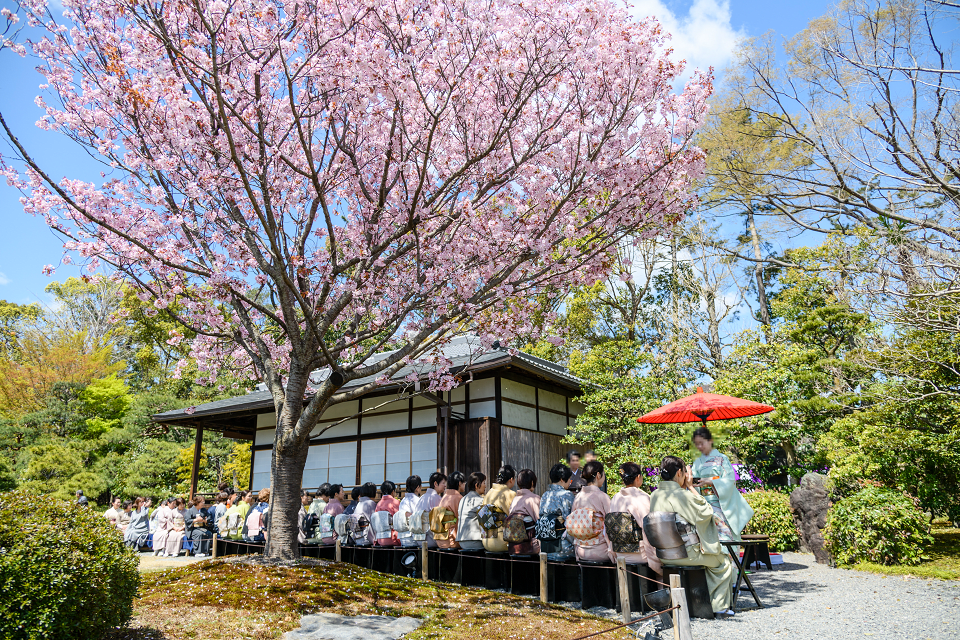
The cherry blossom viewing tea ceremony at Nijo Castle is a cultural experience unique to spring, held in Seiryu-en Garden on the north side of the castle grounds. You can enjoy tea in a tranquil garden that is not usually open to the public.
Nijo Castle has approximately 380 cherry trees, and in spring, the combination of the castle's historic landscape and cherry blossoms creates a special seasonal atmosphere.
Many visitors come dressed in kimono, and you can feel a refined Japanese elegance at the venue.
On fine days, outdoor seating may be arranged, allowing you to enjoy tea while gazing at cherry blossoms in full bloom and petals dancing in the breeze.
You do not need to worry if you are unfamiliar with tea ceremony etiquette. While it may seem intimidating, this is not a setting where strict adherence to detailed protocols is required. Simply follow the guidance, and if you are unsure about something, quietly observe and imitate those around you.
<Information>
Dates: April 9, 2026 (tentative)
Access: Directly connected to Subway Tozai Line "Nijojo-mae" Station
Admission: To be determined
Website: https://nijo-jocastle.city.kyoto.lg.jp/event/kanou2025/ (Reference: 2025)
Oharame Matsuri
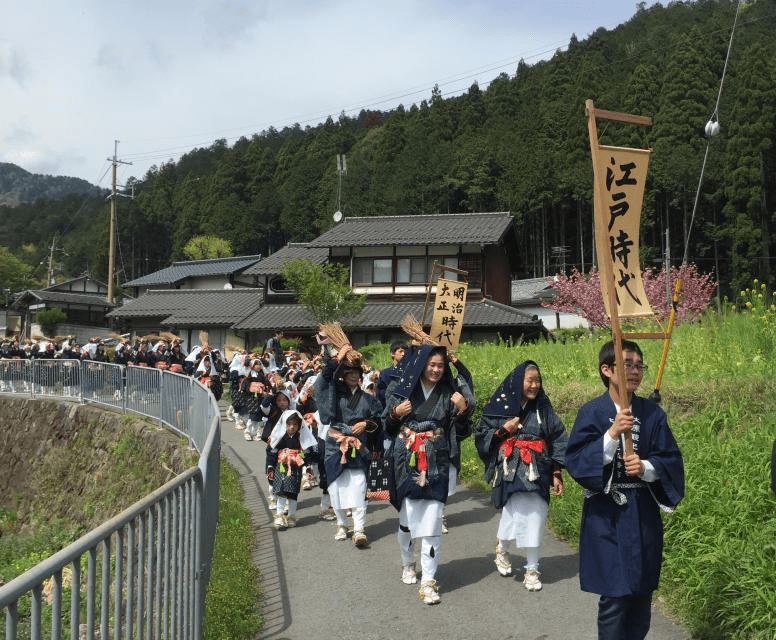
Oharame Matsuri is a spring event that preserves the tradition of the "Oharame," historically associated with Ohara, Kyoto.
Oharame refers to the women who carried brushwood and firewood on their heads and walked to Kyoto's town to sell them.
The highlight is the Oharame Historical Parade held during the festival period. In this procession, participants wear costumes recreating the traditional attire and walk along the rural mountain paths.
I once watched this parade from the roadside. The Oharame costumes were fascinating, and the sight of women carrying loads on their heads left a lasting impression. I also noticed they wore waraji (traditional straw sandals), and I thought it must be quite challenging to walk about 2 kilometers in them.
This Kyoto event in April 2026 is suited for those who want to feel the history of daily life and the atmosphere of the land, rather than seeking lively festivities.
<Information>
Dates: Mid-April to mid-May 2026 (Exact dates to be determined)
Access: From JR Kyoto Station, take Kyoto Bus Route 17 or Express 17 to "Ohara" bus stop / From Subway Kokusaikaikan Station, take Kyoto Bus Route 19 or Express 17 bound for Ohara to "Ohara" bus stop
Admission: Free
Website: https://kyoto-ohara-kankouhosyoukai.net/info/4065/ (Reference: 2025)
Traditional Events in Kyoto for April 2026
Heian Shrine Sakura Oto Yo (Cherry Blossom Sound Night)
Source:PR TIMES
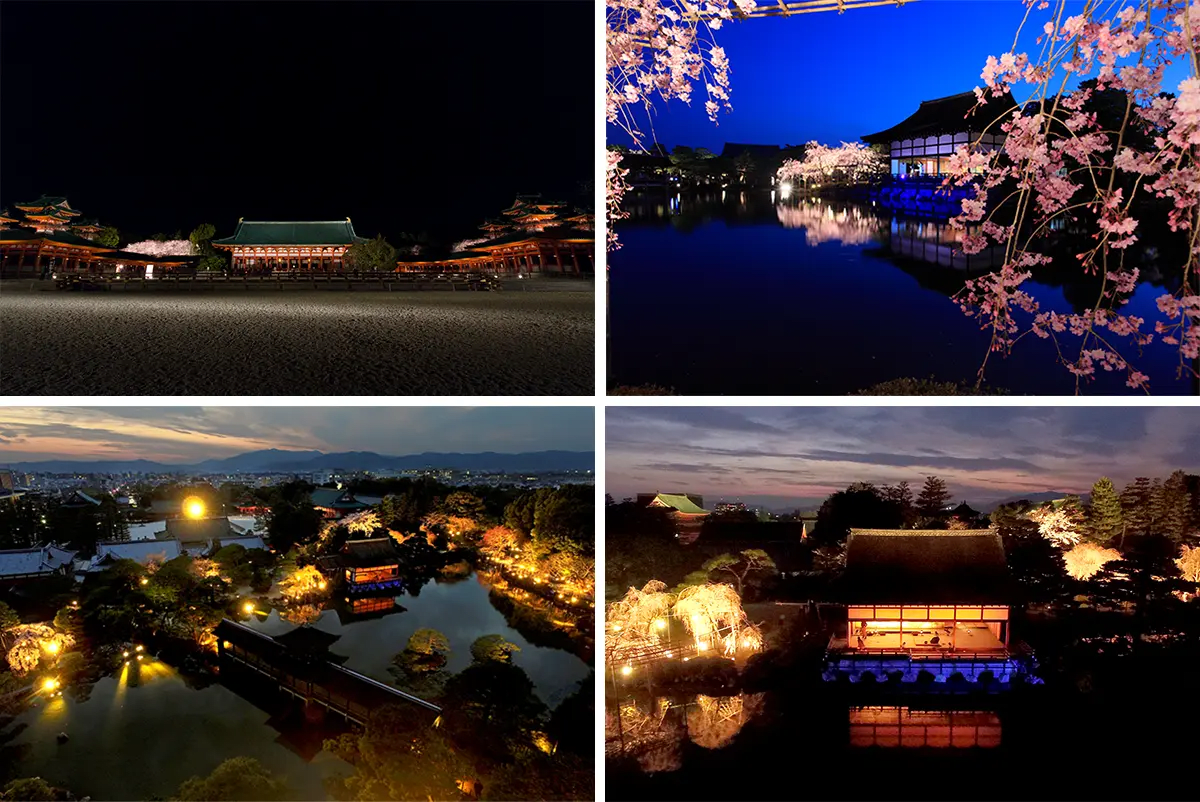
Heian Shrine Sakura Oto Yo is a magical event where illuminated cherry blossoms and music create an enchanting atmosphere against the backdrop of Heian Shrine's majestic architecture.
This event has no fixed seating. Participants are free to stroll through the gardens while enjoying music and admiring the lit-up Toshinen Kihinkan building and cherry blossoms. The musical performances vary each day, ranging from Gagaku (ancient Japanese court music) to contemporary music by various artists.
This event has been gaining attention as a new form of cultural experience that beautifully merges a Japanese garden dating back to 794 with contemporary music.
While the 2026 schedule is yet to be announced, interested visitors should check the official website for updates.
<Information> (Based on 2024 details)
Dates: April 3-7, 2024
Access:
- From JR Kyoto Station: Take City Bus Route 5 to "Okazaki Park Museum/Heian Shrine Mae," then 5-min walk north
- From Hankyu Kyoto-Kawaramachi Station: Take City Bus Routes 5, 46, or 32 to "Okazaki Park Museum/Heian Shrine Mae" or "Okazaki Park ROHM Theatre Kyoto/Miyakomesse Mae," then 5-min walk north
- From Subway Tozai Line Higashiyama Station: 10-min walk
- From Keihan Kamogawa Line Sanjo Station or Jingu Marutamachi Station: 15-min walk
Admission:
- Advance tickets: Adults ¥3,000 / Elementary school students ¥2,500
- Same-day tickets: Adults ¥4,000 / Elementary school students ¥3,500
Website: https://pr.kyoto-np.jp/event/benishidare/
Taikō Cherry Blossom Viewing Parade (Daigo-ji Temple)
Source:Official website
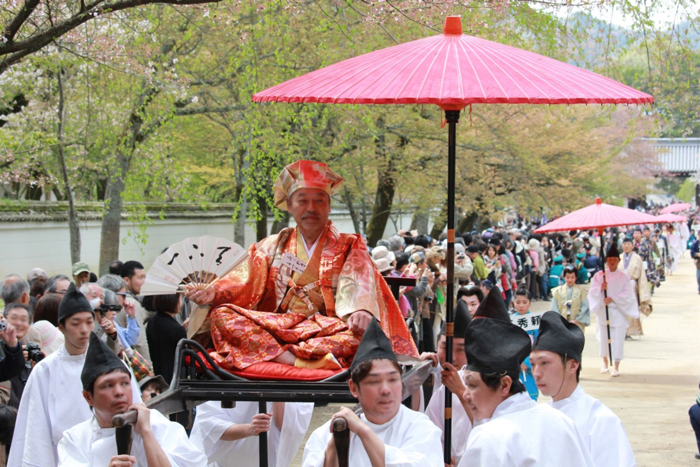
Daigo-ji Temple has long been known as a famous cherry blossom spot, called "The Blossoms of Daigo." In spring, cherry blossoms bloom throughout the temple grounds, creating one of Kyoto's most spectacular cherry blossom viewing scenes.
The Taikō Cherry Blossom Viewing Parade is an event based on the grand cherry blossom viewing banquet held by Toyotomi Hideyoshi at Daigo-ji Temple in the spring of 1598.
Toyotomi Hideyoshi was a military commander who unified Japan in the late 1500s and was the most powerful figure in Japan at that time.
Following this historical event, participants dressed as Toyotomi Hideyoshi, his family members, and retainers parade through the temple grounds in gorgeous period costumes.
With cherry blossoms and historic buildings as the backdrop, the procession advances, making you feel as if you are witnessing a scene from history unfold before your eyes. This is a must-see Kyoto event in April 2026.
<Information>
Dates: April 12, 2026
Access: 10-minute walk from Subway Tozai Line "Daigo" Station
Admission: Free
Website: https://www.daigoji.or.jp/event/detail2.html
Kamo Kyokusui-en (Stream-Side Poetry Party)
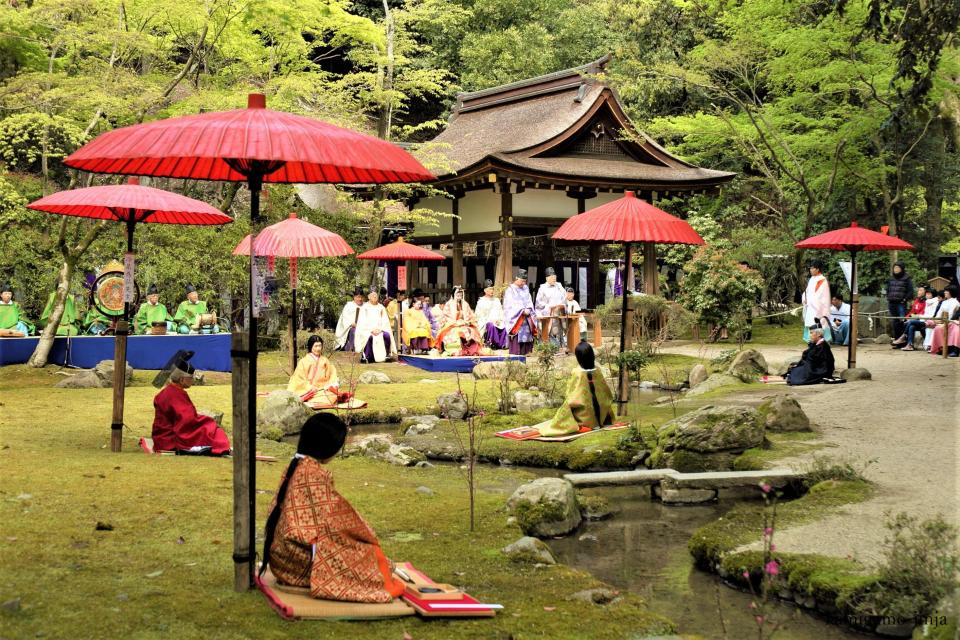
The Kyokusui no en held at Kamigamo Shrine is an elegant cultural event that preserves ancient traditions.
Kyokusui no en is a refined game where participants must compose a Waka poem before a floating sake cup passes in front of them, after which they drink the sake. Waka is a traditional Japanese poetry form consisting of 31 syllables in a 5-7-5-7-7 pattern.
Set in the shrine's garden, participants dressed in Junihitoe (traditional twelve-layered kimono) compose Waka poems accompanied by Gagaku (ancient Japanese court music). The scene creates an elegant atmosphere that transports viewers back 1,200 years in time.
This is a rare opportunity to witness one of Japan's most graceful traditional cultural ceremonies up close.
<Information>
Date: April 13th
Access:
- From Kyoto Station: Take City Bus Route 4 to "Kamigamo Shrine Mae" (immediate access)
- Or take City Bus Route 9 to "Kamigamo Miyazono-bashi," then 5-min walk
- From Kyoto Municipal Subway Kitayama Station: 15-min walk
Admission: ¥1,000 (includes tea ticket / limited to first 150 visitors)
Website: https://www.kamigamojinja.jp/202304051195/
Seiryu-e (Blue Dragon Ceremony)
Source:Official website
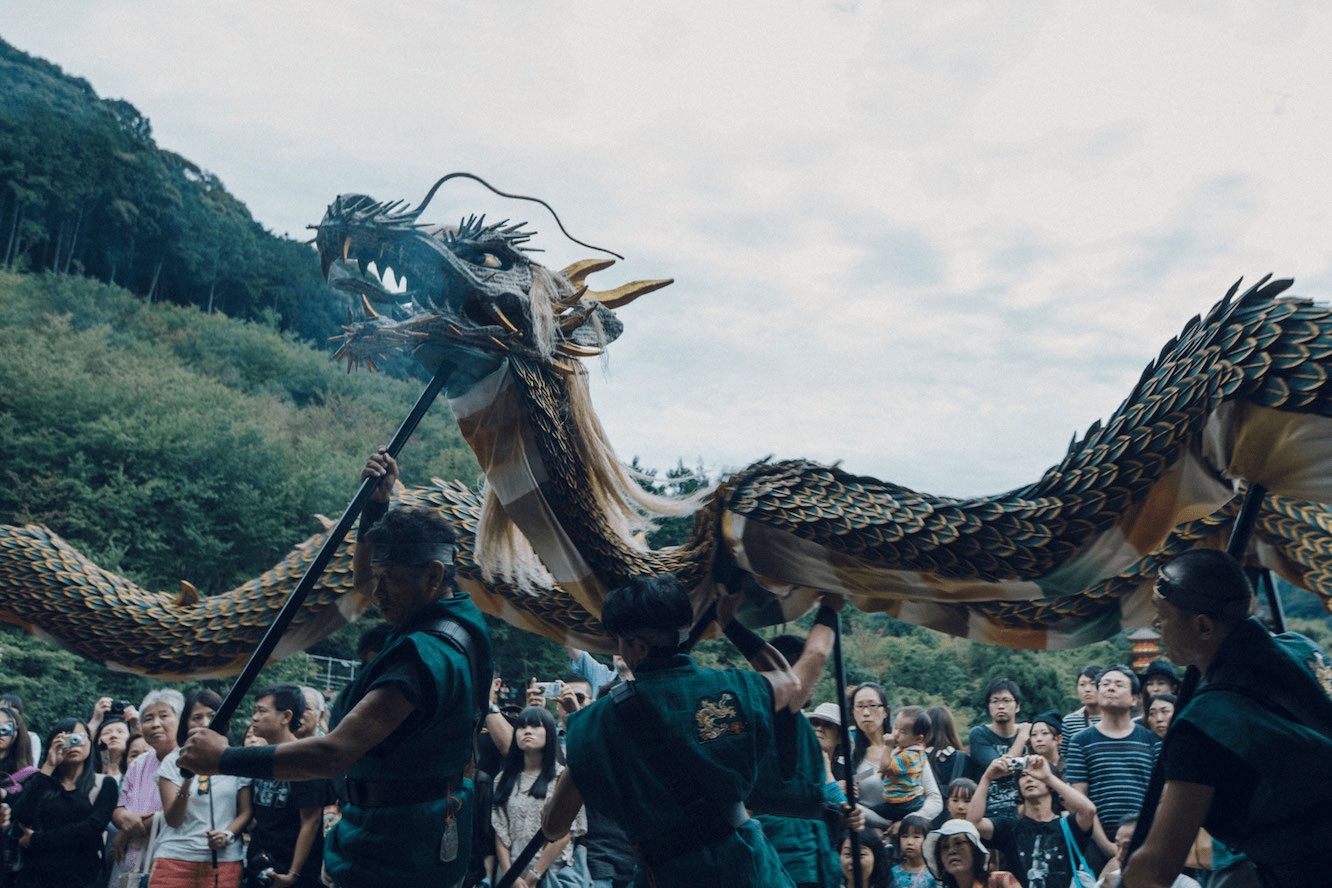
The Seiryu-e at Kiyomizudera is a solemn Buddhist ceremony held to pray for local protection and removal of misfortune. During this event, an approximately 18-meter-long blue dragon, along with people dressed as monks and deities, parades through the temple grounds and surrounding areas.
Particularly spectacular is the sight of the blue dragon descending the stone steps of Kiyomizudera, creating an impressive scene as if a real dragon were descending from the heavens. On Kiyomizuzaka Slope, the blue dragon sometimes dramatically enters shops accompanied by powerful chants. When I observed last year, the dragon's head suddenly appeared at a storefront, drawing excited gasps from tourists.
Don't miss this chance to experience up close the powerful presence of the blue dragon and the mystical atmosphere woven with Japanese traditional beauty.
<Information>
Date: April 3, 2026
Access:
- From Kyoto Station: Take City Bus Routes 206 or 100, get off at "Gojozaka," 10-minute walk
- From Hankyu Railway "Kyoto-Kawaramachi Station" or Keihan Railway "Gion-Shijo Station": Take City Bus Route 207, get off at "Kiyomizumichi," 10-minute walk
Admission: Free
Website: https://www.kiyomizudera.or.jp/event/seiryu_e.php
Imamiya Yasurai Festival
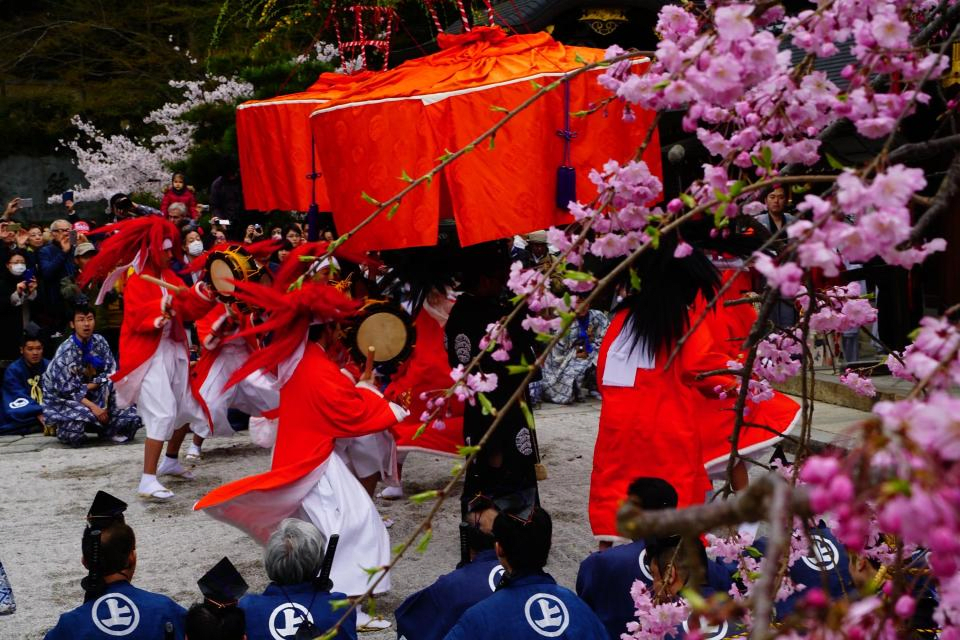
The Imamiya Yasurai Festival, recognized as one of Kyoto's Three Unique Festivals and designated as an Important Intangible Folk Cultural Property, is held on the second Sunday of April. Dancers wearing magnificent red costumes and red or black wigs parade through the streets while playing gongs and drums.
The festival's centerpiece is the "Hanagasa," a decorative umbrella approximately 180 centimeters in diameter. It is believed that passing under this umbrella ensures good health for the year ahead. As a result, the festival draws large crowds of visitors eager to pass under the umbrella. When I tried it myself, it was quite challenging due to the number of people.
Don't miss the opportunity to experience this precious cultural tradition.
<Information>
Date: April 13, 2026
Access:
- From Kyoto Station: Take Karasuma Subway Line to "Kitaoji Station" (bound for Kokusaikaikan) → Take City Bus 1, North 8, 12, M1, 204, 205, or 206 to "Funaokayama," then 7-minute walk north
- Or 20-minute walk west from Kitaoji Station Exit 1
Admission: Free
Website: http://www.imamiyajinja.org/
Goō Grand Festival (Goō Shrine)
Source:Official website
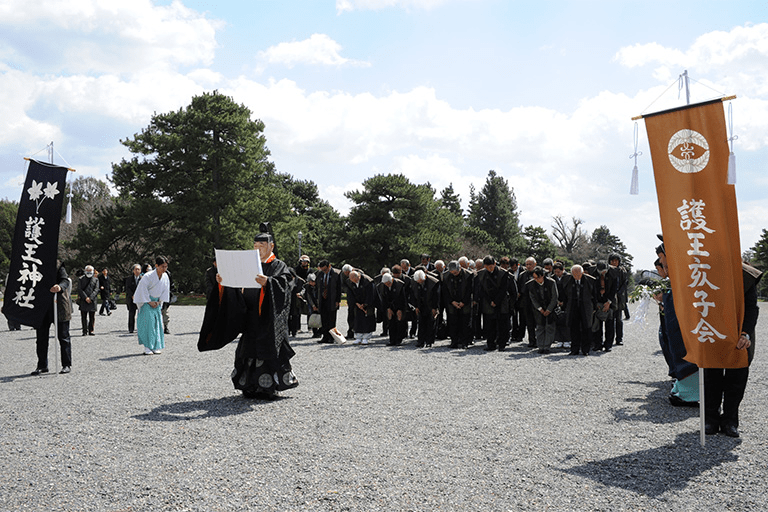
The Goō Grand Festival is a Shinto ceremony honoring Wake no Kiyomaro, the enshrined deity at Goō Shrine, located west of Kyoto Imperial Palace. Wake no Kiyomaro was a court official active in the 8th century who played a crucial role in protecting the Emperor's position.
On the day of the festival, a ceremony is held at the main hall starting at 11:00 AM, but viewing inside is not permitted. However, if you are within the shrine grounds, you can sense the sounds and atmosphere of the ritual, feeling a quiet tension and Japanese essence.
From around 12:00 PM, a procession of Shinto priests and local residents takes place. While not flashy, this Kyoto event in April 2026 offers a unique experience of quietly observing a ceremony that has continued as part of Kyoto's community traditions.
This event is suited for those who want to step away from tourist crowds and feel Kyoto's spiritual heritage and local atmosphere.
<Information>
Dates: April 4, 2026
Access: 7-minute walk from Subway Karasuma Line "Marutamachi" Station
Admission: Free
Website: https://www.gooujinja.or.jp/annai/saiji.html
Fudō Grand Festival (Sanzen-in Temple)
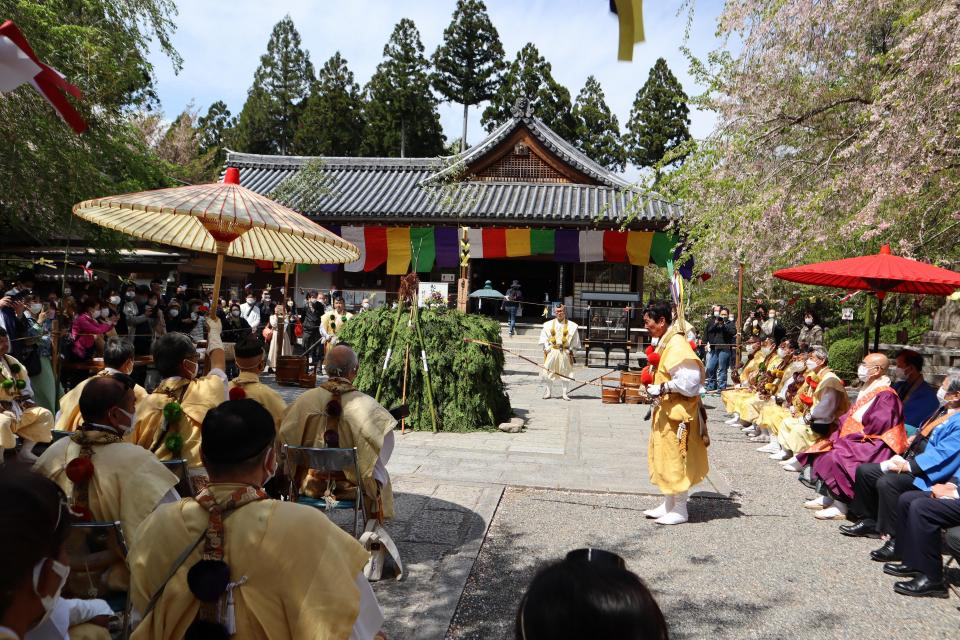
The Fudō Grand Festival is a spring event held at Sanzen-in Temple.
The main highlight is the special public viewing of the hidden principal image: the Gilt Standing Statue of Fudō Myōō, which is not normally available for worship.
I had the opportunity to see it, and the moment I stepped inside the hall, I felt the air become taut. The golden Fudō Myōō has such an intense presence that it feels as if he is staring back at you—it is truly breathtaking.
Spring arrives a little later in Ohara than in central Kyoto. During this time, the area is enveloped in fresh green foliage and vibrant rhododendrons. Depending on the year, wild mountain cherry blossoms may still remain, and simply walking through the temple grounds allows you to feel the transition of seasons.
Please enjoy the encounter with this hidden Buddhist statue and the beautiful scenery unique to this time of year. This is a remarkable Kyoto event in April 2026.
<Information>
Dates: Mid-April to mid-May 2026 (Exact dates to be determined)
Access: 15-minute walk from Kyoto Bus Route 17 "Ohara" bus stop
Admission: 700 yen
Website: https://www.sanzenin.or.jp/index.html
Matsuo Taisha Shinkosai Festival
Source:Official website

The Shinkosai at Matsuo Taisha is a traditional Shinto ritual where the deity of Matsuo visits the parishioners' towns to purify and protect the local community.
The biggest highlight of this Kyoto event in April 2026 is watching seven mikoshi (portable shrines) being loaded onto boats one after another and crossing the Katsura River. The sight of the ornate mikoshi gliding quietly across the water feels almost mystical.
After crossing the river, the mikoshi are carried by large groups of bearers who move forward with powerful chants. The scene of all seven mikoshi lined up after crossing the river is truly spectacular.
I accompanied one of the mikoshi all the way to its otabisho (temporary resting place for the deity). It takes an entire day, but you can experience the powerful chants, the energy of the crowd, and see how the local people welcome the mikoshi—making it incredibly rewarding to watch.
This is a recommended event for anyone who wants to experience a Kyoto festival up close.
<Information>
Date: April 26, 2026 (tentative)
Access: Get off at "Matsuo Taisha-mae" on Kyoto City Bus Route 28
Admission: Free
Website: https://www.matsunoo.or.jp/event/event04/
Matsuo Festival (Shinko Festival)
Source:Kyoto City Foundation for Protection of Cultural and Tourist Resources
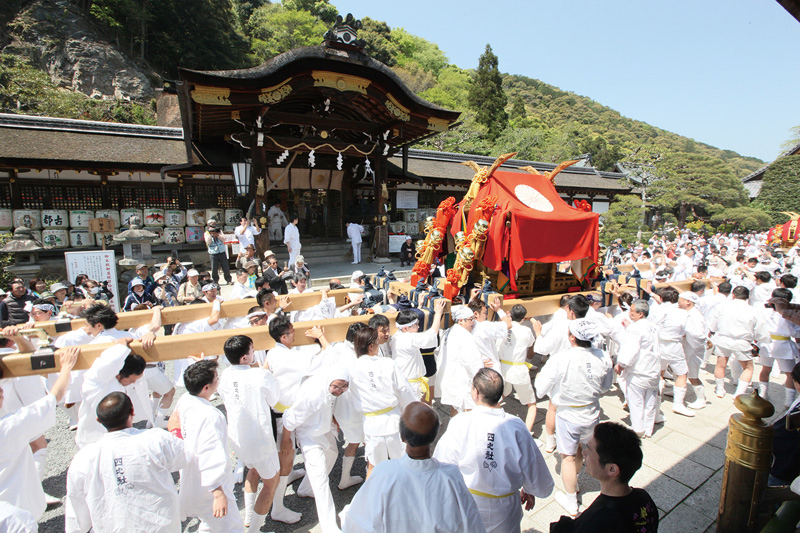
The Matsuo Festival, held at Matsuo Taisha Shrine, is a significant annual event at this shrine known as the deity of sake brewing. In 2025, the Shinko Festival was held on April 20th, followed by the Kanko Festival on May 12th. During the festival, six Mikoshi (portable shrines carrying deities) parade through the town.
My recommended viewing spot is the riverbank near Katsura Ohashi Bridge. Here, you can closely observe both the divine and majestic Mikoshi being transported across the river by boat and the Mikoshi being carried by men participating in the festival with their powerful chants.
You can fully experience the weight of tradition and the festival's energy while feeling the crowd's enthusiasm and admiring the beautiful decorations of the Mikoshi up close.
<Information>
Date: April 20th
Access: From Kyoto Station:
- Take subway to "Shijo" → Transfer to Hankyu Kyoto Line → Transfer at "Katsura Station" to Hankyu Arashiyama Line → Get off at "Matsuo Taisha Station"
- Take Kyoto City Bus Route 28 → Get off at "Matsuo Taisha-mae"
- Take Kyoto Bus Routes 73 or 83 → Get off at "Matsuo Taisha-mae"
Admission: Free
Website: https://www.matsunoo.or.jp/
April is one of the most pleasant months in Japan, with wonderful spring weather. Even at night, you can comfortably go out wearing just a light jacket.
This time of year is perfect for hiking tours where you can explore Kyoto while experiencing its rich climate.
By joining a Magical Trip hiking tour, you can walk through charming traditional spots that most tourists don't know about, accompanied by local guides who are deeply familiar with the famous sites.
・Fushimi Inari Hidden Hiking Tour
・Kyoto Arashiyama Bamboo forest & Garden Half-Day Walking Tour
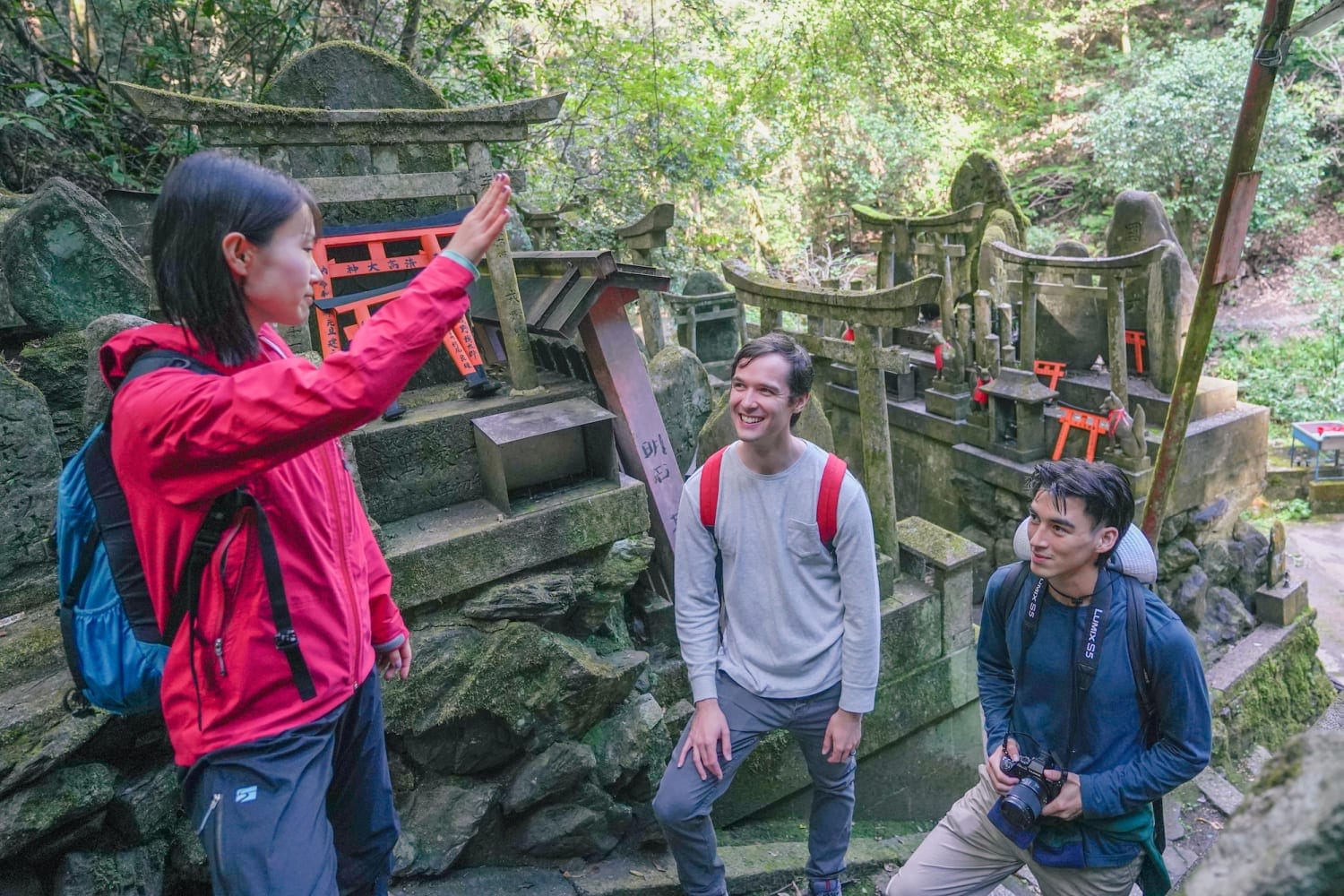
You can learn more about the spring tradition in Kyoto with the local guide.
Check the tours below if you're interested.
・Ultimate Kyoto Tours Guide 2026: Best Seasonal Experiences for Spring Cherry Blossoms, Summer Festivals, Autumn Foliage & Snowy Landscape
Natural Attractions in Kyoto in April
Late March marks the prime cherry blossom viewing season. For 2026, we've created a complete guide to Kyoto's cherry blossoms to help more tourists fully enjoy the highlights!
Kyoto's Cherry Blossoms: 10 Best Sakura Spots 2026
 sena kanda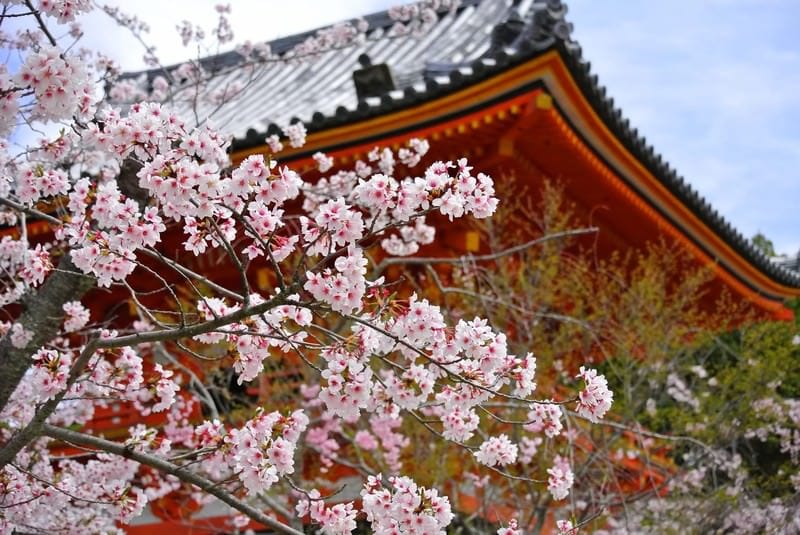
I introduce 10 must-visit spots, focusing on famous locations known for their cherry blossoms. We also explain three spots where you can see beautiful collaborations between Kyoto's traditional buildings and stunning cherry blossoms.
Cherry Blossom Festival
Source:Official website
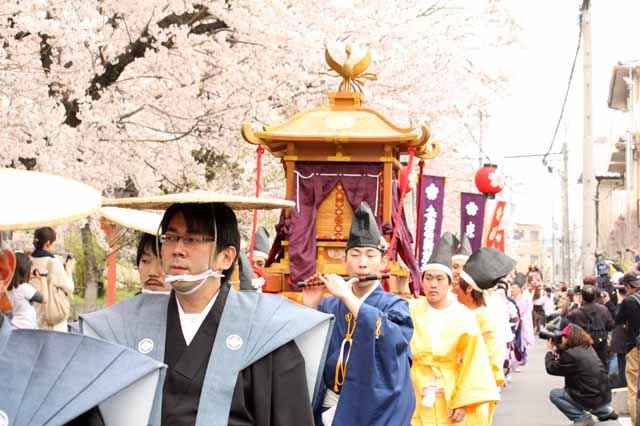
The Okasai, the cherry blossom festival at Hirano Shrine, is a traditional spring celebration in Kyoto. This shrine has been known as one of Kyoto's premier cherry blossom viewing spots for over 1000 years.
The Okasai is held annually on April 10th, beginning with sacred ceremonies in the morning. The festival's main event is the magnificent historical parade that starts in the afternoon. About 200 participants dressed in Heian period (794-1185) royal costumes slowly parade through Kyoto's streets for two and a half hours.
The scene resembles Kyoto from a thousand years ago, featuring gorgeously dressed Palace Ladies, Samurai Warriors in armor, and beautifully decorated Festival Floats (dashi).
Taking photos with the cherry blossoms will guarantee you a quintessentially Japanese beautiful picture.
<Information>
Date: April 10th
Access: From Kyoto Station:
- Take City Bus Routes 205 or 50 → Get off at "Kinugasa-ko-mae" → 3-min walk north
- From Keifuku Railway Kitano Line "Kitano-hakubaicho Station" → 7-min walk north
- From Keihan "Sanjo Station" → Take City Bus Route 10 to "Kitano-hakubaicho"
→ 7-min walk north
→ Take City Bus Route 15 to "Kinugasa-ko-mae" → 3-min walk north
- From Hankyu Kyoto Line "Kawaramachi Station" → Take City Bus Route 205 to "Kinugasa-ko-mae" → 3-min walk north
Admission: Free
Website: https://www.hiranojinja.com/home/gaiyo/nentyugyoji/okasai
Okazaki Cherry Blossom Corridor Ten-stone Boat Cruise
Source:WEATHER NEWS
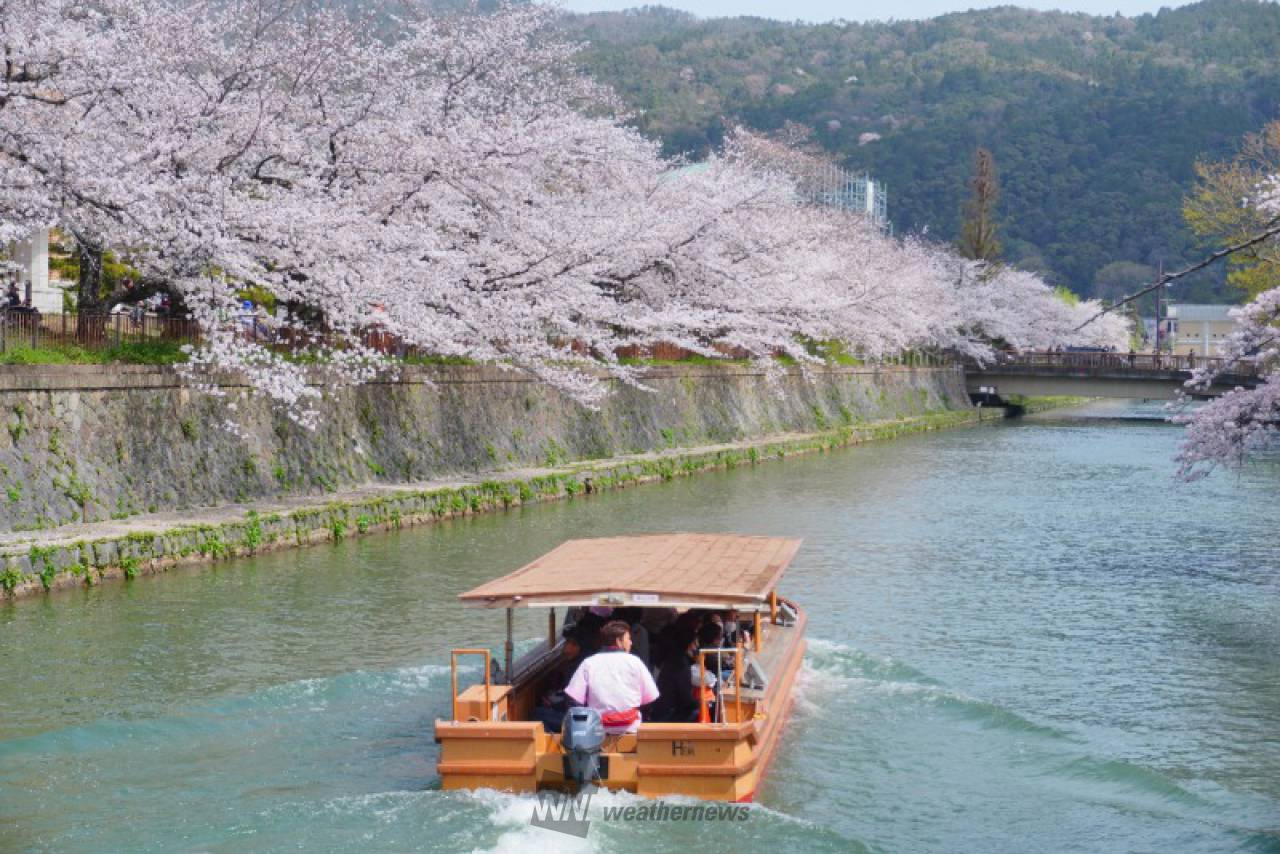
The boats gracefully cruising along the Biwako Sosui (Lake Biwa Canal) are a beloved spring tradition in Kyoto. The Biwako Sosui is a 20-kilometer waterway constructed in 1885 to draw water from Lake Biwa in Shiga Prefecture to Kyoto City.
During this seasonal boat tour, visitors enjoy a 25-minute round trip covering approximately 3 kilometers. From the leisurely moving boat under the blooming cherry blossoms, you can admire the cultural facilities of Okazaki, known as the art district, and the rows of cherry trees from the water's perspective.
I recommend visiting after sunset when you can experience the magical and romantic scenery of illuminated cherry blossom tunnels.
Don't miss this accessible boat journey that offers a uniquely seasonal Japanese atmosphere.
<Information>
Dates: March 20 - April 13, 2026
Access: 7-minute walk from Keage Station on the Subway Tozai Line
10-minute walk from "Okazaki Koen Museum/Heian Jingu-mae" bus stop from Kyoto Station
Admission: Adults (Junior high school and above) ¥2,000
Children (Elementary school) ¥1,000
Infants (3 years and above) ¥500
Website: https://kyoto-tabi.or.jp/
Maruyama Park's Weeping Cherry Tree Illumination
Source:Official website
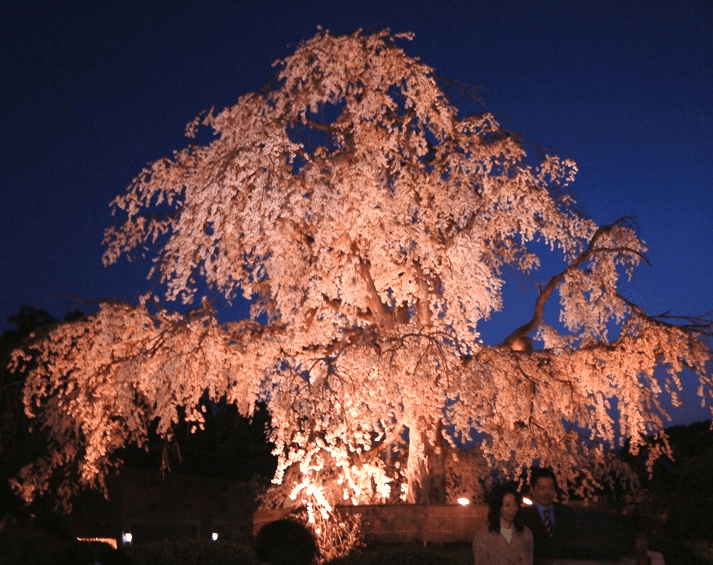
The weeping cherry tree standing in the center of Maruyama Park, known as "Gion no yozakura" (Gion's night cherry blossoms), is Kyoto's premier cherry blossom viewing spot. This magnificent cherry tree creates a majestic atmosphere that deeply moves all visitors.
When illuminated, the impressive 12-meter-tall weeping cherry tree transforms into a breathtaking sight. At night, the addition of traditional bonfire lighting creates an even more profound atmosphere. This weeping cherry tree has been carefully preserved by the 16th generation cherry tree guardian, Sano Toemon.
The walking path connecting the park to Kodaiji Temple and Kiyomizudera is also illuminated, making it perfect for an evening stroll through the historic district while enjoying the night cherry blossoms.
<Information>
Dates: Late March - Early April
Access: Take City Bus Route 206 from Kyoto Station to "Gion" stop
10-minute walk from Gion-Shijo Station on the Keihan Line
14-minute walk from Kawaramachi Station on the Hankyu Line
15-minute walk from Higashiyama Station on the Subway
Admission: Free
Website: https://kyoto-maruyama-park.jp/
Cherry Blossom Viewing (Hanami)
Hanami is a traditional Japanese spring celebration where people enjoy food, drinks, and socializing while appreciating cherry blossoms. Cherry blossoms have been cherished by Japanese people since ancient times as symbols of nature's impermanence and the ephemeral nature of life.
Through Hanami, people share the beauty of nature, feel the changing of seasons, and celebrate together. In modern times, it has become a beloved spring tradition to enjoy bento boxes and sake under the cherry blossoms.
Daigoji Temple
Source:Official website
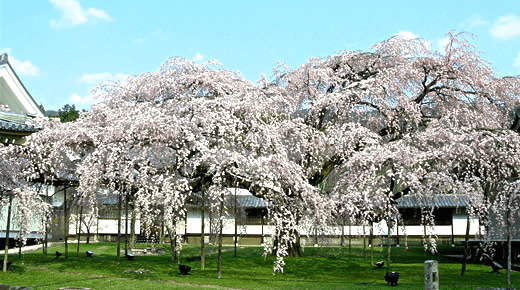
Founded in 874, Daigoji Temple is a historic temple particularly famous for the "Daigo no Hanami," a magnificent cherry blossom viewing party hosted by Toyotomi Hideyoshi, who ruled Japan in the late 16th century.
The scenery created by the combination of the five-storied pagoda (designated as a national treasure and the oldest existing wooden structure in Kyoto) and cherry blossoms presents a quintessentially Japanese landscape. The temple grounds feature approximately 1,000 cherry trees of various species that bloom at slightly different times, allowing visitors to enjoy cherry blossoms over an extended period.
The cherry blossoms at Daigoji Temple have been cherished by imperial family members and nobles throughout history, and their elegant appearance reflects Japanese aesthetics preserved to modern times.
<Information>
Dates: Late March to mid-April (Special viewing opportunities available for April 2026)
Access: 10-minute walk from Exit 2 of Daigo Station on the Subway Tozai Line
Get off at "Daigoji-mae" on Keihan Bus routes 22/22A
Get off at "Daigoji" on Keihan Bus Kyoto Daigoji Line
Admission: Adults: ¥1,800
Junior High/High School Students: ¥1,300
Website: https://www.daigoji.or.jp/flowers/flowers_detail1.html
Ninnaji Temple (Omuro Cherry Blossoms)
Source:Official website
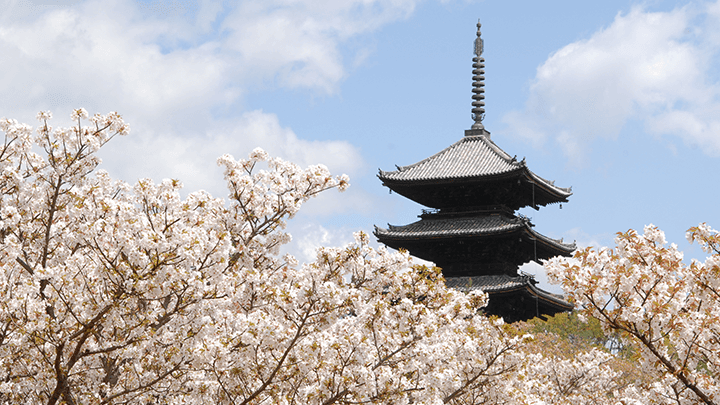
The Omuro Cherry Blossoms at Ninnaji Temple, a World Heritage site, are known for their late blooming and mark the finale of Kyoto's cherry blossom season. The harmony between traditional structures like the Main Sanctuary and five-storied pagoda with the cherry blossoms creates a spectacular view.
Omuro Cherry Blossoms are characterized by their low height, with flowers blooming close to ground level. This unique feature allows visitors to capture photos of the blossoms at eye level rather than looking up.
Visitors can enjoy a leisurely stroll through the temple gardens, taking in the beautiful scenery created by the historic temple and nature.
<Information>
Dates: Early to mid-April (Peak viewing expected in April 2026)
Access: 3-minute walk from Omuro Ninnaji Station on the Keifuku Electric Railroad (Randen)
Direct access from "Omuro Ninnaji" bus stop on City Bus Route 26 from Kyoto Station
Admission: Adults: ¥500
Website: https://ninnaji.jp/cherry_tree/
Toji Temple
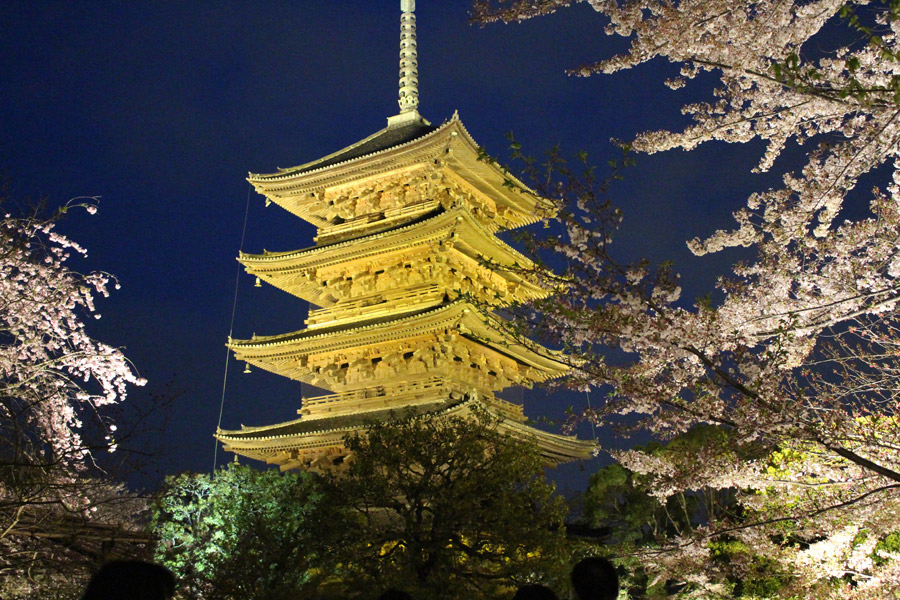
Toji Temple's five-storied pagoda, one of Kyoto's iconic structures, offers a special vista when surrounded by blooming cherry blossoms in spring. Standing approximately 55 meters tall, it is Japan's highest wooden pagoda.
The temple grounds feature various historic buildings including the Main Sanctuary and Lecture Hall interspersed with cherry trees, allowing visitors to enjoy the contrast between the blossoms and historical architecture from different angles. The falling cherry petals create a solemn atmosphere throughout the grounds.
Whether you're a history enthusiast or photography lover, cherry blossom viewing at Toji Temple offers a uniquely Kyoto experience combining culture and scenery.
<Information>
Dates: Late March to early April (Special illumination events planned for April 2026)
Access: 15-minute walk from Kyoto Station Hachijo Exit
10-minute walk from Toji Station
10-minute walk from Toji Station (transfer at Kintetsu-Tambabashi Station)
1-minute walk from "Toji Higashimon-mae" bus stop (City Bus routes 18, 71, 207)
Admission: ¥1,000
Website: https://toji.or.jp/
Join the guided tour and enjoy the hidden spots of cherry blossoms only in April!
・Ultimate Kyoto Tours Guide 2026: Best Seasonal Experiences for Spring Cherry Blossoms, Summer Festivals, Autumn Foliage & Snowy Landscape
Yamabuki Festival (Matsuo Taisha)
Source:Souda Kyoto Ikou
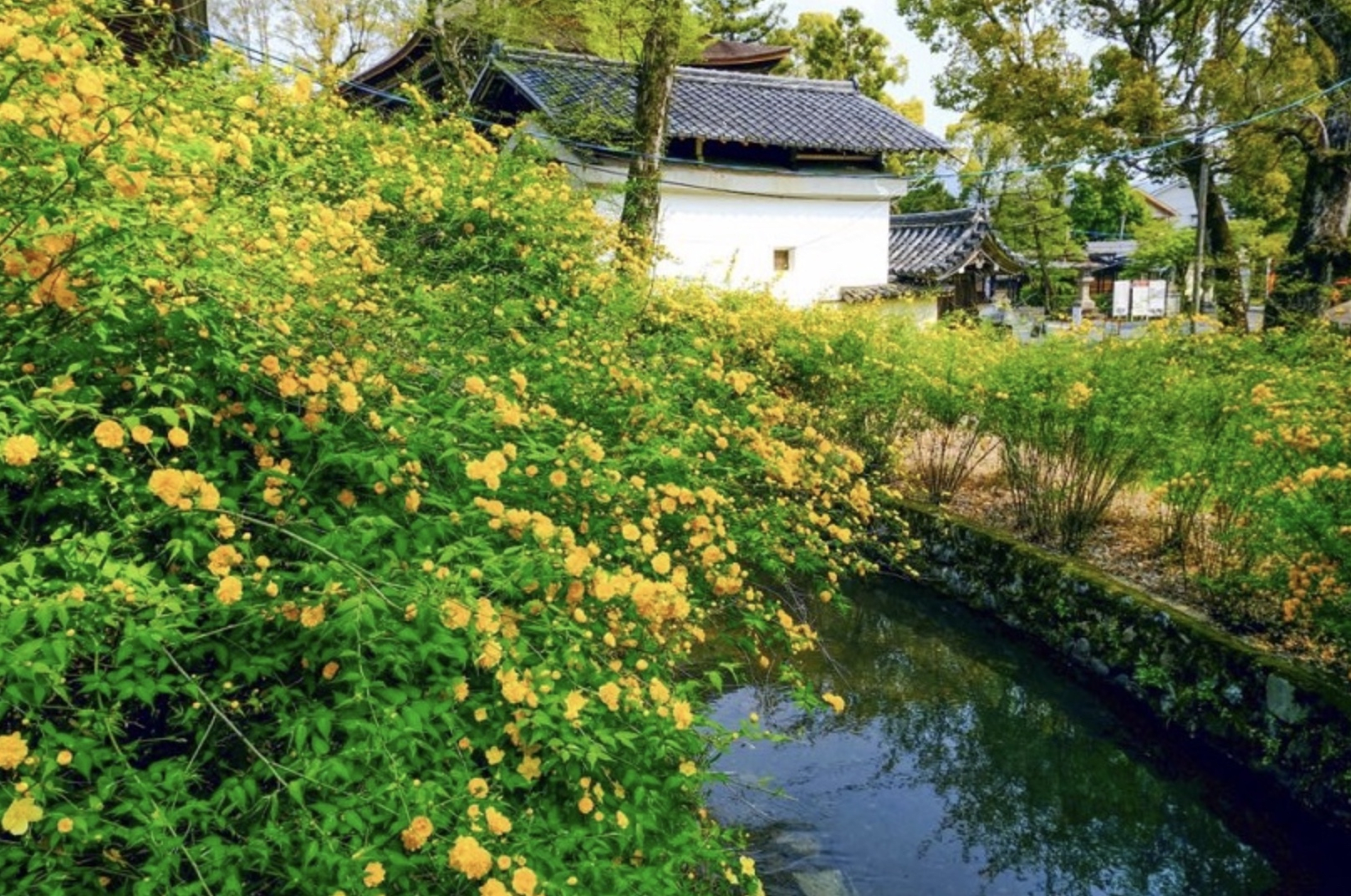
The Yamabuki Festival is a spring flower event held annually at Matsuo Taisha from April to May, heralding the arrival of the flower season. Matsuo Taisha has long been worshipped as the guardian deity of sake brewing, and sake producers from across Japan come to pay their respects.
The main attraction of this Kyoto event in April 2026 is the approximately 3,000 yamabuki (Japanese kerria) flowers blooming throughout the shrine grounds. The golden-yellow flowers line the riverside and approach path, making this one of the largest displays in the Kansai region.
Despite the name "Festival," there are no special ceremonies—the main enjoyment is simply appreciating the flowers at a leisurely pace. For me, the color of the flowers and the sound of the river were enough to feel completely satisfied.
During the festival period, there are also days when local flea markets and the Matsuo Festival take place, so be sure to check the schedule to match your travel itinerary.
<Information>
Date: Early April to early May 2026
Access: Get off at "Matsuo Taisha" Station on the Hankyu Arashiyama Line
Admission: Shrine grounds free; Garden and Shinzokan Hall 500 yen
Website: https://www.matsunoo.or.jp/
Fresh Green Maple Viewing at the Historic Site "Odoi" (Kitano Tenmangu Shrine)
Source:Official website
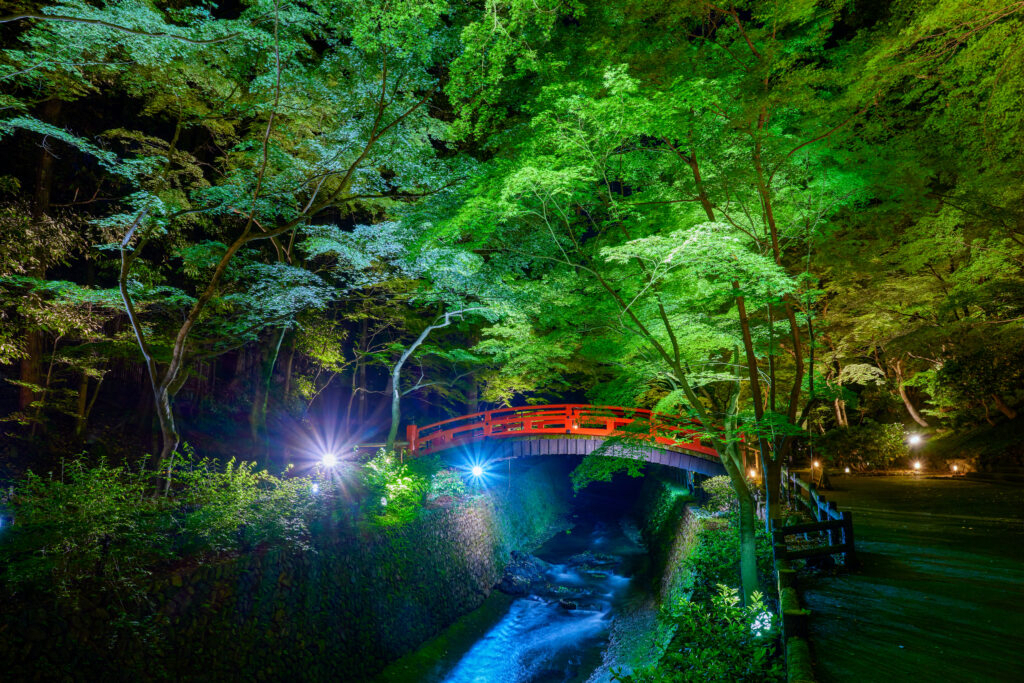
The fresh green maple viewing at the historic site "Odoi" offers a chance to enjoy scenery that incorporates the Odoi—an earthen embankment built long ago to protect Kyoto—within the grounds of Kitano Tenmangu Shrine.
From atop the Odoi, you can look down upon the fresh green maples, while from below, you look up at them. This means that even in the same location, the way light enters and the layers of leaves change, creating a three-dimensional experience of fresh greenery.
I especially recommend the early morning hours. The air is crisp, there are fewer people, and I find the fresh green maples look their most beautiful in the soft light.
Within the garden, as you walk through the groves, you can also enjoy the fresh greenery reflected on the water's surface, the contrast with vermillion bridges, and the dodantsutsuji (Japanese enkianthus) in full bloom.
This is a spot I recommend for anyone who wants to fully savor the Japanese atmosphere during their Kyoto visit in April 2026.
<Information>
Date: Early April to mid-June 2026 (exact dates TBD)
Access: Get off at "Kitano Tenmangu-mae" on Kyoto City Bus; or 5-minute walk from "Kitano Hakubaicho" Station on the Keifuku Railway
Admission: Adults (junior high school and above) 500 yen
Website: https://kitanotenmangu.or.jp/news/%E5%8F%B2%E8%B7%A1-%E5%BE%A1%E5%9C%9F%E5%B1%85-%E9%9D%92%E3%82%82%E3%81%BF%E3%81%98%E5%85%AC%E9%96%8B%E3%81%AE%E3%81%8A%E7%9F%A5%E3%82%89%E3%81%9B/ (Reference: 2025 schedule)
Special Viewing Events in April 2026 Where Usually Closed Spots Open to the Public
Kosho-ji Temple Spring Special Viewing
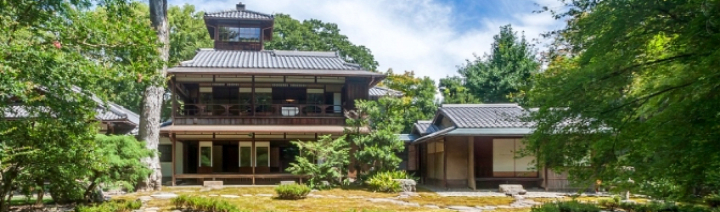
Kosho-ji Temple is a Zen Buddhist temple founded in 1669 that is usually closed to the public, but during spring, it holds limited-time special viewings.
The highlight is a karesansui garden called "Shinwa no Niwa (Garden of Harmony)." Karesansui is a style of Japanese garden that uses white sand, stones, and artificial hills to represent mountains, rivers, and the flow of waves without using water.
In Shinwa no Niwa, four small islands arranged in white sand form a three-dimensional representation of the Japanese character "心" (kokoro, meaning "the heart").
I love sitting on the engawa (veranda) of this temple, gazing at the garden and spending quiet time. Looking at the peaceful scenery naturally deepens my breathing and calms my heart.
This is a hidden gem with few tourists, making it perfect for anyone who wants to experience a quiet side of Kyoto in April 2026.
<Information>
Date: Late April 2026
Access: 10-minute walk from "Nijo" Station on the Tozai Subway Line or JR
Admission: 800 yen; Tea ceremony 700 yen
Website: https://koseiji.kyoto.jp/
Spring Special Opening of Hidden Cultural Properties in Kyoto
Source:Souda Kyoto Ikou
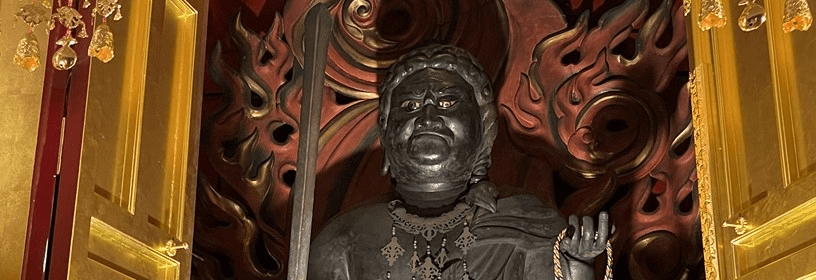
The "Spring Special Opening of Hidden Cultural Properties," held annually in spring in Kyoto, offers limited-time access to temples and cultural properties that are normally off-limits to the public.
The locations and contents vary each year, allowing visitors to view that year's unique cultural treasures, including gardens, fusuma paintings (art on sliding doors), Buddhist statues, and shoin-style halls (traditional study halls).
Details for 2026 have not yet been announced, but since the temples and cultural properties featured change each year, I look forward to this season every year.
Unlike trips to popular tourist destinations, this offers an experience where you can take your time to engage with culture and aesthetics, feeling the depth of Kyoto. For anyone interested in Japanese art, this Kyoto event in April 2026 is truly a golden opportunity.
<Information>
Date: Late April to early May 2026
Access: Varies by location
Admission: 1,000 yen per location
Website: https://www.kobunka.com/
Shoren-in Monzeki "Tea Room Kobuntei" Special Viewing
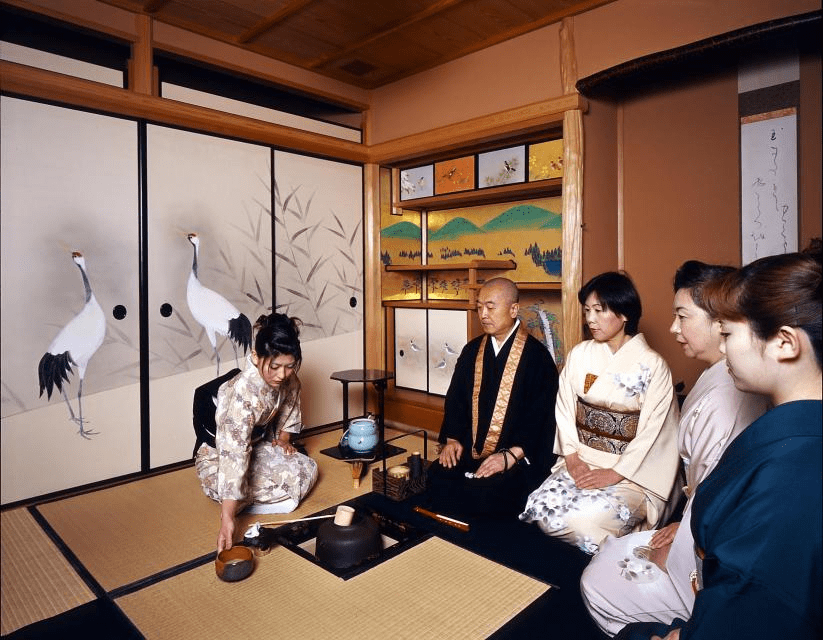
At Shoren-in Monzeki, the tea room "Kobuntei" located within the garden is specially opened to the public. During this special viewing, visitors can see the four-and-a-half-tatami tea room, the six-tatami Buddhist room, and the mizuya (tea preparation space).
A tea room is a quiet space designed specifically for the tea ceremony, where etiquette and utensils are carefully maintained. This is precisely why these spaces are not normally open to casual visitors. The opportunity to view the interior and even experience an authentic tea ceremony is extremely rare.
I had tea in this room, and it brought me a deep sense of calm.
For anyone interested in Japanese tea ceremony, please don't miss this opportunity to experience a tea ceremony in an authentic tea room during this Kyoto event in April 2026.
<Information>
Date: Saturdays, Sundays, and holidays from April 1 to April 30, 2026 (excluding April 19)
Access: 5-minute walk from "Higashiyama" Station on the Tozai Subway Line
Admission: 1,200 yen *Separate admission fee of 600 yen required
Website: https://www.shorenin.com/
Mibu-dera Temple Sr>pring Special Opening
Source:PR TIMES
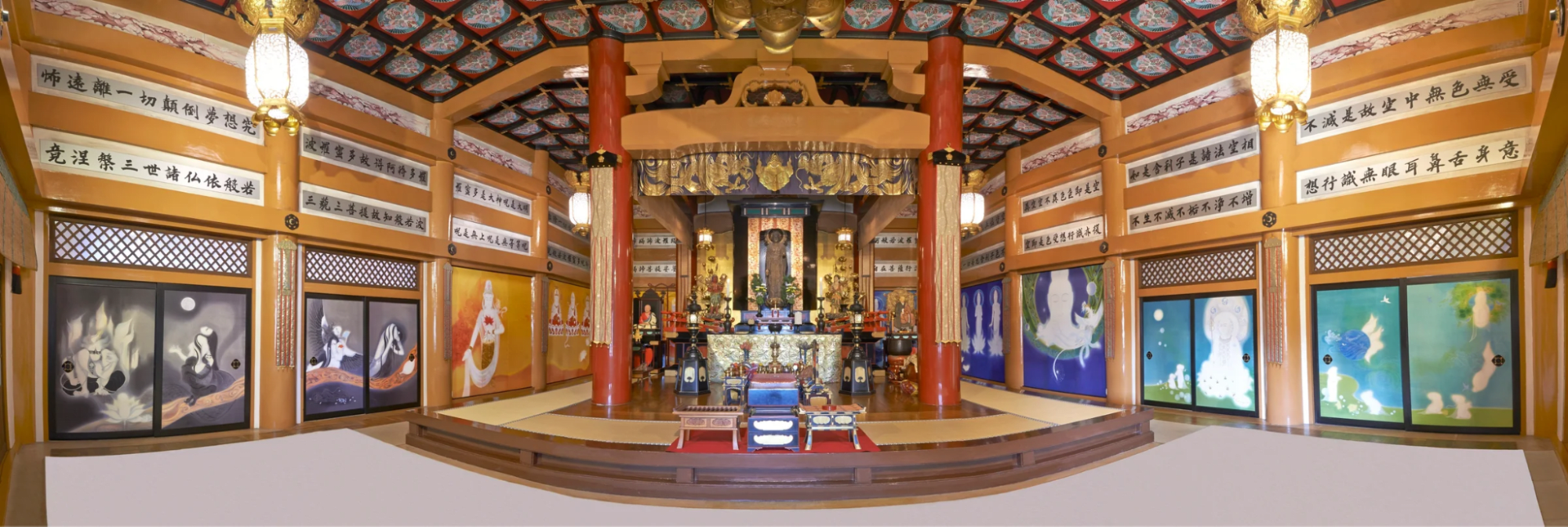
At Mibu-dera Temple, the main hall, gardens, and temple treasures that are normally closed to the public are opened during a special spring period. In 2026, items such as folding screen paintings and famous Japanese swords are scheduled to be specially exhibited. For anyone interested in Japanese art or swords, this is a precious opportunity to see authentic pieces up close.
Additionally, Mibu-dera Temple holds "Mibu Kyogen" alongside the spring special opening. Mibu Kyogen is a traditional performing art that conveys Buddhist teachings through movement alone, without using dialogue.
Because it can be enjoyed even without understanding the language, it is recommended for those experiencing Japanese culture for the first time.
The spring special opening at Mibu-dera Temple is my recommended Kyoto event in April 2026 for casually experiencing Japanese art and classical performing arts.
<Information>
Date: April 25 to May 5, 2026
Access: 10-minute walk from "Shijo Omiya" Station on the Keifuku Railway; 10-minute walk from "Omiya" Station on the Hankyu Railway; 12-minute walk from "Tambaguchi" Station on the JR Sagano Line
Admission: Adults 1,000 yen
Website: https://www.mibudera.com/index.html