Yasaka Shrine Kyoto 2026: Highlights, Gion Festival & Best Times to Visit
I visited Kyoto several times between August and October 2025. I'm updating this article to share the new charms of Kyoto I discovered and to recommend the latest spots worth visiting. In this update, I've also included the newest information about Kyoto for 2026.
Another reason for this update is the growing interest in tours that allow visitors to fully experience Kyoto's traditions and culture.
Due to Kyoto's deep history and traditions, first-time visitors often find it challenging to explore the city efficiently while gaining a deeper understanding. This has led to increasing popularity of guided tours like those offered by Magical Trip, where local guides help tourists navigate the city.
Notably, Magical Trip's tour, which was ranked No.1 among all tours on Tripadvisor in 2024, is experiencing high demand in 2026.

For those interested in Kyoto's traditions and culture, we recommend the following tours where you can experience authentic Kyoto tea ceremonies and Zen meditation:
• Kyoto Tea Ceremony & Kiyomizu-dera Temple Walking Tour
• Kyoto Zen Meditation & Garden Tour at a Zen Temple, including a traditional vegetarian lunch
If you love visiting shrines and temples, try the "Fushimi Inari Hidden Hiking Tour" to discover the hidden charms of Fushimi Inari Shrine.
Whichever tour you choose, it's sure to be an unforgettable experience!
Introduction
Kyoto, visited by many tourists every year, is the city where you can best experience the elegant atmosphere of Japan. Established as "Heian-kyo" in 794, it remained the capital of Japan where the emperor resided for over 1000 years.
The charm of Kyoto lies in its numerous World Heritage sites, including shrines and temples, allowing you to feel Japanese culture and history throughout the city. Among these, Yasaka Jinja Shrine has a long history dating back to 656, even before Kyoto was established as Heian-kyo. Known as the stage for Kyoto's largest festival, the "Gion Festival," Yasaka Jinja Shrine is one of Kyoto's popular tourist spots.
In this article, we'll introduce the history and highlights of Yasaka Jinja Shrine in detail. We'll also explain the etiquette for visiting Yasaka Jinja Shrine, so please check it out!
What is Yasaka Shrine?
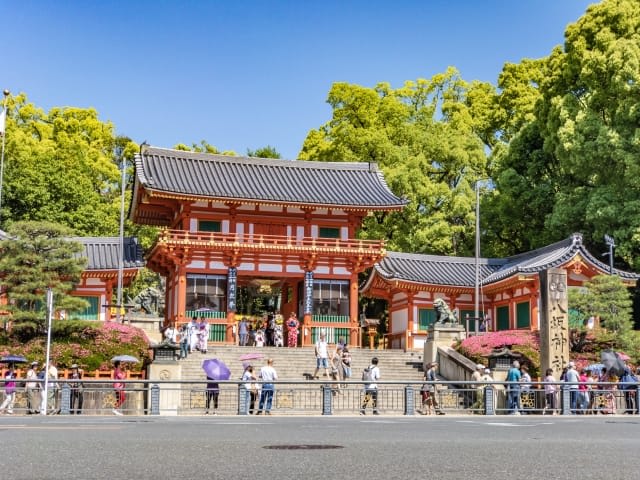
Yasaka Shrine is a prestigious shrine located in the Gion district, where Kyoto's historic townscape remains well preserved. With a history spanning over 1,100 years, this shrine is popular as a destination where visitors can enjoy quintessentially Japanese scenery created by traditional shrine architecture and the natural beauty of each season.
Yasaka Shrine is also famous as the venue for the Gion Festival, one of Kyoto's most iconic festivals that has continued since 869.
During July, when the Gion Festival is held, the streets of Kyoto are enveloped in a traditional atmosphere as if transported back 1,100 years in time, attracting many tourists from both Japan and abroad.
This shrine offers excellent accessibility, located just a 5-minute walk from Gion-Shijo Station, where many of Kyoto's major tourist attractions are concentrated. It is the ideal first stop for sightseeing in Kyoto when exploring traditional landmarks.
Access and Visiting Information for Yasaka Shrine
- Address: 625 Kitagawa, Gion-cho, Higashiyama-ku, Kyoto
- Access: 5-minute walk from Keihan Line "Gion-Shijo Station" / 8-minute walk from Hankyu Kyoto Line "Kyoto-Kawaramachi Station"
- Phone: 075-561-6155
- Visiting hours: 24 hours
- Admission: Free
- Official website: https://www.yasaka-jinja.or.jp
##八坂神社の歴史(A Brief History)
A Brief History of Yasaka Jinja Shrine
Yasaka Jinja Shrine developed when people prayed to quell an epidemic that was once prevalent. The ritual of offering prayers at that time has continued for over 1000 years as the "Gion Festival." Various deities are enshrined at Yasaka Jinja Shrine, offering benefits for warding off evil, matchmaking, and beauty.
One of its features is that 29 buildings within the shrine grounds, including the main hall which is a national treasure, are designated as important cultural properties. The natural beauty of the shrine grounds and its surroundings, which can be enjoyed in all seasons, is also a reason for its popularity.
Let's take a look at the highlights of Yasaka Jinja Shrine that can be enjoyed in any season!
3 Must-See Highlights at Yasaka Jinja Shrine
The National Treasure "Main Hall" and 29 Important Cultural Properties
Source: Official website
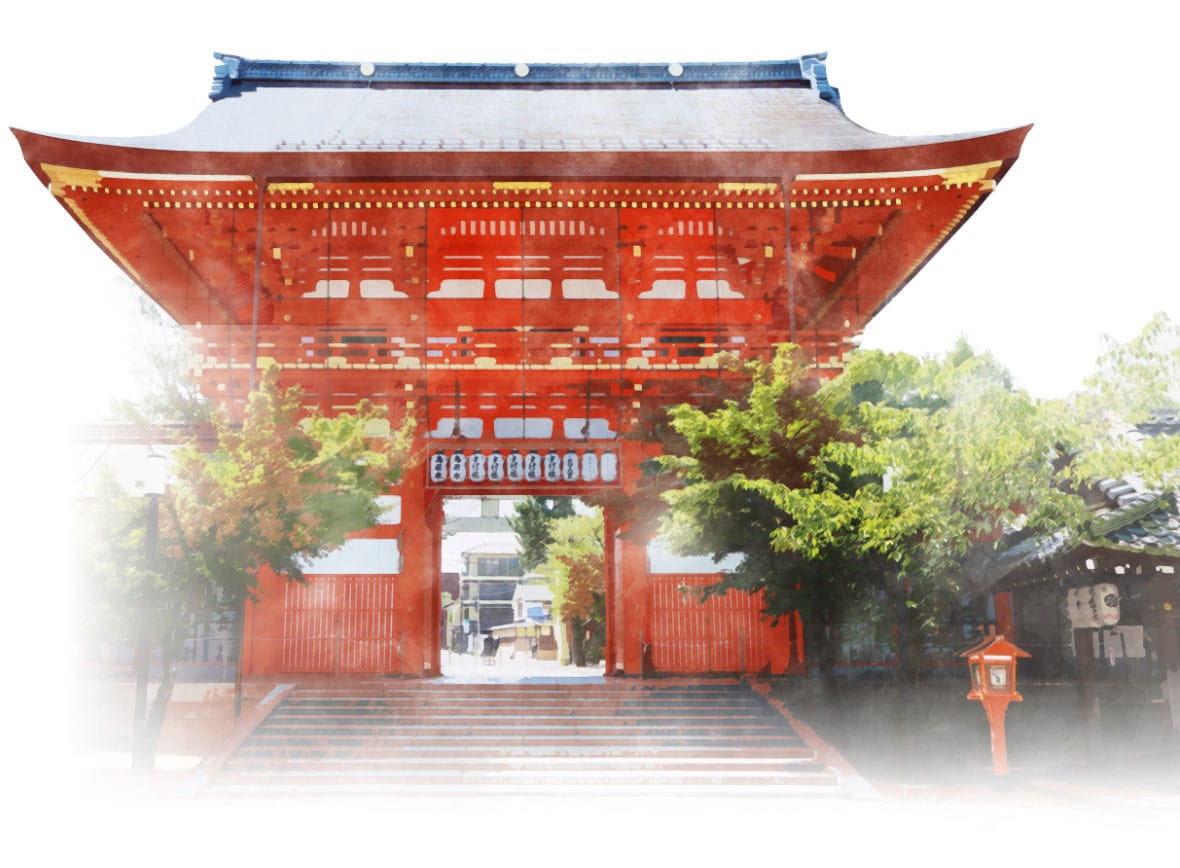
The main highlight of Yasaka Jinja Shrine is the "Main Hall" (honden). Designated as a national treasure in 2020, the Main Hall stands out with its vivid vermilion color and large roof. This style, which covers two buildings with a single large roof, is called "Gion-zukuri" or "Yasaka-zukuri," a unique architectural style not found elsewhere.
It is said that a guardian deity called "Blue Dragon," which harbors the power of the earth, dwells underground beneath the Main Hall. The "transparent fence" (sui bei) surrounding the east side of the Main Hall is one of the important cultural properties. Its see-through design and elegant arabesque pattern are also noteworthy.
Within the shrine grounds, there are 29 other important cultural properties, including the "West Tower Gate" (nishi ro mon), the oldest building in Yasaka Jinja Shrine, the "South Tower Gate" (minami ro mon) which serves as the main gate, and the "Mikoshi Storehouse" which houses three mikoshi (portable shrines) used in the Gion Festival. Be sure to check out these precious buildings that can only be seen at Yasaka Jinja Shrine in Kyoto!
The Fantastical Dance Hall Adorned with Countless Lanterns
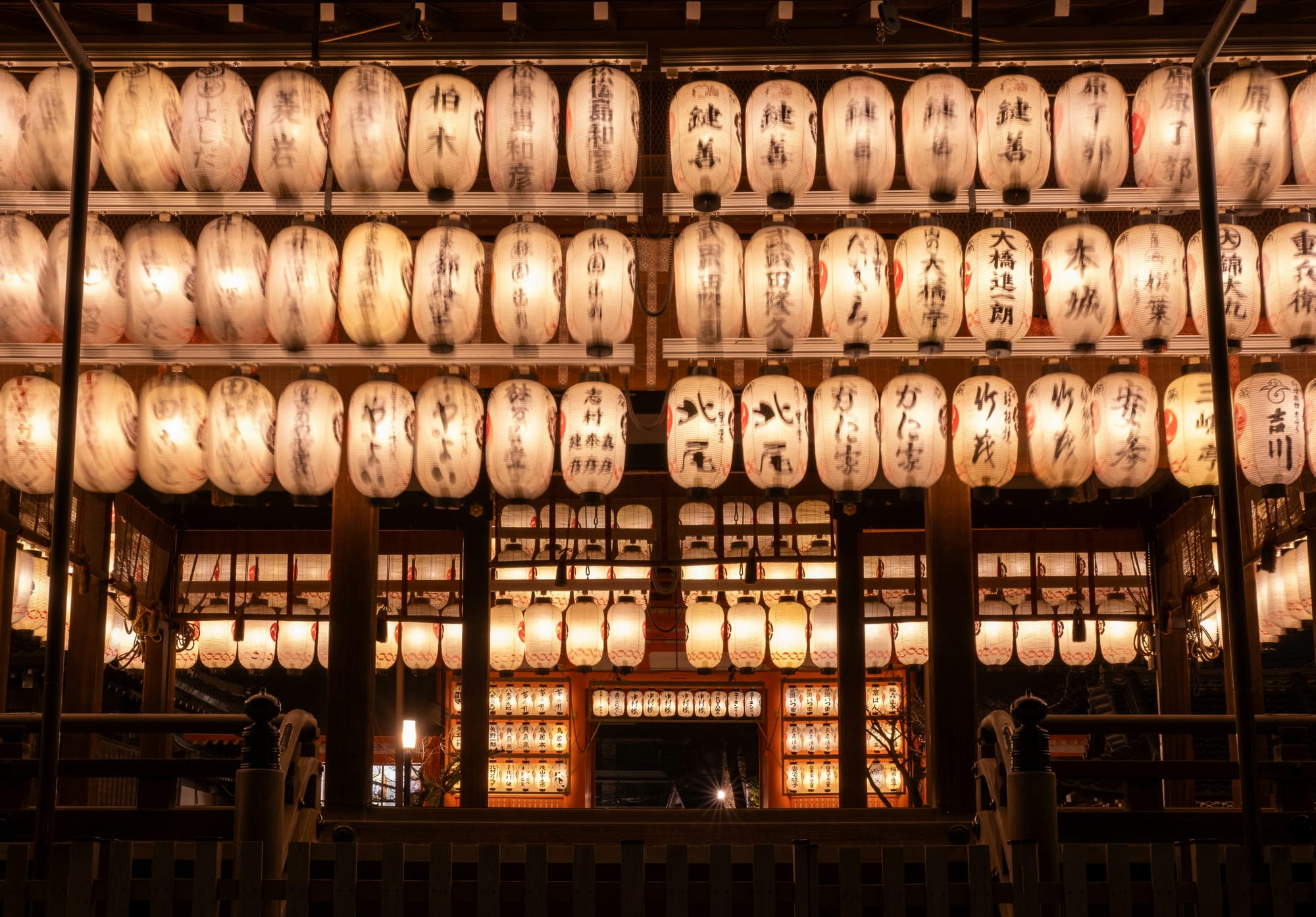
The "Dance Hall" (buden) is a stage-like building for performing "bugaku," a traditional Japanese dance accompanied by ancient music. It is typically built in the center of the shrine grounds to be easily visible from various locations.
The Dance Hall of Yasaka Jinja Shrine, designated as an important cultural property in 2020, is characterized by numerous lanterns donated from nearby restaurants. The lanterns are lit up every night, creating a fantastical atmosphere with their soft, warm glow. You can experience a different charm of Yasaka Jinja Shrine at night compared to daytime.
During the "Setsubun Festival" in February, geishas throw beans from the top of the Dance Hall, scattering "lucky beans" with wishes for "happiness to visit."
On the day I visited, a wedding ceremony was taking place, and the beautiful sight of the bride in a traditional Japanese bridal kimono "shiromuku" was impressive.
The Nature of Yasaka Jinja Shrine Showing Different Expressions in Each Season
Rich in nature, Yasaka Jinja Shrine offers various sceneries to enjoy as the seasons change. Here, we introduce the highlights of each season showing different expressions.
Which season's scenery would you like to see? Whichever season you visit, you can fully experience the unique Japanese atmosphere and charm of Kyoto.
Spring at Yasaka Jinja Shrine with Beautiful Cherry Blossoms
Source: Official website
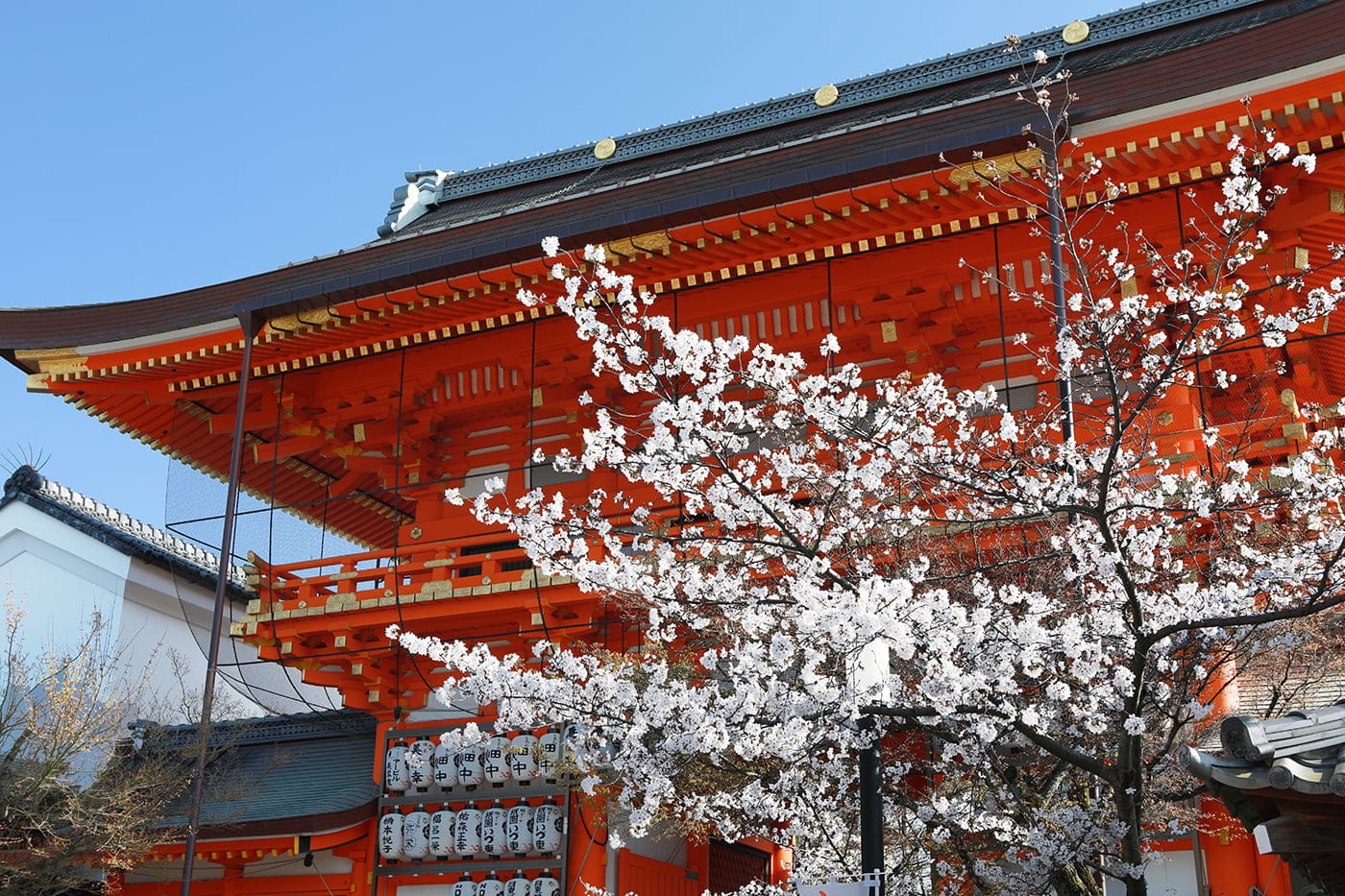
In spring, you can enjoy the beautifully blooming cherry blossoms at Yasaka Jinja Shrine. Take a leisurely stroll around the shrine grounds while feeling the pleasant spring breeze. The vermilion color of the South Tower Gate and the light of the lanterns further enhance the beauty of the pale pink cherry blossoms.
Maruyama Park, Kyoto's oldest park adjacent to the east of the shrine, is a popular cherry blossom viewing spot among locals. The dynamically blooming "Gion Weeping Cherry Tree" is at its best in early April, and you can enjoy a romantic scenery lit up at night.
If you are interested in Cherry Blossom Spots in Kyoto, check the article below! I summarized how and where you can enjoy Sakura as much as possible.
 Takashi Nakadomari
Summer at Yasaka Jinja Shrine: Festivals and Fresh Greenery
Source: Official website
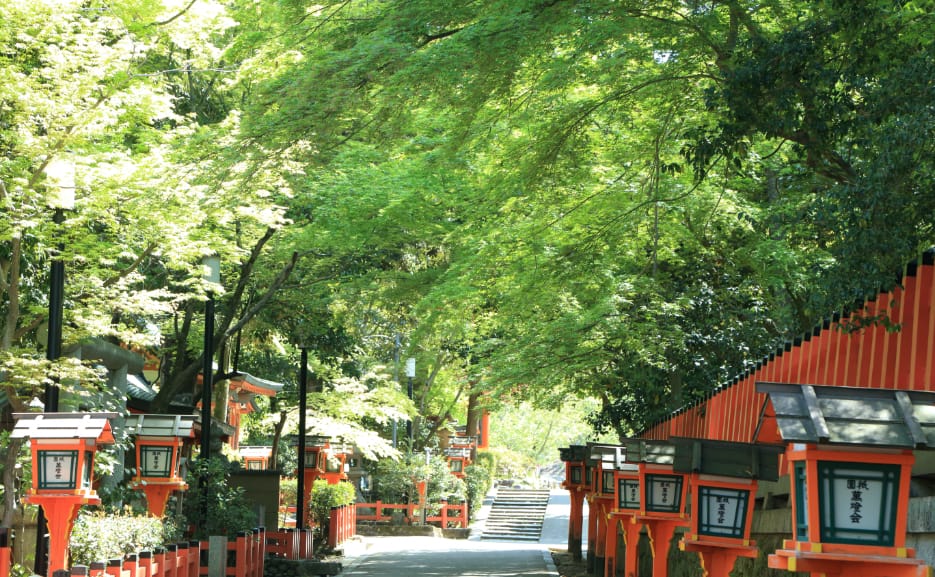
When it comes to summer at Yasaka Jinja Shrine, the main attraction is the Gion Festival. Many people feel the arrival of summer with the sound of flutes and drums called "Gion Bayashi."
Looking at the nature within the shrine grounds, you'll see trees and leaves growing vigorously. The contrast between the vivid fresh greenery and the vermilion color of the West Tower Gate stands out against the summer blue sky. It's especially recommended for those who want to take Instagram-worthy photos.
My favorite way to spend time at Yasaka Jinja Shrine in summer is to take a break at a nearby teahouse after praying. Eating shaved ice while feeling Kyoto's hot summer is the best!
If you are interested in Summer in Kyoto, check the article below! I summarized how and where you can enjoy Summer in Kyoto as much as possible.
Takashi Nakadomari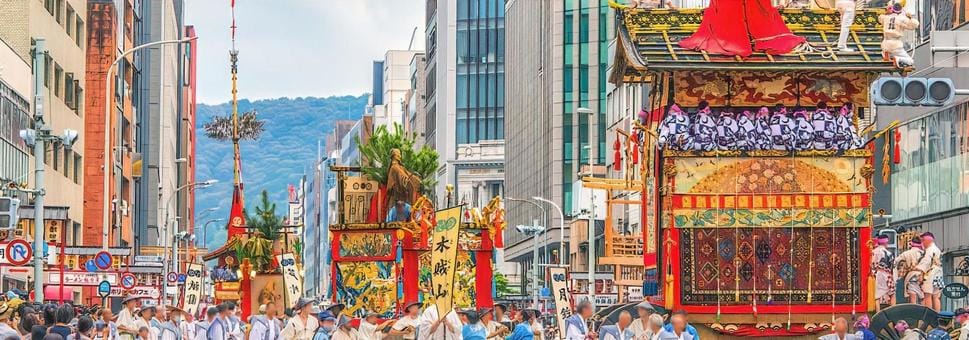
Autumn at Yasaka Jinja Shrine Colored by Autumn Leaves
Source: Official website
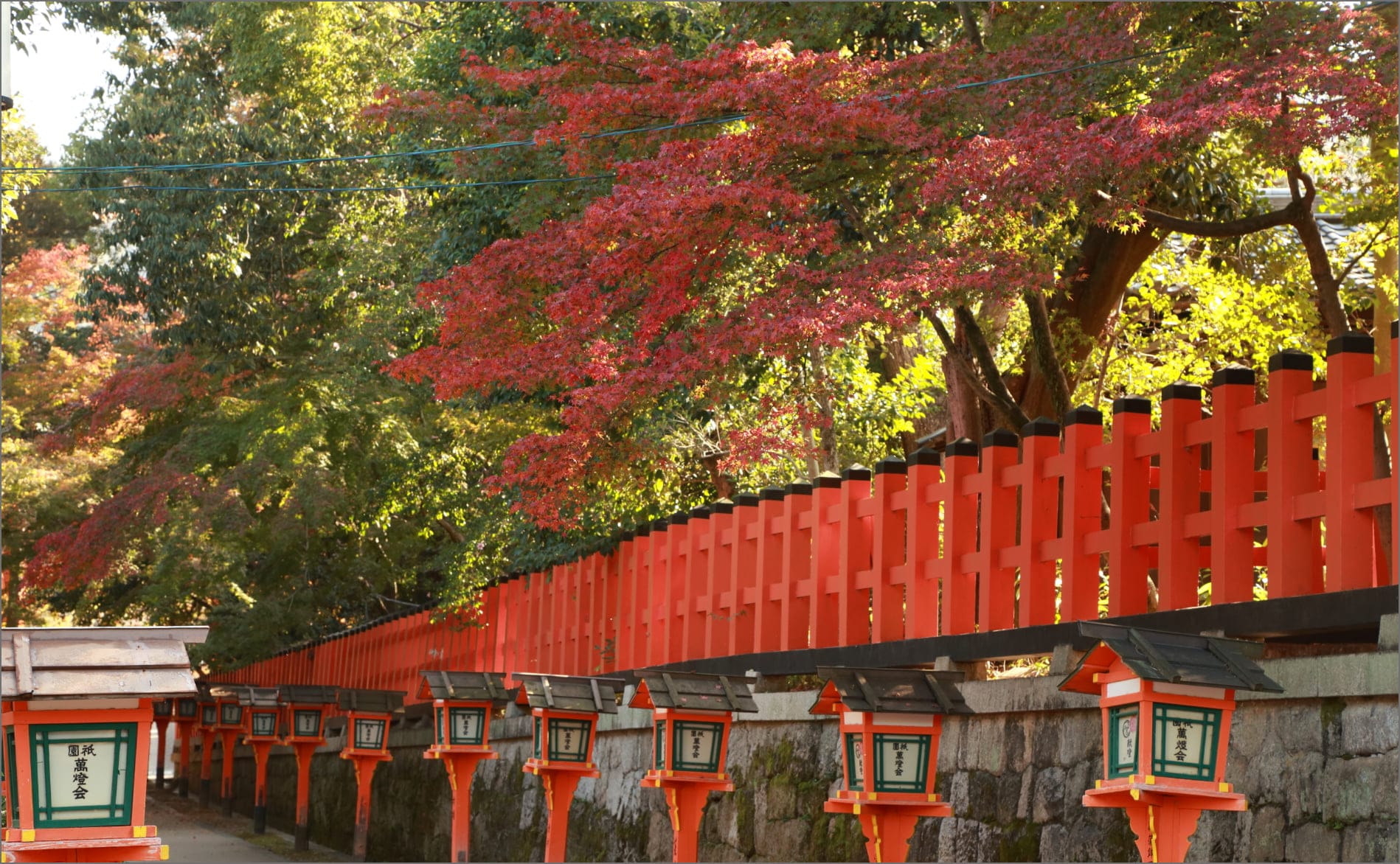
In autumn at Yasaka Jinja Shrine, it's recommended to take a leisurely stroll around the shrine grounds beautifully colored in red and yellow. While Kiyomizu-dera Temple and Tofuku-ji Temple are popular for autumn leaves in Kyoto, enjoying the autumn foliage quietly at Yasaka Jinja Shrine can also be a wonderful experience.
The scenery called "Maple Tunnel" spreads along the path behind the Main Hall. On sunny days, the contrast with the blue sky is beautiful, and at night when the stone lanterns and paper lanterns are lit up, a fantastical atmosphere drifts.
The large ginkgo tree near the South Tower Gate is at its best in late November when its leaves shine in brilliant gold.
If you are interested in Autumn Foliage Spots in Kyoto, check the article below! I summarized how and where you can enjoy Autumn Foalige as much as possible.
Takashi Nakadomari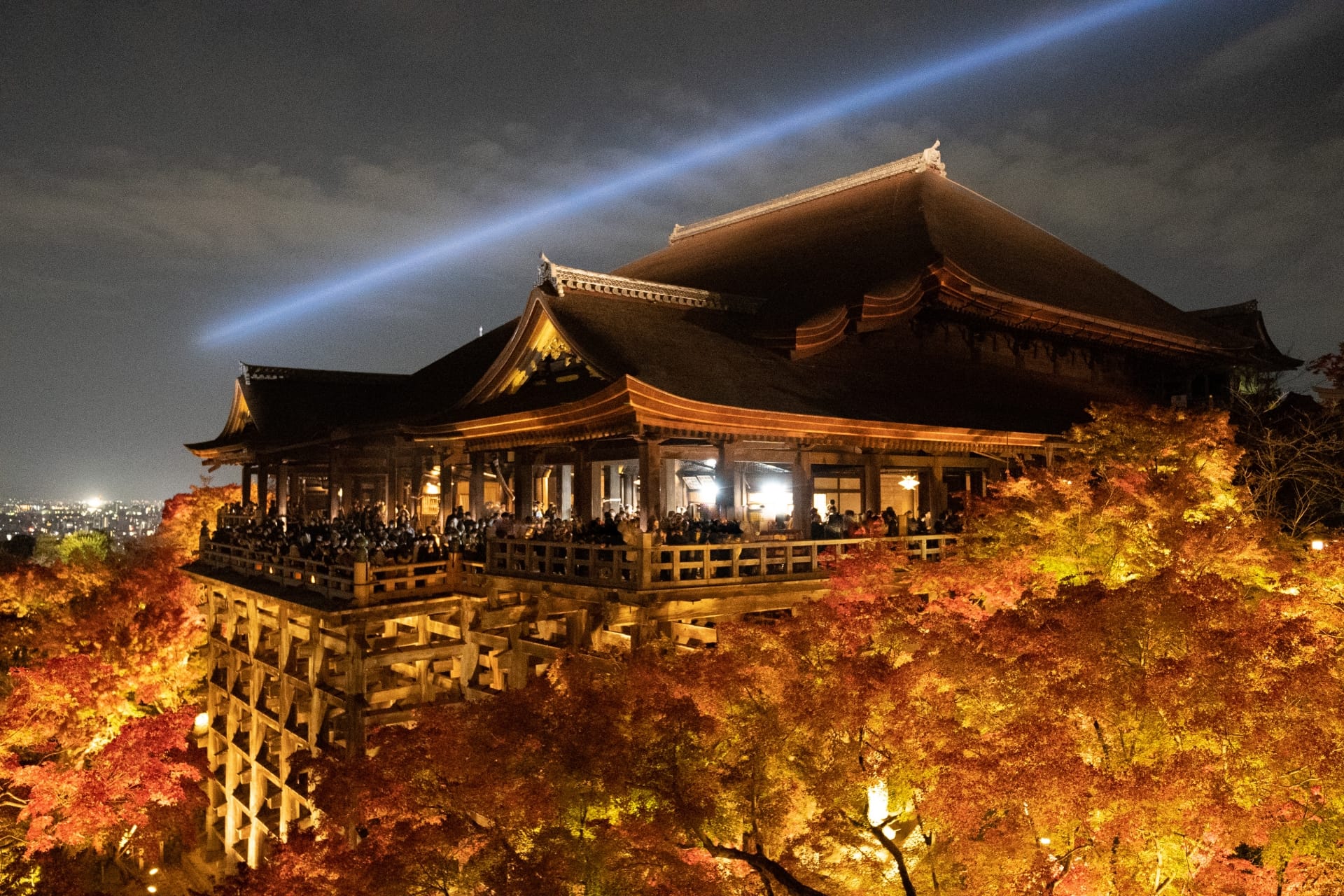
Winter at Yasaka Jinja Shrine Dyed in Snow
Source: Official website
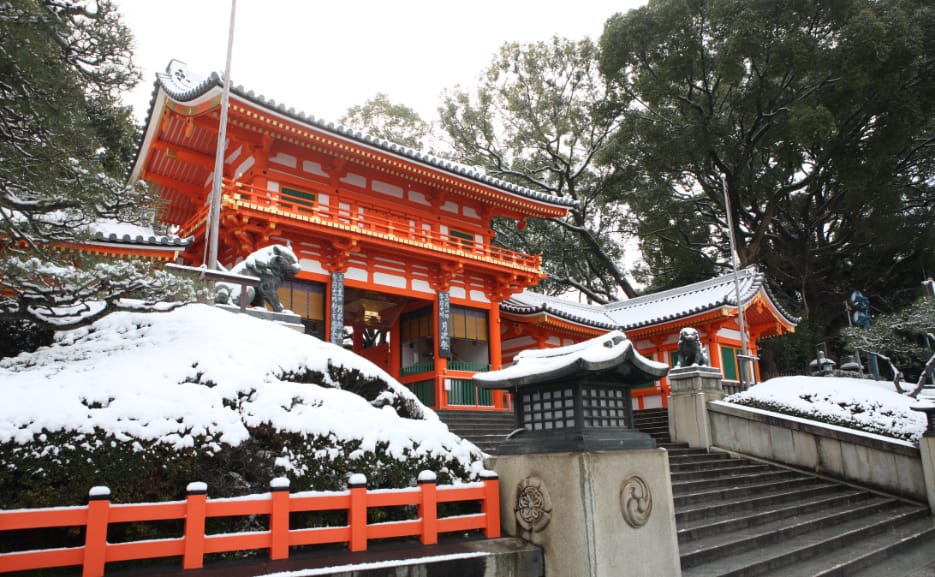
Yasaka Jinja Shrine in winter, wrapped in a solemn atmosphere, has a different flavor from other seasons colored by trees and plants. Especially on snowy days, Yasaka Jinja Shrine exudes a winter charm that feels like it cleanses your heart. The contrast between the red color of the gates and Main Hall and the pure white snow is beautiful, allowing you to fully enjoy the charm of Japanese winter.
I have visited several times for the "Wokera Mairi" held from New Year's Eve to New Year's Day. This event, where fire is kept burning all night long praying for health throughout the year, is a winter tradition in Kyoto. If you visit in a beautiful kimono, you might be able to welcome a wonderful new year!
If you are interested in Winter in Kyoto, check the article below! I summarized how and where you can enjoy Winter in Kyoto as much as possible.
Takashi Nakadomari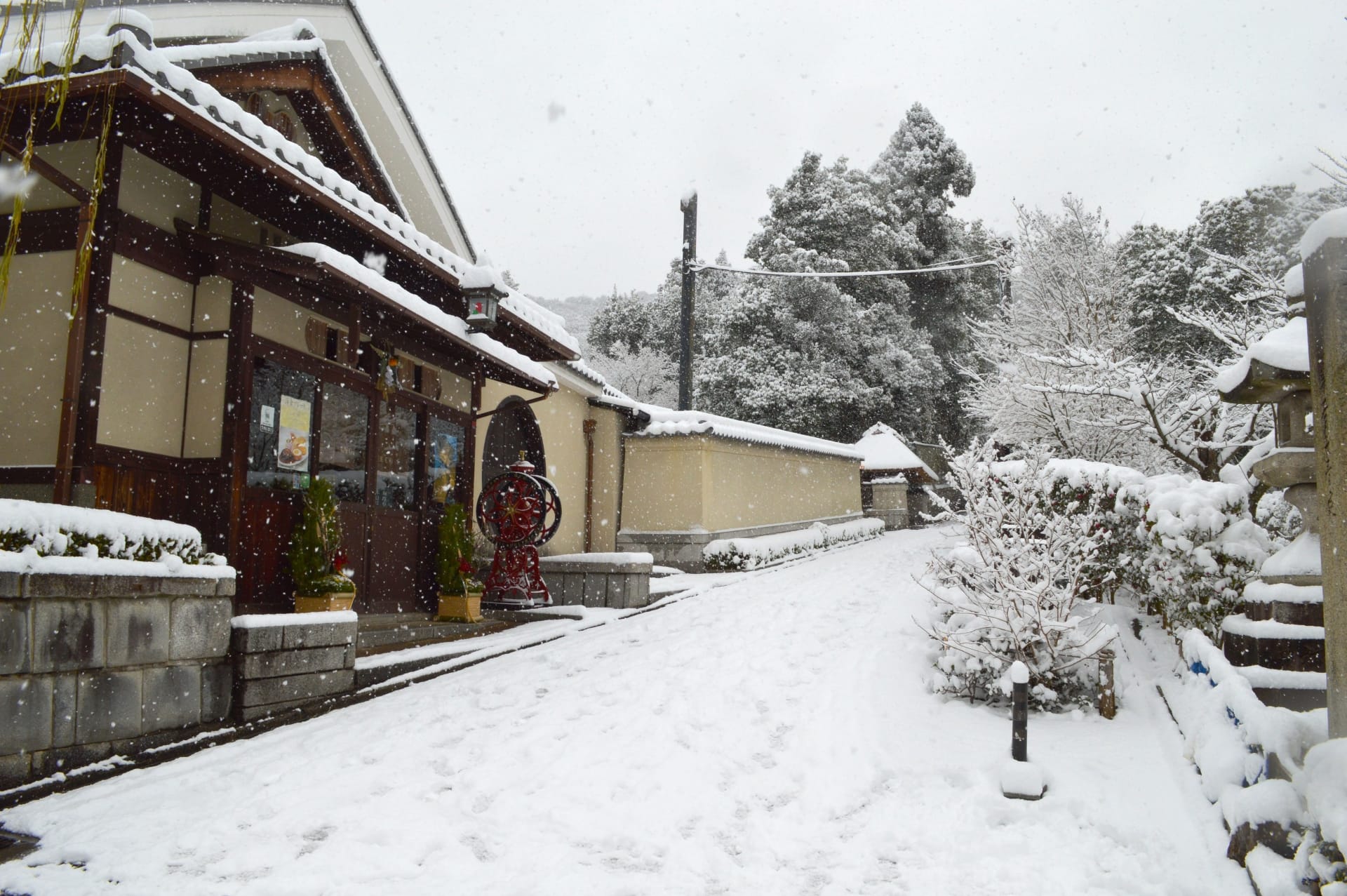
The Gion Festival Season is Recommended When Visiting Yasaka Jinja Shrine
What is the Gion Festival?
Source: Official website
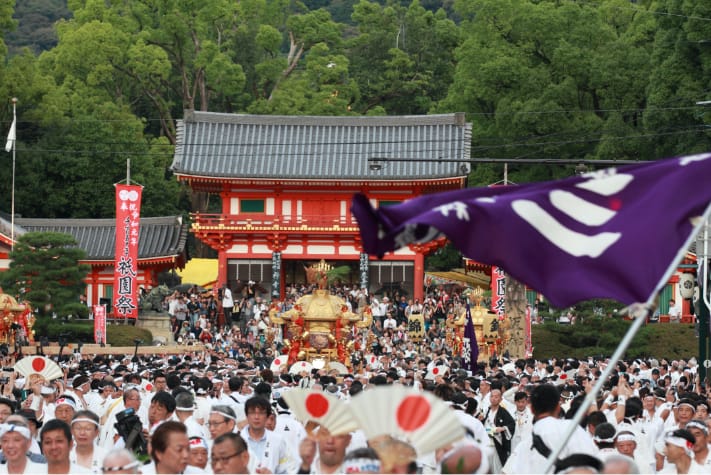
The "Gion Festival," held for one month from July 1st to 31st, is also famous as one of Japan's three major festivals. This festival, held in the Gion area centered around Yasaka Jinja Shrine, is said to have started about 1155 years ago to pray for the dispelling of epidemics.
As the economy developed and the town became wealthy, the scale of the festival gradually increased. Performances of Noh, a traditional Japanese art combining dance and drama, and parades of mikoshi (portable shrines) began to be held, and the custom of enjoying the festival itself as a town event developed.
The "Yamaboko Junko," where floats called "yamaboko" decorated with mountain-shaped ornaments compete in extravagance, has been registered as a UNESCO Intangible Cultural Heritage, establishing its position as a Japanese festival to be proud of worldwide.
Highlights of the Gion Festival
Source: Official website
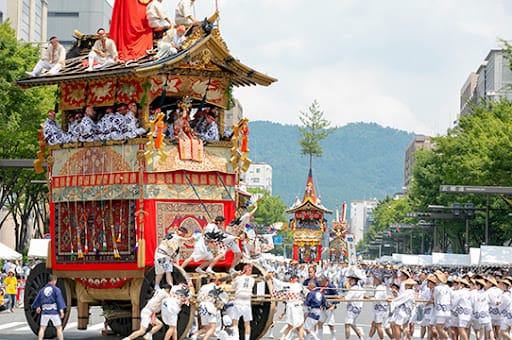
Although the Gion Festival is held for a month, for tourists with limited stay, it's recommended to visit during the main event "Yamaboko Junko" and its eve event "Yoiyama."
During the "Yamaboko Junko" held on July 17th and 24th, a total of 34 giant yamaboko parade through the town of Gion. The impressive yamaboko, reaching up to 25 meters in height and 12 tons in weight, are elaborately decorated by each town, and are called "moving museums" for their extravagance.
During the Yoiyama event held on July 15th and 16th, many food stalls line up on streets closed to vehicle traffic, allowing you to enjoy festival food!
Indispensable to Japanese festivals is the unique music called "Ohayashi" played with drums and flutes. As someone who grew up in the Tokyo area, when I hear the Gion ohayashi, different from my local festival music, it heightens my feeling of "I've come to Kyoto in summer!"
If you are interested in Gion Festival, check the article below! I summarized in more details and how I felt.
If you are interested in Gion Festival, check the article below! I summarized how and where you can enjoy Gion Festival as much as possible.
sena kanda
Points to Note When Visiting Yasaka Jinja Shrine
It's Very Popular and Always Crowded
Yasaka Jinja Shrine, popular as a tourist spot, is very crowded throughout the year. When there's a line to pray, please line up at the end of the queue and wait your turn. When visiting in a group, everyone who wants to pray should line up, not just a representative.
As it's open for worship 24 hours a day, it's also recommended to visit during relatively less crowded times like early morning or night. When praying early in the morning or at night, be mindful of noise and pray quietly with a calm mind.
Observe Shrine Manners and Etiquette
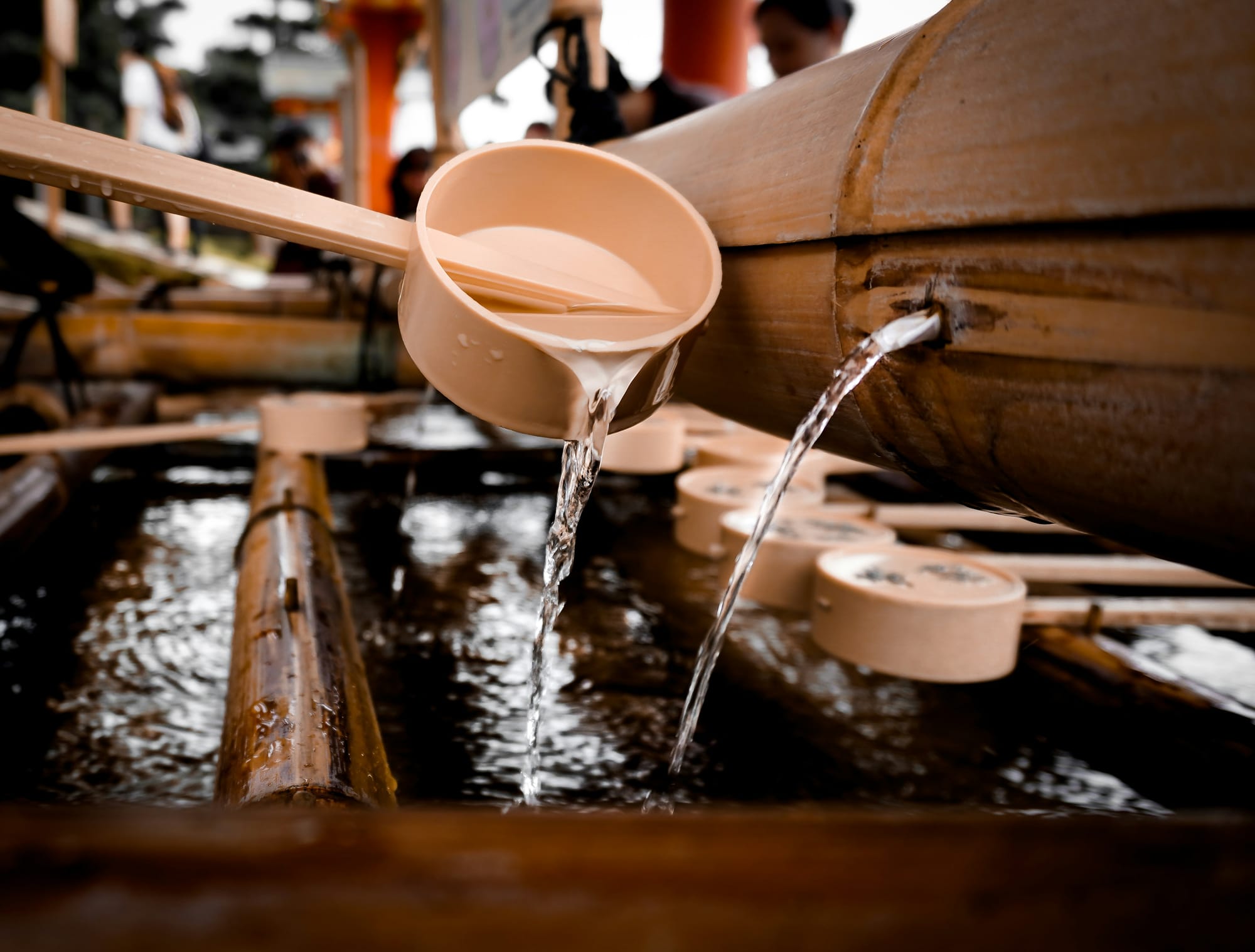
There are several manners and etiquettes to observe when visiting Japanese shrines. Manners at shrines and temples differ by country and religion, so foreigners might be confused, but there's no need to think too hard about it. Basically, if you have a mind to show respect to the deities, you'll be fine.
Here are some general manners for shrines including Yasaka Jinja Shrine. Please use them as a reference:
- Bow once before passing through the torii (shrine entrance)
- First pray to the deities when entering the shrine grounds
- Enjoy taking photos and strolling after praying
- Do not take photos in prohibited areas
- Smoking is prohibited
- Take your trash with you
- Do not take plants, stones, etc. from the shrine grounds
- When leaving, turn back and bow once before departing
Once you've got the basic manners in mind, enjoy Yasaka Jinja Shrine as you like!
Exploring Shrines and Temples Becomes Twice as Enjoyable with a Local Guide Who Knows Kyoto Inside Out!
When visiting shrines and temples in Kyoto, traveling with a knowledgeable local guide allows you to enjoy a deeper cultural experience that cannot be obtained through individual travel.
This is because touring with an English-speaking guide enables you to receive detailed on-site explanations about the historical background and architectural significance of each shrine and temple, as well as insights into the local people's faith.
For foreign tourists unfamiliar with Japanese religious culture in particular, this is a valuable opportunity to learn proper etiquette and manners for visiting shrines and temples from a local guide.
Below, we introduce three popular guided tours that allow you to experience Japanese culture more deeply through activities such as tea ceremony at famous shrines in Kyoto.
Fushimi Inari Hidden Hiking Tour
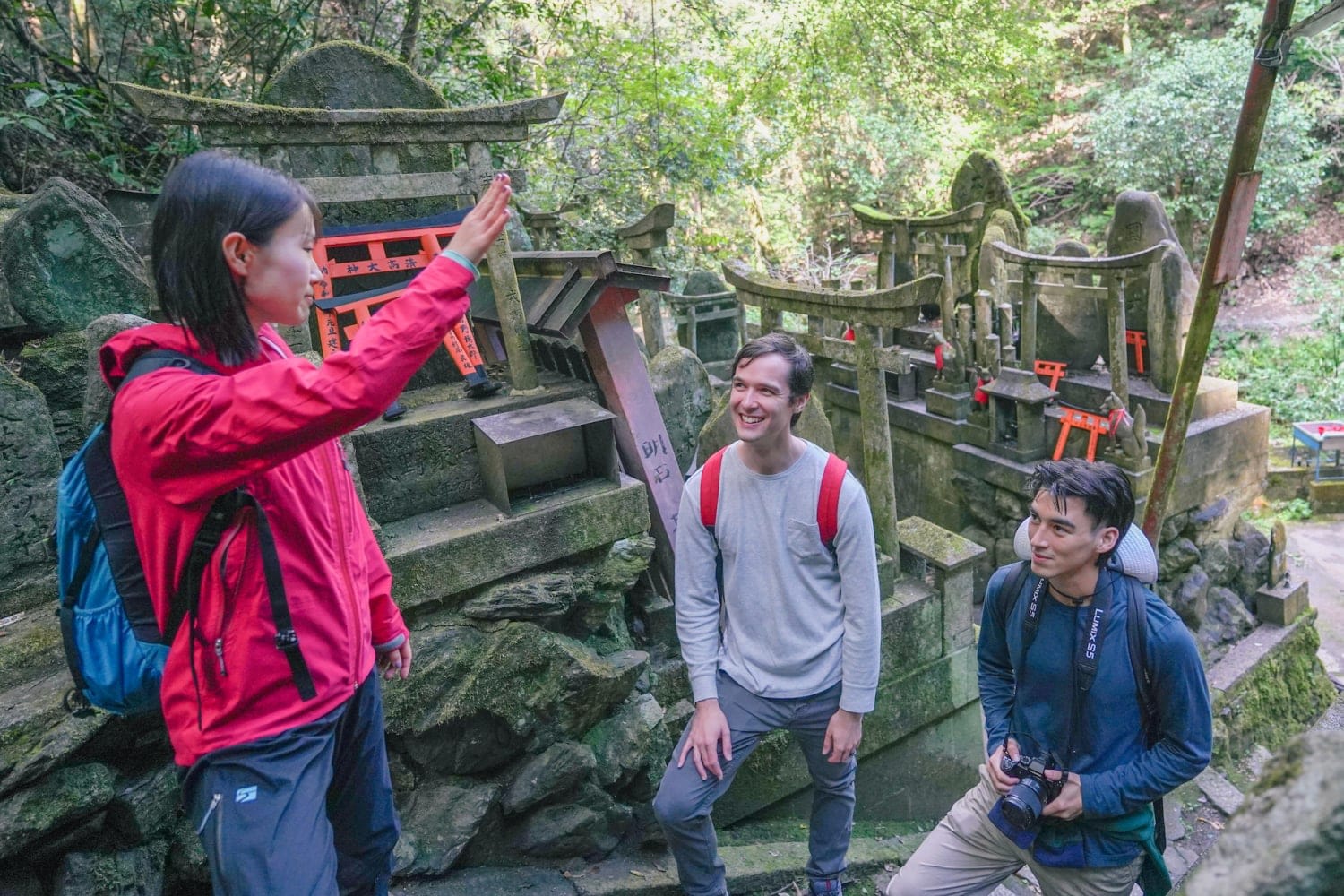

The Fushimi Inari Hidden Hiking Tour is a guided tour of Fushimi Inari Taisha, famous for its photogenic landscape of approximately 10,000 red torii gates lined up in a row. You can enjoy the special experience of visiting Fushimi Inari Taisha while hiking along secret paths unknown to other tourists.
What I recommend about this tour is that you can avoid the crowded approach paths and feel the sacred atmosphere of Fushimi Inari Taisha in peaceful tranquility.
Since you will be walking through narrow mountain paths and bamboo groves for about an hour, please wear comfortable shoes and clothing.
- Meeting point: Family Mart Nakai Tofukuji Store
- Tour area: Tofuku-ji Temple to Fushimi Inari Taisha
- Start times: 9:00 / 10:00 / 13:00
Kyoto Tea Ceremony & Kiyomizu-dera Temple Walking Tour
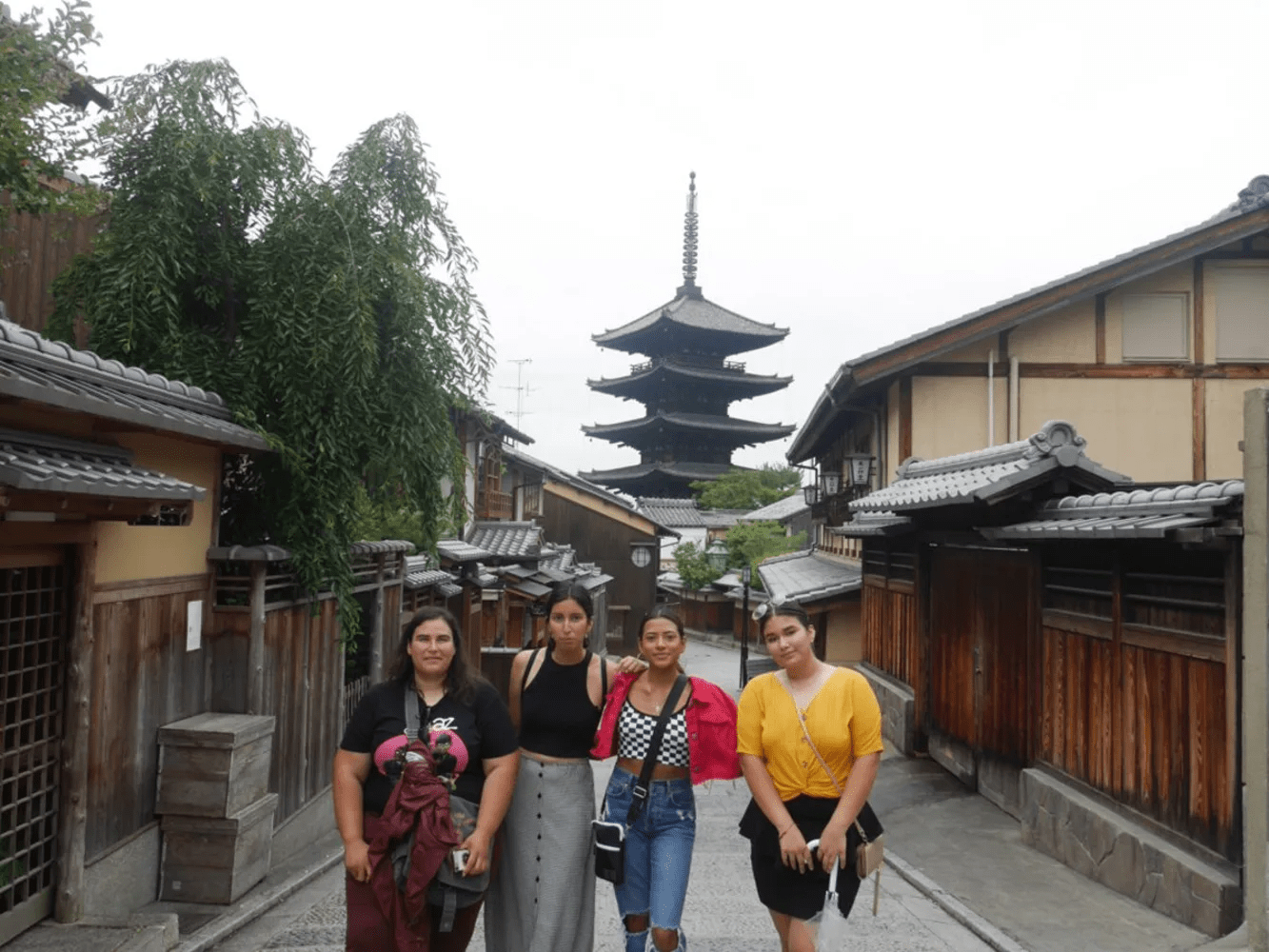
The Kyoto Tea Ceremony & Kiyomizu-dera Temple Walking Tour is a tour where you can experience the essence of Japanese culture, combining a visit to Kiyomizu-dera Temple, one of Kyoto's most representative temples, with a tea ceremony experience.
On this tour with an English-speaking guide, you can enjoy authentic tea ceremony culture without worrying about language barriers, learning not only how to properly visit Japanese shrines but also the etiquette of preparing and drinking matcha.
If you want to experience Japan's traditional aesthetics and spirituality, please consider joining this tour.
- Meeting point: In front of the stone statue, right outside the Nishiromon Gate of Yasaka Shrine
- Tour area: Around Kiyomizu-dera Temple
- Start time: 9:00
Kyoto Zen Meditation & Garden Tour at a Zen Temple with Traditional Shojin Lunch
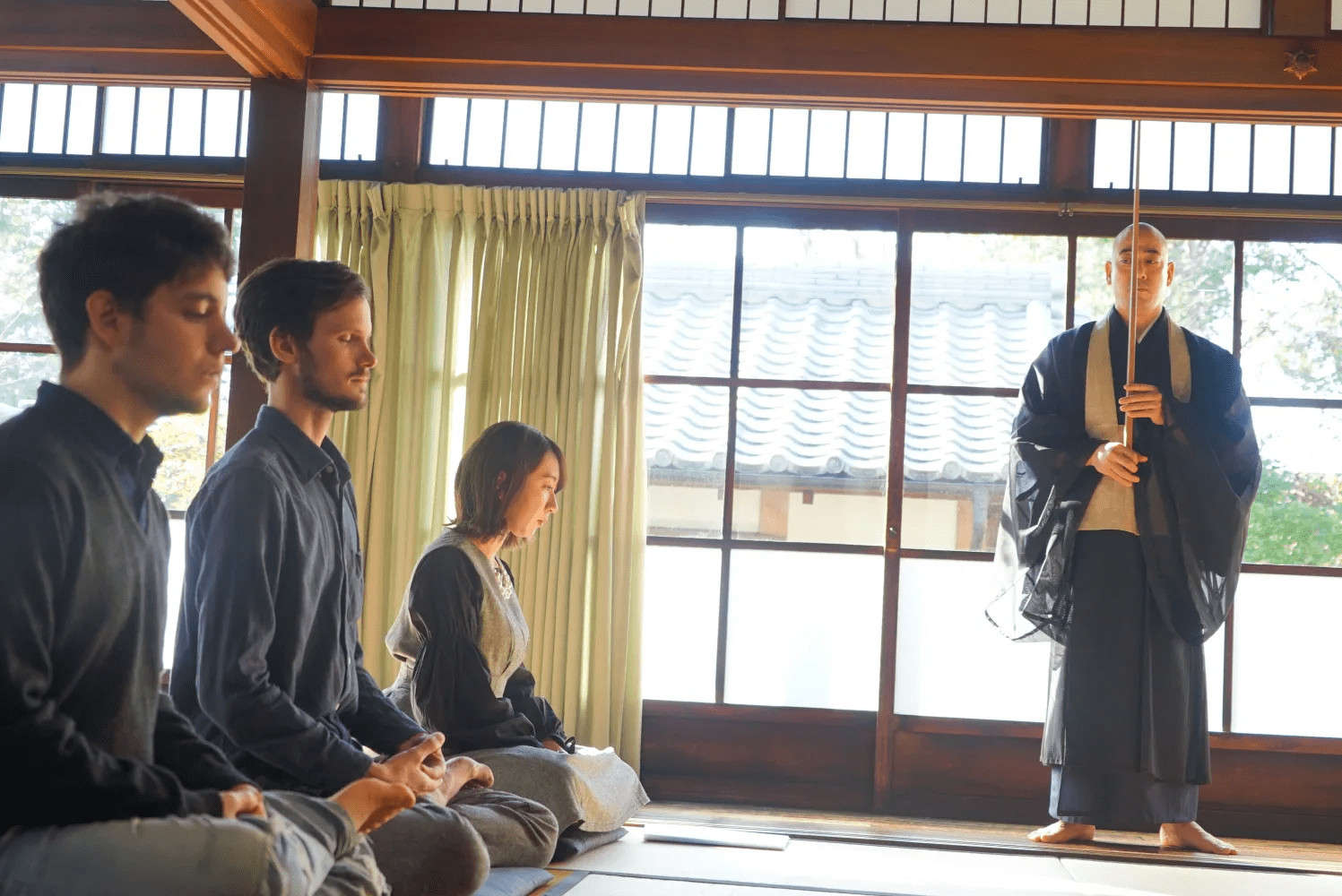
The Kyoto Zen Meditation & Garden Tour at a Zen Temple with Traditional Shojin Lunch is a tour where you can experience zazen, a traditional Buddhist practice, at Tofuku-ji Temple, a Zen temple in Kyoto.
On this tour, you can enjoy strolling through a traditional Japanese garden, experiencing zazen meditation in the serene temple, and having a lunch of Shojin Ryori, a traditional Buddhist cuisine that avoids meat and fish.
This tour is recommended for those who want to enjoy a uniquely Japanese cultural experience that allows you to actually feel the Zen philosophy that lies at the foundation of Japanese culture.
- Meeting point: Family Mart Nakai Tofukuji Store
- Tour area: Around Tofuku-ji Temple
- Start times: 9:30 / 10:30
5 Must-Visit Spots Near Yasaka Shrine
When visiting Yasaka Shrine, we recommend exploring other attractive tourist spots within walking distance.
The Gion area is a district where Kyoto's traditional culture remains deeply rooted, featuring charming streetscapes with a distinctly Japanese atmosphere and historically significant temples that have been registered as World Heritage Sites.
Here are five must-visit spots accessible within a 5 to 20-minute walk from Yasaka Shrine.
Hanamikoji Street
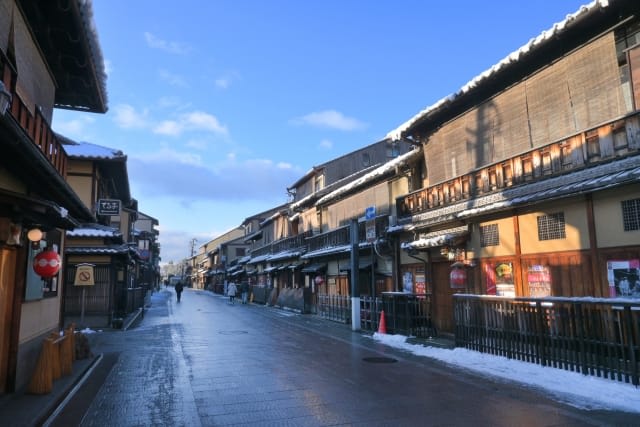
Hanamikoji Street is an area where traditional architecture lines the cobblestone streets, preserving Kyoto's historic atmosphere. Along this streetscape of traditional teahouses and long-established restaurants, if you're lucky, you may experience the quintessentially Japanese scene of maiko and geiko in kimono passing by.
Hanamikoji Street, the main street leading to Yasaka Shrine, is about a 5-minute walk from the shrine grounds. You can enjoy strolling through the charming Japanese atmosphere while savoring authentic Japanese cuisine at established restaurants and matcha at traditional teahouses.
Hanamikoji Street has a completely different atmosphere north and south of Shijo Street. If you want to explore the traditional streetscape, be sure to visit the area south of Shijo Street.
- Address: Gionmachi Minamigawa, Higashiyama-ku, Kyoto City, Kyoto Prefecture
- Hours: 24 hours *Individual store hours vary
- Closed: Varies by store
- Phone: Varies by store
- Official Website: https://www.gion.or.jp/around/花見小路
Chionin Temple
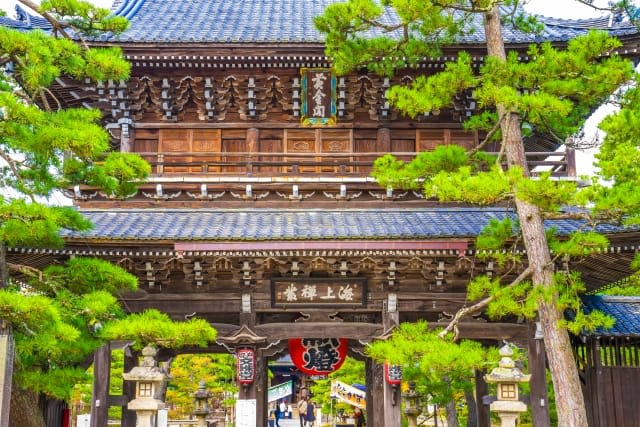
Chionin Temple, located about a 5-minute walk from Yasaka Shrine, is known as the head temple of the Jodo sect (a sect of traditional Japanese Buddhism).
This temple preserves the teachings of the Jodo sect, which Priest Hōnen founded in 1175, and contains many historic buildings designated by the government as particularly valuable cultural properties.
Among the historic structures at Chionin Temple, I especially recommend Sanmon, the main gate of this temple. This largest wooden gate in Japan, built in 1621, stands 24 meters high and 50 meters wide.
You can appreciate its majestic traditional architecture harmoniously blending with the surrounding nature that changes with each season.
This temple also features beautiful Japanese gardens including Hojo-teien and Yuzenen. Please take your time strolling through and enjoying the traditional Japanese temple architecture and seasonal nature.
- Address: 400 Rinkachō, Higashiyama-ku, Kyoto City, Kyoto Prefecture
- Hours: 6:00–16:00
- Closed: None
- Phone: 075-531-2111
- Official Website: https://www.chion-in.or.jp/
Maruyama Park
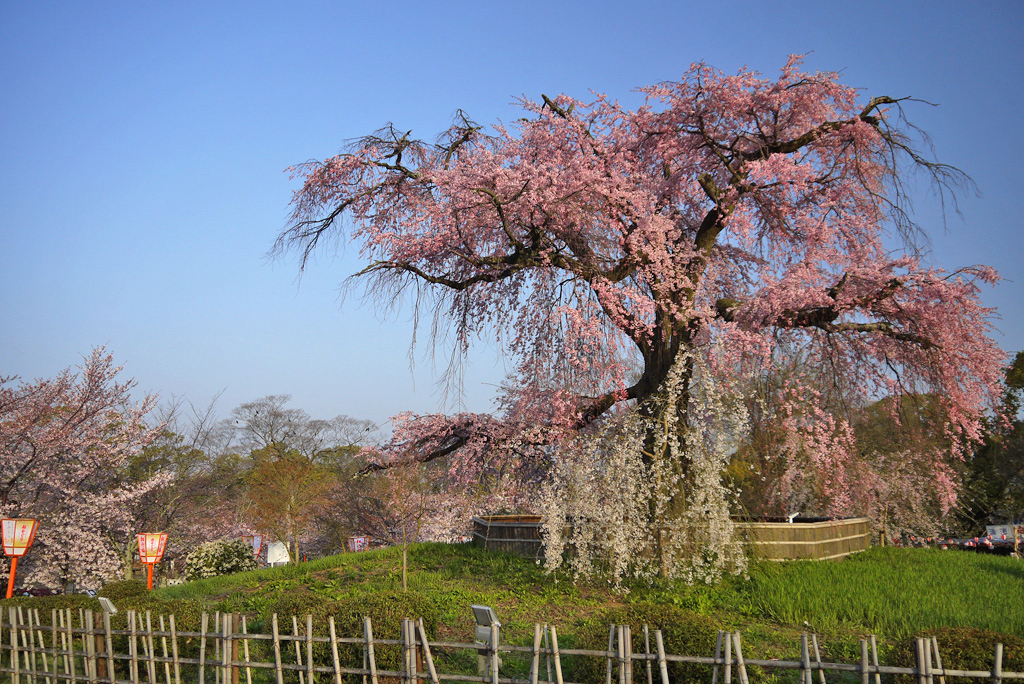
Maruyama Park, adjacent to the east side of Yasaka Shrine, is Kyoto's oldest park, established in 1886. Located between two historic religious sites—Yasaka Shrine and Chionin Temple—this park serves as a relaxing space where locals and tourists can enjoy Kyoto's seasonal nature.
At the center of the park stands a nationally famous weeping cherry tree known as "Gion no Yozakura." Its impressive size—12 meters tall, with branches spanning about 10 meters and a trunk circumference of 2.8 meters—is truly awe-inspiring.
During the typical peak season in early April, you can enjoy a spectacular view symbolizing Japan's vibrant spring, with cherry blossoms cascading dramatically like a waterfall.
As you stroll around the large pond, please experience the beautiful seasonal nature of Kyoto firsthand, from cherry blossoms in spring to autumn foliage.
- Address: Maruyamachō, Higashiyama-ku, Kyoto City, Kyoto Prefecture
- Hours: 24 hours
- Closed: None
- Phone: 075-561-1778
- Official Website: https://kyoto-maruyama-park.jp/
Kiyomizu-dera
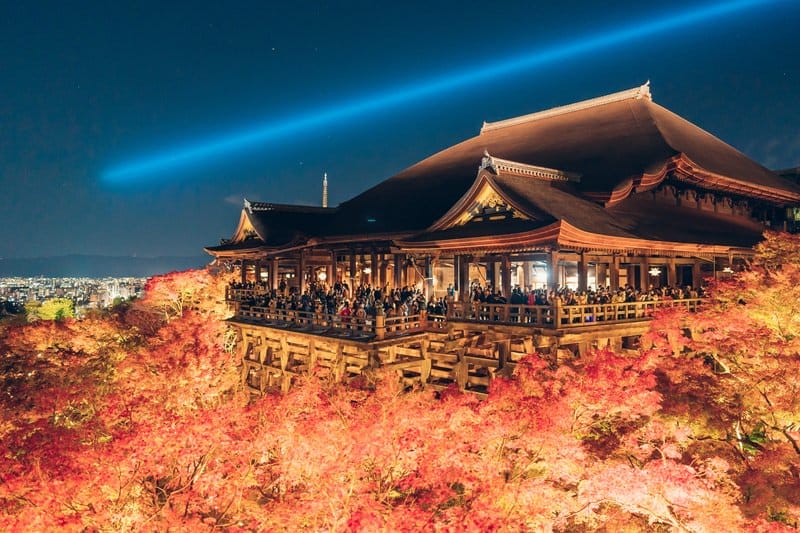
Kiyomizu-dera is a World Heritage temple symbolizing the ancient capital of Kyoto, located about a 20-minute walk from Yasaka Shrine. Founded in 778, this temple is situated on the slopes of Mt. Otowa, with over 30 traditional temple structures scattered throughout its grounds.
The stage called "Kiyomizu no butai," built to project out over the valley from the main hall, is a must-see. As a historic structure representing Kyoto, you can experience the traditional Japanese technique where wooden pieces are assembled to support each other.
From the approximately 13-meter-high stage, you can enjoy spectacular views of the Kyoto cityscape and seasonal nature.
From Yasaka Shrine, we recommend taking the route through Ninen-zaka and Sannen-zaka, where historic wooden structures line the streets, allowing you to stroll through the traditional townscape on your way to Kiyomizu-dera.
- Address: 1-294 Kiyomizu, Higashiyama-ku, Kyoto City, Kyoto Prefecture
- Hours: 6:00–18:00 *Hours may vary by season
- Closed: None
- Phone: 075-551-1234
- Official Website: https://www.kiyomizudera.or.jp/
Kōdaiji Temple
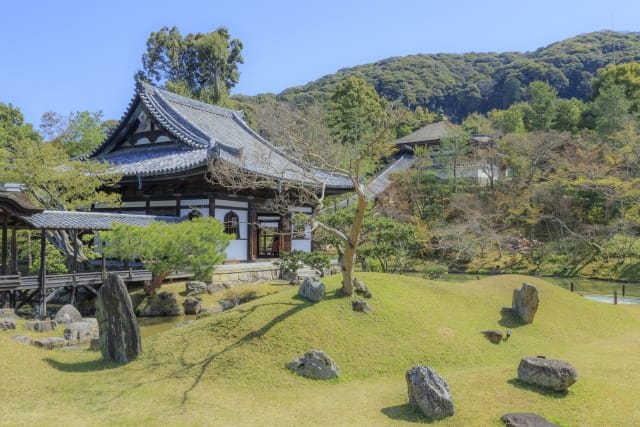
Kōdaiji Temple is a temple founded in 1606, located about a 10-minute walk from Yasaka Shrine. It is said to have been established by Nene, wife of the great commander Toyotomi Hideyoshi who unified Japan, to mourn his death.
Within the temple grounds, you can find precious original structures from the time of founding, including "Kaisan-do," which incorporates parts from a boat that Toyotomi Hideyoshi rode, and "Kangetsu-dai," a covered corridor designed for moon viewing.
You can also explore many other attractions, including refined Japanese gardens and thatched-roof teahouses.
Kōdaiji Temple is also famous for offering walks through one of Kyoto's most beautiful bamboo groves. Stroll along the path lined with tall, verdant bamboo and experience the serene and mystical atmosphere of this temple.
- Address: 526 Kōdaiji Shimokawarachō, Higashiyama-ku, Kyoto City, Kyoto Prefecture
- Hours: 9:00–17:30 (Last entry at 17:00) *Extended hours during special evening viewing periods
- Closed: None
- Phone: 075-561-9966
- Official Website: https://www.kodaiji.com/