Mt Fuji Day Trip from Tokyo 2026: Complete One-Day Itinerary, Costs & Best Seasons
Key Points of This Article
・Author’s recommended sightseeing itinerary around Mt. Fuji:
-6:45AM: Depart from Busta Shinjuku
-9:20 AM: Arrive at Mount Fuji 5th Station
-9:30 AM〜Around 6:00PM: Sightseeing around Mount Fuji 5th Station, Oshino Hakkai, Tenjoyama Park etc.
-Till 7:00PM: Return to Shinjuku (Tokyo)
・Mount Fuji is easy to reach from Tokyo by bus, train, or guided tour, each offering scenic and convenient travel
-Bus from Tokyo: Accessible from Shinjuku Station, Tokyo Station, Shibuya Station, and other major hubs. It’s convenient because it takes you directly to your destination, but travel time can vary greatly depending on traffic conditions
-Train from Tokyo: Take the direct limited express Fuji Excursion from JR Shinjuku Station. The trip takes about 2–3 hours and allows for more accurate time planning, though it is slightly more expensive than the bus
-Guided tour: You can reach the Mt. Fuji area by various means of transportation, including buses, the Shinkansen, and private hired cars. Private car tours are especially recommended, as they take you to must-see spots around Mt. Fuji that are truly loved by locals
-Mt. Fuji Full-day Day Trip Tour from Tokyo with a Private Car & Guide
Due to Mount Fuji's massive size and the scattered tourist spots around its base, planning an efficient itinerary can be quite challenging for visitors. I remember when I first visited the Mount Fuji area, I wasn't able to efficiently visit the surrounding attractions, which left me feeling like I hadn't fully experienced what the region had to offer.
I created this guide because I don't want international visitors who make the journey to Japan to have the same disappointing experience.
This article outlines an itinerary centered around three key locations: Mount Fuji's 5th Station, Oshino Hakkai Springs, and Tenkaiho Park, allowing you to explore the Mount Fuji area without feeling rushed. This recommended route was inspired by Magical Trip's new "Mt. Fuji Full-day Nature Guided Tour with a Private Chartered Car" launched in November, and offers a perfect way to experience Mount Fuji's charm.
The "Mt. Fuji Full-day Nature Guided Tour with a Private Chartered Car" is a stress-free tour with round-trip transportation from Tokyo, offered by Magical Trip behind the "Tokyo Bar Hopping Night Tour in Shinjuku," which was ranked #1 on TripAdvisor's 2024 tour rankings.

Local guides share insights about the region's culture and traditions while taking you to key spots around Mount Fuji in the most efficient way possible.
If you check out the itinerary in this article and feel like you'd prefer a deeper, stress-free experience around Mount Fuji, I encourage you to consider booking Magical Trip's tour.
Check out the video to get a clear picture of the tour details
Introduction
While caught up in Tokyo's urban hustle, I sometimes catch a glimpse of Mount Fuji in the distance — a quiet privilege of living in this city. On clear days, its silhouette peers between the high-rises, and the sight of it glowing alongside Tokyo Tower at dusk has a way of stopping you in your tracks.
Mount Fuji is more than just a pretty backdrop. As Japan's most iconic landmark and a UNESCO World Heritage Site, it has captivated people around the world for centuries. Its beauty shifts with every season — cherry blossoms framing its base in spring, lush green slopes in summer, blazing autumn foliage in fall, and a pristine snow cap in winter. Each visit reveals a different mountain.
And yet, for a long time, I told myself it was out of reach. Caught up in work, I had convinced myself that a proper trip required days off I didn't have. Then one weekend, I finally went — just a single day from Shinjuku. What I found completely changed my perspective.
Standing at the 5th Station that morning, I breathed in air that felt nothing like Tokyo's. Later, the reflection of Mount Fuji shimmering across the ponds of Oshino Hakkai. The panoramic view of the mountain and Lake Kawaguchi bathed in golden light from Tenjoyama Park. These were scenes I simply couldn't have experienced from my apartment window — and I was back in my own bed that same night.
Of course, you won't reach the summit in a single day. But the view of Mount Fuji from its base often captures the mountain's soul more completely than the summit does. This is the Mount Fuji of famous paintings and photographs — and it's absolutely within reach.
In this article, I'll share everything I've discovered about experiencing Mount Fuji on a day trip from Tokyo, in a way that international visitors can fully enjoy.
Table of Contents
・The Charm of Mount Fuji
・How to Access Mount Fuji from Tokyo
・Itinerary: A One-Day Trip from Tokyo to Mount Fuji
・Other Spots to Visit on a Day Trip to Mount Fuji
・Two Recommended Tours to Experience Mt. Fuji Area and Tokyo
・Frequently Asked Questions About a Day Trip to Mount Fuji from Tokyo
The Charm of Mount Fuji
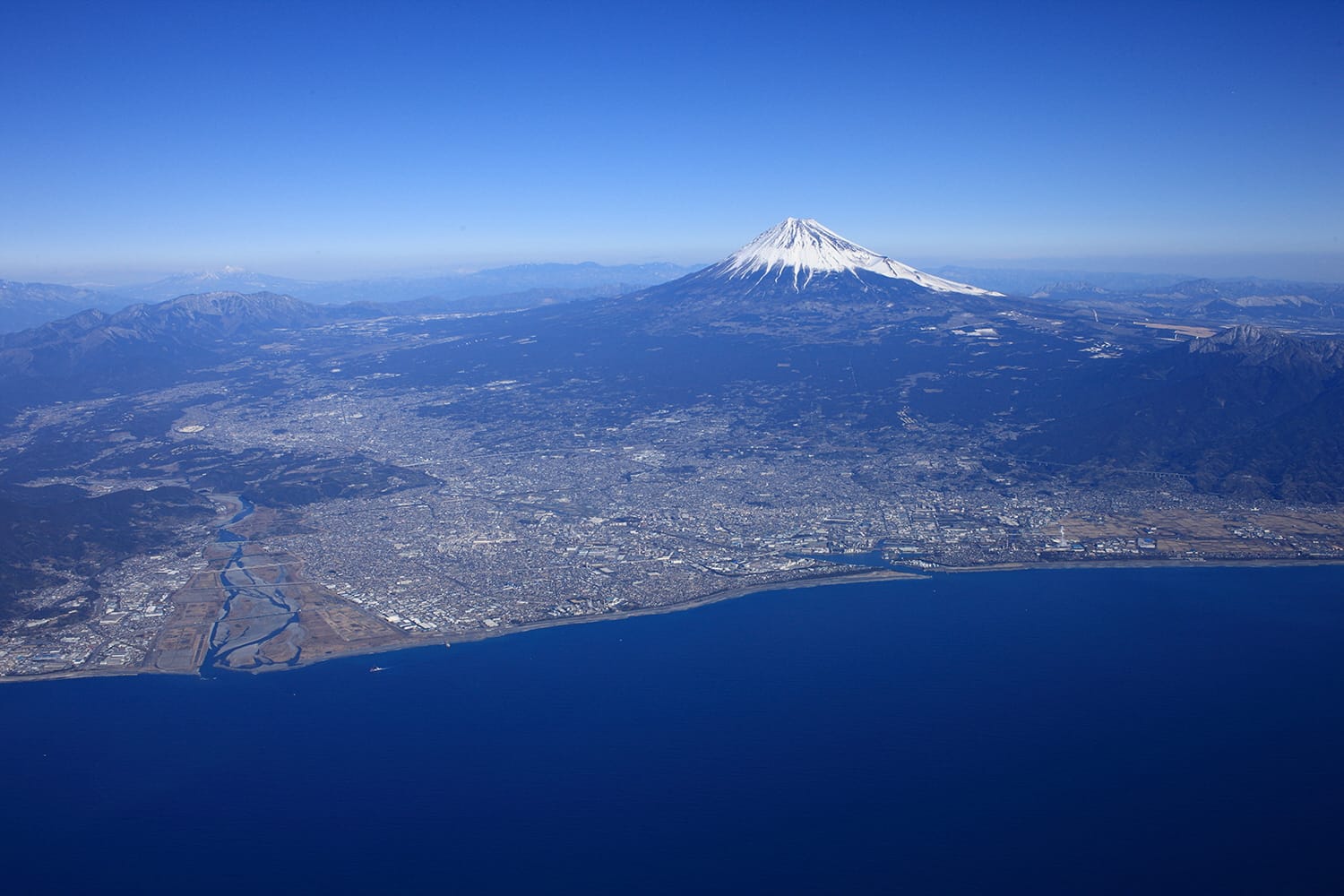
Mount Fuji is an iconic landscape of Japan and a source of national pride registered as a World Heritage site. Its majestic figure continues to fascinate not only Japanese people but people from all over the world.
When I was living in Tokyo, my heart would leap every time I caught a glimpse of Mount Fuji. Its beauty in each season is exceptional - the contrast of cherry blossoms and Mount Fuji in spring, the mountain slopes wrapped in deep green in summer, the foothills colored with autumn leaves in fall, and the pure white snow cover in winter - its appearance changes moment by moment.
Mount Fuji is also popular as a venue for various activities. It's not only great for mountain climbing and trekking but also as a spot for photography.
Through this trip, I hope you'll be able to fully experience the charm of Mount Fuji.
Mt Fuji Day Trip Quick Facts
Mt. Fuji Day Trip is absolutely doable from Tokyo, but it's worth knowing upfront that the areas you can visit are somewhat limited.
To make the most of your Mt. Fuji Day Trip, the key to planning is to narrow down your must-see spots to two or three, then fill the remaining time with nearby attractions. As a general guide, if you depart at 6:00 AM and return by 10:00 PM, you have up to 10 hours of free time. For a more relaxed Mt. Fuji Day Trip with a 7:00 AM departure and 4:00 PM return, expect around 6 hours.
Your choice of transportation — rental car or public transit such as buses and trains — will also significantly affect how you structure your itinerary. If you want the flexibility to adjust your destinations on the go and move efficiently between spots, a rental car is the way to go. If you'd rather get to each location without any navigation stress, public transportation is recommended. Choose whichever suits your travel style and priorities.
Local's Tips for Day Trip from Tokyo to Mt.Fuji
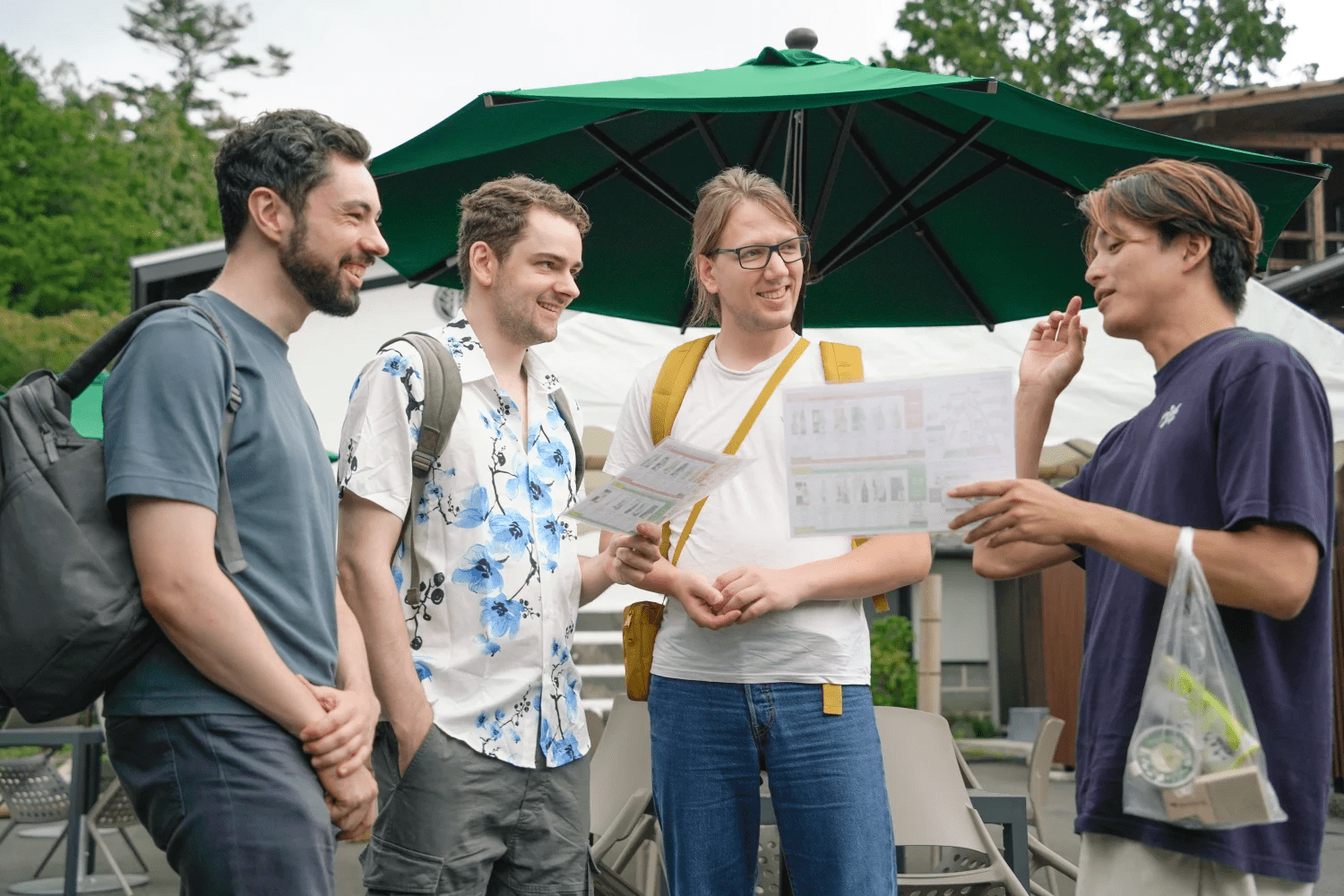
The natural scenery and tourist attractions around Mt. Fuji are spread across a wide area, so trying to cover them all in a single Mt. Fuji Day Trip on your own is genuinely difficult.
Traveling independently means you'll need to handle logistics like securing a rental car and researching bus timetables — all of which takes considerable preparation. If you'd rather skip that hassle and focus on enjoying the journey, joining a tour led by a local guide is a great way to hit multiple highlights efficiently.
Mt. Fuji Full-day Day Trip Tour from Tokyo with a Private Car & Guide
Best Time to Visit Mt Fuji & How Appearance Changes by Season
The likelihood of a clear view of Mt. Fuji varies by month, with October through January offering the best visibility. During this period, the cold, crisp air makes the mountain easier to see, and if the location and weather conditions align, you may even witness "Diamond Fuji" — a spectacular moment when the sun appears to sit perfectly atop the summit.
The best seasons for Mt. Fuji sightseeing are late March to early April, when cherry blossoms are in full bloom, and late October to early November, when the mountains glow with vibrant autumn foliage. From mid-April through mid-November, the Mt. Fuji 5th Station — the main base for Mt. Fuji tourism — is open to visitors, offering access to mountain shrines rooted in ancient religious traditions, Mt. Fuji-themed cuisine, and souvenir shopping.
Below, you'll find a detailed look at recommended seasonal events and spots.
Recommended Spring Events and Spots Around Mount Fuji
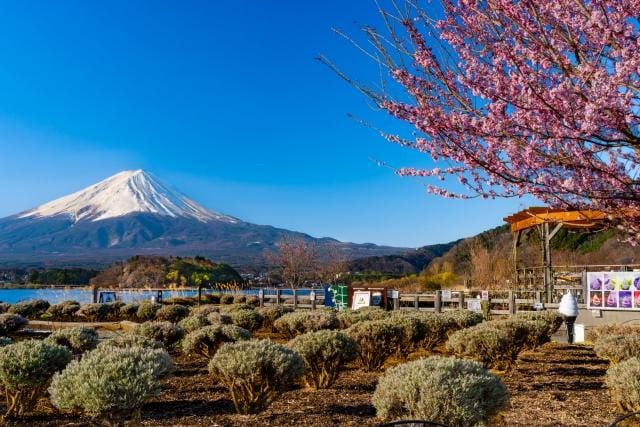
In spring, the Mt. Fuji area hosts cherry blossom events such as the "Fujikawaguchiko Cherry Blossom Festival" during the sakura season from late March to early April. The iconic photo spot "Arakurayama Sengen Park" — where cherry blossoms, Mt. Fuji, and a five-story pagoda all appear in a single frame — is a must-visit, along with the shores of Lake Kawaguchi and Oshino Hakkai, both stunning during this season.
If you're planning a spring Mt. Fuji Day Trip, be sure to check the article below for details on cherry blossom spots and limited-time events.
Spring at Mt. Fuji: The Complete Guide
Recommended Autumn Events and Spots Around Mount Fuji
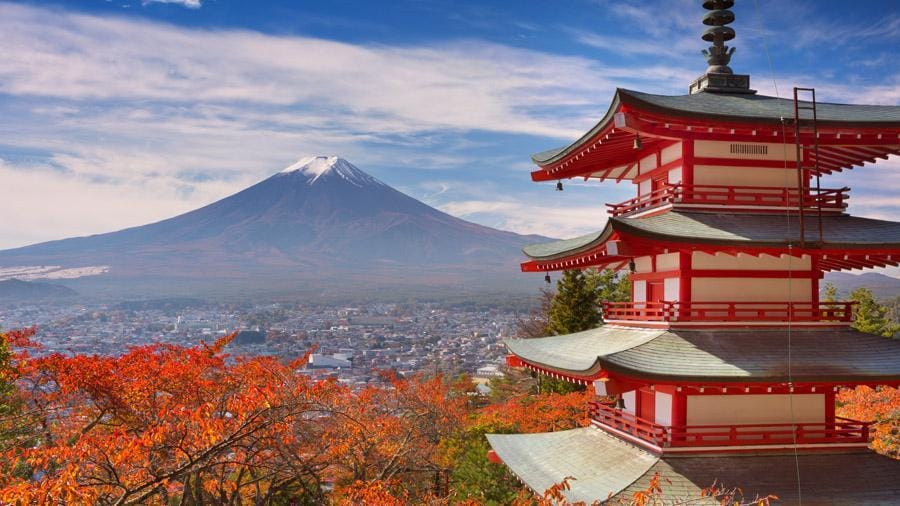
In autumn, foliage festivals are held around Lake Kawaguchi and Lake Yamanaka from late October through late November. The sight of snow-capped Mt. Fuji rising above vivid autumn leaves — warm tones of red and orange set against the cool blues of the mountain and sky — creates a breathtaking contrast. Among the most popular photography spots during an autumn Mt. Fuji Day Trip are the "Momiji Corridor" near Lake Kawaguchi and the "Sunset Shore" at Lake Yamanaka.
If you're planning an autumn visit, the article below covers event highlights and scenic spots in detail.
Autumn at Mt. Fuji: The Complete Guide
Recommended Summer Events and Spots Around Mount Fuji
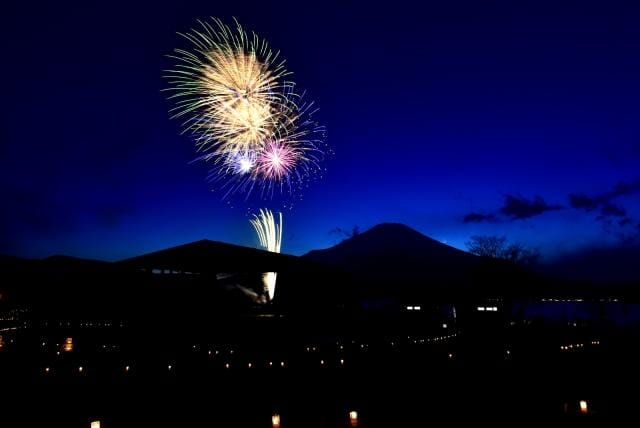
Summer (July through early September) is the Mt. Fuji climbing season. Festive fireworks events light up the area, including the "Kawaguchiko Yamabiraki Festival Fireworks" celebrating the official opening of the mountain, and the "Lake Yamanaka Hōko Festival," which features approximately 10,000 fireworks. During a summer Mt. Fuji Day Trip, hiking around the 5th Station and lake activities on Lake Kawaguchi and Lake Yamanaka are also highly recommended.
For more on summer events around Mt. Fuji and hiking options, check out the article below.
Summer at Mt. Fuji: The Complete Guide
Recommended Winter Events and Spots Around Mount Fuji
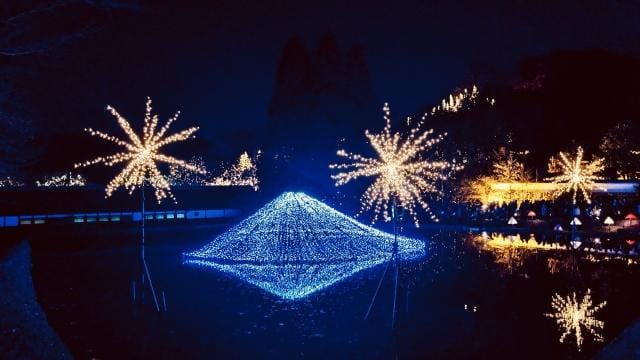
Winter is the season to witness the mystical beauty of Mt. Fuji draped in snow. Events like the "Kawaguchiko Winter Fireworks" and the "Lake Yamanaka Ice Candle Festival" offer a uniquely winter atmosphere, with Mt. Fuji dramatically illuminated against a magical light. Because the air is at its clearest in winter, this is one of the best times for a Mt. Fuji Day Trip focused on photography — strolling around the Fuji Five Lakes (Lake Kawaguchi, Lake Yamanaka, Lake Motosu, Lake Shoji, and Lake Saiko) is particularly rewarding.
The article below introduces ways to enjoy Mt. Fuji in winter that don't involve climbing, so check it out and experience the scenery safely.
Winter at Mt. Fuji: The Complete Guide
With an Efficient Itinerary Led by a Local Guide Who Knows Mt.Fuji Area Inside and Out, You can Enjoy in Just One Day!
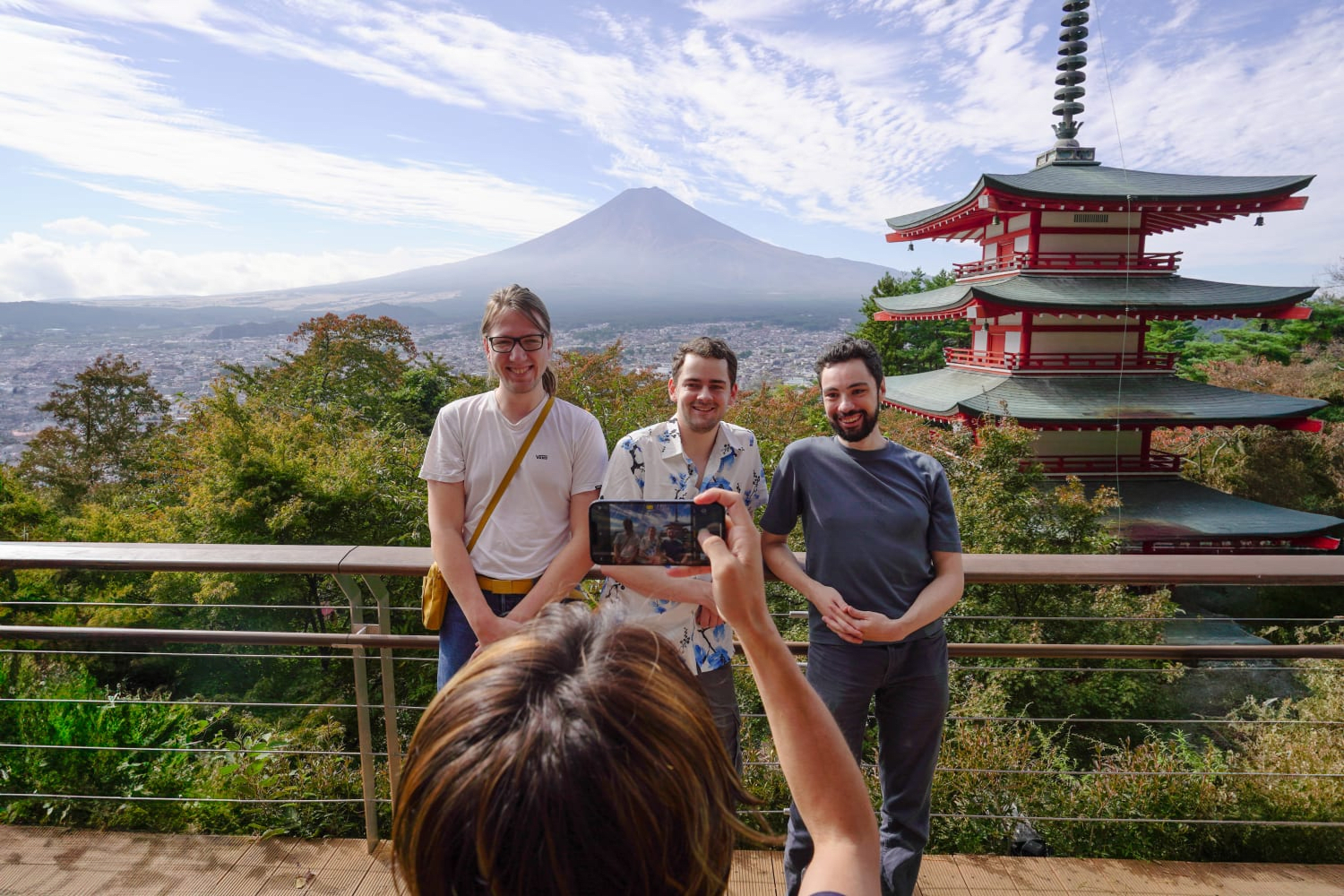
Want to get even more out of your Mt. Fuji Day Trip? Consider joining a tour led by a local guide. Magical Trip runs tours for international visitors across Japan, and with their English-speaking guides, you can explore the highlights of the Mt. Fuji area while learning about the local attractions and Japanese culture in depth.
Magical Trip offers the "Mt. Fuji Full-day Day Trip Tour from Tokyo with a Private Car & Guide," which lets you experience your Mt. Fuji Day Trip comfortably via a dedicated vehicle from Tokyo. The tour typically includes a visit to the Mt. Fuji 5th Station, making it a perfect fit for anyone who wants to experience the feel of climbing Japan's highest peak without a full ascent. Since the guide will suggest the best route based on that day's weather conditions, even first-time visitors to Mt. Fuji can join with complete peace of mind.
[Mt. Fuji Full-day Day Trip Tour from Tokyo with a Private Car & Guide]
- Meeting Point: A hotel within the designated area or the default meeting point (Shinjuku area)
- Tour Area: Tokyo to the Mt. Fuji region
- Start Time: From 8:00 AM
- Tour URL: https://www.magical-trip.com/product/5fb4ab62-c50d-423d-b91e-2aa2291a480f?utm_source=mt-media&utm_medium=article&utm_content=link-in-article&utm_campaign=a-guide-to-enjoying-mt-fuji-in-winter-for-foreign-tourists-2025-w-map
Magical Trip also offers walking tours around the lakeside areas near Mt. Fuji, as well as tours where you can experience traditional Japanese crafts. For more details, visit the official website below.
How to Access & How Much Does a Mt Fuji Day Trip Cost?
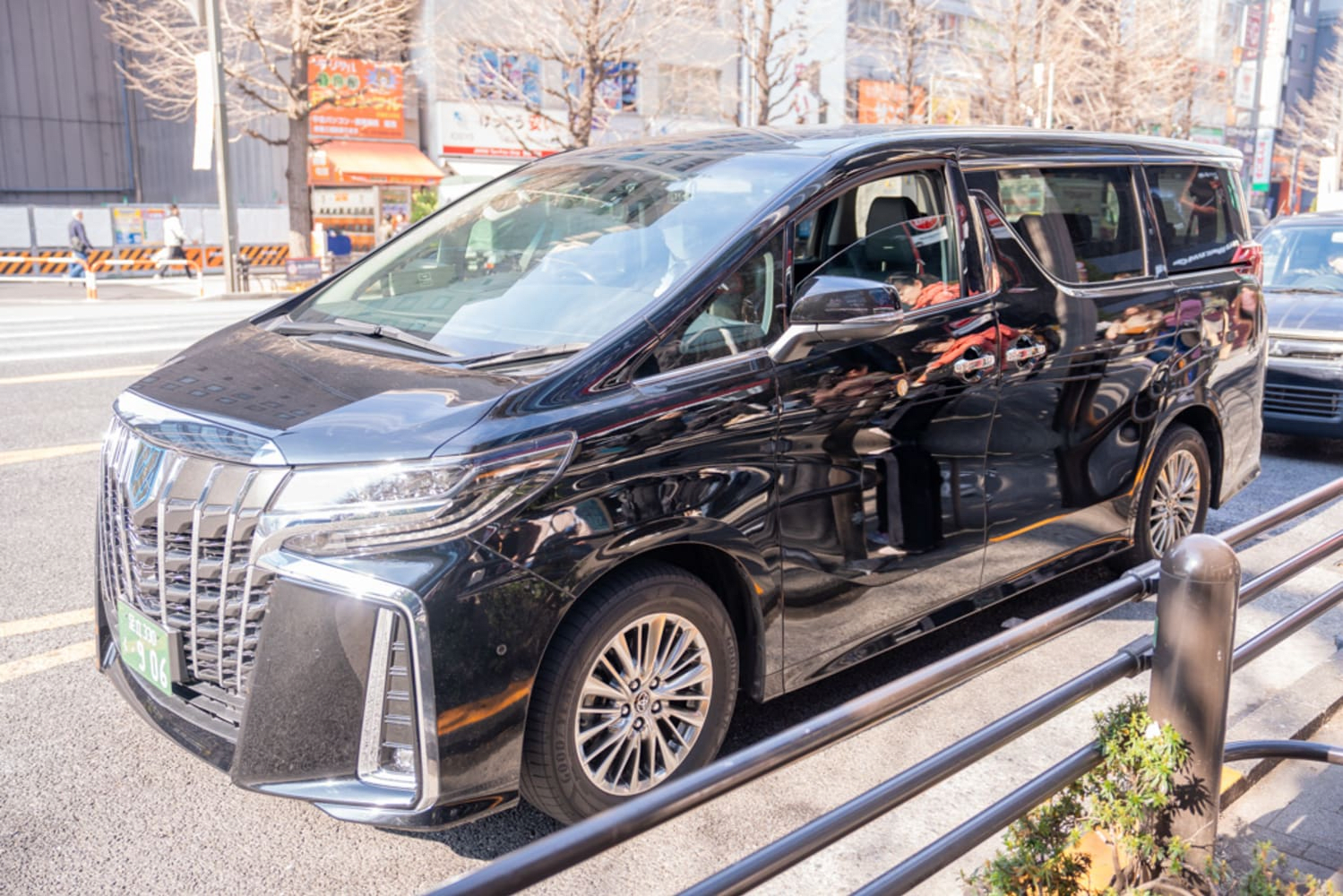
If you are planning to access Mt. Fuji from Tokyo on your own, there are various transportation options available, including highway buses, limited express trains, and cars.
Among them, the most affordable option is the highway bus operated by Fujikyu Highway Bus, available from Shinjuku Station (Busta Shinjuku). It takes approximately 1 hour and 35 minutes to Kawaguchiko Station with no transfers, at a reasonable fare of around 2,000 yen. On a clear day, you can enjoy views of Mt. Fuji right from the window, making it a great choice for those who want to take in the scenery even during the journey.
Another option is to take the JR Chuo Line from Tokyo Station to Shinjuku, then board the limited express train "FUJI EXCURSION" bound for Kawaguchiko Station. What I personally love about the limited express train is that you can enjoy views of Mt. Fuji and the townscape from inside the train, and even savor an Ekiben (Japanese boxed lunch) along the way.
If you enjoy driving, you can also head to the area around Mt. Fuji via the expressway, with the freedom to make stops along the way. However, please keep in mind that traffic congestion may occur during the tourist season.
Below is a summary of the estimated travel times and fares for each option — use it as a reference when choosing the transportation method that best suits your Mt. Fuji Day Trip.
Main Transportation Options from Shinjuku Station to Kawaguchiko Station:
- Highway Bus (Fujikyu Highway Bus): Travel Time (fastest): 1 hour 35 minutes / Fare: Counter 2,200 yen, Web 2,000 yen
- Limited Express Train (FUJI EXCURSION): Travel Time: Approximately 2 hours / Fare: 4,130 yen
- Car (Shinjuku IC to Kawaguchiko IC): Travel Time: Approximately 2 hours / Toll (expressway fee): Approximately 5,000 yen
DIY vs Guided Tour: Which is Better?
When planning a Mt. Fuji Day Trip, you will need to decide between arranging everything yourself (DIY) or leaving it to a professional (Guided Tour).
A DIY approach gives you a high degree of freedom, while a Guided Tour lets you explore without worrying about the language barrier, as an English-speaking guide accompanies you throughout. Each has its own advantages and disadvantages. Below is a clear breakdown of the pros and cons of both DIY and Guided Tour options — a helpful reference if you are unsure how to plan your trip.
DIY – Pros
- Transportation costs can be kept low (estimated round trip: approximately 4,000–10,000 yen)
- You can choose your preferred mode of transportation
- You can freely combine the sightseeing spots you want to visit
DIY – Cons
- You need to arrange transportation and tickets for each attraction on your own
- In the event of bad weather or unexpected trouble, navigating an unfamiliar area can be challenging
- You will need to handle situations yourself even in places where English is not widely spoken
Guided Tour – Pros
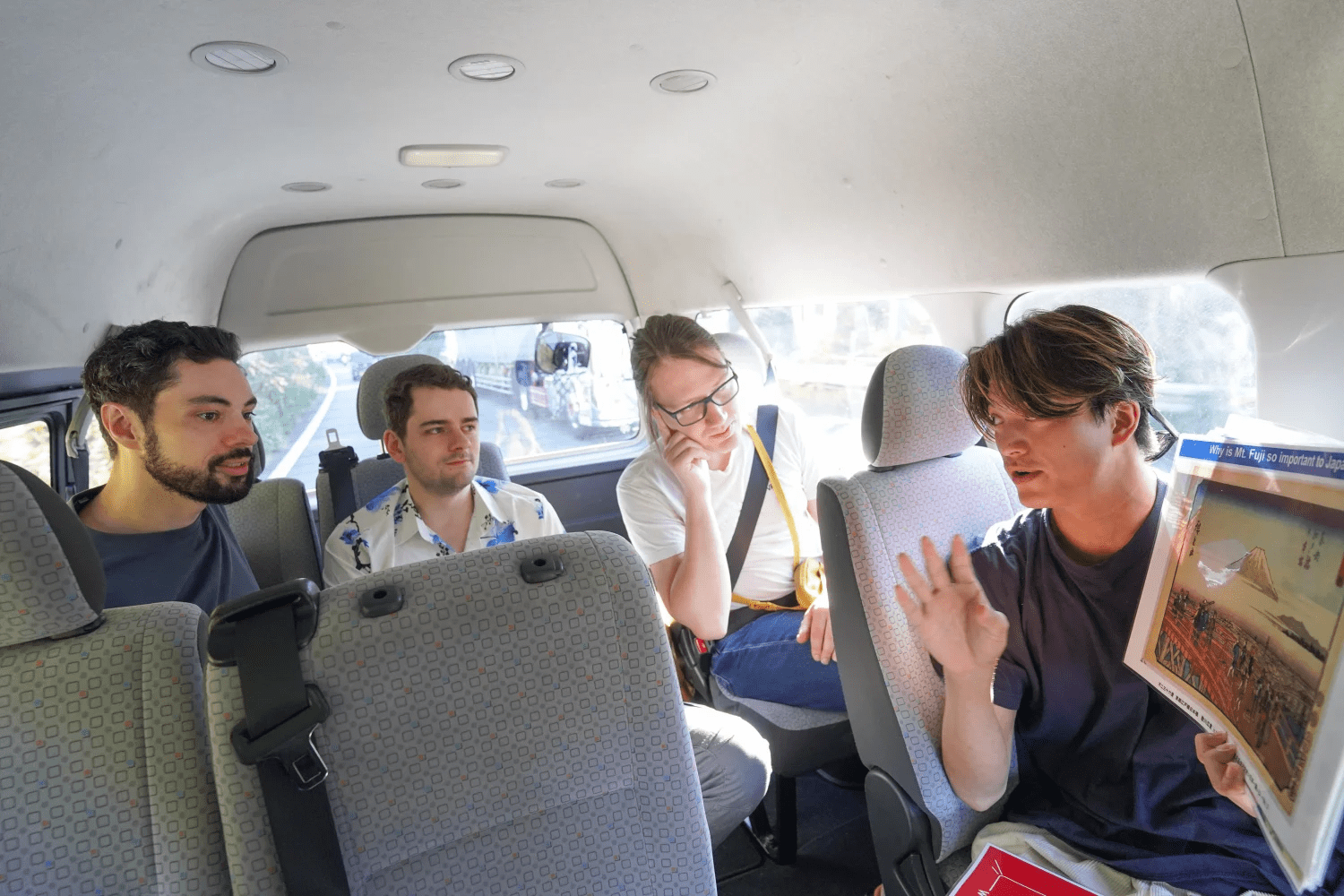
- No language concerns, as an English-speaking guide accompanies you
- All transportation, sightseeing destinations, and time management are taken care of
- You can learn about Japanese culture directly from a local guide
Guided Tour – Cons
- Costs tend to be higher, as transportation, admission fees, and meals are included (estimated from approximately 32,000 yen; as of March 2026)
- Transportation options are limited
- Flexibility in route and schedule is reduced
If you are comfortable with Japanese or are an experienced traveler looking to keep costs down, DIY is the way to go. For those visiting Japan for the first time or who prioritize efficiency, a Guided Tour is the recommended choice for your Mt. Fuji Day Trip.
Itinerary: A One-Day Trip from Tokyo to Mount Fuji
This itinerary is based on my experience of visiting multiple times, structured to be the most efficient and attractive route. It's a day from early morning to night where you can fully enjoy the charms of the Mount Fuji area.
6:45 AM - 9:20 AM Depart from Busta Shinjuku - Arrive at Mount Fuji 5th Station
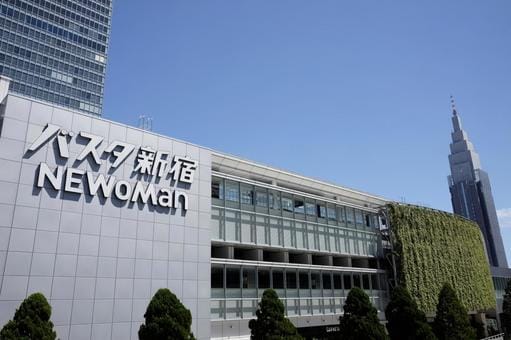
Early morning in Shinjuku, my heart races with anticipation for the adventure about to begin. I love this moment every time. The journey to Mount Fuji begins as I board the Fuji Kyuko Bus from Busta Shinjuku.
From inside the bus, you can view the figure of Mount Fuji gradually approaching.
I recommend making bus reservations online in advance from the website below. However, the site is only in Japanese, so using the translation function of browsers like Chrome is convenient. This is the method I recommend when teaching my foreign friends as well.
Website: https://www.fujikyu-travel.co.jp/free5/bus.html
9:20 AM - 11:30 AM Sightseeing at Mount Fuji 5th Station
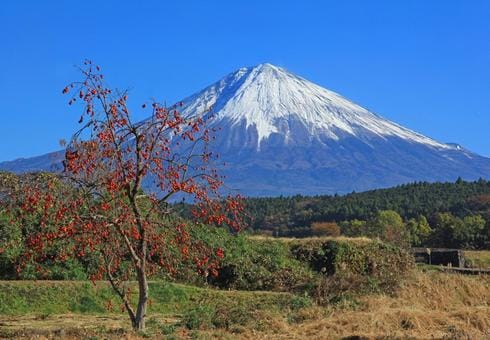
After about a two-and-a-half-hour comfortable journey, we finally arrive at the 5th Station of Mount Fuji.
The 5th Station is the gateway to Mount Fuji sightseeing. The view from here is spectacular. I still can't forget the excitement I felt when I first visited.
Here, I recommend hiking the Ochudo trail. I've walked it with friends before, and it's a wonderful experience to feel the majestic nature of Mount Fuji up close.
Visiting the Komitake Shrine is also a good opportunity to experience Japanese culture. The view from the shrine is also wonderful and popular as a photo spot.
There are many souvenir shops at the 5th Station. For lunch, I recommend enjoying "Houtou" at the restaurant "Fujisan Miharashi."
Houtou is a local dish of Yamanashi Prefecture, where flat noodles and vegetables are stewed in a miso-based soup. I've eaten it several times, and it warms the body and is perfect after mountain walking.
Time at the 5th Station passes quickly, but you should be able to fully enjoy the grandeur of Mount Fuji and the beauty of Japanese nature.
Website: http://www.fujisan5.com/
Dining Options around Mt. Fuji & Oshino Hakkai (Fujiyoshida)
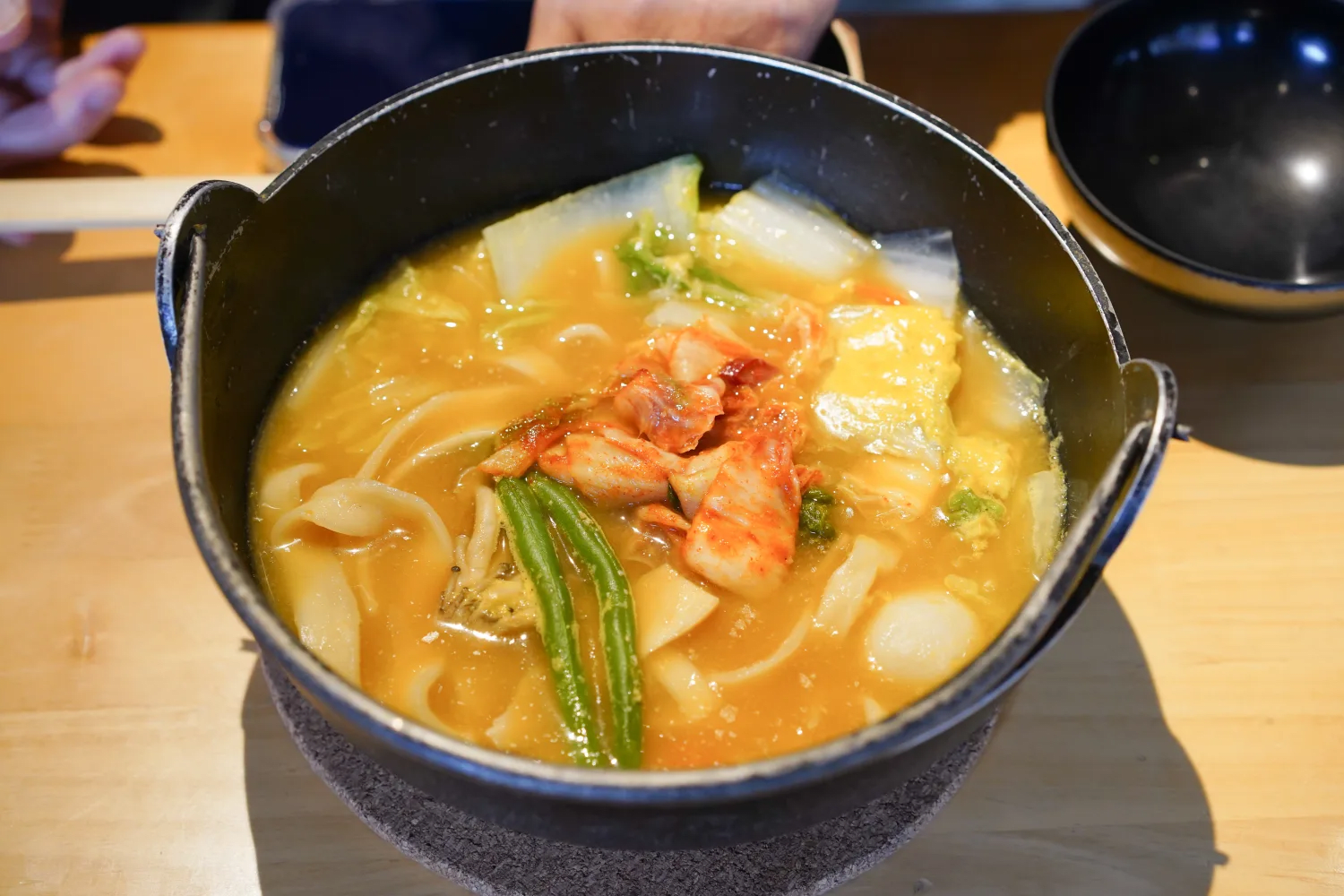
While not included in this Mt. Fuji Day Trip itinerary, we highly recommend setting aside some flexible time for lunch so you can savor the incredible local cuisine around Mt. Fuji.
In the Fujiyoshida area, which you'll pass through on your way from Tokyo to Mt. Fuji, there are many restaurants serving beloved regional dishes that have been cherished by locals for generations. If sightseeing is your top priority, stopping for lunch at Mt. Fuji 5th Station or Oshino Hakkai — both popular spots on any Mt. Fuji Day Trip — is a great option.
Below, we've handpicked five standout local restaurants near Mt. Fuji that are well worth a visit. Be sure to check them out!
11:45 AM - 1:15 PM Move to Oshino Hakkai by Bus
We head to our next destination, Oshino Hakkai. Move to Kawaguchiko Station by bus, then take another bus and get off at the "Oshino Hakkai" stop.
This travel time is also an excellent opportunity to enjoy the scenery of Mount Fuji and its surroundings from the bus window. I always liked to sit by the window during this time and watch the changing scenery.
The bus transfer might feel a bit complicated, but Japanese public transportation is very accurate, and you should be able to move smoothly. If you have any trouble, try asking station staff or locals. Japanese people are kind, and even if there's a language barrier, they'll try to help you somehow.
It's also good to use this travel time to prepare for our next destination, Oshino Hakkai. I remember being excited when I heard it was a mystical place where Mount Fuji's underground water springs forth.
1:15 PM - 2:30 PM Explore Oshino Hakkai and Oshino Village
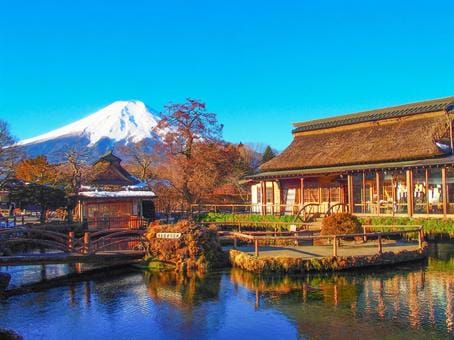
Oshino Hakkai is a mystical place where you can tour eight ponds where Mount Fuji's underground water springs forth.
Each of the eight ponds has a name, and you can tour them along a set route. Learn more about the detailed attractions of Oshino Hakkai.
The scenery of Oshino Village is also a wonderful place to enjoy the atmosphere of an old Japanese settlement. Thatched-roof houses and other features spread out like a scene from a time slip. I enjoyed the original landscape of Japan while walking slowly with friends.
The time spent at Oshino Hakkai will be a special experience where you can fully enjoy the blessings of Mount Fuji and the traditional Japanese landscape. For me, the time spent here always becomes a major highlight of the trip.
2:30 PM - 3:30 PM Move to Tenjoyama Park
After spending a quiet time at Oshino Hakkai, we head to Tenjoyama Park. Move from the Oshino Hakkai bus stop to Kawaguchiko Station by bus, then walk to the ropeway station.
3:30 PM - 4:30 PM Enjoy the Spectacular View at Tenjoyama Park
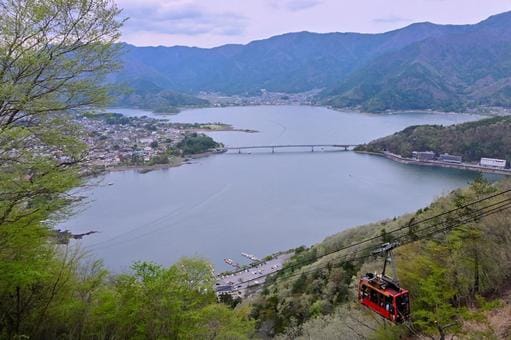
Tenjoyama Park, as its name suggests, is a place where you can enjoy heavenly scenery. When you arrive at the summit after riding the Mt. Fuji Panoramic Ropeway, a breathtaking view spreads out before you.
When I first visited here, I was at a loss for words at the beauty of the panoramic view of Mount Fuji and Lake Kawaguchi. On a clear day, you can see the figure of Mount Fuji clearly, and its grandeur is overwhelming.
The view from the observation deck shows various expressions depending on the season and time of day. I remember when I visited in autumn, the contrast between the mountains colored with autumn leaves and Mount Fuji was particularly beautiful. Also, if you visit at dusk, the view of the sunset sinking into Mount Fuji is exceptional.
This is the perfect place to take commemorative photos with Mount Fuji in the background. I also took many photos with my friends. Every time I look at those photos, wonderful memories come flooding back.
The time spent at Tenjoyama Park becomes the climax of this trip. Please enjoy the grandeur of Mount Fuji and the beauty of Japanese nature to your heart's content.
4:30 PM - 7:00 PM Return to Shinjuku (Tokyo)
To conclude this wonderful day, we head back to Tokyo. Return to Kawaguchiko Station by ropeway, then take a bus bound for Busta Shinjuku.
From the bus, you can view the silhouette of Mount Fuji at dusk.
Once back in Tokyo, I recommend having dinner in Shinjuku. My favorite is enjoying traditional Japanese cuisine at an izakaya in Shinjuku. Toasting with delicious food and drinks after a day of adventure is the perfect way to end the day.
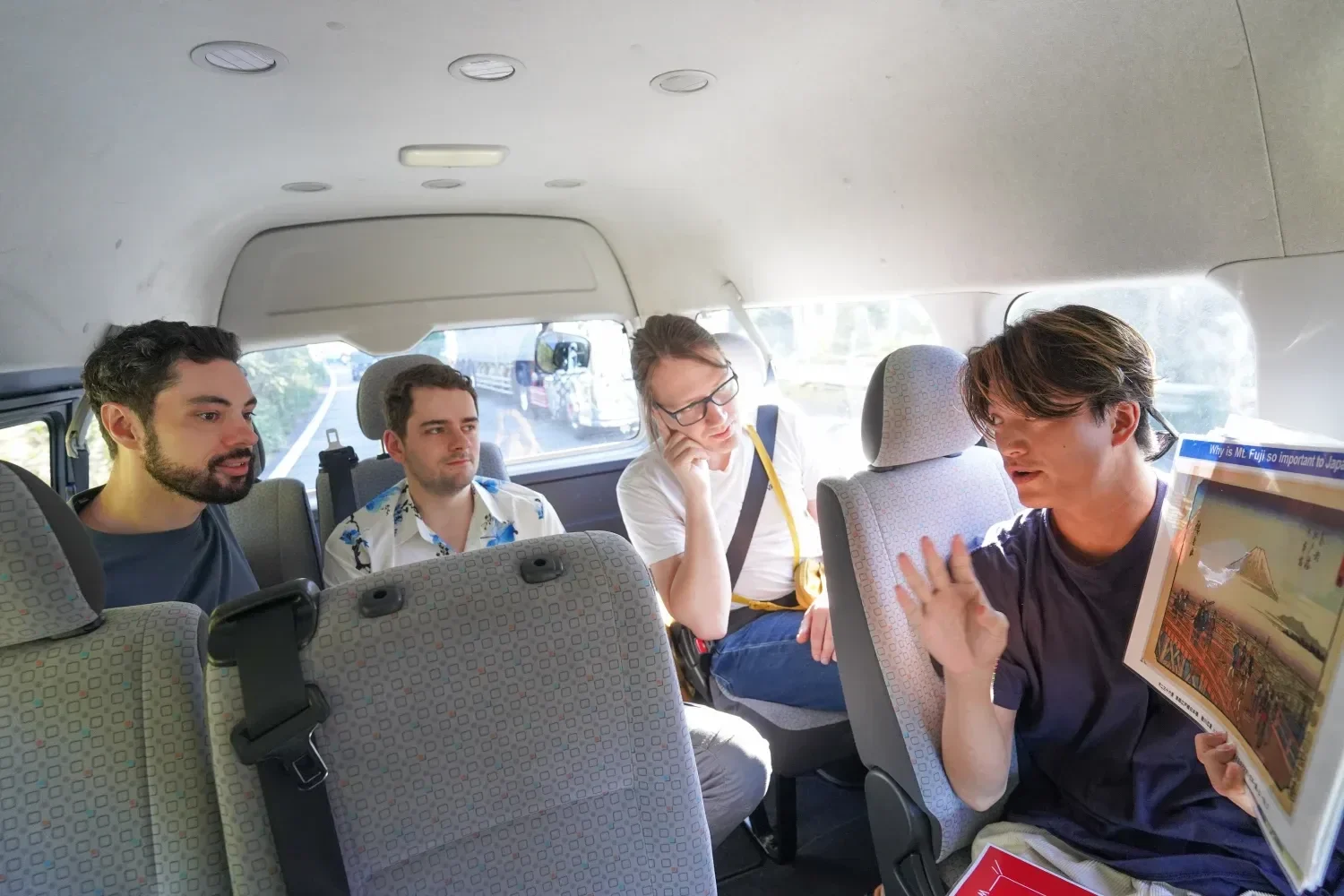
If you want to save the hassle of driving and getting around, try the "Mt. Fuji Full-day Nature Guided Tour with a Private Chartered Car" which comes with a driver and guide.
This includes round-trip transportation from Tokyo, and an experienced guide who will take you to carefully selected must-see spots around Mount Fuji.
Other Spots to Visit on a Day Trip to Mount Fuji
There are many attractive spots around Mount Fuji besides the 5th Station, Oshino Hakkai, and Tenjoyama Park. For those who have extra time or want to visit on another occasion, I'd like to introduce places that I particularly recommend.
Arakura Fuji Sengen Shrine
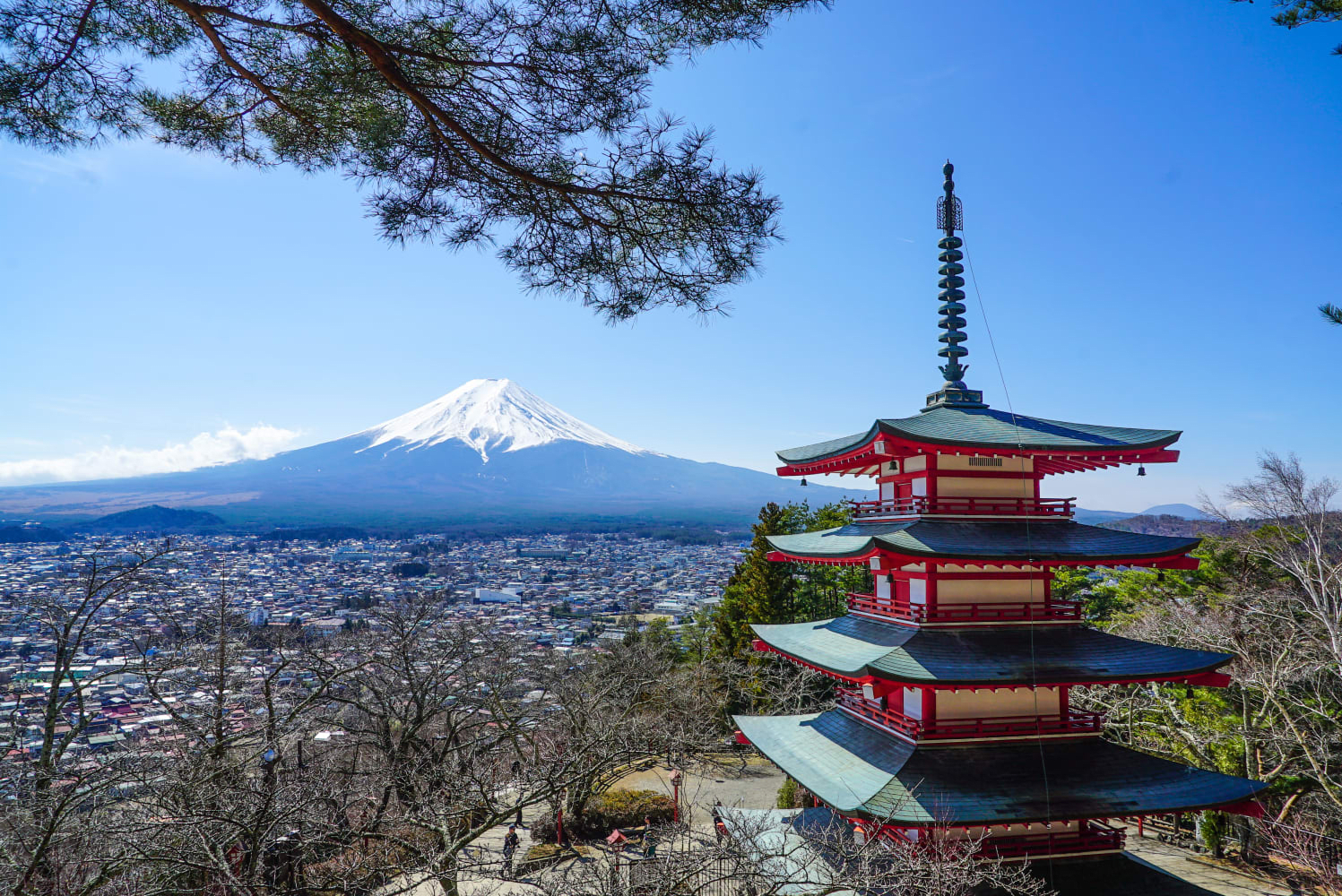
Arakura Fuji Sengen Shrine is one of Yamanashi's most iconic tourist destinations, celebrated for its stunning view of Mt. Fuji from within the shrine grounds. The vivid red torii gate and the Five-Storied Pagoda — built to honor those who fell in war — are among its most famous features, drawing visitors from both Japan and abroad throughout the year who come specifically to see Mt. Fuji from this vantage point.
The shrine is also renowned as a prime spot for cherry blossoms in spring and autumn foliage, two seasons that draw especially large crowds. Beyond the scenery, there are plenty of other highlights to enjoy, including 398 stone steps that lead up to the panoramic viewpoint.
If you're looking to take in one of Japan's most quintessentially beautiful landscapes on your Mt. Fuji Day Trip, this is an unmissable stop.
- Address: 2-4-1 Sengen, Fujiyoshida City, Yamanashi Prefecture
- Opening Hours: Open 24 hours
- Closed: No regular closing days
- Phone: 0555-23-2697
- Official Website: https://www.arakurafujisengen.com/
Oishi Park
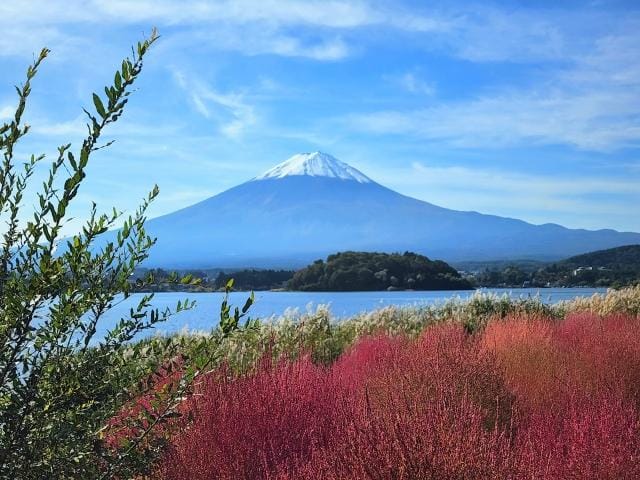
Oishi Park is a lakeside park situated along the shores of Lake Kawaguchi. Positioned directly facing Mt. Fuji, the park offers beautiful views of the mountain on clear days. On calm, clear mornings in particular, the surface of the lake reflects a perfectly inverted image of Mt. Fuji — known as "Sakasa Fuji" (Upside-Down Fuji) — making it a beloved spot for photographers.
The park is also known for its seasonal flowers, which bloom in colorful succession throughout the year, adding an extra layer of beauty to the already stunning backdrop of Mt. Fuji. Inside the park, a 350-meter flower-lined path called Hana Kaido invites visitors to take a leisurely stroll and unwind at their own pace.
If you want to spend some unhurried time enjoying the combination of vibrant flowers and Mt. Fuji during your Mt. Fuji Day Trip, this park is well worth a visit.
- Address: 2525-11 Oishi, Fujikawaguchiko Town, Minamitsuru District, Yamanashi Prefecture
- Opening Hours: Open 24 hours
- Closed: No regular closing days
- Phone: 0555-76-8230
- Official Website: N/A
Fuji Sengen Shrine
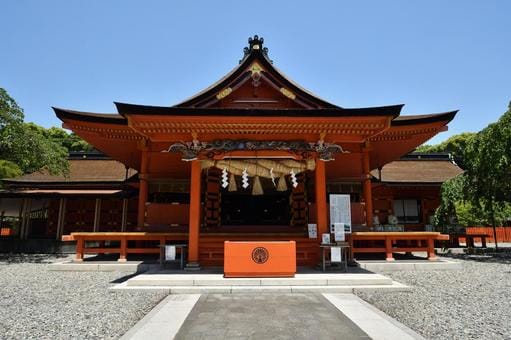
Fuji Sengen Shrine is a historic shrine that enshrines the guardian deity of Mount Fuji. I remember being overwhelmed by its solemn atmosphere when I first visited this shrine.
Particularly impressive is the sacred tree that is over 1000 years old. Its enormous figure tells the story of the passage of time and the power of nature.
Fuji Sengen Shrine is also popular as a power spot. Many people visit this shrine to feel the spiritual power of Mount Fuji. I myself felt a strange sense of purification after worshiping.
Website: https://www.sengenjinja.jp/
Lake Yamanaka
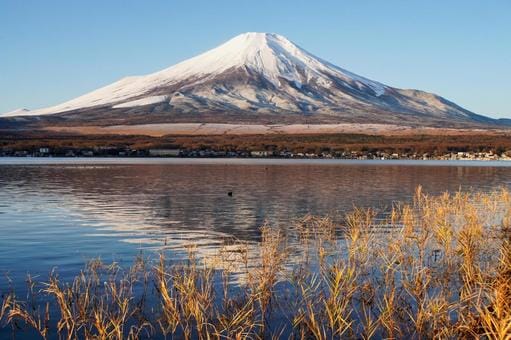
Lake Yamanaka is the highest in altitude among the Fuji Five Lakes and is known for its particularly beautiful view of Mount Fuji.
The charm of Lake Yamanaka is that it shows various expressions depending on the season. In spring, the contrast between the cherry blossoms on the lakeside and Mount Fuji creates a spectacular view. What I particularly like is the autumn scenery. The contrast between the autumn-colored trees and Mount Fuji is indescribably beautiful.
Another attractive point is that museums and leisure facilities are scattered around Lake Yamanaka. For example, at Yamanaka Lake Literature Forest Park, you can stroll through gardens inspired by Japanese literary works.
Also, at Yamanaka Lake Flower Park, you can enjoy different flowers each season, and the experience of walking through flower fields with Mount Fuji in the background is exceptional.
Fuji-Q Highland
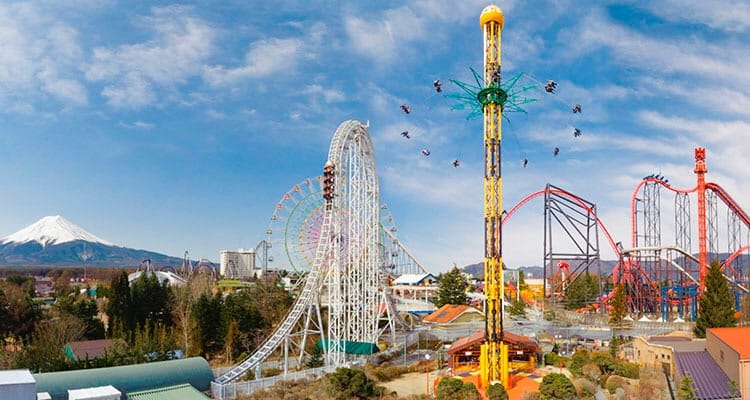
Fuji-Q Highland is a theme park with Mount Fuji as a backdrop, popular for its thrilling attractions.
It boasts some of the world's largest roller coasters and scream machines, making it irresistible for adrenaline junkies. Especially from the roller coaster called "FUJIYAMA," you can enjoy the luxurious experience of viewing Mount Fuji from near the top.
Moreover, the charm of Fuji-Q Highland isn't just about the attractions. There are many spots where you can take photos with Mount Fuji in the background, so it's also recommended for those aiming for social media-worthy pictures.
Furthermore, Fuji-Q Highland is less affected by weather compared to mountain climbing, so it's also ideal as an alternative plan for days when Mount Fuji isn't visible. Even on rainy days, you can enjoy indoor attractions.
Website: https://www.fujiq.jp/en/
Top 5 Recommended Restaurants & Cafés Near the Stops on Your Mt. Fuji Day Trip Itinerary
Maruten
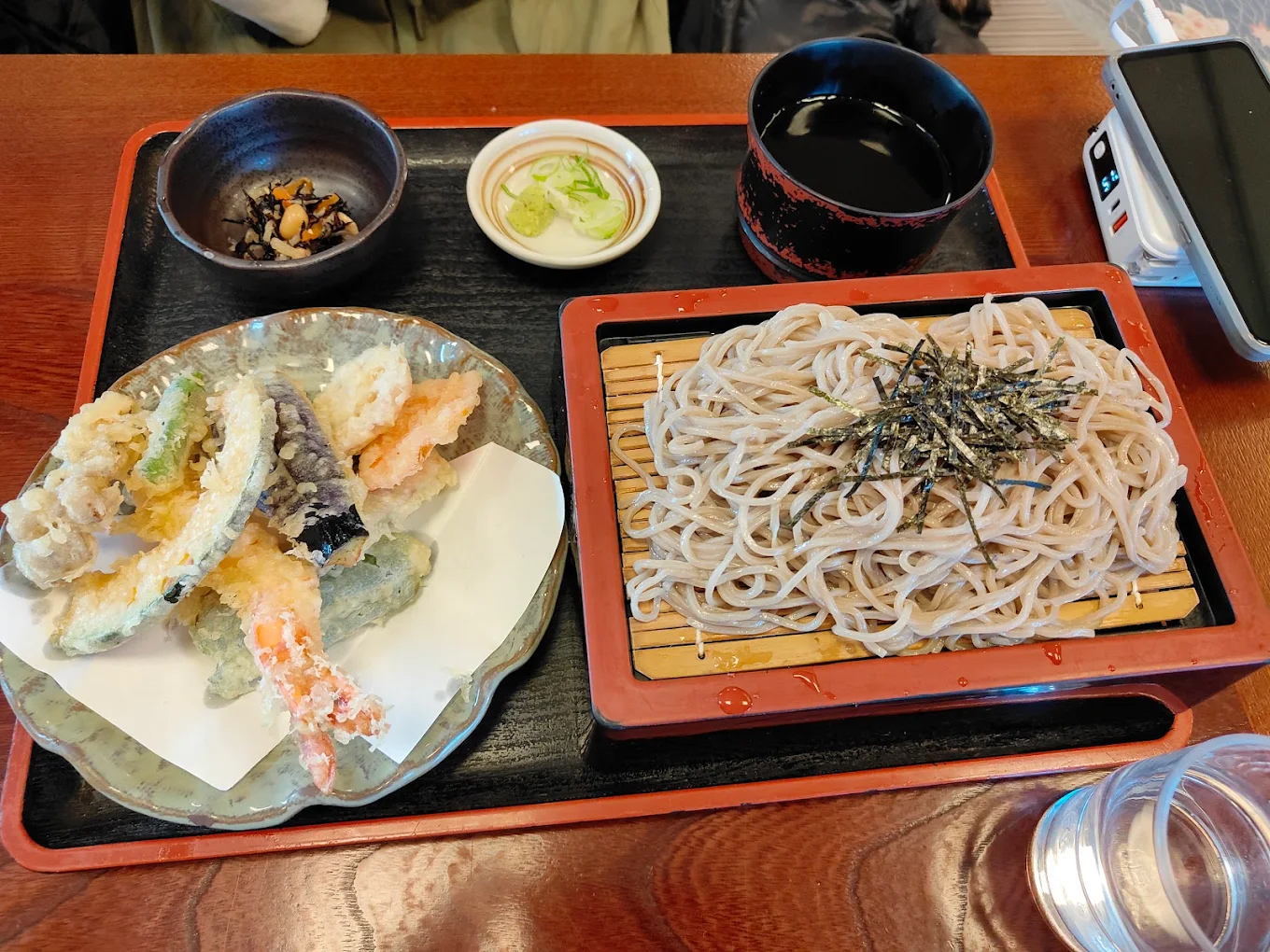
Maruten is a restaurant near Oshino Hakkai where you can savor traditional Yamanashi cuisine. The standout dish is their soba — made with high-quality buckwheat flour and natural Mt. Fuji spring water — which is highly regarded for its smooth texture and satisfying firmness.
Also popular is hoto, a beloved Yamanashi specialty featuring thick noodles slow-simmered in a rich miso soup with generous amounts of vegetables. Alongside these classics, the menu includes sashimi from carp raised in natural spring water and various rainbow trout dishes, offering a well-rounded taste of local cuisine.
After visiting Oshino Hakkai on a Mt. Fuji Day Trip, this is always my personal go-to stop to fully savor the flavors of Yamanashi.
- Address: 114 Oshino, Oshino Village, Minamitsuru District, Yamanashi Prefecture
- Opening Hours: 11:00 AM – 2:30 PM
- Closed: No regular closing days
- Phone: 0555-84-2109
- Official Website: http://maruten.asia/
Oshokujidokoro Irori
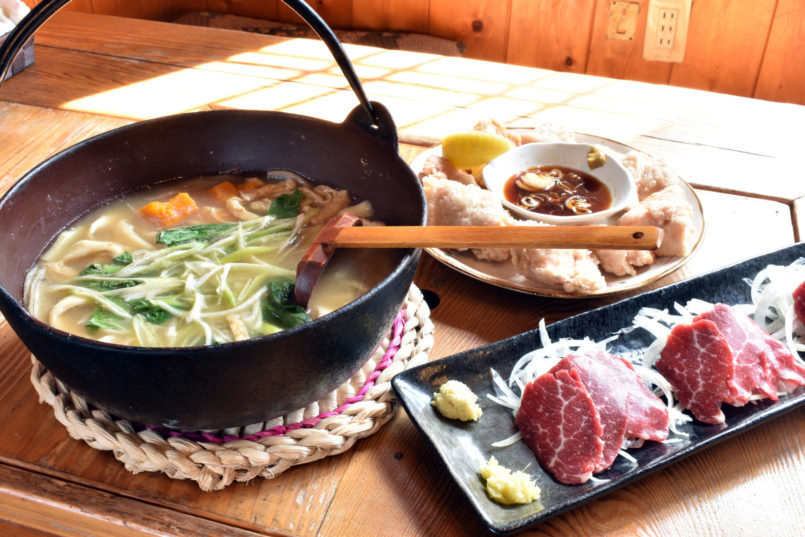
Irori is a restaurant where you can enjoy a hearty serving of Yamanashi's local cuisine. One of the most popular menu items here is Hoto, a dish well known as a local specialty of Yamanashi. It is served on a portable stove, so you can enjoy it piping hot at any time.
Since buckwheat flour is widely cultivated in the surrounding area, delicious Soba can be enjoyed year-round. Other highlights include Tofu made with snowmelt water from Mt. Fuji — the menu is characterized by healthy, easy-to-enjoy dishes. All of the vegetables served at the restaurant are grown in-house.
Located just a short walk from Oshino Hakkai, it is the perfect spot to visit after sightseeing.
- Address: 200-1 Oshinomura Oshino, Minamitsuru-gun, Yamanashi
- Hours: 11:30–14:00 / 18:00–22:00
- Closed: Every Tuesday
- Phone: 090-5516-3794
- Official Website: https://oshino-irori.com/
Sengenchaya Honten
Sengenchaya is a Hoto specialty restaurant located near Kitaguchi Hongu Fuji Sengen Jinja. The restaurant is spacious and wrapped in a serene atmosphere, allowing you to dine at a leisurely pace while taking in the lush natural surroundings.
The Hoto soup is made with a broth of dried sardines, shiitake, and other ingredients, finished with miso. The udon noodles are made the day before and rested to firm up, giving them an outstanding chewy texture.
A variety of ingredients are used as toppings, including tempura and bird offal, so feel free to order according to your preference. Hoto is also available as a souvenir, so if you enjoy it, be sure to pick some up.
- Address: 5562-7 Kamiyoshida, Fujiyoshida-shi, Yamanashi
- Hours: 11:00–16:00
- Closed: Wednesdays
- Phone: 0555-30-4010
- Official Website: https://www.sengenchaya.jp/
enico.cafe
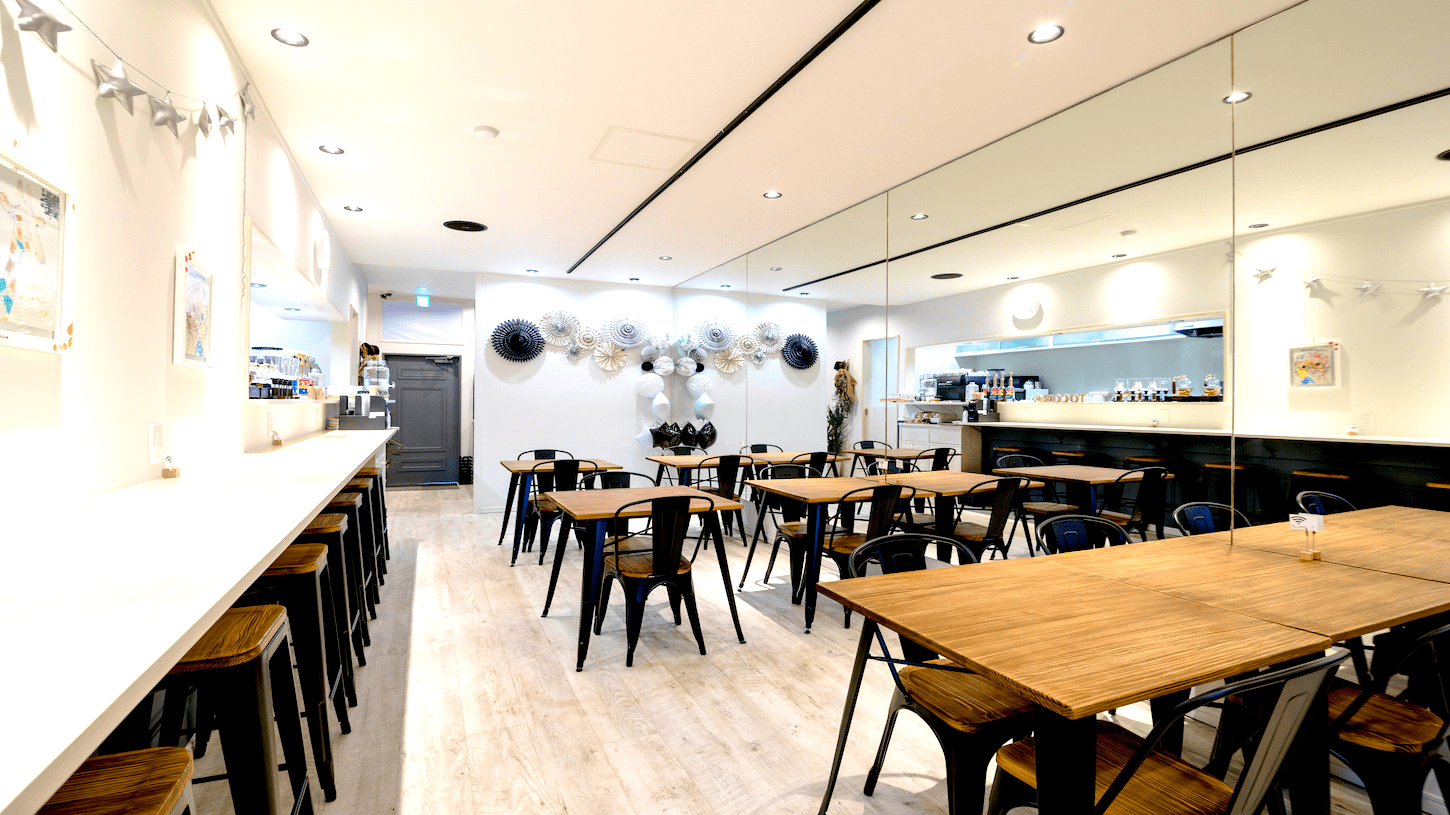
enico.cafe, located near Kawaguchiko, is a stylish café open from 7 in the morning. Its strength lies in the delicious coffee made from carefully selected beans, and one of its most appealing features is the relaxed atmosphere where you can gaze out over Kawaguchiko as time drifts by.
The café also has rooftop seating, and on clear days you can enjoy your drink with a view of Mt. Fuji. The seasonal fruit sweets are also highly recommended — their gentle sweetness is just the thing to soothe a tired body.
The breakfast menu is also extensive, with items such as Eggs Benedict made with a perfectly runny egg. I visited here during my own sightseeing trip and enjoyed the beautiful scenery alongside my drink.
- Address: 3733-7 Funatsu, Fujikawaguchiko-cho, Minamitsuru-gun, Yamanashi
- Hours: Sun–Fri & Holidays 7:00–17:00 / Sat 7:00–19:30
- Closed: None
- Phone: 070-3346-0825
- Official Website: https://enico-cafe.com/
Traditional Japanese House NAKAMURA
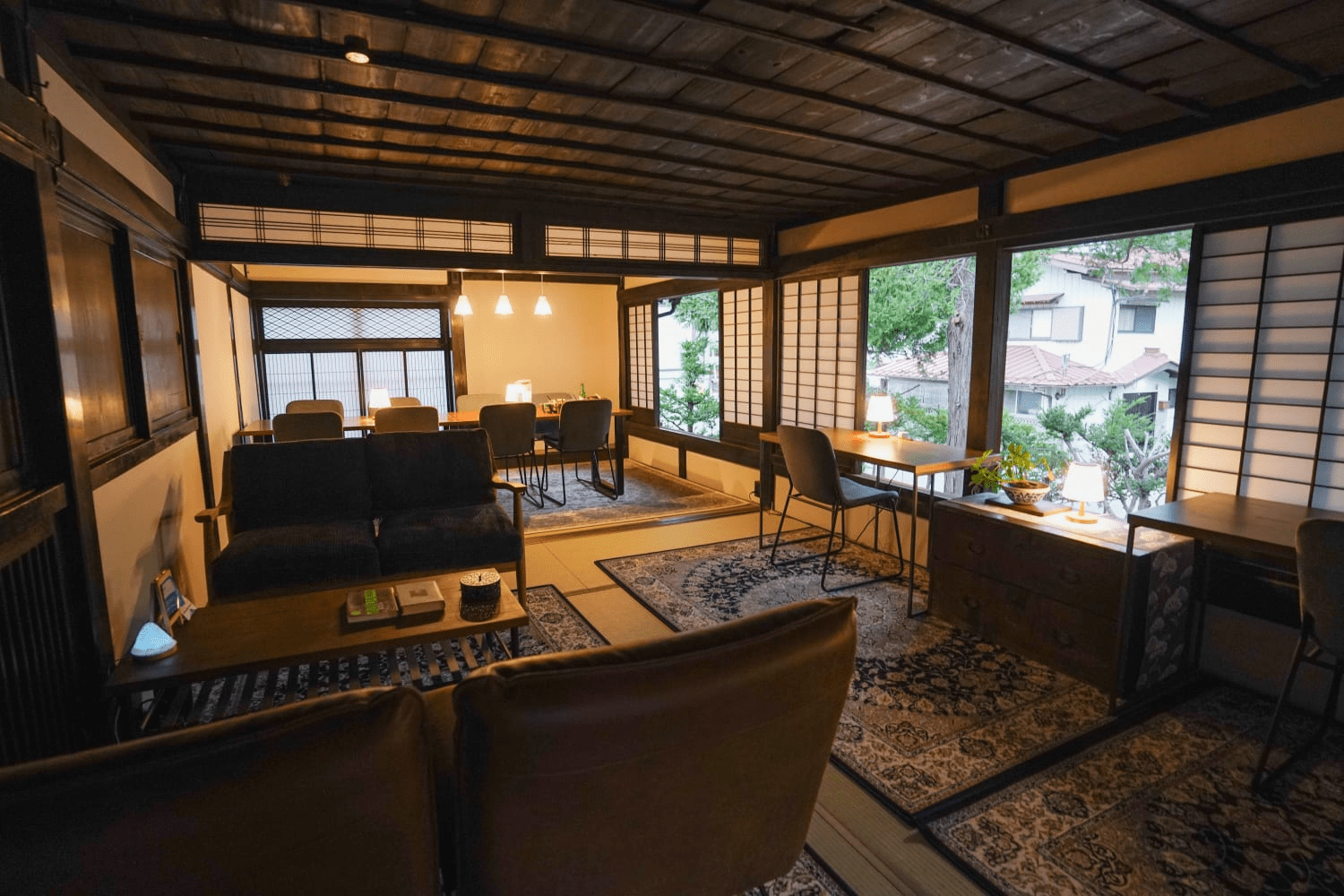
NAKAMURA is a Cafe & Shop that opened in a renovated traditional Japanese farmhouse. At the café, you can enjoy drinks such as coffee, as well as vegan food items and sweets.
The shop sells traditional Japanese crafts and original goods created by local artists, making it a great place to find souvenirs. The second-floor room serves as a coworking space, and its practicality — allowing you to work on a laptop while gazing at Mt. Fuji — is another reason for its popularity.
The café also organizes tours to explore local attractions, offering a range of engaging experiences. During my own visit, I had a great time enjoying the café and joining one of the tours organized by the shop.
- Address: 1045 Kawaguchi, Fujikawaguchiko-cho, Minamitsuru-gun, Yamanashi
- Hours: 10:00–17:00
- Closed: None
- Phone: 0555-28-6433
- Official Website: https://kawaguchiko-nakamura.com/
Winter Mt Fuji Day Trip: Things to Keep in Mind When Planning Your Itinerary and Alternative Options
If you are planning a Mt. Fuji Day Trip in winter, there are some important points to keep in mind that are unique to the snowy season around Mt. Fuji.
The biggest difference from the warmer seasons is that the road leading to the Fuji 5th Station — a key sightseeing base — is closed. The road on the Shizuoka side is typically impassable from mid-November through late April, and even the Fuji Subaru Line on the Yamanashi side, which is open year-round in general, is closed on most days from late November through late April.
If access to the Fuji 5th Station is not possible, consider filling your itinerary with winter-exclusive events and scenic spots instead.
Winter is actually one of the best seasons for clear views of Mt. Fuji, making it ideal for sightseeing and photography around the Fuji Five Lakes area. At Lake Yamanakako, when weather conditions align, you can witness the "Diamond Fuji" at sunset, while at Lake Saiko, ice tree sculptures appear annually from late January to early February — offering breathtaking scenery where Mt. Fuji and the season's nature come together.
Winter also sees many events celebrating the majestic Mt. Fuji against the crisp, clear air, such as the Kawaguchiko Winter Fireworks and the Yamanakako Ice Candle Festival. However, please note that the fireworks display begins at 20:00, which makes for a tight schedule if you are returning to Tokyo on the same day. Customize your events and sightseeing spots to match your itinerary and interests on your Mt. Fuji Day Trip.
Two Recommended Tours to Experience Mt. Fuji Area and Tokyo
Here are two special tours from MagicalTrip that allow international travelers to fully experience both the nature of Mt. Fuji and Tokyo's nightlife culture.
Mt. Fuji Full-day Nature Guided Tour with a Private Chartered Car
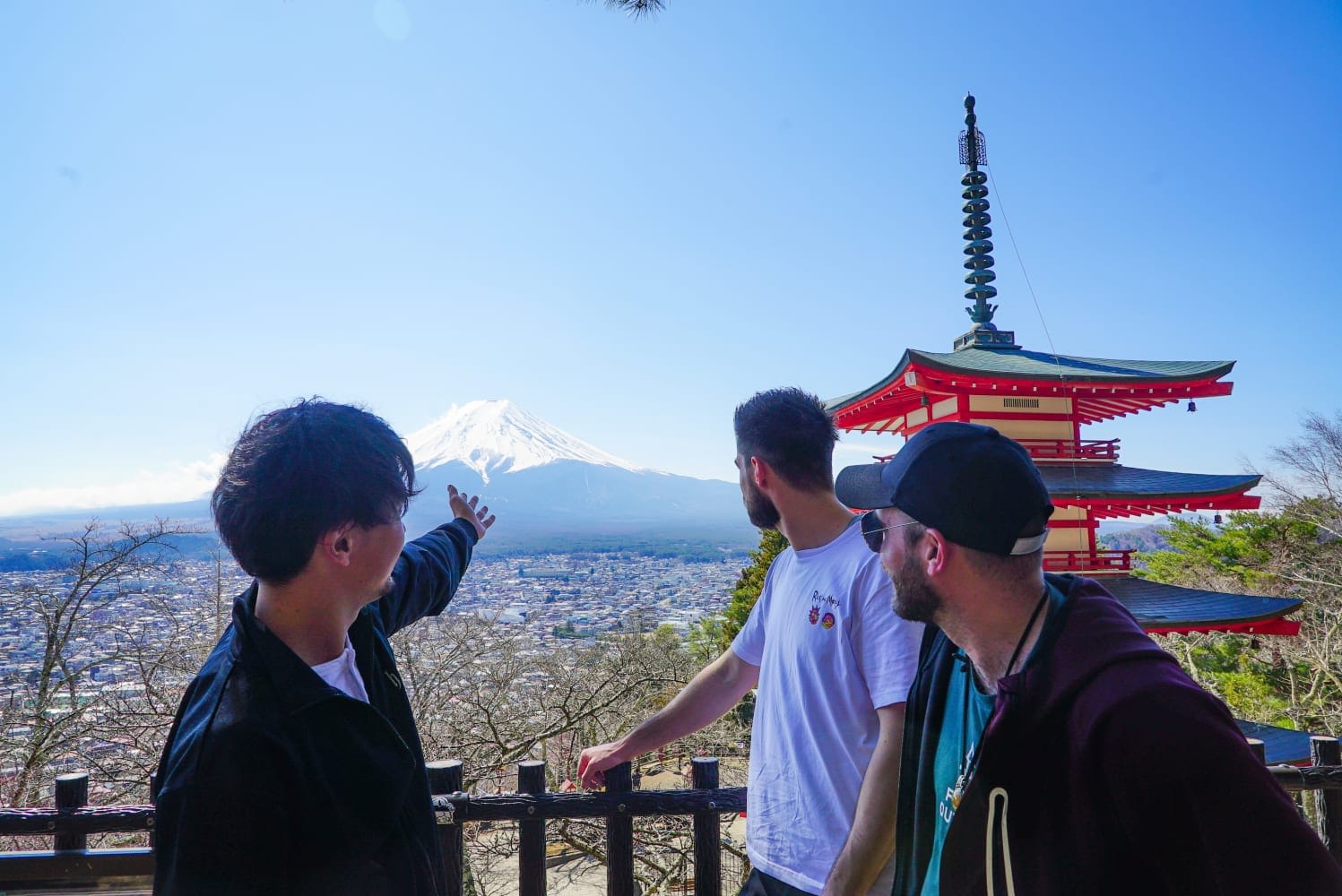
This luxurious day tour, priced at $635.65 per person (approximately 93,000 yen), is perfect for travelers who want to deeply understand Japanese nature and culture. With a dedicated English-speaking guide, you'll explore historical areas around Mt. Fuji.
You'll discover special spots not visited by regular tours, including a wasabi farm with over 100 years of history, a shrine with over 1,000 years of heritage, and hidden waterfalls. At Mt. Fuji's 5th station, you can enjoy magnificent views and take memorable photos with a traditional five-story pagoda.
Lunch features local ingredients using Mt. Fuji spring water, with vegan and gluten-free options available. At the end of the tour, you can enjoy tastings of local sake, wine, matcha, and coffee. This tour is ideal for families, groups of friends, and travelers wanting to deeply experience Japanese culture.
Starting from Shinjuku or your hotel, a private driver and guide will escort you comfortably. Photos taken during the tour will be shared via email later. Full refunds are available for cancellations made 24 hours in advance, and the course can be adjusted according to weather and season.
For details: Mt. Fuji Full-day Nature Guided Tour with a Private Chartered Car
What is the Tour like:
Tokyo Bar Hopping Night Tour in Shinjuku
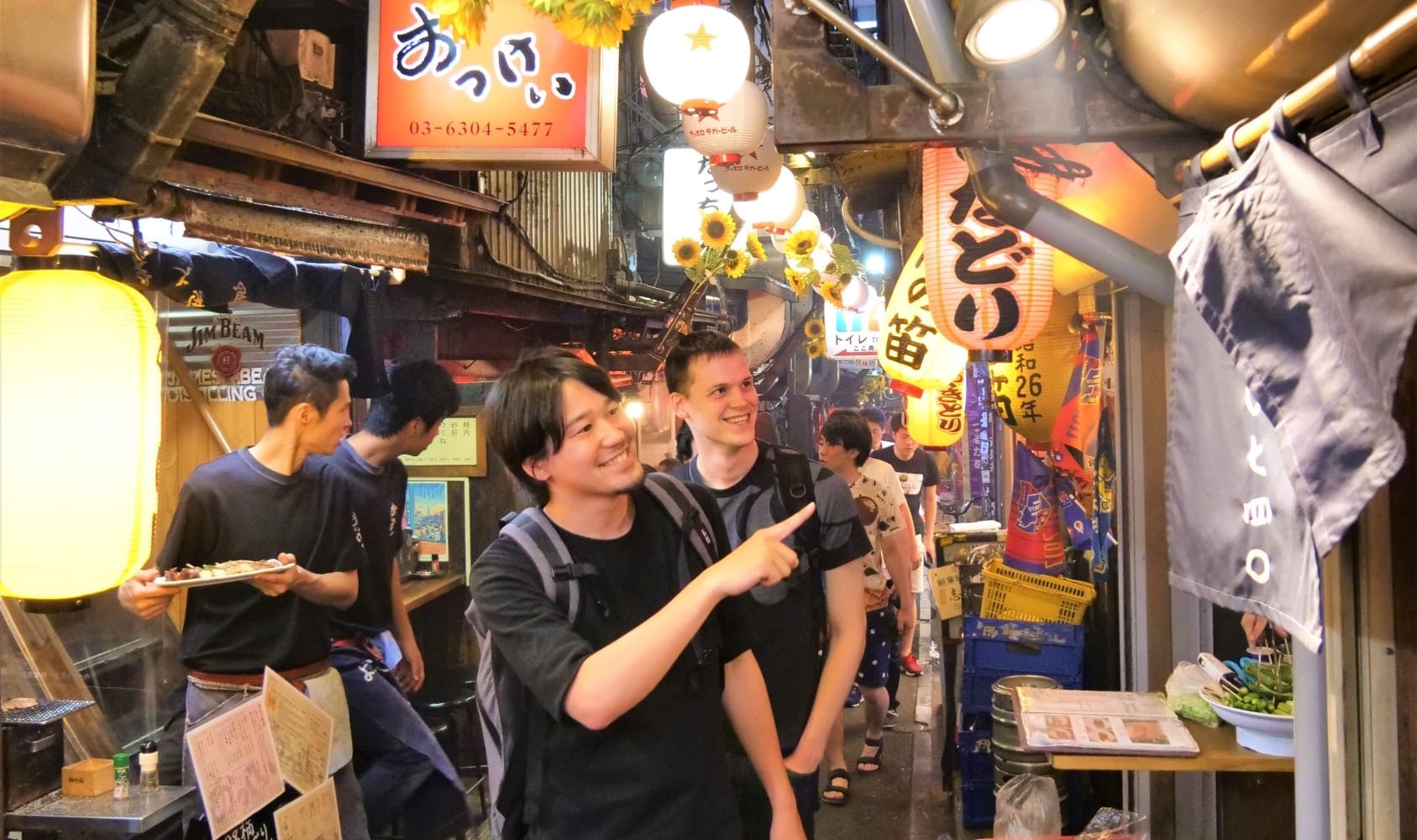
This 3.5-hour tour costs $105.56 per person and is TripAdvisor's #1 rated tour for 2024, experienced by over 20,000 people. Visit three hidden izakaya bars in Shinjuku that tourists rarely find.
The tour includes more than 4 drinks (2 drinks at the first stop, all-you-can-drink at the second, and 1 drink at the third) and dinner featuring yakitori, gyoza, and fried tofu. Open to ages 15 and up, with alcohol served only to those 20 and older. Vegetarian options are available.
Explore different areas of Shinjuku, including Omoide Yokocho and Kabukicho, while interacting with locals. With English-speaking guides explaining menus and recommendations, non-Japanese speakers can feel at ease.
Full refunds are available for cancellations made 24 hours in advance, and photo-taking service is included. The meeting point is at the black pillar next to UNIQLO Shinjuku West Exit Store, 7-8 minutes walk from Shinjuku Station West Exit.
For details: Tokyo Bar Hopping Night Tour in Shinjuku
The Mt. Fuji tour and Shinjuku bar hopping tour offer special journeys to experience Japan's nature, culture, and urban charm fully. We promise unforgettable experiences that will allow international travelers to feel the true essence of Japan.
Frequently Asked Questions About a Day Trip to Mount Fuji from Tokyo
Finally, I'll answer common questions that travelers often have about day trips to Mount Fuji.
How long is the day trip to Mt Fuji from Tokyo?
A day trip to Mt. Fuji from Tokyo takes around 10–12 hours in total, including approximately 2 hours of travel each way from Shinjuku to the Fuji Five Lakes area (Kawaguchiko). Most visitors spend 4–6 hours exploring the area before returning to Tokyo in the evening.
To make the most of your day, aim to depart early — ideally by 7:00–8:00 AM — to avoid crowds and give yourself enough time at the lake, viewpoints, or the 5th Station if you plan to go higher up the mountain.
Is it worth going to Mt Fuji from Tokyo?
Yes, a day trip to Mt. Fuji from Tokyo is absolutely worth it. As Japan's most iconic landmark, the views from Kawaguchiko and the Fuji Five Lakes area are breathtaking — especially when the snow-capped summit reflects on the lake's surface — and the area is easily accessible within 2 hours from central Tokyo.
That said, it's worth setting realistic expectations: Mt. Fuji is often shrouded in clouds, particularly in the afternoon or during summer months. Checking the weather forecast before you go — and aiming for a morning arrival — significantly increases your chances of a clear view.
Can you do Mt Fuji in one day?
Yes, a day trip is a normal way for Tokyo-based visitors to experience Mt. Fuji. While you won't have time to fully explore every corner of the Fuji Five Lakes region, one day is enough to enjoy the lake views, visit popular spots like Chureito Pagoda or Oshino Hakkai, and even reach the 5th Station on the mountain itself (open seasonally).
If you want to hike to the summit, however, one day is not enough — a proper summit climb requires an overnight stay on or near the mountain and is only possible during the official climbing season (early July to mid-September).
How much does it cost to go to Mt Fuji from Tokyo?
Budget around ¥5,000 – ¥10,000 per person for a self-guided day trip, depending on your transportation and activities. Here's a rough breakdown:
- Bus (round trip, Shinjuku → Kawaguchiko): ¥3,000–¥4,000
- Train alternative (JR + Fujikyu Railway): ¥2,500–¥3,500
- Mt. Fuji 5th Station bus (from Kawaguchiko, seasonal): ¥1,500–¥2,000 round trip
- Chureito Pagoda entrance: ¥400
- Meals and souvenirs: ¥1,500–¥3,000
What is the best month to visit Mt Fuji?
October and November are the best months to visit Mt. Fuji, offering crisp, clear skies, excellent summit visibility, and vibrant autumn foliage around the Fuji Five Lakes. April and early May are another top choice, when cherry blossoms frame the mountain in one of Japan's most celebrated seasonal views.
If you want to climb Mt. Fuji, the official season, runs from early July to mid-September, though July tends to be more crowded and humid. Note that June and July (rainy season) can bring frequent cloud cover, which may obscure the mountain entirely.
In general, mornings offer the clearest views regardless of season, as clouds tend to build around the summit as the day progresses.
Is There Time to Climb Mount Fuji?
Unfortunately, it's impossible to climb to the summit of Mount Fuji on a day trip. Summit climbing requires at least two days and one night, and thorough preparation is necessary.
However, access to the 5th Station is possible. I've been to the 5th Station several times, and the view from there is sufficiently wonderful. You can enjoy alpine plants and unique landscapes.
Climbing Mount Fuji can be a great experience, but it's important not to take it lightly and to prepare adequately. While you can't climb to the summit on a day trip, you can still feel the charm of Mount Fuji with a tour up to the 5th Station.
When is the Best Season for Mount Fuji Sightseeing?
Mount Fuji has beauty in all four seasons, and you can have a wonderful experience no matter when you visit. However, each season has its characteristics, so it's good to choose according to your preferences and purposes. Based on my experience, I'll introduce the charms of each season.
・Spring (April to May): This is the season when the contrast between cherry blossoms and Mount Fuji is beautiful. It's one of my favorite seasons. The combination of cherry blossoms blooming around Lake Kawaguchi and Mount Fuji is spectacular. Also, the temperature is comfortable and it's an easy season for sightseeing. However, be careful of crowds during Golden Week (late April to early May).
・Summer (July to September): This is the climbing season when the Mount Fuji area is most lively. This is the only time you can climb to the summit. However, it gets very crowded and temperatures are high, so you need to be careful about managing your physical condition.
・Autumn (October to November): This is the season when the combination of autumn leaves and Mount Fuji is spectacular. Especially the autumn leaves around Lake Kawaguchi and Lake Shoji are breathtakingly beautiful. Also, the temperature is comfortable and it's an easy season for sightseeing. However, it gets crowded on weekends during the peak autumn foliage period.
・Winter (December to February): This is the season when you can see Mount Fuji covered in snow. Also, there are relatively fewer tourists during this period, so you can enjoy Mount Fuji quietly. However, protection against the cold is essential, and you need to be careful about road conditions.
Each season has different charms, so it's best to visit multiple times. I myself have enjoyed the diverse expressions of Mount Fuji by visiting in different seasons. Choose the best season for you based on your preferences and schedule.
What Should Foreign Visitors Be Careful About When Sightseeing at Mount Fuji?
There are several points that foreign visitors should be careful about when sightseeing at Mount Fuji. From my experience of guiding foreign friends, I feel the following points are particularly important.
・Be aware of altitude sickness: Especially when going above the 5th Station, there's a risk of altitude sickness. Even my friends experienced mild symptoms. Move slowly and make sure to stay hydrated. If symptoms appear, it's important to descend without pushing yourself.
・Respect Japanese public manners: Taking your trash with you is a must. Don't litter.
・Treat it as a sacred place: Mount Fuji is a sacred mountain for Japanese people. Behave respectfully, especially in places where there are shrines or small shrines.
・Prepare appropriate shoes: Even in paved tourist areas, it's important to choose comfortable walking shoes.
A one-day trip to Mount Fuji from Tokyo is a wonderful opportunity to experience Japan's iconic landscape and rich culture in a single day. This itinerary, departing from Shinjuku and touring Mount Fuji's 5th Station, Oshino Hakkai, and Tenjoyama Park, is designed to fully savor the diverse charms of Mount Fuji.
I hope that those who read this article will be able to fully feel the charm of Mount Fuji. Through this trip, I sincerely hope that you too will be fascinated by the charm of Mount Fuji, gain a deeper understanding of Japan as a country, and come to love it!