Kyoto in May 2026: 17 Best Events, Festivals & Seasonal Highlights
Since its publication in August, this article has served as a guide for many international visitors planning their trips to Kyoto. Travelers considering a February visit have been using this article to incorporate events into their itineraries and explore tour options through Magical Trip.
We're updating this article now, as January 2026 approaches, to help visitors make the most of their Kyoto experience. We've improved the layout to make it more user-friendly, allowing visitors to easily check event locations and details while exploring the city.
Kyoto is a city where complex layers of culture and history intertwine, making it challenging for tourists to fully appreciate its historical sites and culture on their own.
At the end of the article, I'll also share my experiences with two tours I took during my visit to Kyoto between August and October: the "Kyoto Night Foodie Tour" (Ranked #6 among all tours on TripAdvisor in 2024) and the "4.5-hour Kyoto Historical Highlights Bike Tour with UNESCO Zen Temples," including their highlights and key features!

Introduction
In May, Kyoto begins to warm up as summer approaches. While daytime temperatures are warm enough for short sleeves, a light jacket is essential for cooler mornings and evenings. May offers one of the most pleasant climates in Kyoto's calendar, attracting numerous domestic and international tourists.
Kyoto, Japan's ancient capital, is a premier tourist destination known for its historic temples and shrines. The city's traditional streetscapes and cultural experiences make it particularly appealing to international visitors.
In May 2026, Kyoto hosts events that showcase traditional shrine ceremonies, seasonal experiences, and the harmony between tradition and nature.
2026 Year-round Event Schedule in Kyoto↓
・Kyoto: List of Events & Festivals for 2026
 Takashi Nakadomari
Traditional Events in Kyoto - May 2026
Aoi Festival
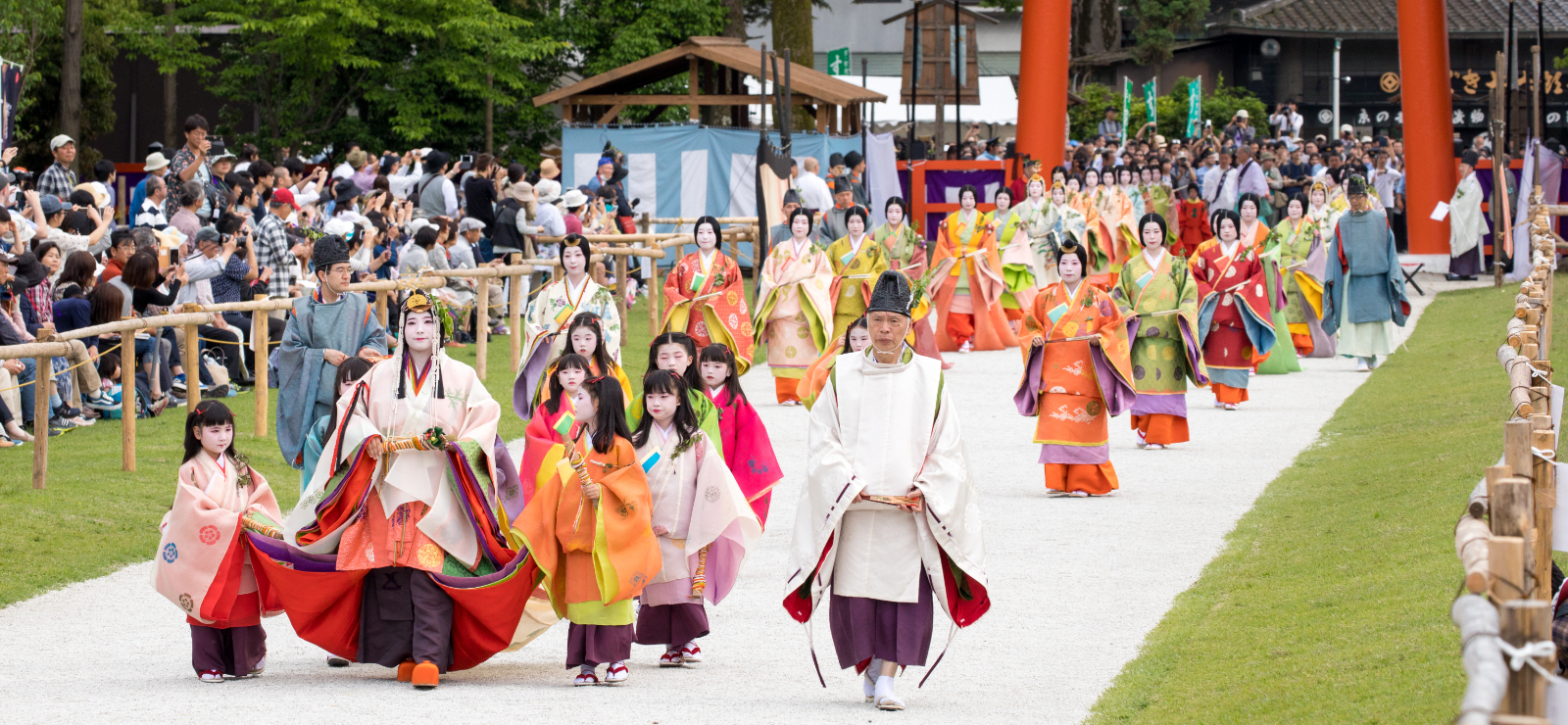
The Aoi Festival, jointly hosted by Shimogamo Shrine and Kamigamo Jinja, is a traditional ceremony dating back approximately 1,500 years, originally celebrating abundant harvests.
Historically, it was an aristocratic festival where nobles elegantly observed a grand procession of imperial messengers visiting both shrines. Today, the Aoi Festival continues as Kyoto's representative festival, preserving ancient traditions for future generations.
The festival's highlight is the "Roadside Ceremony," featuring a magnificent procession of about 500 people, including 36 horses and 4 oxen, parading through Kyoto's streets. The sight of people in traditional Japanese attire moving in unison creates an awe-inspiring atmosphere, transporting viewers back in time.
Various ceremonies begin about two weeks before the main event. These include Yabusame (horseback archery) and purification rituals where women in kimono cleanse themselves in shrine pond waters.
<Information>
Date: May 15, 2026
Access:
- From JR Kyoto Station: Take City Bus Route 4 or 205 to "Shimogamo Jinja-mae" bus stop (immediate walk)
- From Subway Kitaoji Station: Transfer to City Bus Route 1 or 205 to "Shimogamo Jinja-mae" bus stop (immediate walk)
Admission: Free (Reserved seating available for a fee)
Website: https://ja.kyoto.travel/event/major/aoi/
Don't Miss the Mikage Festival Preceding the Aoi Festival!
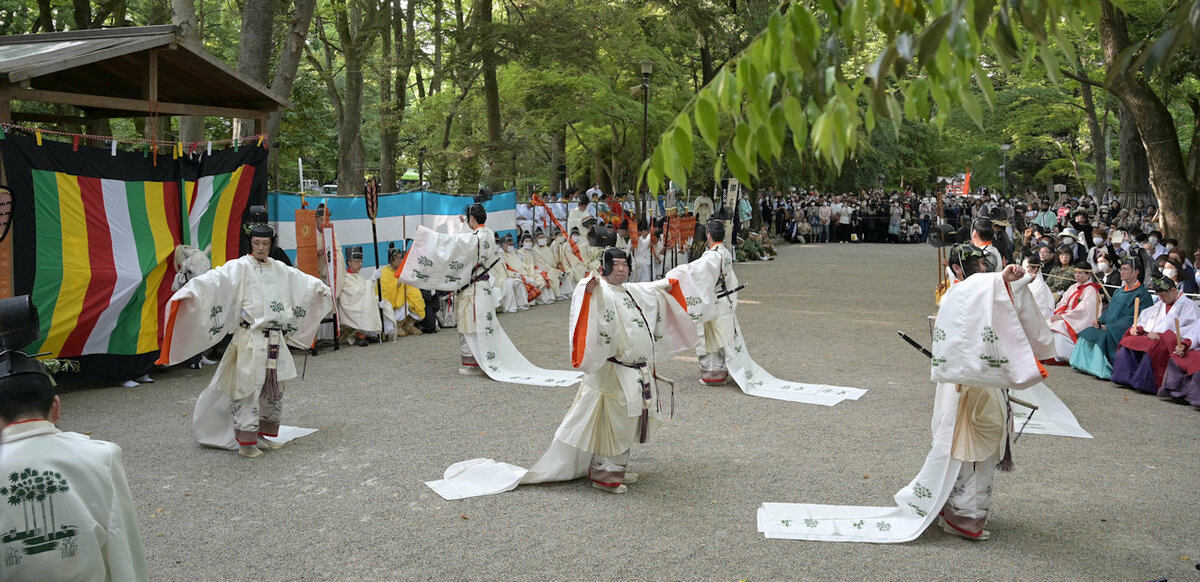
The Mikage Festival, a preliminary ritual, involves welcoming Shimogamo Shrine's divine spirit from Mt. Mikage.
According to tradition, the spirit travels to Shimogamo Shrine by possessing a horse, led by Shinto priests in procession.
After the spirit's arrival, witness the essential bugaku dance performed by priests in Tadasu no Mori, the shrine's ancient forest. Their graceful movements in traditional attire herald the sacred beginning of the Aoi Festival.
For those seeking a deeper appreciation of the Aoi Festival, participation in these preliminary events is highly recommended.
Yabusame Shinto Ritual
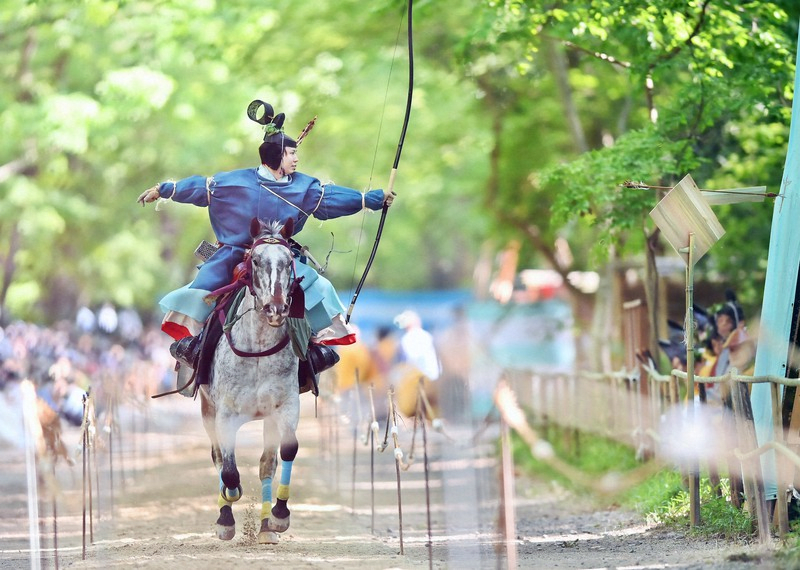
The Yabusame Shinto Ritual is a traditional ceremony held before the Aoi Festival. In this ritual, mounted archers shoot arrows at small targets while galloping on horseback—a tradition dating back to Japan's samurai era. Historically, Yabusame was performed to pray for world peace and abundant harvests; in this event, it's conducted to pray for the safety of the Aoi Festival.
The captivating highlight is watching the powerful Yabusame performance in the sacred atmosphere of Tadasu no Mori, where archers in samurai attire release three arrows in succession. The tension builds as spectators hold their breath before each shot, and successful hits are met with applause, creating a shared experience between archers and viewers.
This is a must-see for those interested in samurai culture and traditional martial arts.
<Information>
Date: May 3, 2026
Access:
- From JR Kyoto Station: Take City Bus Route 4 or 205 to "Shimogamo Jinja-mae" bus stop (immediate walk)
- From Subway Kitaoji Station: Transfer to City Bus Route 1 or 205 to "Shimogamo Jinja-mae" bus stop (immediate walk)
Admission: Free
Website: https://www.shimogamo-jinja.or.jp/saiji
Kamogawa Odori
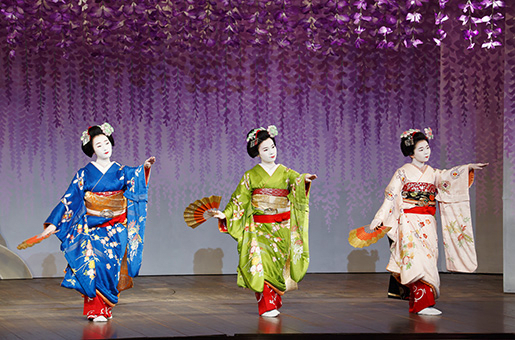
Kamogawa Odori began in 1872, three years after the capital moved from Kyoto to Tokyo, aiming to maintain Kyoto's prosperity by attracting tourists.
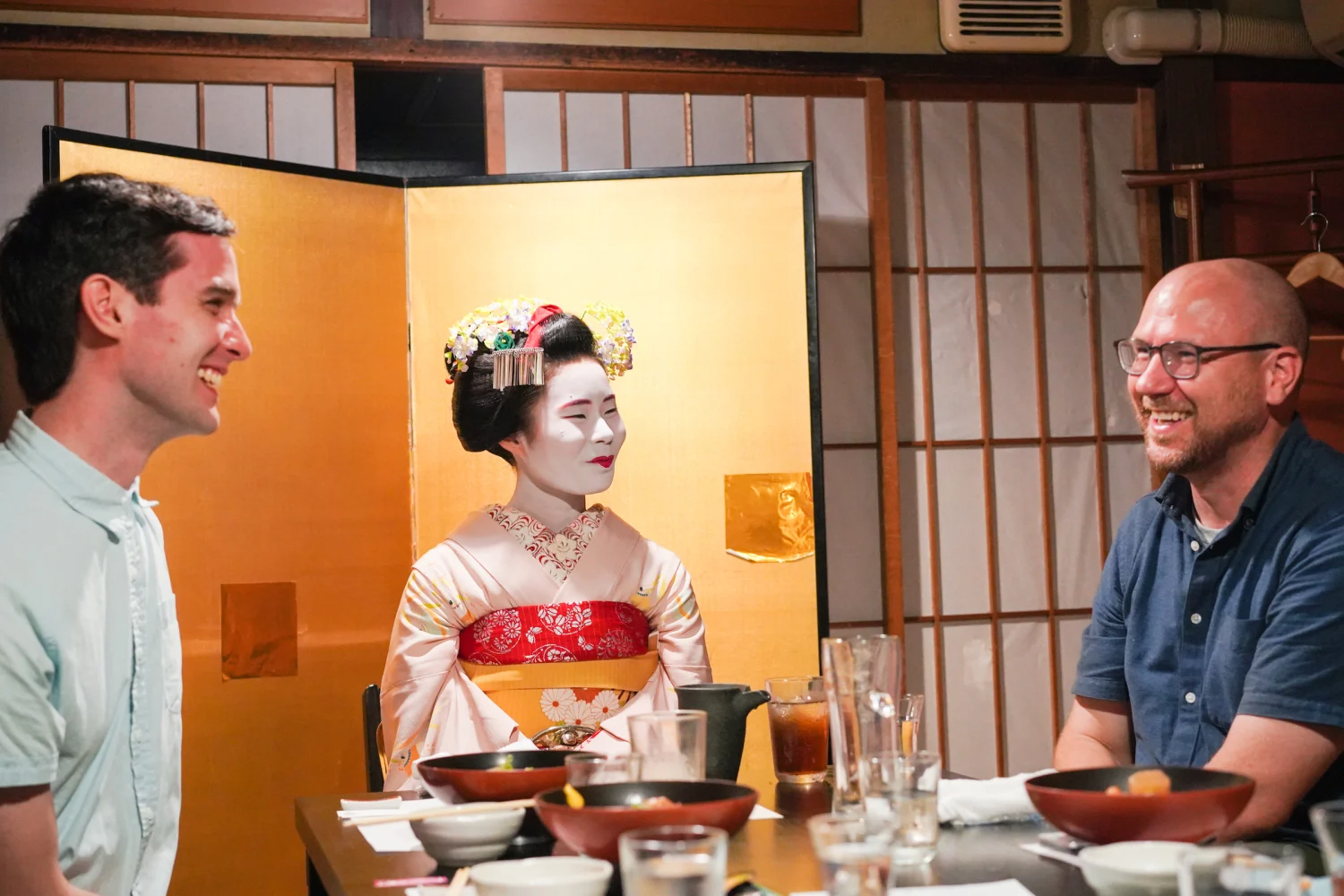
The performance features geisha in elaborate costumes and traditional makeup performing elegant dances. The show is divided into two parts: an elegant yet humorous "dance drama" and a formal "pure dance" typically performed in ceremonies. Each segment offers distinct atmospheres, allowing viewers to compare different themes and geisha movements.
Special tickets including traditional matcha tea ceremony before the performance are available.
<Information>
Date: May 5-22, 2026
Access:
- 5-minute walk from Exit 6 of Keihan Railway Sanjo Station
- 10-minute walk from Exit 1 of Hankyu Railway Kyoto-Kawaramachi Station
Admission:
- Regular seats: ¥4,000
- Special seats: ¥6,000
- Special seats with tea ceremony: ¥7,000
Website: https://www.kamogawa-odori.com/
Why not take the spring guided tour and deepen your knowledge of Kyoto's culture ?
・Ultimate Kyoto Tours Guide 2026: Best Seasonal Experiences for Spring Cherry Blossoms, Summer Festivals, Autumn Foliage & Snowy Landscape
Fujinomori Festival
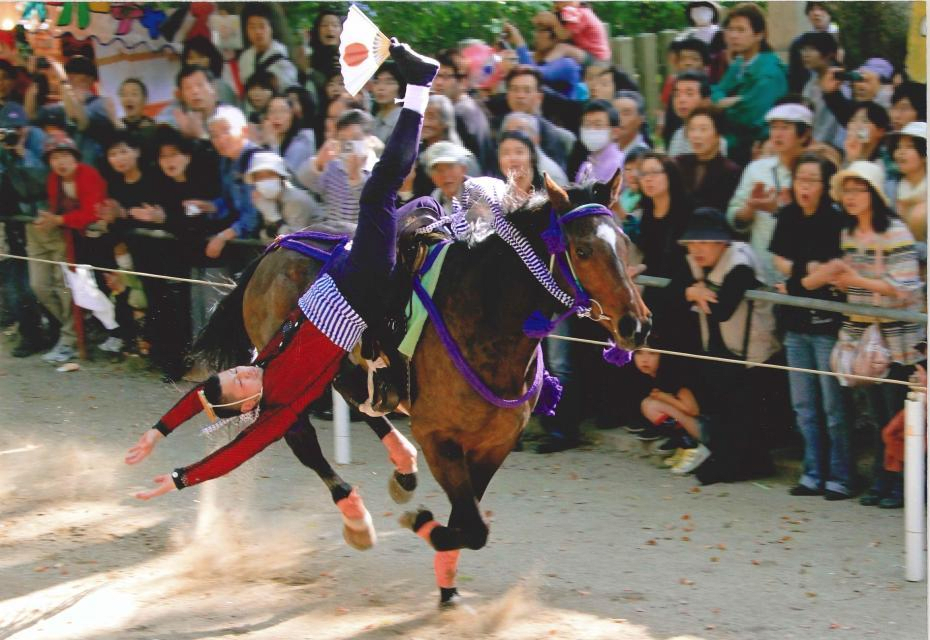
The Fujinomori Festival is a traditional event held at Fujinomori Shrine, beloved as the deity of victory and horses. This ceremony, which prays for the peace and stability of the Imperial household and the nation, takes place annually from May 1 to May 5.
During the festival, visitors can watch the Mikoshi procession, where a sacred portable shrine is carried through the streets, as well as performances of traditional Japanese taiko drumming.
The greatest highlight of the Fujinomori Festival is the Kakeuma Shinji, a sacred ritual held on May 5. This ceremony, which has been passed down for approximately 1,200 years, features riders performing spectacular feats on horseback — including handstands and riding backwards — making it one of the most thrilling Kyoto Events of May 2026.
The Fujinomori Festival is a rare and valuable opportunity to experience both the sacred atmosphere of a Japanese Mikoshi procession and the tradition of classical equestrian culture at the same time. If you are visiting Kyoto in May, be sure to attend and immerse yourself in a traditional event that has been carefully preserved in Japan for centuries.
- Date: May 1 – May 5, 2026
- Address: 609 Fukakusa Torii-zakicho, Fushimi-ku, Kyoto City, Kyoto Prefecture
- Access: Approximately 5 minutes from JR Fujinomori Station
- Admission: Free
- Website: https://fujinomorijinjya.or.jp/fujinomori/
Uesakusai (Full Moon Festival in May)
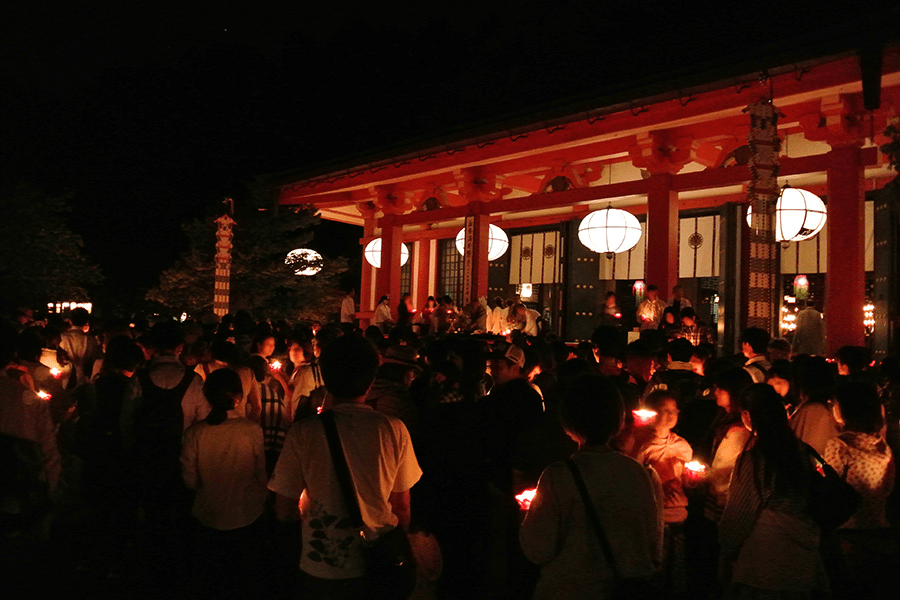
Uesakusai is a mystical traditional event held every year on the night of the full moon in May at Kurama-dera Temple, a historic temple founded in 770. The full moon of May is said to be a time when "powerful energy descends from the heavens," and worshippers gather to offer prayers for the awakening of the soul and world peace.
One of the most recommended aspects of Uesakusai — and one of the most enchanting Kyoto Events of May 2026 — is the otherworldly scene created when the darkened temple grounds are lit by lotus-shaped lanterns carried by the worshippers.
During this event, visitors are asked to refrain from unnecessary conversation, and each person experiences a sacred moment of quiet, heartfelt prayer.
The lotus-shaped lanterns used during the festival can be purchased for 1,000 yen, separate from the temple entrance fee of 500 yen. If you are hoping to feel the mystery of a Kyoto night that can only be experienced on this one day of the year, or if you are seeking a uniquely Japanese spiritual experience, this event is not to be missed.
- Date: The night of the full moon in May 2026
- Address: 1074 Kurama Honmachi, Sakyo-ku, Kyoto City, Kyoto Prefecture
- Access: Approximately 10-minute walk from Tahoto Station on the Kurama Cable Car
- Admission: 500 yen (Kurama-dera Temple entrance fee) ※ Lotus-shaped lanterns available for an additional 1,000 yen
- Website: https://www.kuramadera.or.jp/gyouji.html
Goryosai Festival
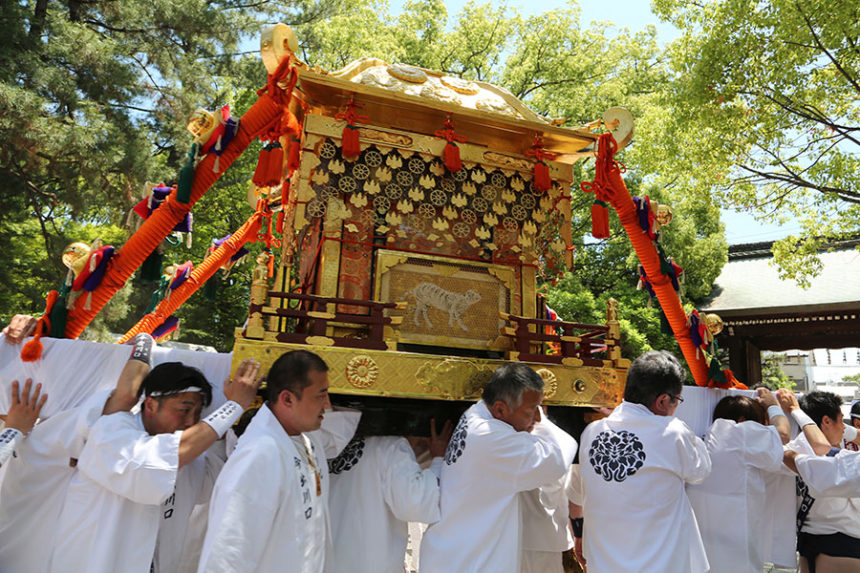
The Goryo Festival is a traditional ceremony to pray for peace and prosperity by pacifying spirits of those who died with grudges, believed to bring misfortune. The Goryo Festival at Goryo Shrine is historically the oldest among all Goryo Festivals held across Japan, attracting numerous visitors nationwide during its 18-day celebration in May.
The festival's highlight is the "Togyo no gi" on the final day, featuring a grand procession through Kyoto's streets with participants wearing traditional costumes passed down for over 1,000 years. Don't miss the "Mikoshi" - a decorated portable shrine carried on shoulders with powerful chants as it sways up and down. Highly recommended for those seeking to experience one of Japan's most historically significant traditional events.
<Information>
Date: May 1-18, 2026
Address: 495 Kamigoryotate-machi, Kamigoryo-mae-dori Karasuma Higashi-iru, Kamigyo-ku, Kyoto City, Kyoto Prefecture
Access: 3-min walk from Kurama-guchi Station (Municipal Subway)
Admission: Free
Website: http://www.kyoto-jinjacho.or.jp/shrine/02/004/
Mifune Festival
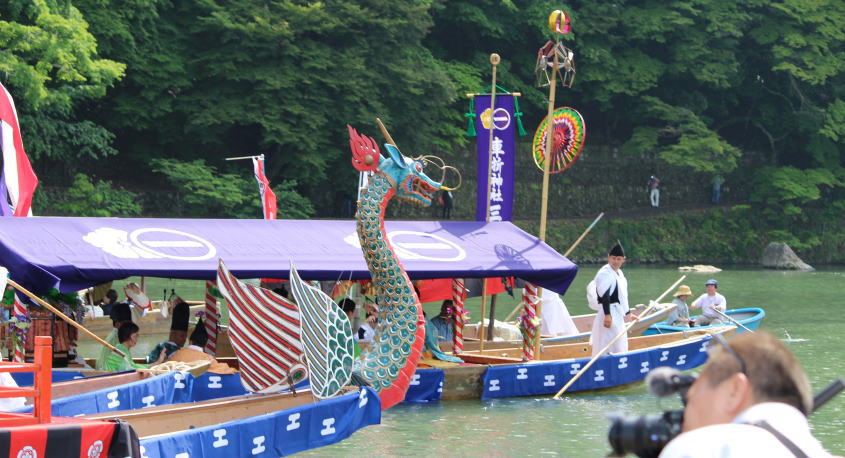
The Mifune Festival is a traditional event at Kurumazaki Shrine, known for its deity of performing arts. This festival recreates the entertainment popular among nobles over 800 years ago during the time of "Yorinari Kiyohara," the shrine's enshrined deity.
The festival features brilliantly decorated boats depicting dragons and birds floating on the usually tranquil Oi River, creating a mystical atmosphere like stepping into a storybook. Viewers can enjoy various traditional performances including bugaku (court music and dance) performed by kimono-clad artists and oginagashi (floating folding fans on the river).
This rare festival combines the grandeur of nature with Japanese traditional culture, making it unique even in historic Kyoto.
<Information>
Date: May 17, 2026
Access: 20-minute walk from Iwashimizu Hachimangu Station on Keifuku Electric Railroad
Admission: Free
Website: https://www.kurumazakijinja.or.jp/mifunemathuri2.html
Saga Festival — Shinko Festival & Kanko Festival
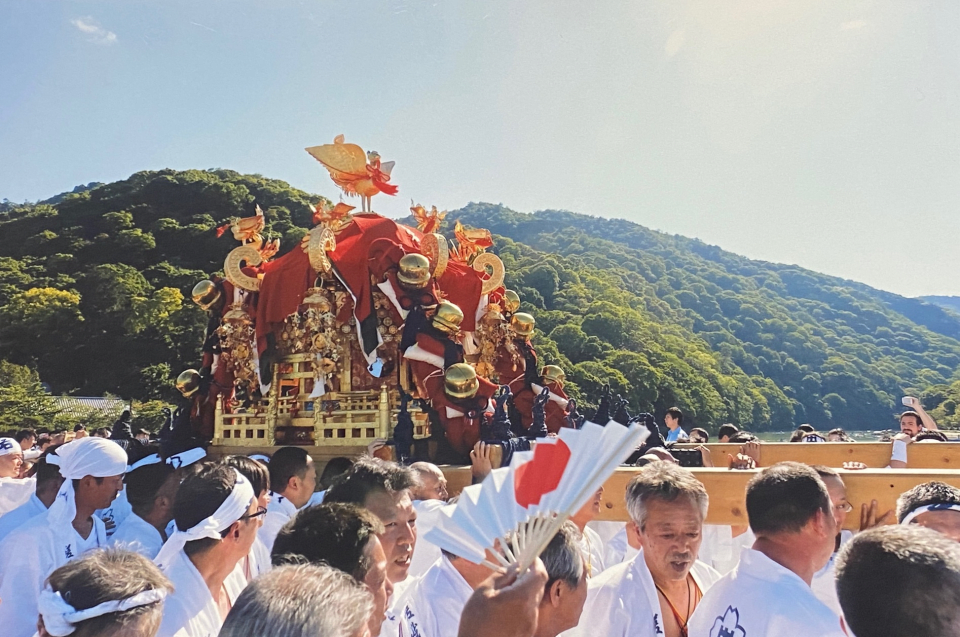
The Saga Festival is a traditional event held at Atago Shrine and Nonomiya Shrine, both located in the Sagano area. The festival takes place over two days during a May weekend — the Shinko Festival on the first day, followed by the main event, the Kanko Festival, on the second day.
[Main Contents of the Shinko Festival and Kanko Festival]
Shinko Festival:
The two Mikoshi from Atago Shrine and Nonomiya Shrine are enshrined in front of Saga Shakado (Seiryo-ji Temple), the departure point for the Mikoshi procession held during the Kanko Festival.
Kanko Festival:
A grand procession of adults carrying Mikoshi and children dressed in traditional costumes winds its way through the Arashiyama and Sagano areas.
The highlight of this Kyoto Event in May 2026 is the Kanko Festival, when the entire neighborhood is filled with a lively and festive atmosphere. The breathtaking sight of approximately 600 people dressed in traditional costumes walking across the iconic Togetsukyo Bridge is truly magnificent — a scene that feels as though you have stepped into the world of a historical drama. I found myself completely captivated by it.
Against the backdrop of Arashiyama's beautiful natural scenery, the sound of bells leading the procession and the calls of those carrying the Mikoshi ring through the air. Why not come and experience this very special festival of Kyoto?
- Date: [Shinko Festival] May 17, 2026 / [Kanko Festival] May 24, 2026
- Address: 46 Saga Shakado Fujinoki-cho, Ukyo-ku, Kyoto City, Kyoto Prefecture
- Access: Approximately 10 minutes from JR Saga-Arashiyama Station
- Admission: Free
- Website: https://nonomiya.com/gyoji.html
Imamiya Festival
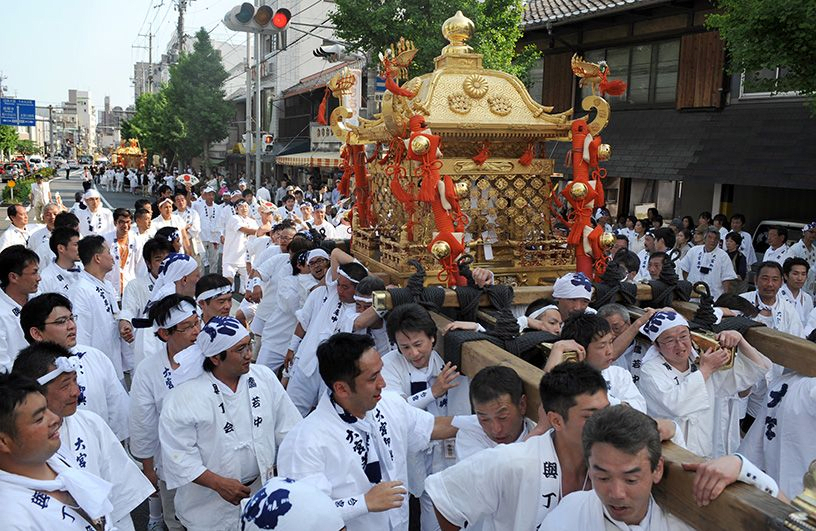
The Imamiya Festival is a traditional religious celebration held over several days in early May each year at Imamiya Shrine, making it one of the most historically significant Kyoto Events of May 2026.
The festival is said to have originated in 994, when prayers were offered to appease the gods of pestilence in order to quell an epidemic that had swept through the city of Kyoto. The event has been passed down for over 1,000 years and continues to this day.
During this traditional event, visitors can witness a large-scale Mikoshi procession in which approximately 800 participants carrying three Mikoshi march through the streets of Kyoto.
In addition to the imposing Mikoshi carried mainly by adult men, there are many other highlights to enjoy, including an ox-drawn carriage and an elegant dance performed by young girls dressed in kimono.
At the Imamiya Festival, we invite you to soak in the solemn yet lively atmosphere of one of Kyoto's most beloved traditional festivals — and to offer a prayer for the health of yourself, your family, and your friends.
- Date: Early May 2026
- Address: 21 Murasakino Imamiya-cho, Kita-ku, Kyoto City, Kyoto Prefecture
- Access: Directly accessible from Kyoto City Bus stop "Imamiya Jinja-mae"
- Admission: Free
- Website: http://www.imamiyajinja.org/event/
In May 2026, the Traditional "Kyoto Kamogawa Nouryou-Yuka" Season Begins!
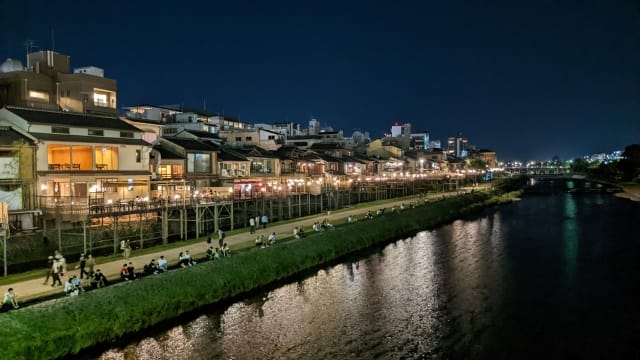
Every year in May, Kyoto welcomes one of its most iconic early summer traditions: the opening of the Kyoto Kamogawa Nouryou-Yuka. This Kyoto Event May 2026 experience features elevated terrace seating set up along the Kamogawa River at various restaurants, where guests can enjoy meals while feeling the cool river breeze — a seasonal and limited-time experience unlike any other.
At the Kyoto Kamogawa Nouryou-Yuka, visitors will find a wide variety of dining options, from traditional Japanese cuisine made with locally sourced Kyoto ingredients to Kyoto-style creative French cuisine and Italian gelato.
Dining while gazing at the gently flowing river and the scenic night views is sure to become an unforgettable culinary experience that is uniquely Kyoto.
The restaurants participating in the Kyoto Kamogawa Nouryou-Yuka range widely in price, from high-end kaiseki restaurants offering full-course meals at around 15,000 yen per person, to casual cafes where you can enjoy a cup of coffee for as little as 500 yen. Depending on your budget and appetite, feel free to drop in and enjoy this beautiful, limited-time Kyoto scenery at your own pace.
- Dates: May to around October 2026
- Address: 489 Matsumoto-cho, Nakagyo-ku, Kyoto City, Kyoto Prefecture
- Access: Just a short walk from Keihan Electric Railway "Gion-Shijo Station"
- Admission: Varies by restaurant
- Website: https://www.kyoto-yuka.com/
Special Experiences Only in Kyoto During May
Iwashimizu Toryoka
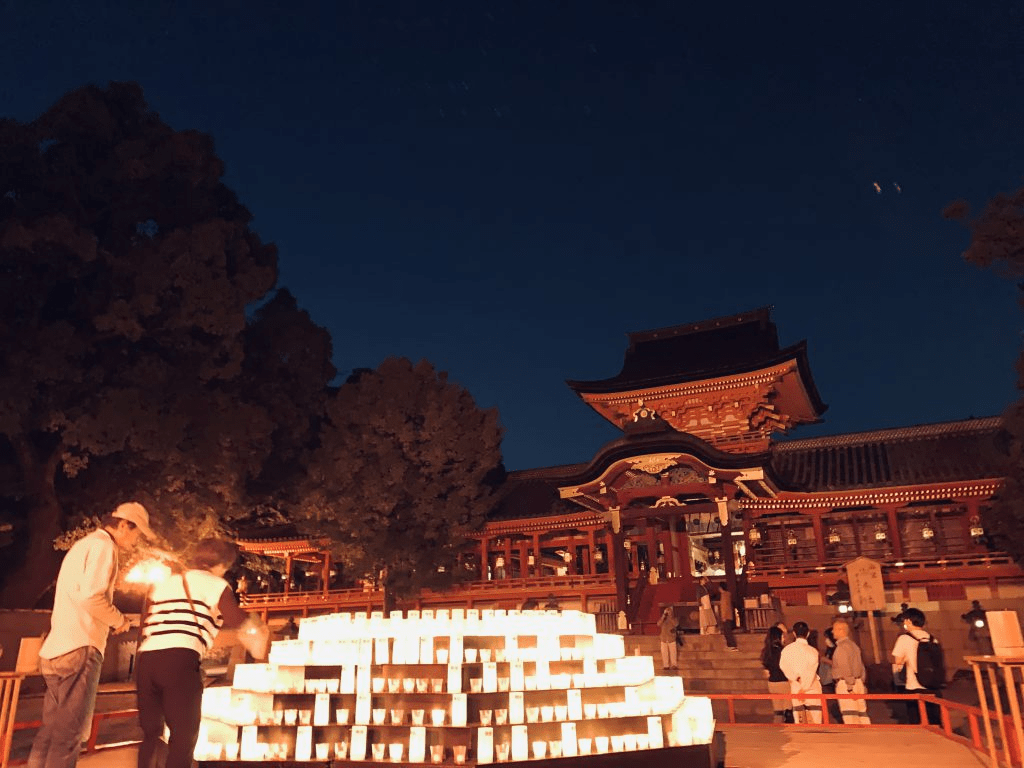
Iwashimizu Toryoka is a one-night event at Iwashimizu Hachimangu Shrine, Japan's third-ranking shrine dedicated to "Hachimanjin," the deity of military fortune.
The shrine, designated as a National Treasure, is notable for both its military fortune blessings and remarkable architecture. The shrine buildings combine ancient dynamic architecture with modern brilliant decorations, creating an overwhelmingly majestic atmosphere.
During Iwashimizu Toryoka, visitors can enjoy the shrine's illuminated architecture. Experience this mystical space where historic buildings emerge in the soft lantern light amidst the dark mountain nature.
<Information>
Date: May 4, 2026
Access: Take the Cable Car from Hachimanguchi Station to Hachimangu Sangen Station (5-min walk), after arriving at Iwashimizu Hachimangu Station (Keihan Railway)
Admission: Free
Website: https://iwashimizu.or.jp/
Kamo Horse Racing Ceremony (Kamo Kurabeuma Ashizoroeshiki)
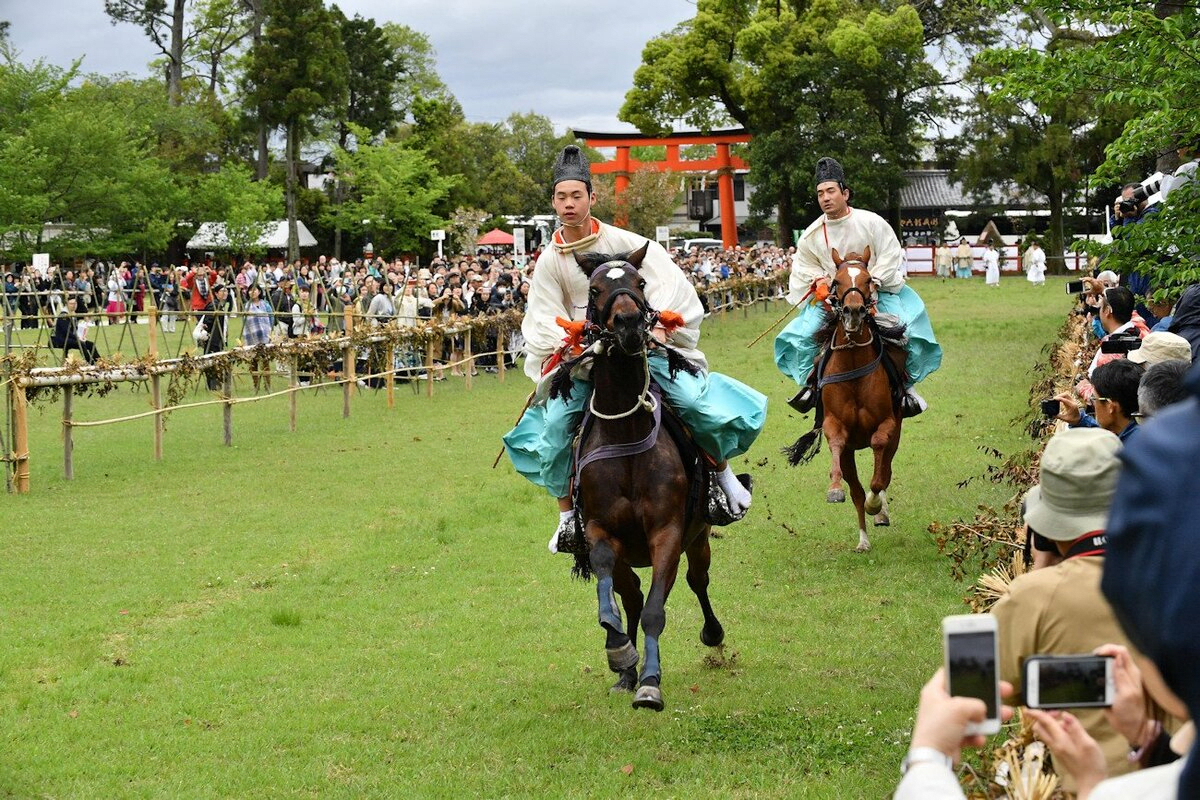
The Kamo Horse Racing Ceremony precedes the traditional horse race "Kamo Kurabeuma" held at Kamigamo Shrine on May 5th, 2026.
Established in 1093, "Kamo Kurabeuma" is considered the origin of Japanese horse racing. Two riders in ceremonial court music costumes compete for speed, praying for world peace and abundant harvests.
During the ceremony, they determine horse pairings and running order for the main race. Visitors can witness this powerful traditional horse racing demonstration featuring riders in authentic costumes.
Among Kyoto's many traditional events in May 2026, this unique horse racing ritual offers a distinctive experience worth attending alongside the main ceremony.
<Information>
Date: May 1, 2026
Access:
- 15-minute walk from Kitayama Station (Municipal Subway)
- Take City Bus Route 4 from Kyoto Station to "Kamigamo Jinja-mae" bus stop (immediate walk)
Admission: General ¥1,000 / Tent seats ¥1,500
Website: https://www.kamigamojinja.jp/hitotose/kamosai/#kurabeuma
Senbon Enmado Grand Nembutsu Kyogen
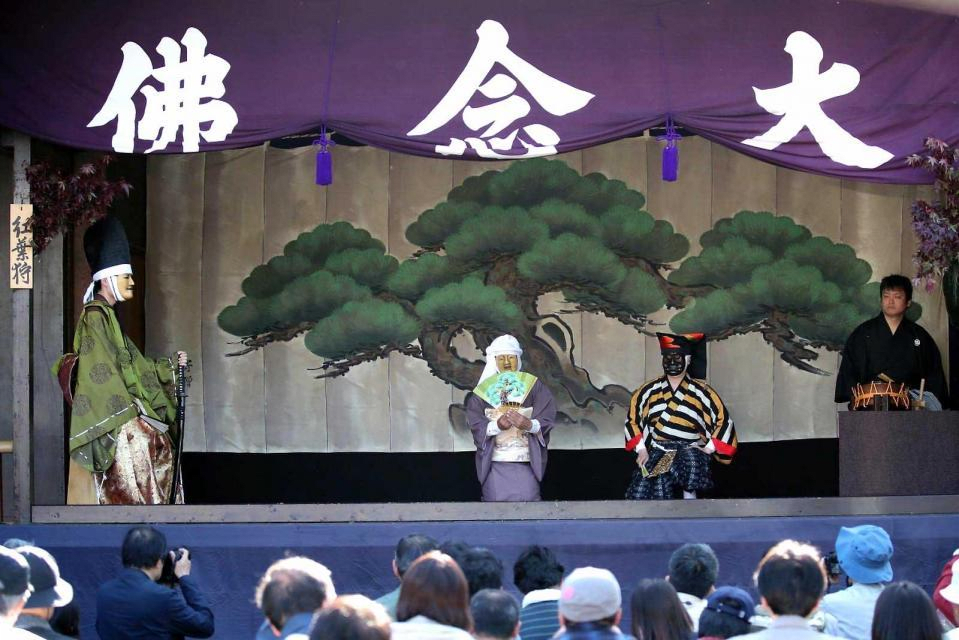
Senbon Enmado Dai-Nembutsu Kyogen is a unique form of Kyoto's Nembutsu Kyogen, a classical Japanese comedy.
Unlike most silent Nembutsu Kyogen performances, this May 2026 event features spoken dialogues. Performers wearing traditional kimono and masks engage in dynamic, comical movements, making it enjoyable even for non-Japanese speakers.
The performance showcases authentic traditional music using Japanese drums and flutes, characteristic of Kyogen.
This rare opportunity offers free admission to experience traditional Japanese performing arts, typically difficult to access even for locals.
<Information>
Date: May 1-4, 2026
Access: Take City Bus Route 206 from Kyoto Station to "Senbon Kuramaguchi" bus stop (immediate walk)
Admission: Free
Website: http://enmadokyogen.info/
Kyoto's Five Festivals and Annual Events
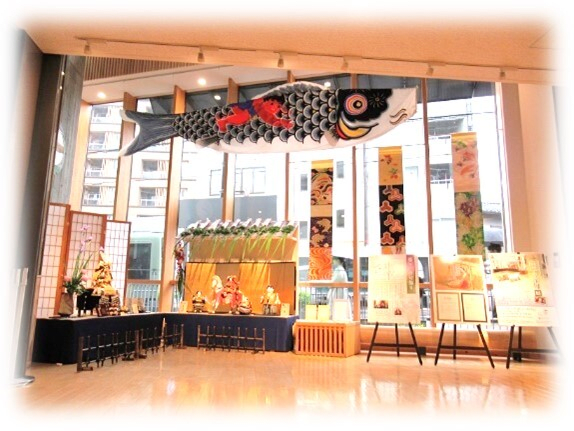
In Japan, seasonal purification ceremonies have traditionally been held in January, March, May, July, and September. At "Kyoto's five festivals and annual events" in May 2026, visitors can enjoy the Boys' Festival held on May 5th to pray for boys' growth, along with cultural exhibitions about Kyoto.
The Boys' Festival features carp streamers, symbolizing children overcoming adversity like carp swimming upstream, and warrior dolls representing hopes for strong growth like samurai. Visitors can see actual carp streamers and warrior dolls on display.
A highlight of this event is viewing Nishijin textile, Kyoto's premium silk fabric. Experience both traditional Japanese family customs and Kyoto's traditional crafts.
<Information>
Dates: Late April - Early May 2026
Access:
- Subway: Short walk from Imadegawa Station
- City Bus: Lines 51, 59, 102, 201, 203; get off at Kamigyoku Sogochosha-mae
Admission: Free
Website: https://www.city.kyoto.lg.jp/kamigyo/page/0000323825.html
Natural Beauty of Kyoto in May
Otokunidera Temple Peony Festival
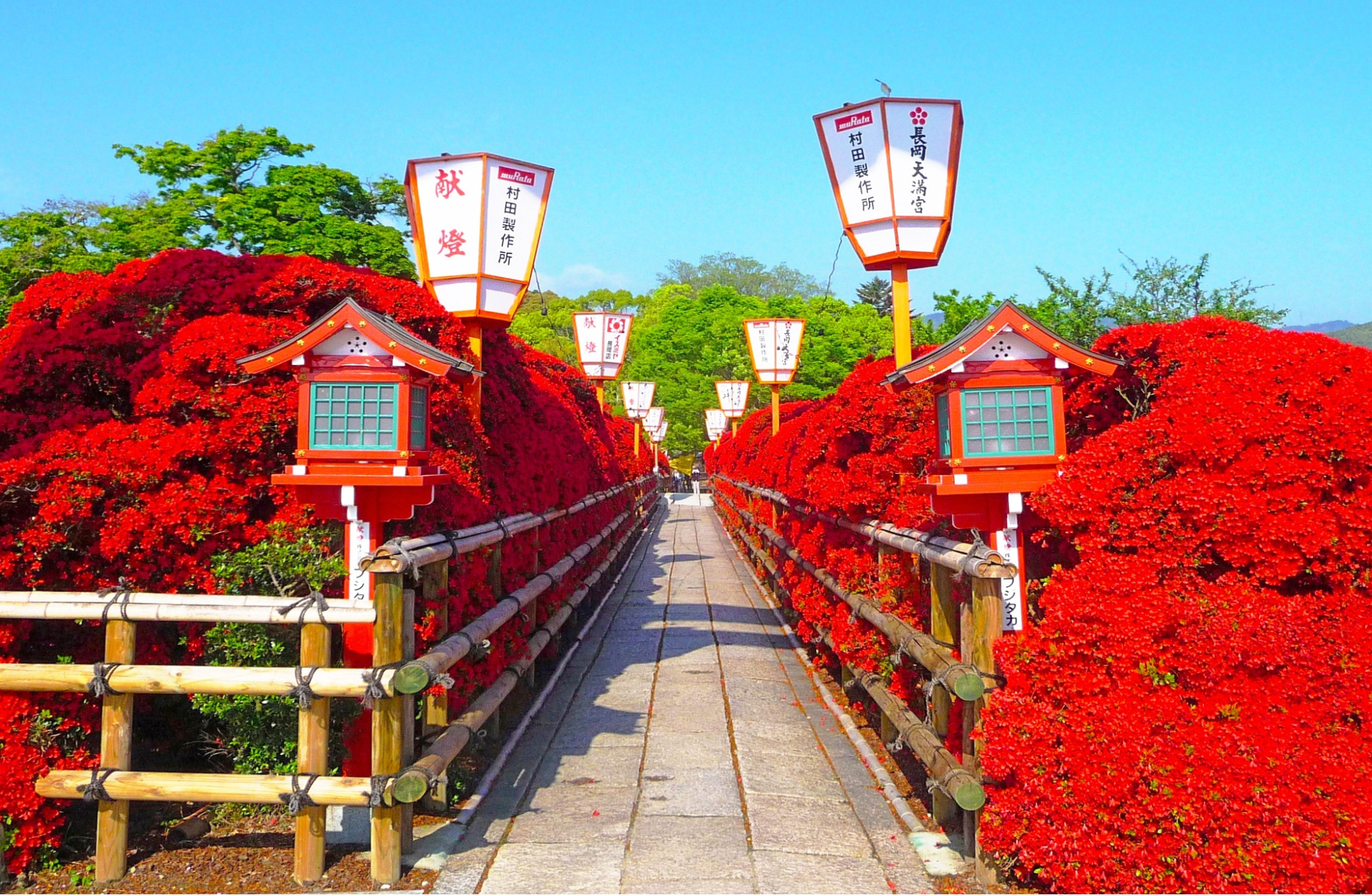
Otokunidera Temple, renowned for its peonies, hosts the annual Peony Festival during the peak blooming season.
During the Peony Festival, visitors nationwide come to see approximately 2,000 peony plants in full bloom throughout the temple grounds.
Otokunidera Temple features about 30 peony varieties, blooming in various colors including pink, purple, and white.
Founded approximately 1,300 years ago, Otokunidera Temple is one of Kyoto's oldest temples. It houses rare cultural treasures, including the oldest of Kyoto's three "single-day carved Buddhist statues" - a wooden standing Eleven-faced Kannon.
<Information>
Dates: Late April - Early May 2026
Access: Take Hankyu Railway to Nagaokatenjin Station, transfer to Hankyu bus, get off at Yakushido stop (5-minute walk)
Admission: Adults (High school and above) 500 yen / Children (Junior high and below) Free
Website: https://otokunidera.jimdosite.com/
If you want to enjoy the fresh spring breeze in hidden spots, take the guided tours!
・Ultimate Kyoto Tours Guide 2026: Best Seasonal Experiences for Spring Cherry Blossoms, Summer Festivals, Autumn Foliage & Snowy Landscape
Mimuroto-ji Temple Hydrangea Garden Opening
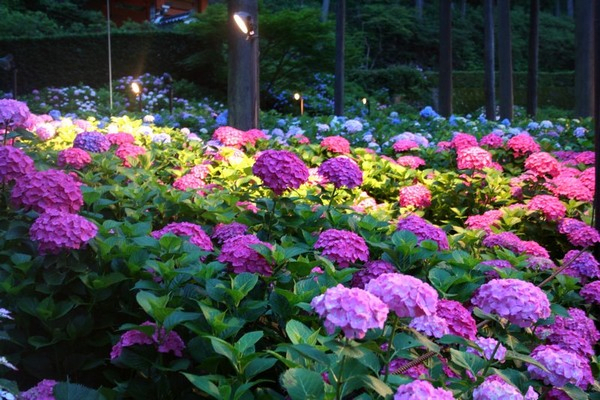
Mimuroto-ji Temple is a nature-rich temple also known as the "Temple of Flowers" for its beautiful seasonal blooms throughout the year. Among its many highlights, the Hydrangea Garden is especially renowned as a must-visit spot where 20,000 hydrangea plants bloom in full splendor in early summer, drawing photography enthusiasts and tourists from both Japan and abroad.
The Hydrangea Garden at Mimuroto-ji Temple is open to the public from late May through July. Winding through rows of cedar trees, the garden bursts with vivid hydrangeas in shades of purple, pink, blue, and white — a truly breathtaking sight that made even me lose track of time as I found myself absorbed in taking photos.
Why not take a stroll through the garden, admiring the spectacular scenery created by the seasonal hydrangeas and the temple's historic architecture, and feel firsthand the changing of Japan's four seasons along with the unique atmosphere that only a temple setting can offer?
- Dates: May 31 to July 5, 2026
- Address: 21 Toji Shigaya, Uji City, Kyoto Prefecture
- Access: Approximately 15 minutes from Keihan Electric Railway "Mimuroto Station"
- Admission: Adults 1,000 yen / Children 500 yen
- Website: https://www.mimurotoji.com/event/hydrangea.html
Fujinomori Shrine Hydrangea Garden Opening
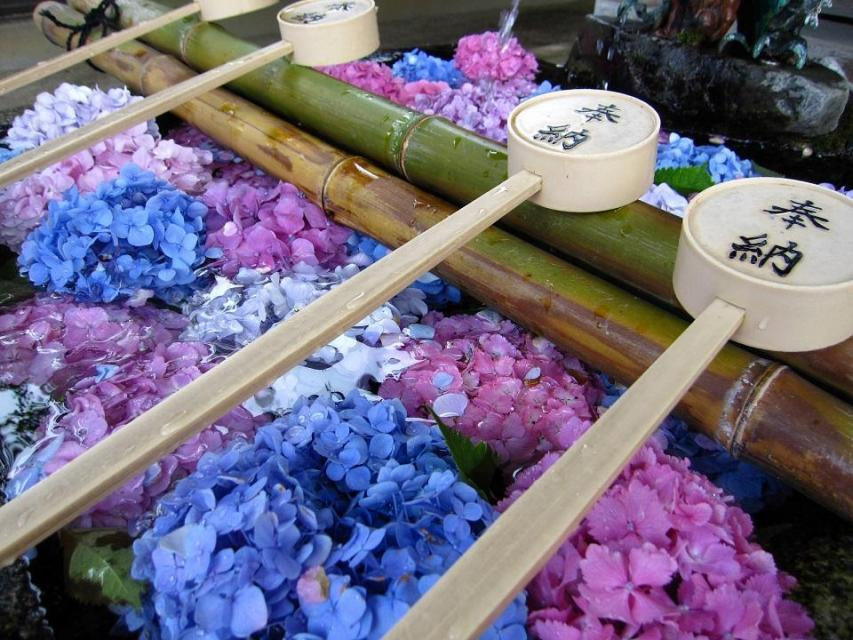
At Fujinomori Shrine's Hydrangea Garden, hydrangeas also come into full bloom from late May through around late June. Approximately 3,500 hydrangea plants bloom magnificently across two garden areas within the shrine grounds, bringing vibrant color to both the eyes and the heart during Japan's rainy season.
What I particularly recommend at this shrine is the experience of walking along winding garden paths lined on both sides with hydrangeas — it feels as though you are passing under a beautiful arch of flowers. No matter where you look within the garden, you are surrounded by a colorful tapestry of hydrangeas, making it a perfect spot for photography.
Additionally, at the temizusha, the ritual purification fountain where visitors cleanse their hands and mouth before worship, you can enjoy the charming sight of colorful hydrangeas floating in the water. Along with paying your respects at this sacred shrine, be sure to take your time admiring the hydrangeas that bloom so beautifully only during this special time of year.
- Dates: Late May to late June 2026
- Address: 609 Fukakusa Torii-saki-cho, Fushimi-ku, Kyoto City, Kyoto Prefecture
- Access: Approximately 5 minutes from JR "Fujinomori Station"
- Admission: Hydrangea Garden entrance fee 500 yen (shrine grounds entry is free)
- Website: https://ja.kyoto.travel/event/single.php?event_id=4438