Cycling Lake Kawaguchiko 2026: A Complete Guide to Mt. Fuji Bike Routes, Rentals & Tips
Mount Fuji, a symbol of Japan, attracts countless tourists who visit Japan specifically to witness its majestic presence. However, given Mount Fuji's massive size and the numerous tourist attractions scattered around its vicinity, we've created this guide to help you explore the Mount Fuji area efficiently.
Additionally, Magical Trip, which won the #1 spot for all tours on Tripadvisor in 2024, has recently launched the Mount Fuji tours.

The "Mt. Fuji Full-day Nature Guided Tour with a Private Chartered Car & Guide" offers a stress-free experience exploring the Mount Fuji area, complete with private car transportation from Tokyo.
Even if you have limited time to explore the Mount Fuji region, this tour allows you to visit all the must-see spots with detailed guidance from your tour guide.
If you're interested in efficiently experiencing the essential locations while gaining deep insights from a knowledgeable local guide who knows the area inside and out, we highly recommend joining the "Mt. Fuji Full-day Nature Guided Tour with a Private Chartered Car & Guide."
We hope you'll have a wonderful time experiencing everything Mt.Fuji has to offer by joining a Magical Trip tour!
Introduction
Mount Fuji, recognized as Japan's symbol, is one of the world's most famous mountains. The area surrounding Mt. Fuji is bustling with visitors daily, offering numerous observation points with spectacular views and shrines that reflect the region's rich history.
Particularly popular are the majestic views of Mt. Fuji from the shores of large lakes, and new tourist facilities continue to be developed in the surrounding areas.
In this article, we'll introduce information about cycling opportunities that allow you to efficiently enjoy the tourist spots and spectacular views around Mt. Fuji.
We'll also introduce model courses, so please check them out if you're interested in experiencing the natural beauty and tourist attractions around Mt. Fuji.
Table of Contents
-A Quick Guide to the Three Routes
-A Seasonal Cycling Guide and Highlights
-Bicycle Rental Shops Near Mt.Fuji
-Cycling in Lake Kawaguchiko Area
-Cycling in Lake Yamanaka ~ Panorama-dai Area
-Cycling in Around Fuji-Q Highland (Touring Sengen Shrines by Bike)
Cycling is recommended for efficiently exploring tourist spots around Mt. Fuji while enjoying the scenery!
The area surrounding Mt. Fuji offers numerous spots with beautiful scenery and facilities where you can experience fascinating cultural elements. For efficiently touring these attractions while enjoying the natural environment around Mt. Fuji, cycling is recommended as it allows you to easily stop and explore.
When choosing your cycling course, please focus on these three points:
・Road elevation changes
・Course distance
・Points of interest to visit
By selecting courses with minimal elevation changes, even beginners can easily take on the challenge. It's also good to check interesting spots in advance when deciding your route.
Choose a cycling course that suits your abilities to comfortably travel around Mt. Fuji.
A Quick Guide to the Three Routes Introduced in This Article (Time Required and Difficulty)
This article introduces three Mt. Fuji Cycling routes you can enjoy around Mt. Fuji: the Lake Kawaguchiko circuit, the Lake Yamanaka route, and the Sengen Shrine tour. To help you choose the course that best suits your fitness level and interests, we have compiled the distance, estimated time, difficulty, and highlights for each route. Whether you are checking riding time and difficulty or looking for spots to stop along the way — such as parks, museums, and shrines — this guide has everything you need.
Quick Guide to All Three Routes (Summary of Time Required and Difficulty)
| Lake Kawaguchiko Circuit | Lake Yamanaka Route | Sengen Shrine Tour | |
|---|---|---|---|
| Distance | Approx. 20 km | Approx. 45 km | Approx. 36 km |
| Duration (including rest and sightseeing stops) | 3–4 hours | 5–6 hours | 3–4 hours |
| Difficulty | Beginner-friendly | Beginner to intermediate | Beginner-friendly |
| Highlights | ・Ubuyagasaki ・Kawaguchi Asama Shrine ・Ohishi Park | ・Yamanakako Myojinyama Panorama-dai ・Nagaike Waterfront Park ・Oshino Hakkai | ・Kawaguchi Asama Shrine ・Fuji Omuro Sengen Shrine ・Kitaguchi Hongu Fuji Sengen Shrine |
| Best Season | Spring and autumn | Autumn | Spring to autumn |
Full details on each course are covered in the sections below.
Lake Kawaguchiko circuit
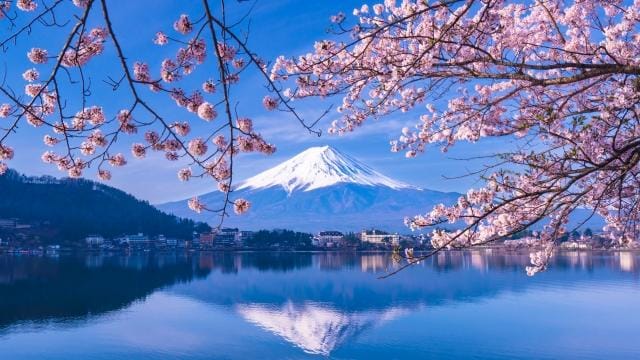
[Recommended Season] Spring / Autumn
A recommended Mt. Fuji Cycling course that you can enjoy casually in 3 to 4 hours, including rest stops. Take your time pedaling and soak in the stunning combination of Mt. Fuji with cherry blossoms or autumn foliage as seen from Ubuyagasaki, and experience the serene atmosphere of Kawaguchi Asama Shrine.
Lake Yamanaka route
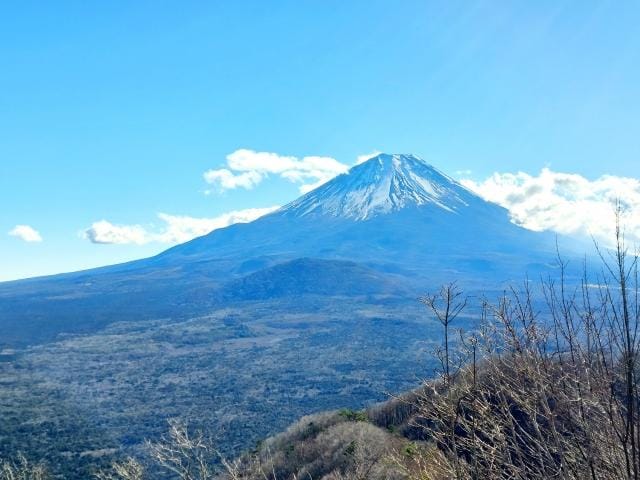
[Recommended Season] Autumn
The Lake Yamanaka route is a recommended Mt. Fuji Cycling course for those who want to enjoy a slightly longer ride. Regular exercisers will find it easy to visit each spot with plenty of energy to spare, while those who haven't been active for a while may struggle on the hills and inclines. That said, the breathtaking views from spots such as Yamanakako Myojinyama Panorama-dai make it well worth the effort — a great excuse to challenge yourself while getting in a good workout.
Sengen Shrine tour
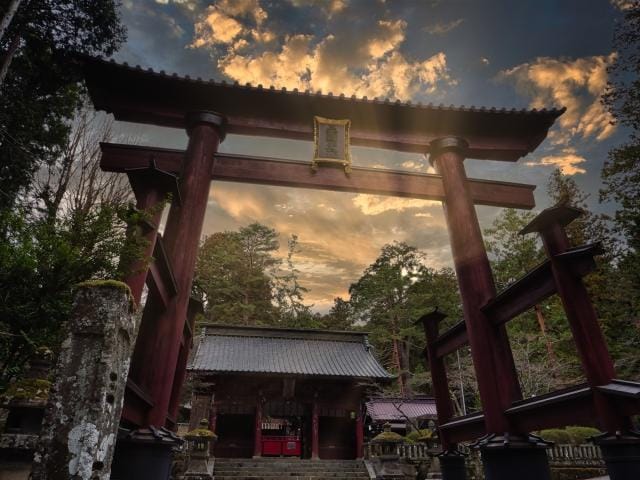
[Recommended Season] Spring to Autumn
A Mt. Fuji Cycling course especially recommended for those interested in shrines, temples, and Japanese culture. While enjoying the cycling and the natural surroundings of the Mt. Fuji area, you will explore important cultural sites nearby, including Kawaguchi Asama Shrine, Fuji Omuro Sengen Shrine, and Kitaguchi Hongu Fuji Sengen Shrine.
- Estimated riding time: 3 to 4 hours (excluding sightseeing stops)
- Additional time should be budgeted at each shrine for sightseeing, as this course covers many historical sites.
Which Season Is Best? A Seasonal Cycling Guide and Highlights
Conditions for Mt. Fuji Cycling vary greatly depending on the season, from scenery and road conditions to crowd levels. Below, we cover the temperature, sights, and crowds you can expect throughout the year. Use this as your guide to planning a safe and enjoyable cycling experience around Mt. Fuji.
Spring (Mar-May)
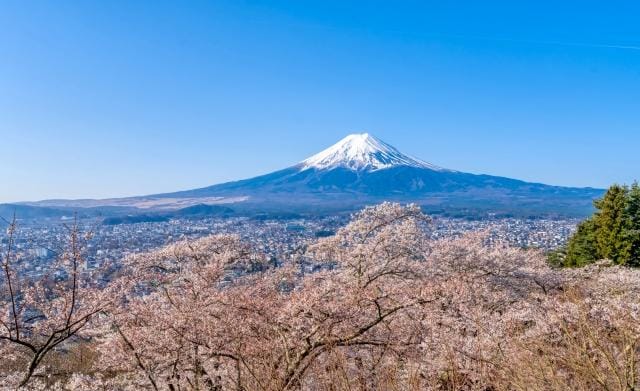
Spring is one of the most visually stunning seasons of the year for Mt. Fuji Cycling, offering a breathtaking contrast between cherry blossoms along the lakeshore and the snow-capped peak of Mt. Fuji. Cherry blossoms around Lake Kawaguchiko typically reach peak bloom from early to late April, while around Lake Yamanaka they peak from mid to late April — making it the perfect time to cycle beneath a canopy of blossoms.
From mid-April onward in particular, the winter chill eases and the warm, pleasant weather makes for a comfortable ride. During the day you can enjoy a refreshing breeze in the mild sunshine, though March mornings and evenings can still be quite cold, so it's a good idea to bring a layer that's easy to put on and take off.
Spring's combination of iconic cherry blossom scenery and comfortable temperatures also means it's one of the busier tourist seasons. Weekends and midday hours tend to draw larger crowds, so if you'd like a more relaxed experience, consider heading out on a weekday or in the early morning.
Summer (Jun-Aug)
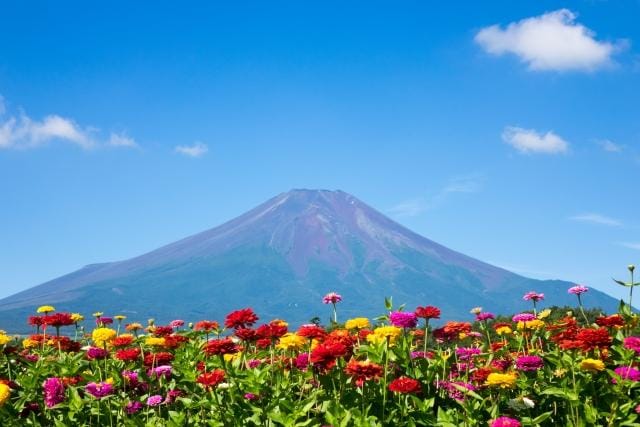
Summer brings high temperatures, and thorough heat precautions are essential for safe and enjoyable Mt. Fuji Cycling.
Dressing appropriately is a must — opt for lightweight long sleeves to shield yourself from direct sunlight, moisture-wicking base layers, and a UV-blocking hat. Make sure to stay on top of hydration and electrolyte intake throughout your ride to guard against heat exhaustion.
Since midday heat and strong sun put significant strain on the body, setting off in the early morning when temperatures are cooler is strongly recommended. Renting an electric-assist bicycle is also a great way to conserve energy on longer rides.
Weather around Mt. Fuji can shift quickly in summer, and rain is always a possibility, so in addition to heat protection, make sure to pack rain gear to keep your ride safe and enjoyable.
Autumn (Sep-Nov)
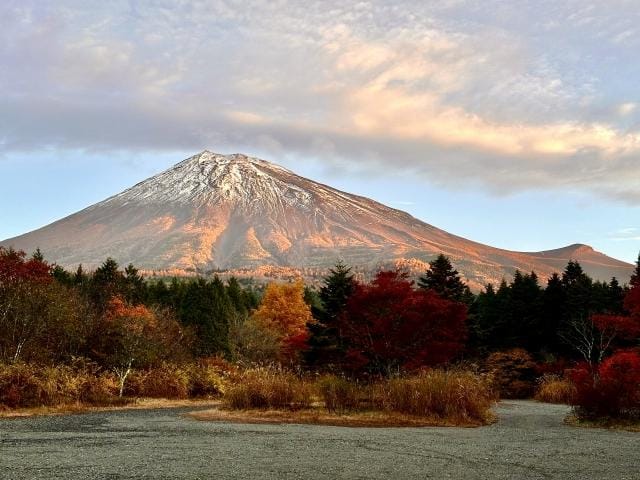
Autumn is the best season for Mt. Fuji Cycling, with stunning views of fall foliage framing the iconic peak at every turn. Around Lake Kawaguchiko — one of the most popular cycling spots in the area — the average temperature in autumn is 19°C, striking a perfect balance between warm and cool that makes it ideal riding weather.
The lakeshores come alive with the rich colors of autumn leaves, offering a distinctly Japanese natural beauty alongside views of Mt. Fuji — a combination that draws visitors from around the world. Fall foliage around Lake Kawaguchiko is typically at its best from early to late November, while around Lake Yamanaka it peaks from mid-October to mid-November.
That said, autumn is also the most crowded season of the year around Mt. Fuji, as travelers from both Japan and abroad flock to see the autumn foliage. Evening crowds increase particularly during lakeside light-up events, so plan to start your ride early in the day to make the most of your time on the route.
Winter
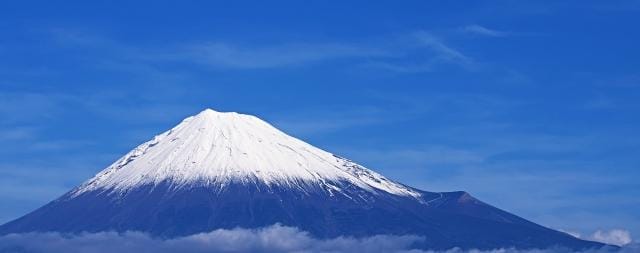
Winter around Mt. Fuji brings extremely low temperatures along with the risk of snowfall and icy road surfaces, making it generally an unsuitable season for Mt. Fuji Cycling.
From December through February, average minimum temperatures drop below freezing, and even sightseeing on foot can feel brutally cold — let alone cycling. If you are visiting the Mt. Fuji area for the first time, it is strongly recommended to avoid winter and instead plan your cycling trip during the warmer months from spring through autumn.
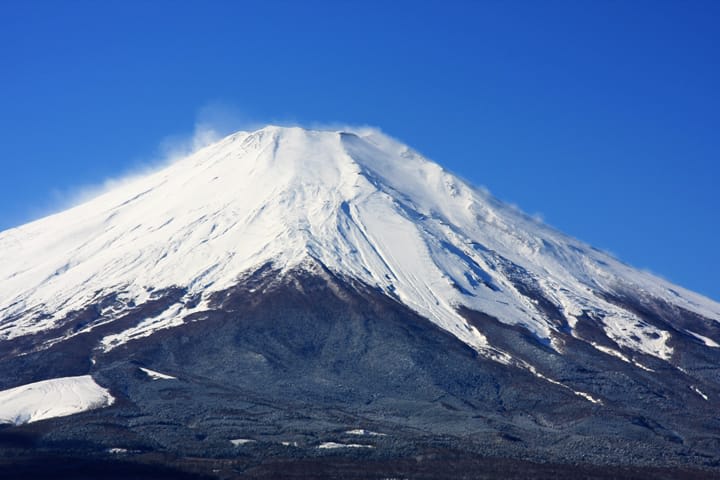
That said, winter's crisp, clear air is said to offer the most spectacular views of Mt. Fuji, making it an ideal season for soaking in the scenery with proper cold-weather gear. Make good use of public transportation to get to the best vantage points, and be sure to capture Japan's highest peak in all its winter glory through your camera lens.
Bicycle Rental Shops Near Mt.Fuji
Around Lake Kawaguchiko
Fuji Kanko Travel
Address: 3644-1 Funatsu, Fujikawaguchiko-machi, Minamitsuru-gun, Yamanashi Prefecture
URL: https://www.fujikanko-travel.jp
Bicycle rental fees:
Standard Bicycle: ¥500/hour, ¥2,500/day
Electric Assist Bicycle: ¥600/hour, ¥3,000/day
Deluxe Electric Assist Bicycle: ¥700/hour, ¥3,500/day
fujisanbike Kawaguchi-ko Station Front Baggage Storage
Address: 3634-2 Funatsu, Fujikawaguchiko-machi, Minamitsuru-gun, Yamanashi Prefecture
| Bicycle Type | 1 Day | Overnight (2 Days) | Hours |
|---|---|---|---|
| Standard Bicycle | ¥1,500 | ¥2,700 | 1 Day: 9:00 AM – 5:00 PMOvernight: until 5:00 PM next day(returns from 9:00 AM) |
| Cross Bike | ¥2,000 | ¥3,600 | 1 Day: 9:00 AM – 5:00 PMOvernight: until 5:00 PM next day(returns from 9:00 AM) |
| All-Wheel Drive Electric Assist Bicycle | ¥3,000 | ¥5,400 | 1 Day: 9:00 AM – 5:00 PMOvernight: until 5:00 PM next day(returns from 9:00 AM) |
| Electric Assist Bicycle with Child Seat | ¥4,000 | ¥7,200 | 1 Day: 9:00 AM – 5:00 PMOvernight: until 5:00 PM next day(returns from 9:00 AM) |
Soranoshita Kawaguchi-ko Station Front Store
Address: 3631-2 Funatsu, Fujikawaguchiko-machi, Minamitsuru-gun, Yamanashi Prefecture
URL: https://www.soranoshita.net/kawaguchiko-jp/blog/bicycle-rental-at-soranoshita-kawaguchiko/
| Bicycle Type | 1 Hour | 3 Hours | 1 Day | 24 Hours | 1 Night & 2 Days |
|---|---|---|---|---|---|
| Regular Type | ¥500(from 3 PM) | ¥1,000 | ¥1,500 | ¥2,500 | ¥3,000 |
| Electric Type | — | ¥3,000 | ¥4,000 | ¥5,500 | ¥6,500 |
| Extension Fee (per hr) | Regular: +¥500/hr Electric: +¥2,000/hr |
Sazanami
Address: 4010 Funatsu, Fujikawaguchiko-machi, Minamitsuru-gun, Yamanashi Prefecture
URL: https://bassguide.jp/sazanami/
Bicycle rental fees:
REGULAR BIKE:
1 hour: ¥400
1 day: ¥1,500
ELECTRIC BIKE:
1 hour: ¥600
1 day: ¥2,600
※As of 2025 Research
Q-BIKE
Address:3641 Funatsu, Fujikawaguchiko, Minamitsuru District, Yamanashi 401-0301
Website:https://docomo-cycle.jp/fsr/english.html
Bicycle rental fees (in Kawaguchiko Lake Area): ¥1,100/ 60min
Maximum extension fee: ¥3,300/ day
Port Map
Aloha Biketrip
Bikes can be picked up and returned at Shimoyoshida Station. Delivery to other locations such as Kawaguchiko Station, hotels, and guesthouses is also available upon request.
(For pick-up or return at locations other than Shimoyoshida Station, an additional fee of ¥500 per group applies for each — ¥500 at pick-up and ¥500 at return.)
| Cross Bike | Road Bike | |
|---|---|---|
| 1-day rental (9:00–18:00) | ¥3,500 | ¥4,500 |
| 2nd day onwards (per day) | ¥3,000 | ¥4,000 |
| Delivery (drop-off) | ¥500 | ¥500 |
| Return pick-up | ¥500 | ¥500 |
Around Lake Yamanakako
SANSUI Bicycle Rental
1460 Yamanaka, Yamanakako, Minamitsuru District, Yamanashi 401-0501
URL:https://sansui3416.sakura.ne.jp/
Enjoy spectacular views of Mt. Fuji and rich nature! 3 recommended tourist areas for cycling
Here are three recommended areas for enjoying spectacular views of Mt. Fuji and its rich natural environment:
Lake Kawaguchiko area
Lake Yamanakako ~ Panorama Dai area
Fuji-Q Highland area (Sengen Shrine tour)
We'll introduce the characteristics of each course and highlights along the way, so please use this as a reference when planning your cycling adventure.
Lake Kawaguchiko Area
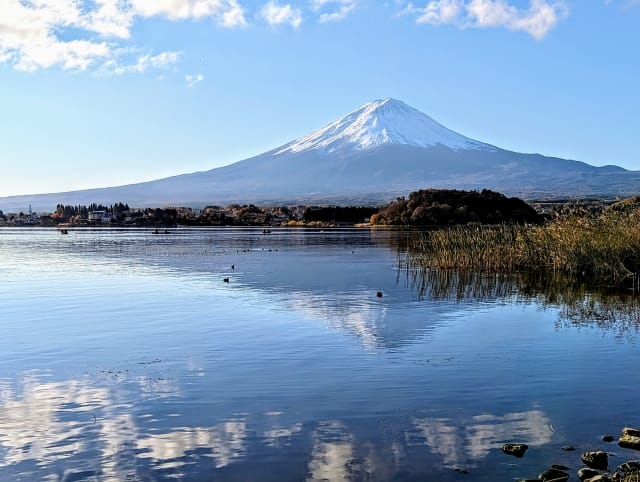
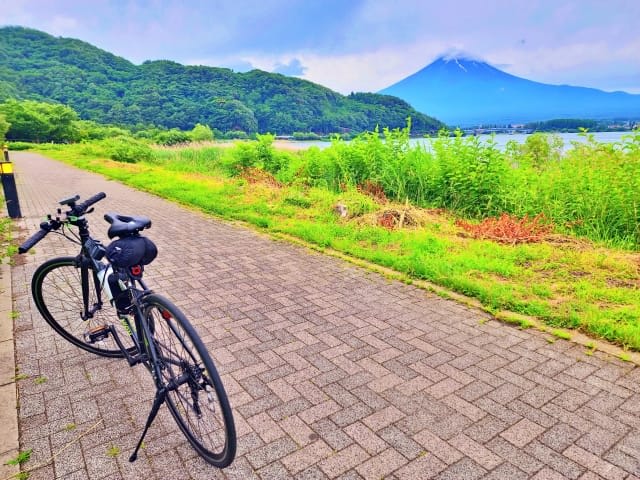
For enjoying spectacular views of Mt. Fuji and rich natural surroundings, the cycling course around Lake Kawaguchiko is highly recommended. From the various parks and rest areas scattered along the route, you can enjoy seasonal scenery alongside beautiful views of Mt. Fuji while cycling.
The Lake Kawaguchiko area features mostly flat roads, making it an ideal cycling course for beginners. The roads are marked with blue lines indicating the route, making it easy to navigate even without a guide.
The complete circuit around Lake Kawaguchiko is approximately 20km, and with stops along the way, the cycling tour takes about 3-4 hours.
Around Kawaguchiko Station on the Fujikyu Line, there are many shops where you can rent bicycles. Start your journey by renting an easy-to-ride bike and heading towards Lake Kawaguchiko at a leisurely pace.
Ubuyagasaki
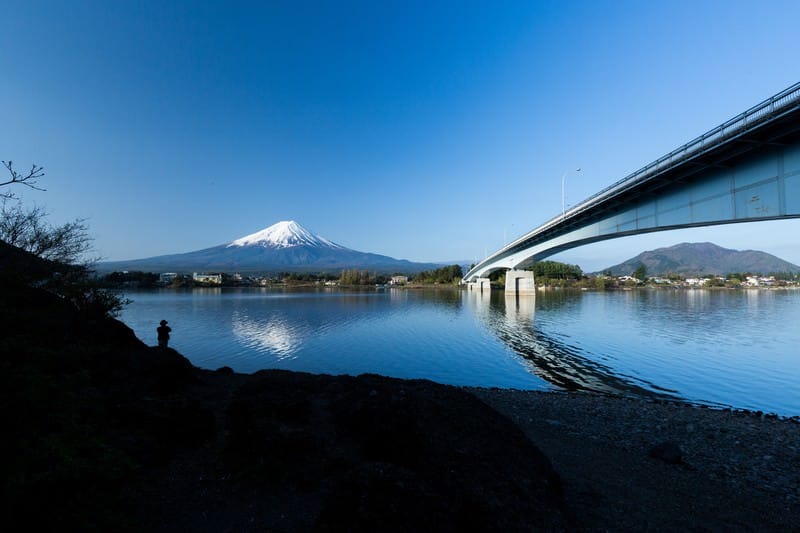
The first recommended stop is Ubuyagasaki, located along the north shore after crossing the Kawaguchiko Bridge (Kawaguchiko Ohhashi). Ubuyagasaki is perfect for a cycling detour as it's accessible via a flat road with minimal elevation changes.
Ubuyagasaki is popular among tourists for its beautiful views of Mt. Fuji, which can be viewed looking up from a position close to the lake's surface.
When the water is calm, you can see the "Reversed Mt. Fuji" (Sakasa Fuji) reflected in the water like a mirror, which is one of the area's most attractive features.
Ubuyagasaki is particularly famous as a cherry blossom viewing spot, making spring the best time to visit.
<Facility Information>
・Address: Asakawa, Fujikawaguchiko-machi, Minamitsuru-gun, Yamanashi Prefecture
Kawaguchi Asama Shrine
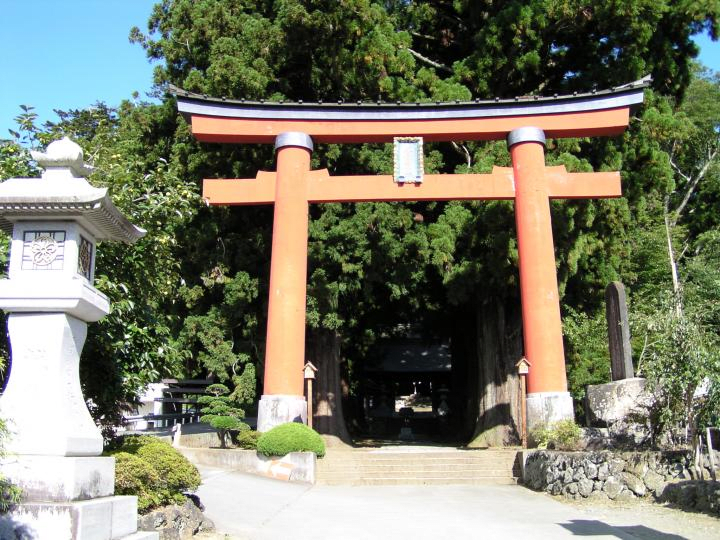
The shrine grounds offer a cool, shaded area perfect for cooling down after cycling in the Mt. Fuji area.
Learning about Kawaguchi Asama Shrine's history reveals how local residents have coexisted with Mt. Fuji throughout the ages.
The shrine was built following a major Mt. Fuji eruption in 864 CE, which severely impacted local residents. To appease the volcanic activity, they enshrined the mountain as "Asama Daijin."
The "Chigo no Mai" (Children's Dance), originally performed by children praying for peace, continues today and is recognized as an important Japanese traditional performing art that should be preserved.
<Facility Information>
- Address: 1 Kawaguchi, Fujikawaguchiko-machi, Minamitsuru-gun, Yamanashi Prefecture
- Hours: 9:00-16:00
- Closed: None
- Phone: 0555-76-7186
- Official Website: https://asamajinja.or.jp/
Ohishi Park
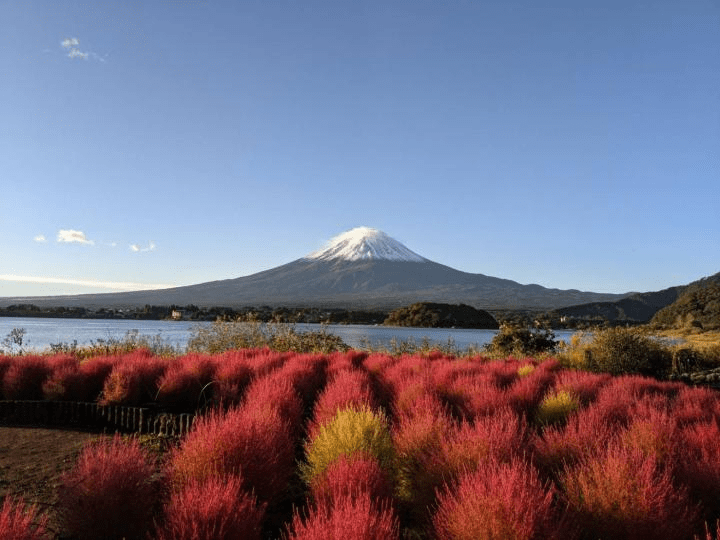
Ohishi Park is located on the northern shore of Lake Kawaguchi. It's an ideal destination for cycling enthusiasts as you can park your bicycle nearby and take a break while enjoying the scenery. Throughout the seasons, you can experience the stunning collaboration between seasonal flowers and Mt. Fuji.
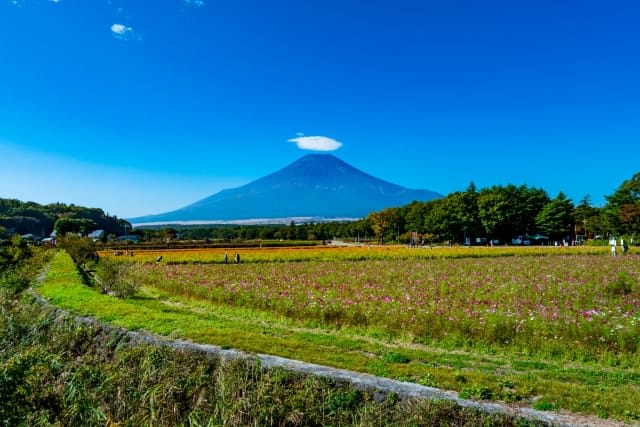
My recommendation is the view of Mt. Fuji alongside the Kokia flowers that bloom in autumn. The field of bright red Kokia creates a beautiful contrast that enhances the blue silhouette of Mt. Fuji.
Additionally, lavender blooms around late June, filling the air with its elegant fragrance. Consider timing your visit during the Herb Festival in early summer, when food stalls and various activities create a lively atmosphere.
<Facility Information>
- Address: 2585 Ohishi, Fujikawaguchiko-machi, Minamitsuru-gun, Yamanashi
- Phone: 0555-76-8230
Lake Yamanaka ~ Panorama-dai Area
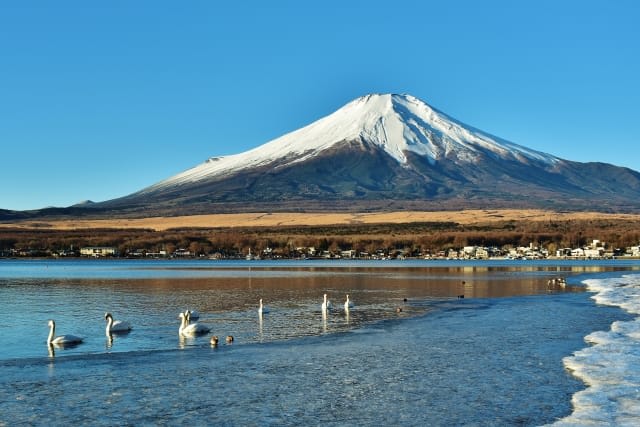
For those seeking the perfect Mt. Fuji photo opportunity, the cycling course around Lake Yamanaka is highly recommended. The area offers unobstructed views of the majestic Mt. Fuji.
The route includes a slightly uphill section at Mikuni Pass on the way to Yamanakako Myojinyama Panorama-dai. While this stretch requires some effort, the breathtaking view waiting at the top makes it worthwhile!
Beyond Mikuni Pass, the lakeside path is well-maintained for cycling, ensuring a comfortable ride.
The total distance is approximately 45km, taking about 5-6 hours when including sightseeing stops.
Start your journey by renting a bicycle from the rental shop near Mt. Fuji Station on the Fujikyu Line, then head towards Lake Yamanaka.
Yamanakako Myojinyama Panorama-dai
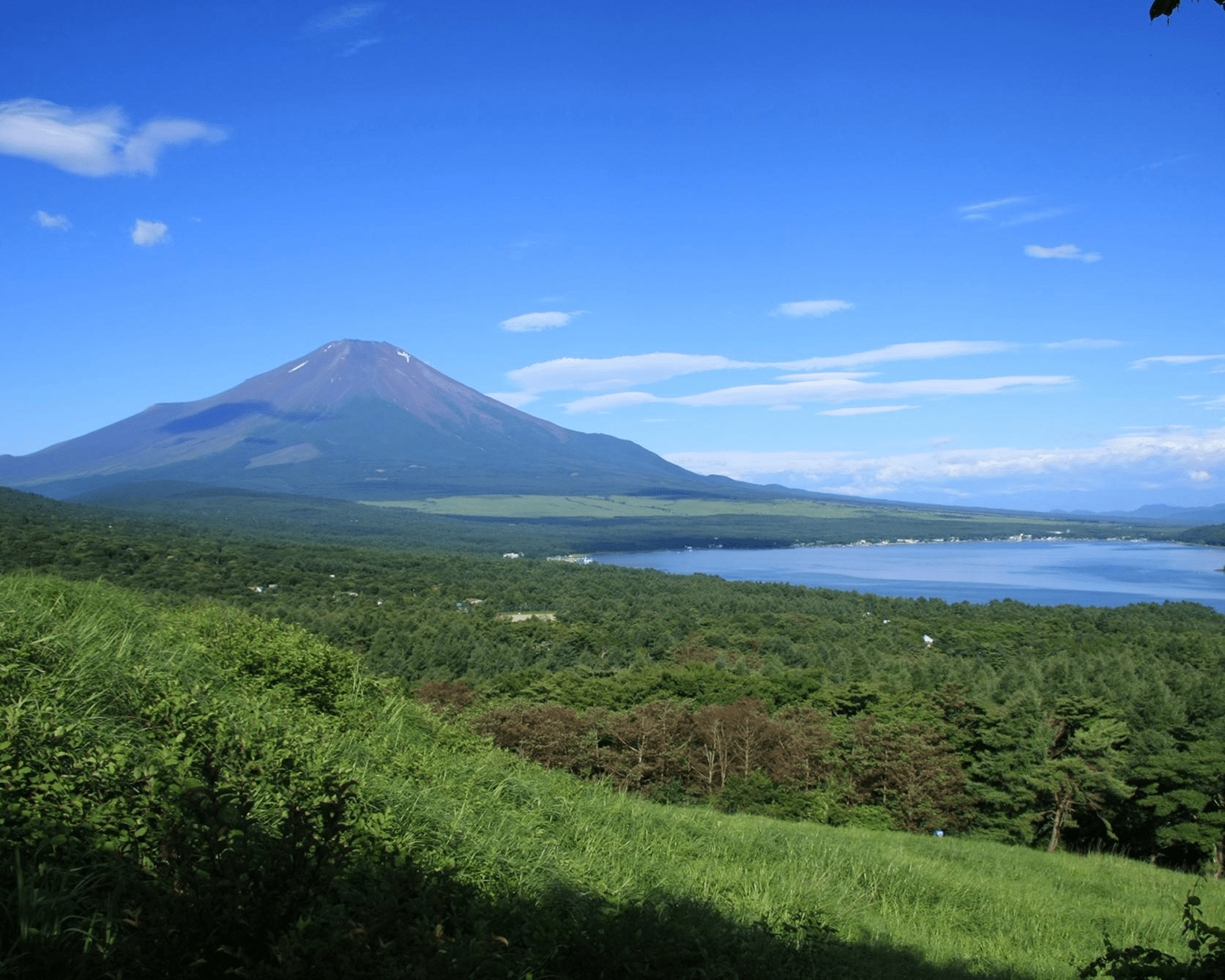
When cycling around Lake Yamanaka, make sure to visit Yamanakako Myojinyama Panorama-dai. After conquering the steep Mikuni Pass by bicycle, the panoramic view from the observation deck is especially rewarding.
The Panorama-dai was renovated in November 2024, expanding its viewing space. On clear days, you can see as far as the Southern Alps, Japan's largest mountain range.
From December to February, early risers might catch the "Belt of Venus," a pink band of light appearing on the right side of Mt. Fuji before sunrise, making it worth an early morning visit.
<Facility Information>
- Address: Hirano, Yamanakako-mura, Minamitsuru-gun, Yamanashi
Nagaike Waterfront Park
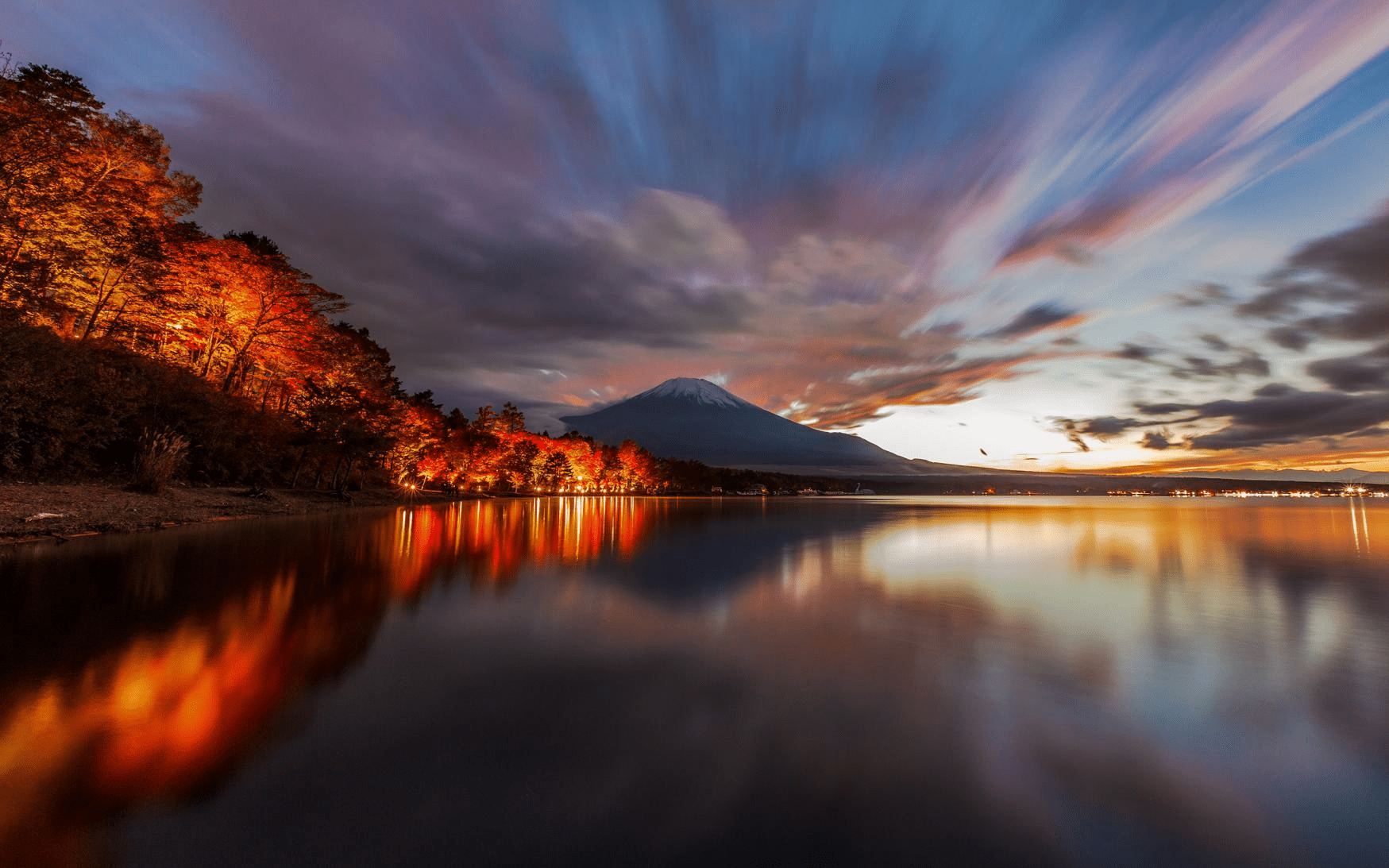
The Nagaike Waterfront Park (Nagaike Shinsui Park) is a popular tourist destination in the Lake Yamanakako area. Located on the northern shore of Lake Yamanaka, the park offers an unobstructed, breathtaking view of Mt. Fuji, making it a perfect spot for photography enthusiasts and nature lovers.
Since the park is frequently featured in guidebooks and attracts many tourists, cycling is the most convenient way to access it, eliminating parking concerns. The area is part of a scenic cycling route that circles Lake Yamanakako with Mt. Fuji as your constant companion.
The park's most spectacular view is the "Double Diamond Fuji," where both Mt. Fuji and its reflection in Lake Yamanaka are illuminated by the setting sun. This magnificent sight, with the mountain peaks gleaming like diamonds, creates an ephemeral moment that leaves a lasting impression on visitors.
To witness the Double Diamond Fuji, plan your visit around 3:30 PM in early November or 4:00 PM in early February.
<Facility Information>
- Address: Hirano, Yamanakako-mura, Minamitsuru-gun, Yamanashi Prefecture
- Phone: 0555-62-9977
Oshino Hakkai
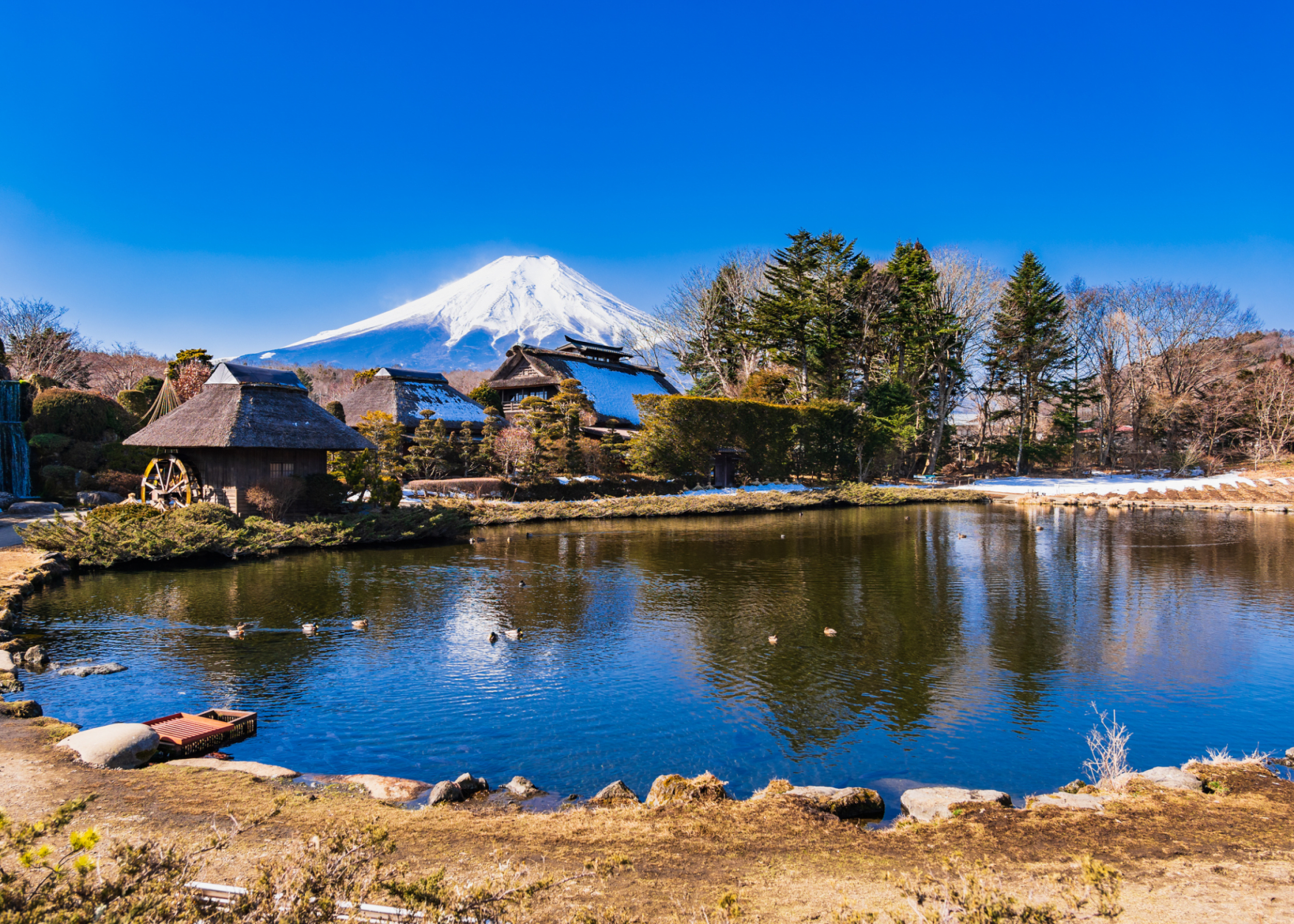
At Oshino Hakkai, visitors can observe and taste the naturally filtered snowmelt water from Mt. Fuji that emerges from springs after years of filtration. This unique opportunity to experience Mt. Fuji's natural blessing makes it a must-visit destination when in the area.
Cycling is the ideal way to explore the eight spring ponds scattered throughout Oshino Hakkai. With convenient bicycle parking available nearby, you can take your time appreciating the crystal-clear ponds at your own pace.
Among the eight spring ponds, the Sokonashi Pond (Bottom-less Pond) is particularly noteworthy. Located within the grounds of the Hannokibayashi Folk Museum, it offers a quintessential Japanese view combining a traditional Japanese house with Mt. Fuji in the background.
This scene provides an excellent photo opportunity that captures the essence of traditional Japan.
<Facility Information>
- Address: Oshinomura, Minamitsuru-gun, Yamanashi Prefecture
- Hours: Open 24/7 (Hannokibayashi Folk Museum: 9:00 AM - 5:00 PM)
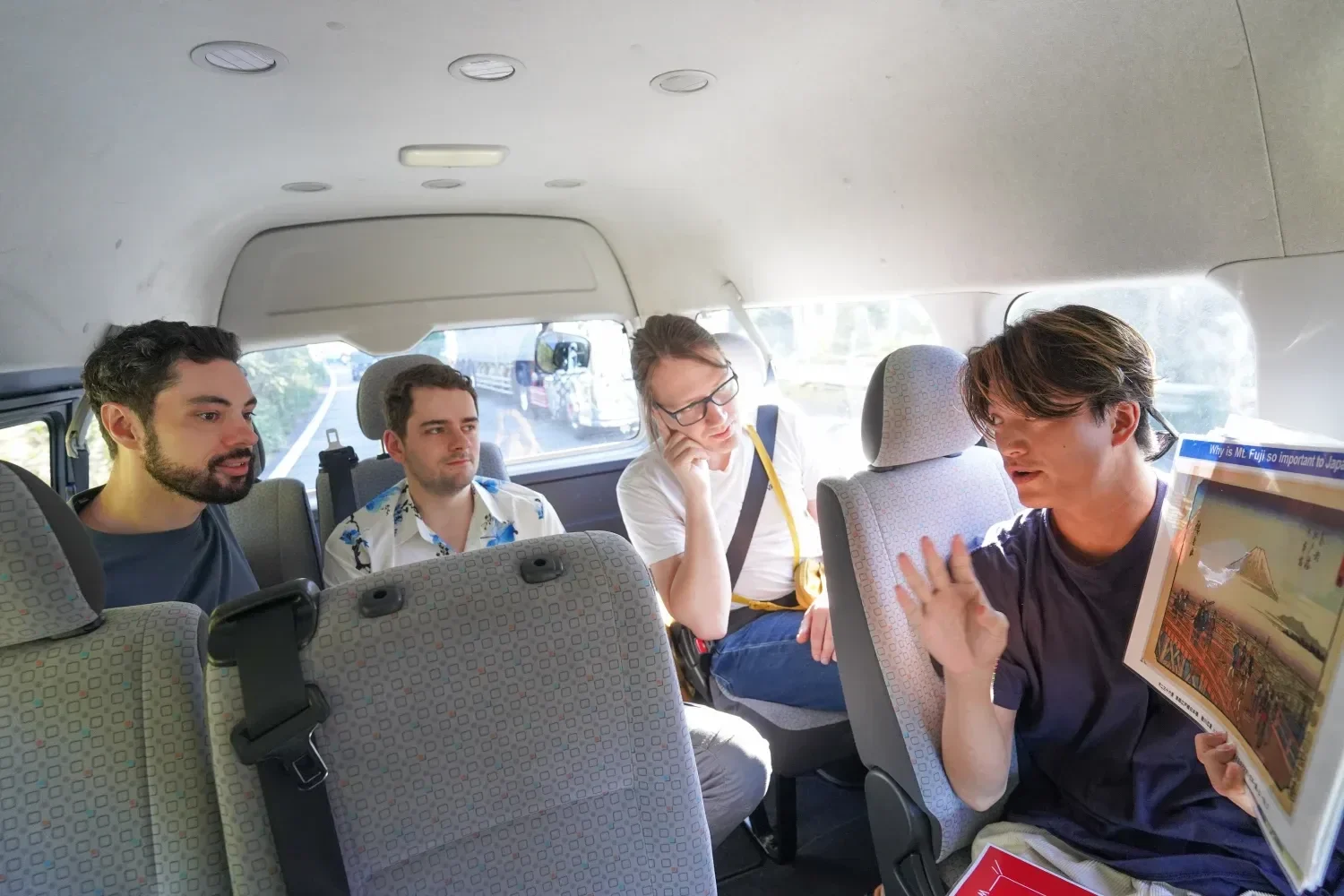
If you want to efficiently explore tourist spots around Mt. Fuji by car, try joining Magical Trip's "Mt. Fuji Full-day Nature Guided Tour with a Private Chartered Car." You'll visit 5-8 carefully selected locations with a private car and an expert guide who knows the Mt. Fuji area inside and out.
With pick-up and drop-off service from Tokyo included, you can enjoy each destination stress-free and efficiently.
Around Fuji-Q Highland (Touring Sengen Shrines by Bike)
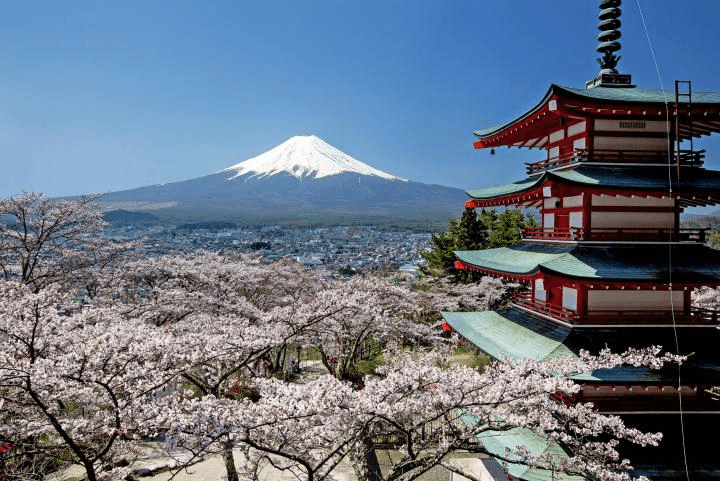
For those interested in Japanese culture or who have previously visited the Mt. Fuji area, why not explore deeper into Japan by cycling between shrines? You'll have a fulfilling day learning about Mt. Fuji's history and the surrounding regions.
The route is beginner-friendly with minimal elevation changes. You'll enjoy diverse scenery as the course takes you through forests and along lakeshores.
The total cycling distance is approximately 36km, and including time for shrine visits, the round trip takes about 3-4 hours.
The recommended starting point is Kawaguchiko Station on the Fuji Kyuko Line, where numerous bike rental shops are conveniently located near the station. After selecting a comfortable bicycle, start pedaling towards Lake Kawaguchi.
Kawaguchi Asama Shrine
The shrine grounds offer a cool, shaded area perfect for cooling down after cycling in the Mt. Fuji area.
Learning about Kawaguchi Asama Shrine's history reveals how local residents have coexisted with Mt. Fuji throughout the ages.
The shrine was built following a major Mt. Fuji eruption in 864 CE, which severely impacted local residents. To appease the volcanic activity, they enshrined the mountain as "Asama Daijin."
The "Chigo no Mai" (Children's Dance), originally performed by children praying for peace, continues today and is recognized as an important Japanese traditional performing art that should be preserved.
<Facility Information>
- Address: 1 Kawaguchi, Fujikawaguchiko-machi, Minamitsuru-gun, Yamanashi Prefecture
- Hours: 9:00-16:00
- Closed: None
- Phone: 0555-76-7186
- Official Website: https://asamajinja.or.jp/
Fuji Omuro Sengen Shrine
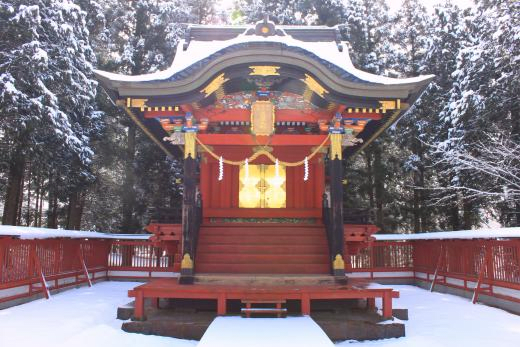
Located on the southern shore of Lake Kawaguchi, Fuji Omuro Sengen Shrine is a must-visit spot while cycling around the area, offering stunning lakeside views. The shrine grounds provide a sacred space where visitors can experience authentic Japanese atmosphere.
A unique highlight of Fuji Omuro Sengen Shrine is the "Yakuwari" (misfortune-breaking) ritual experience. In Japanese culture, when a series of unfortunate events occur, people often attribute it to bad luck (yaku) and perform rituals to ward it off.
The Yakuwari is a simple purification ritual where visitors purchase a "Yakuwari no tama" (fortune-breaking ball) from the shrine office and throw it at a cup-shaped bronze statue called "Yakuwari no sakazuki." It's said that if the ball breaks successfully, it will help ward off any impending misfortunes.
While exploring Mt. Fuji by bike, take the opportunity to experience this unique Japanese purification custom.
<Facility Information>
- Address: 3951 Katsuyama, Fujikawaguchiko-machi, Minamitsuru-gun, Yamanashi
- Hours: Summer (Late March-Early November) 9:00-16:30
Winter (Late November-Early March) 9:00-16:00
- Closed: None
- Phone: 0555-83-2399
- Official Website: https://fujiomurosengenjinja.jp/
Kitaguchi Hongu Fuji Sengen Shrine
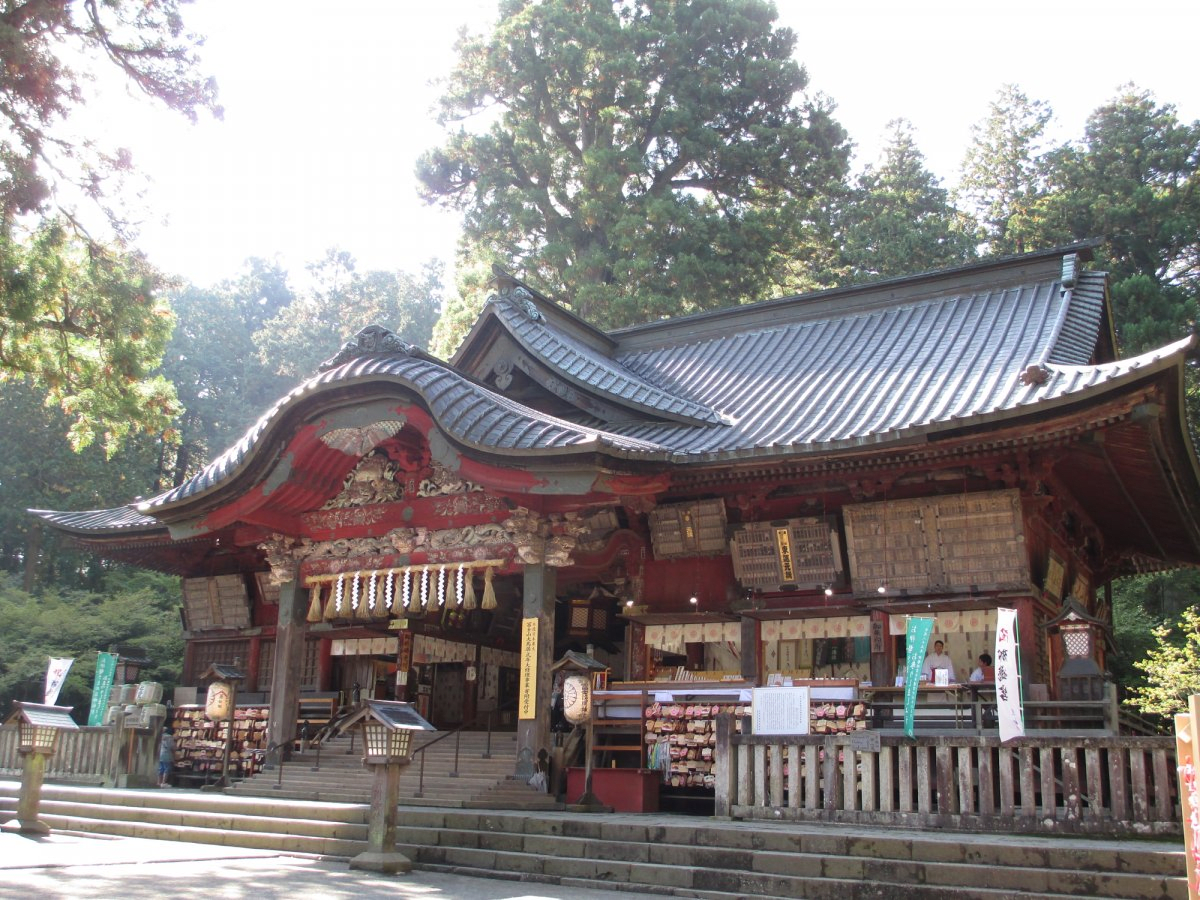
The Kitaguchi Hongu Fuji Sengen Shrine offers an excellent cycling course through the lush Suwa Forest. With over 1,900 years of history, the shrine's main attraction is its Main Hall (Honden), which is designated as an important cultural property of Japan. The hall features exquisitely detailed decorations.
The shrine is known for bringing good fortune in childbirth and relationship connections. When visiting, try following these proper worship procedures:
1. Stop in front of the main hall
2. Put a coin in the offering box
3. Ring the bell
4. Bow twice
5. Clap twice and pray with hands together
6. Bow once
Following other worshippers' example will give you a genuine taste of Japanese cultural traditions.
<Facility Information>
- Address: 5558 Kamiyoshida, Fujiyoshida City, Yamanashi
- Hours: 8:30-17:00
- Closed: None
- Phone: 0555-22-0221
- Official Website: https://www.sengenjinja.jp/
Frequently Asked Questions About Kawaguchiko & Mt.Fuji
How long does it take to cycle around Lake Kawaguchiko?
Cycling the full loop around Lake Kawaguchiko takes approximately 1.5 to 2 hours at a leisurely pace. The circuit is about 20 km, making it very manageable for most riders in a single outing.
That said, most visitors take 3–4 hours in total once you factor in photo stops, rest breaks, and time spent at lakeside viewpoints. With Mt. Fuji as a backdrop at nearly every turn, you'll find yourself stopping far more often than expected — and that's entirely the point.
Where can I rent a bike at Lake Kawaguchiko?
The most convenient place to rent a bike is near Kawaguchiko Station, where several rental shops are located within a short walk of the station exit. Most shops are open daily from around 8:30 AM to 5:00 PM and offer a selection of standard city bikes as well as electric-assist models.
Rental fees vary by shop and by bike type, but they are generally charged for a few hours or for a full day rather than strictly by the hour. Helmets and simple route maps are often included.
Bikes can sell out quickly on weekends and during cherry blossom or autumn foliage season, so arriving early in the day is strongly recommended, as advance online reservations are usually not available.
What is the best season for cycling at Lake Kawaguchiko?
Spring (late March to early May) and autumn (October to November) are the best seasons for cycling around Lake Kawaguchiko. In spring, cherry blossoms line the lakeside paths while Mt. Fuji remains snow-capped, creating one of Japan's most iconic views. Autumn brings vivid red and orange foliage against the mountain.
Summer is also popular, though Mt. Fuji is frequently hidden by clouds or haze, and humidity can make the ride uncomfortable. Winter offers the clearest views of the mountain but comes with cold temperatures and the occasional icy patch on paths, requiring extra caution.
Are electric bikes available for rent at Kawaguchiko?
Yes, electric-assist bikes (e-bikes) are available at several rental shops near Kawaguchiko Station, typically priced at ¥1,500~¥4,000 for a full day — slightly higher than standard bikes. They are an excellent choice for those who want to tackle gentle inclines effortlessly, cover more ground, or simply enjoy the scenery without fatigue.
Because e-bikes are in high demand during cherry blossom season and autumn foliage, advance reservation is strongly recommended. Some shops offer online booking, so checking the shop's website before your visit can save you a wasted trip.
Is cycling around Lake Kawaguchiko safe for beginners?
Yes, Lake Kawaguchiko is one of Japan's most beginner-friendly cycling destinations. The 20 km loop is almost entirely flat, features well-paved roads, and includes a dedicated cycling path along much of the lakeshore — making it accessible even for those who haven't ridden in years.
A few practical tips: during peak season, the main lakeside road can see moderate car traffic, so staying on the dedicated path where available is advisable. Helmets are provided at most rental shops and are recommended. Families with young children may want to ask about child seats or tandem options at the rental counter.