Shinjuku in June 2026: Traditional Festivals, Shrine Events & Seasonal Highlights
Since moving to a neighborhood adjacent to Shinjuku in 2024, I've been visiting Shinjuku and Shin-okubo almost daily to explore its appeal and discover spots I can recommend to tourists. I updated this article in January 2026 to incorporate my findings from this research, along with the latest information for 2026.
Another reason for updating the article is the growing interest in tours that allow visitors to safely and deeply experience Shinjuku's nightlife. As these tours gain popularity, Magical Trip's tour, which ranked #1 among all tours on Tripadvisor, has been receiving numerous applications.

If you want to enjoy Shinjuku's nightlife, I recommend the "Tokyo Bar Hopping Night Tour in Shinjuku," which ranked #1 on Tripadvisor. Our guides who know Shinjuku inside and out will take you bar hopping while avoiding dangerous areas, allowing you to fully enjoy Shinjuku at night.
I also recommend the "Tokyo Night Foodie Tour in Shinjuku," where you can enjoy premium wagyu beef barbecue and exceptional sushi. You'll learn from food-savvy tour guides about the best ways to grill your meat and proper sushi etiquette while enjoying exquisite Japanese cuisine.
I hope you can safely and thoroughly enjoy Shinjuku's nightlife with Magical Trip's tours!
Introduction
In June, Shinjuku is mostly warm enough to wear short sleeves or light jackets. Also, being in Japan where humidity is high, especially during the rainy season, it will feel warmer than the actual temperature. As it's a comfortable season, you'll encounter many tourists going out to seasonal events in the city.
Shinjuku is famous for having "Shinjuku Station," which boasts the world's highest number of passengers, and is one of Japan's leading entertainment districts. Shinjuku, with its established department stores, cutting-edge commercial complexes, and Japan's number one entertainment district for nightlife, constantly attracts many people from both Japan and abroad.
In June 2026, this major Japanese city of Shinjuku will host events where you can enjoy traditional ceremonies at historic shrines as well as beautiful natural scenery unique to this season.
This time, we will introduce the highlights, basic information, dates, and access to the event venues.
2026 Year-round Event Schedule in Shinjuku↓
・Shinjuku: List of Events & Festivals for 2026
 sena kanda
Traditional Shinjuku Events in June 2026
Nagoshi no Oharae (Summer Purification Ritual)
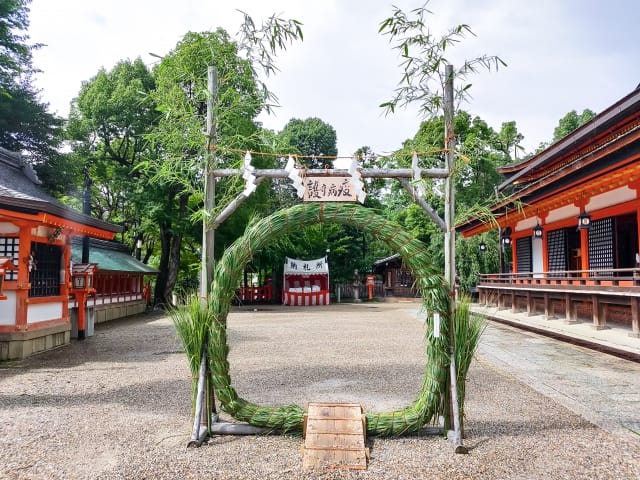
"Nagoshi no Oharae" is a traditional ceremony at Hanazono Shrine, located in the middle of the metropolitan Shinjuku. Hanazono Shrine is famous as the guardian deity of Shinjuku and has been loved by locals for over 400 years.
"Nagoshi no Oharae" is a ceremony to purify the impurities accumulated during the first half of the year and pray for good health for the remaining half. "Nagoshi no Oharae" is conducted not only at Hanazono Shrine but at shrines throughout Japan in preparation for the arrival of full summer.
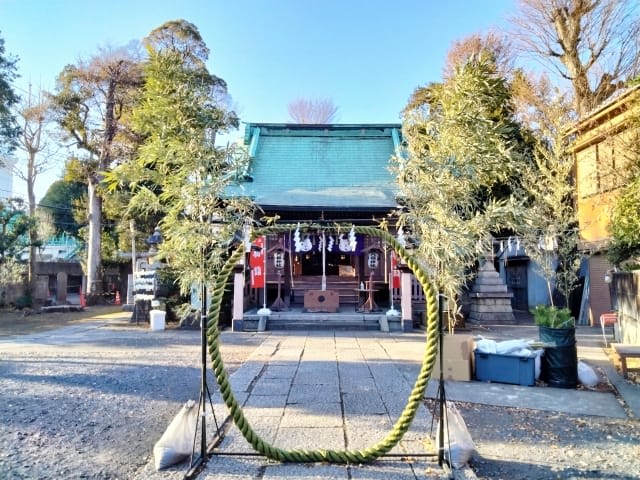
During "Nagoshi no Oharae," you purify yourself by passing through a giant ring woven from chigaya grass and pray for health and protection from evil. The vibrant green chigaya grass creates a cool atmosphere, and you can enjoy the shrine grounds surrounded by a refreshing air that feels different from usual.
Also, please take the opportunity to see the historic architecture of Hanazono Shrine, including one of Shinjuku's tallest torii gates and the beautiful vermilion main hall.
<Information>
Date: June 30, 2026
Access:
- Immediately from Tokyo Metro "Shinjuku-sanchome Station" Exit E2
- 7-minute walk from JR, Odakyu Railway, and Keio Railway "Shinjuku Station" East Exit
Admission: Free
Website: http://hanazono-jinja.or.jp/ceremony/
Hanazono Shrine
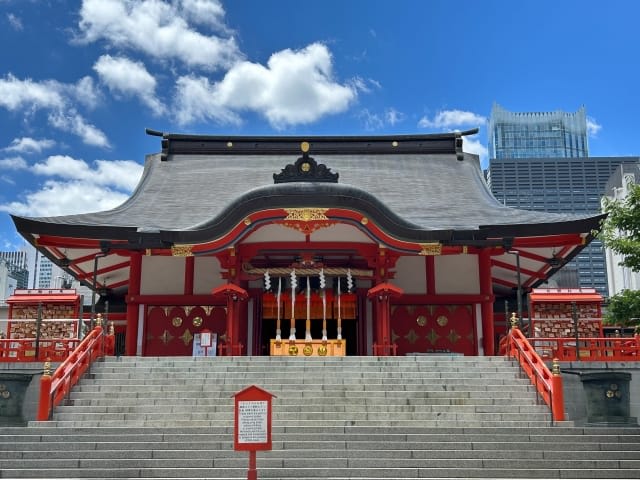
Hanazono Shrine has been the guardian shrine of Shinjuku for over 400 years. Known as the deity of prosperous business, good fortune in work, and protection from evil, this shrine has long been cherished by locals.
On June 30, the Nagoshi no Oharae ceremony is held here. By passing through the large grass ring called "Chinowa" set up on the shrine grounds, visitors can purify themselves of the impurities accumulated over the past six months and welcome the remaining half of the year with a refreshed spirit. The beautiful scenery created by the vivid vermilion of the main hall and the green of the "Chinowa" is also a must-see during this Shinjuku event in June 2026.
Hanazono Shrine is also well known as a lush, green oasis away from the hustle and bustle of the city, despite being just a 7-minute walk from Shinjuku Station — the busiest station in the world by passenger volume. In the warm June weather, be sure to experience the sacred ceremony of one of Shinjuku's most iconic shrines.
<Information>
Date: June 30, 2026
Address: 5-17-3 Shinjuku, Shinjuku-ku, Tokyo
Access: Directly accessible from Exit E2 of Tokyo Metro "Shinjuku-sanchome Station"
Admission: Free
Website: http://hanazono-jinja.or.jp/ceremony/
Inarikio Shrine
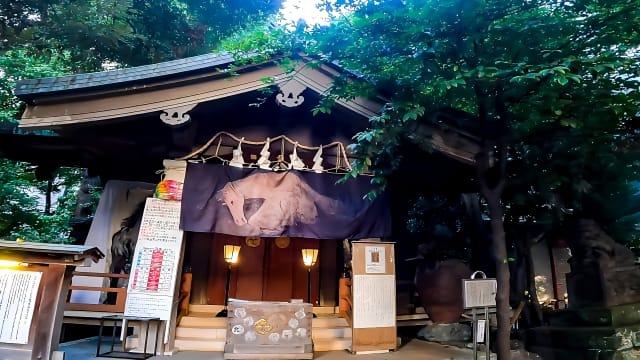
Inarikio Shrine is a shrine located in Kabukicho, one of Japan's most prominent entertainment districts, and is famous for being the only shrine in Japan dedicated to the "King of Demons." Founded in 1653, this shrine has long attracted many worshippers each day, all seeking the power of the demon deity said to ward off misfortune and bestow good fortune.
At Inarikio Shrine's Nagoshi no Oharae, ceremonies are held including passing through the "Chinowa" and a ritual in which visitors write their name and age on a paper effigy to have prayers offered on their behalf. What I personally recommend is that even if you cannot attend on the day itself, you can still participate in these rituals over an extended period spanning from late June to early July — making this a flexible Shinjuku event for June 2026 visitors.
Located right in the heart of the city, the shrine grounds carry a solemn atmosphere surrounded by greenery. Why not take part in the traditional ceremony of this rare shrine, one of the few in Japan dedicated to a king of demons?
<Information>
Date: June 30, 2026
Address: 2-17-5 Kabukicho, Shinjuku-ku, Tokyo
Access: Approximately 3-minute walk from Tokyo Metro / Toei Subway "Higashi-Shinjuku Station"
Admission: Free
Website: https://www.kanko-shinjuku.jp/event/-/article_4423.html
Kumano Shrine
Source:Official website
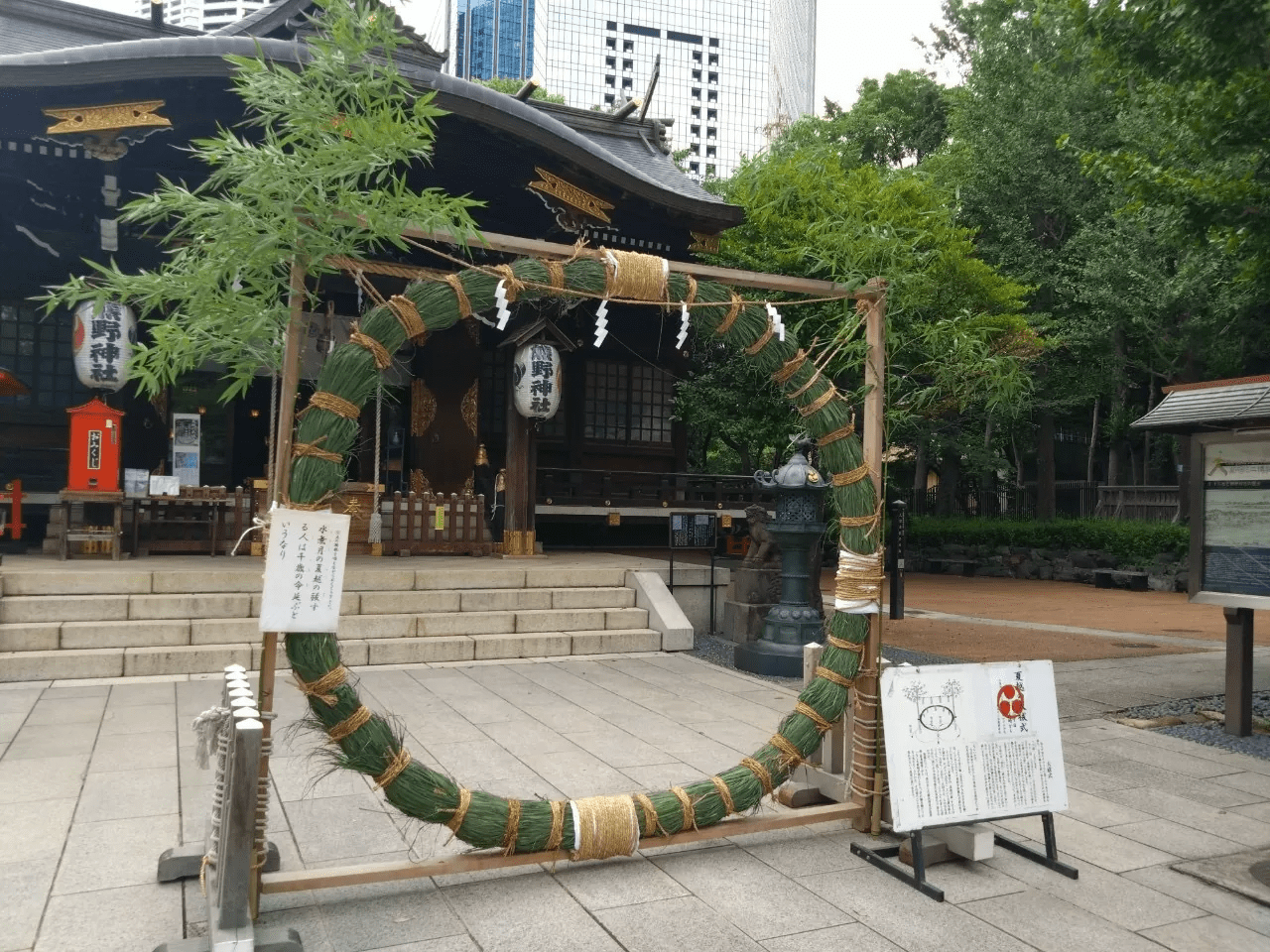
Kumano Shrine's official name is "Juniso Kumano Shrine," and it has a history of approximately 600 years. It is a shrine based on "Kumano Faith," a blend of Shinto and Buddhism rooted in Wakayama Prefecture, and is beloved as a deity of prosperous business, protection from evil, and matchmaking.
A distinctive feature of Kumano Shrine's Nagoshi no Oharae is that alongside the ritual of writing one's name and age on a paper effigy for prayer, paper effigies for pets are also prepared. What I personally love about this shrine is that you can purify yourself of half a year's impurities while also praying for the health of your beloved pet — a wonderful Shinjuku event in June 2026 for animal lovers.
This shrine is also popular for its beautiful scenery, where grand shrine architecture, high-rise buildings, and lush greenery come together harmoniously. Be sure to experience the traditional ceremony within the shrine grounds, where you can enjoy Japan's nature across the changing seasons.
<Information>
Date: June 30, 2026
Address: 2-11-2 Nishi-Shinjuku, Shinjuku-ku, Tokyo
Access: Approximately 4 minutes from Exit A5 of Toei Subway "Tochomae Station"
Admission: Free
Website: https://12so-kumanojinja.or.jp/
Koinomori Suwa Shrine
Source:Official website
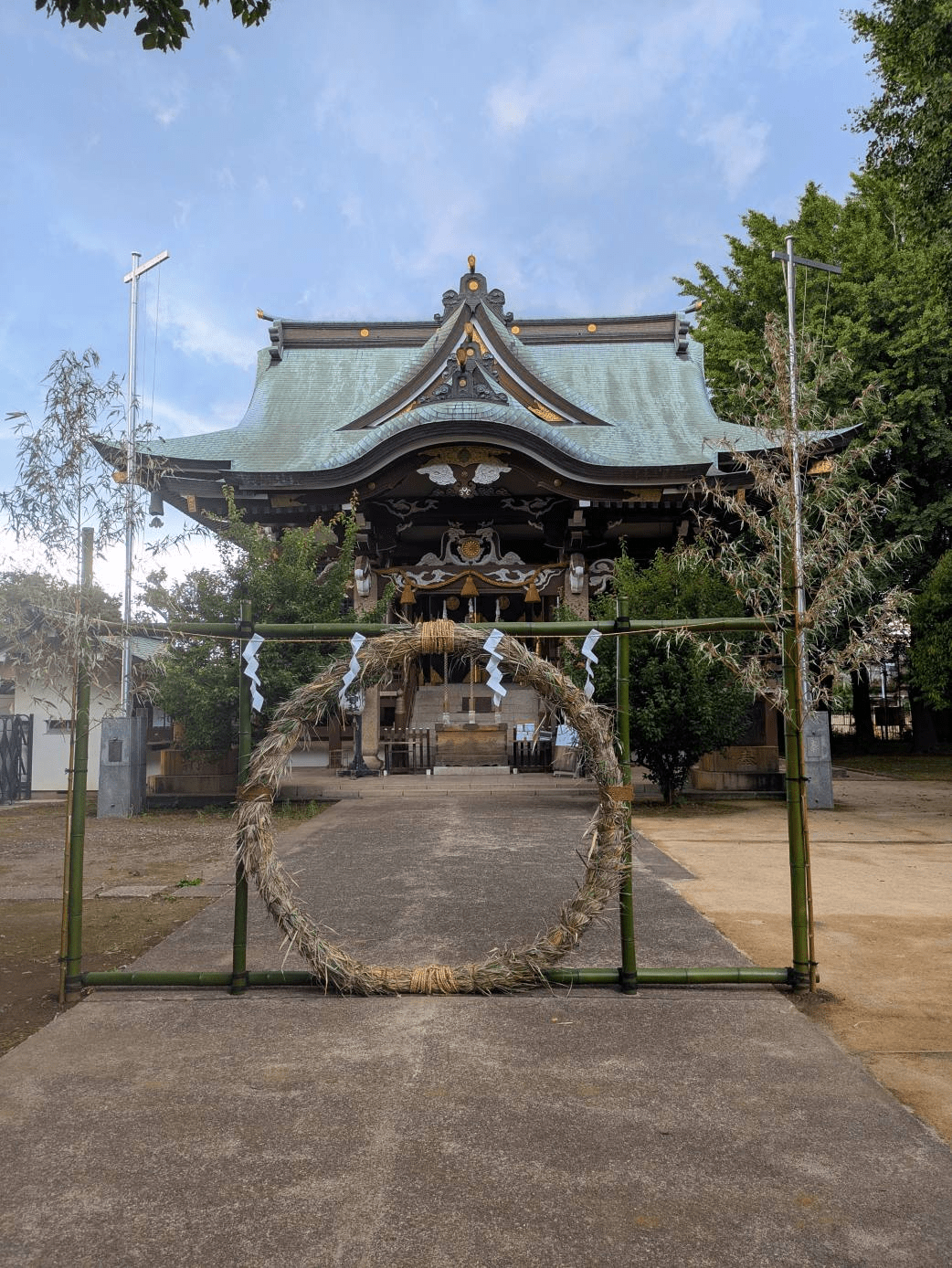
Koinomori Suwa Shrine's official name is "Shinjuku Suwa Jinja," a shrine with a long history that enshrines the deity of valor revered even by feudal warlords, as well as the deities of mountains and wind.
According to legend, a poet couple once stopped by this shrine, became separated, and prayed to the deity — only to be reunited safely. This story gave the shrine its nickname, "Koinomori" (Forest of Love).
At this shrine's Nagoshi no Oharae, in addition to providing paper effigies for pets during the paper purification ritual, a small "Chinowa" is also prepared especially for pets alongside the large one. The sight of both a large and a small "Chinowa" standing side by side is a rare and unique scene, making it a recommended Shinjuku event in June 2026 for those who want to enjoy a one-of-a-kind Nagoshi no Oharae experience.
At Koinomori Suwa Shrine, a sign with arrows shows the order in which to pass through the "Chinowa," so even foreign visitors who do not understand Japanese can participate in the ritual confidently and in the proper manner.
<Information>
Date: June 30, 2026
Address: 1-12-6 Takadanobaba, Shinjuku-ku, Tokyo
Access: Approximately 1 minute from Tokyo Metro "Nishi-Waseda Station"
Admission: Free
Website: https://koinomorisuwajinjya.com/special/special-216/
Akagi Shrine
Source:Official website
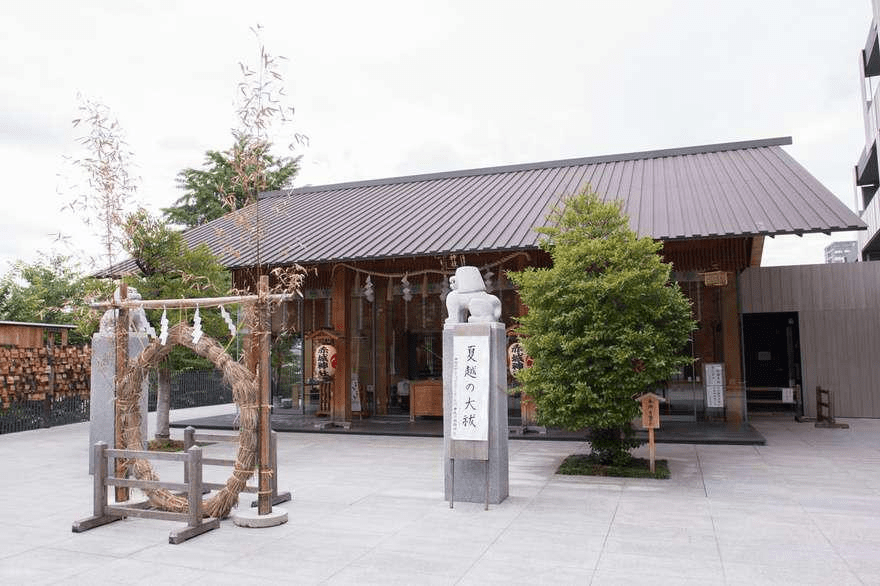
Akagi Shrine is a venerable shrine founded in the year 1300. A defining feature of this shrine is its modern hall of worship, rebuilt in 2010 due to the deterioration of the original structure. The new hall was designed by world-renowned architect Kengo Kuma, and what I personally love about it is the refined, open space consisting of just a roof and pillars where visitors can worship.
At Akagi Shrine's Nagoshi no Oharae, the purification ritual and the ceremony of passing through the "Chinowa" are performed to ward off half a year's misfortune. The shrine's hall of worship is situated at a height equivalent to the second floor of a building, allowing visitors to experience the sacred purification ceremony in an open, expansive atmosphere beneath a wide-open sky — a highlight of this Shinjuku event in June 2026.
The shrine grounds are also home to a café where you can enjoy Japanese sweets and drinks, so feel free to take a break while sightseeing and participate in this time-honored tradition unique to this season in Japan.
<Information>
Date: June 30, 2026
Address: 1-10 Akagi-Motomachi, Shinjuku-ku, Tokyo
Access: Approximately 1 minute from Exit 1b of Tokyo Metro "Kagurazaka Station"
Admission: Free
Website: https://www.akagi-jinja.jp/info/2024/6630.html
Yotsuya Suga Shrine Annual Festival
Source:Official website
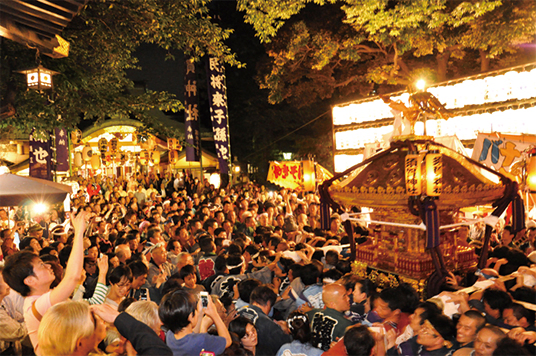
At Yotsuya Suga Shrine, which has about 390 years of history, an annual festival is held during this time every year to thank the deities and pray for the prosperity of worshippers and abundant harvests.
The highlight of this traditional event is the ceremony of carrying a small box called "Mikoshi," which houses the deity, through the streets. The sight of people wearing traditional happi coats carrying elaborately decorated golden Mikoshi while chanting loudly is impressive. Especially at night, the Mikoshi and venue are illuminated, creating a magical festival atmosphere.
Also, on June 7 and 8 during the festival period, food stalls offering classic festival cuisine will appear. While enjoying Japan's traditional events, please also savor uniquely Japanese festival foods such as takoyaki and candied fruits.
This is recommended for those who want to experience Japan's quintessential festival scene with powerful Mikoshi and children in yukata (traditional summer kimono) enjoying the food stalls.
<Information>
Date: June 5–8, 2026
Access:
- 7-minute walk from Tokyo Metro "Yotsuya-sanchome Station"
- 10-minute walk from Tokyo Metro/JR "Yotsuya Station"
- 10-minute walk from JR "Shinanomachi Station"
Admission: Free
Website: https://sugajinjya.or.jp/annual_event/
Shinjuku Central Park — Hydrangea Season
Source:PR TIMES
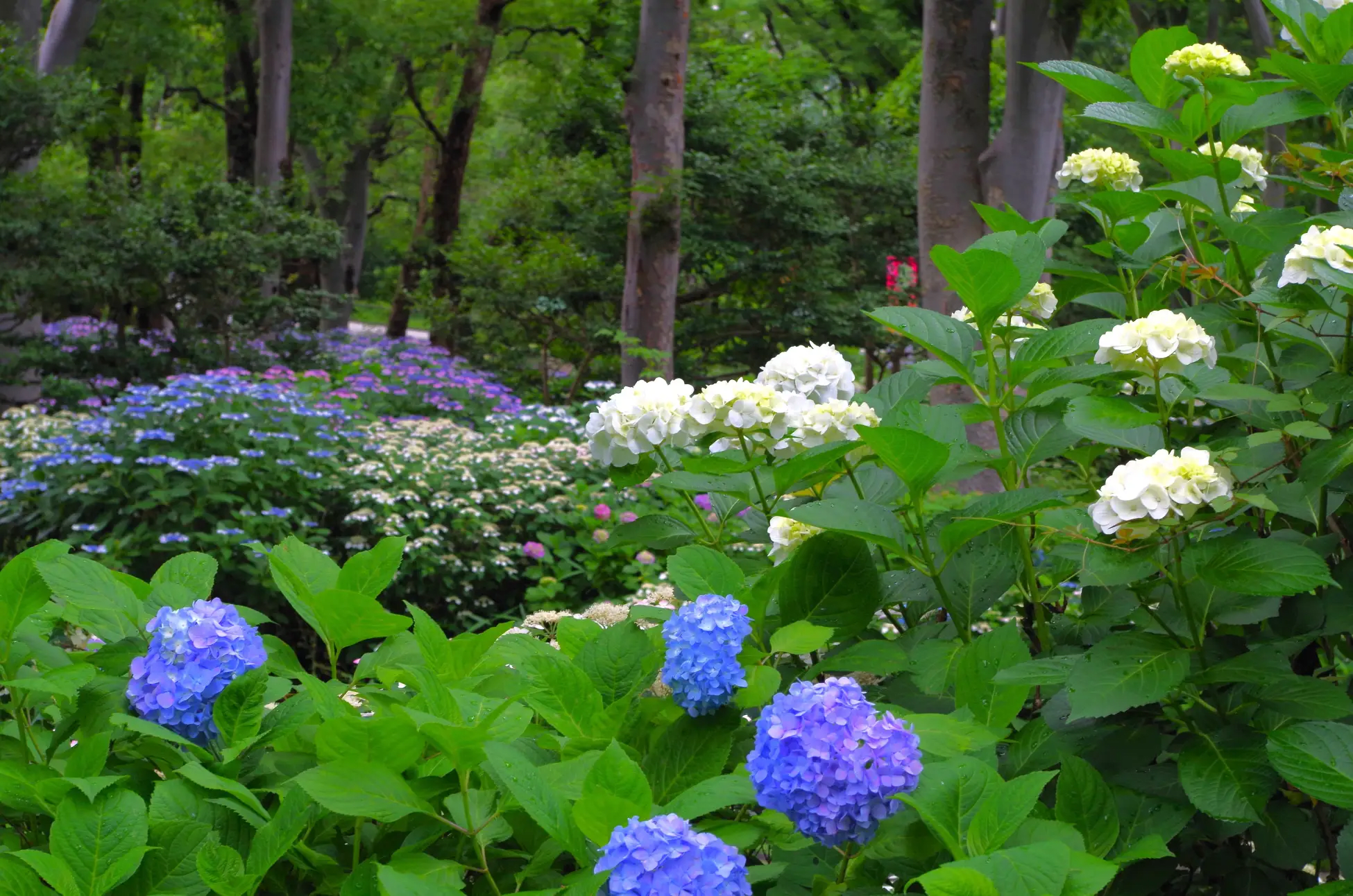
At Shinjuku Central Park, located right next to the Tokyo Metropolitan Government Building, hydrangeas reach their peak bloom every year from early to mid-June.
Hydrangeas are a flower unique to this season and are cherished in Japan as a symbol of early summer — making them a wonderful feature of any Shinjuku event in June 2026.
Along the "Hydrangea Road" within the park, visitors can stroll along well-maintained walkways and admire hydrangeas blooming in a rich array of colors, including purple, pink, and white.
The sight of hydrangeas lined up in abundance on both sides of the path is truly breathtaking — I personally found myself completely absorbed in photographing them from every angle imaginable.
Shinjuku Central Park also features a play area exclusively for infants, playground equipment for children, as well as nursing rooms and diaper-changing stations, so families with young children are welcome to visit without hesitation.
<Information>
Date: Early to mid-June 2026
Address: 2-11 Nishi-Shinjuku, Shinjuku-ku, Tokyo
Access: Approximately 1 minute from Toei Subway "Tochomae Station"
Admission: Free
Website: https://shinjukuchuo-park.jp/
Special Events to Enjoy in Shinjuku in June 2026
If you're looking for the best Shinjuku Event June 2026 has to offer, this guide covers everything from multicultural festivals to traditional shrine celebrations and serene natural scenery.
Seikatsu no Tanoshimi-ten 2026
Source:Official website
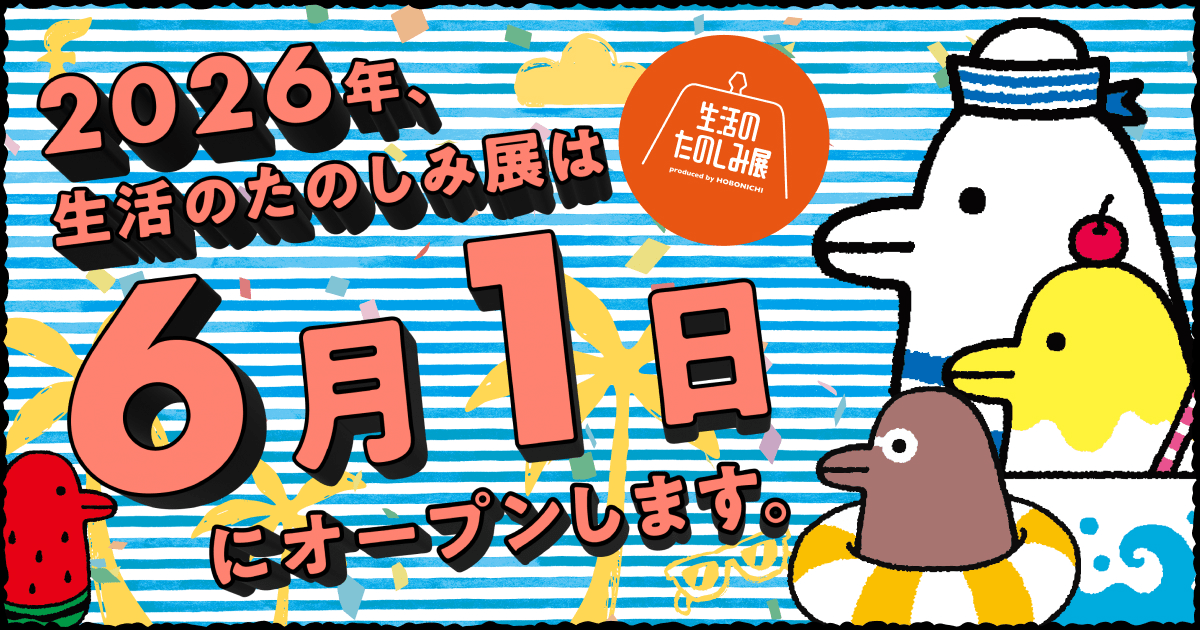
"Seikatsu no Tanoshimi-ten 2026" is a shopping event in exhibition format that brings together all kinds of enjoyments related to everyday life. Approximately 60 shops will be set up at the venue, showcasing a carefully curated selection of unique items spanning fashion, tableware, interior goods, stationery, food, and more.
At this event, you can purchase items that add a touch of luxury to daily life, such as small lamps made from real plants and one-of-a-kind pieces of tableware. There are also fun and quirky products not to be missed, including a soap dispenser that releases bubbles from a crab's mouth, bringing a sense of playfulness to everyday living.
Since this event is held indoors, you can enjoy shopping without getting wet even on the rainy June days that are common in Shinjuku. Beyond shopping, the event offers a rich lineup of content including talk shows, performances, and food booths, so be sure to soak up the uniquely whimsical experience this event has to offer.
<Information>
Dates: June 1–7, 2026
Address: 2-6-1 Nishi-Shinjuku, Shinjuku-ku, Tokyo
Access: Directly connected to Toei Subway "Tochomae Station"
Admission: Free
Website: https://www.1101.com/seikatsunotanoshimi/2026_summer/teaser/
Kokusai Toshi Shinjuku Odori no Saiten 2026 (Shinjuku Dance Festival 2026)
Source:Official website
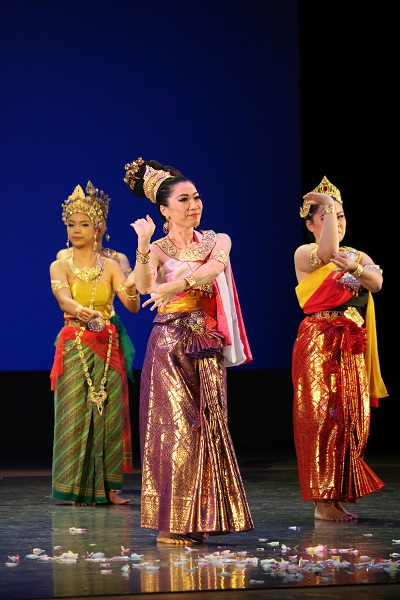
"Shinjuku Dance Festival 2026" is a multicultural exchange festival held in Shinjuku, a district where diverse international cultures coexist.
On the day of the event, visitors can enjoy a wide variety of cross-cultural experiences all in one day, including performances of traditional folk dances from various countries, ethnic music performances, dance workshops, and the sale of ethnic cuisine from around the world.
At this event, you can watch traditional Japanese cultural performances such as Nihon Buyo (classical Japanese dance) performed to the accompaniment of traditional Japanese instruments, as well as Eisa, a traditional performing art from Okinawa.
In addition, traditional dances from countries across Asia, Europe, North America, and beyond gather in one place, allowing you to experience a rich tapestry of world cultures without ever leaving Japan.
At "Shinjuku Dance Festival 2026," there will also be shops selling folk crafts and miscellaneous goods from around the world, as well as food booths where you can savor ethnic cuisine. In the heart of Japan — Shinjuku — enjoy a special experience that brings together traditional performing arts and local flavors from both Japan and all corners of the globe.
<Information>
Date: June 6, 2026
Address: 6-14-1 Shinjuku, Shinjuku-ku, Tokyo
Access: Approximately 5 minutes from Exit A3 of Tokyo Metro "Higashi-Shinjuku Station"
Admission: Free
Website: https://www.regasu-shinjuku.or.jp/bunka-center/odorinosaiten/
June in Shinjuku Has Few Events! Recommended Events in Shinjuku During Surrounding Months
In Shinjuku, major traditional events representing Tokyo are held in May and July, before and after June. Since May and July in Shinjuku have fewer rainy days than June, you can enjoy outdoor events without worrying about the weather in most cases.
There are big events that utilize the entire area of Shinjuku, the heart of Japan, so please check these out along with events held in June 2026.
Hanazono Shrine Grand Festival (May)
Source:Shinjuku Keizai Shimbun
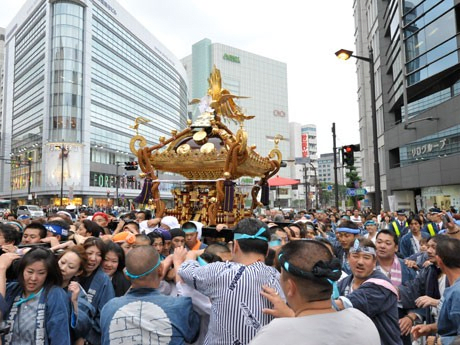
At Hanazono Shrine, where the "Nagoshi no Oharae" is held in June, the shrine's largest traditional event "Grand Festival" takes place in May.
The Hanazono Shrine Grand Festival is held as a main festival in even-numbered years and as a shadow festival in odd-numbered years. During the main festival, two Mikoshi (portable shrines) from Hanazono Shrine participate, while in the shadow festival, eight Mikoshi from eight local areas each participate.
The highlight of the Hanazono Shrine Grand Festival is the spectacular sight of a large procession carrying Mikoshi parading down the main streets of Shinjuku, one of Japan's major metropolitan areas.
You can experience a unique festival where "tradition" and "modern" merge, as this sacred traditional event with deep history unfolds in Shinjuku, an area that usually leads the latest trends.
Additionally, it's interesting to compare the differences between the eight districts, as the decorations of the Mikoshi and the colors of traditional costumes differ for each district.
If you're interested in this powerful festival where spirited chants echo throughout Shinjuku, the center of Japan, please participate.
Information:
- Dates: May 22–25, 2026
- Access:
- Tokyo Metro "Shinjuku-sanchome Station" Exit E2: Immediate access
- JR/Odakyu Electric Railway/Keio Electric Railway "Shinjuku Station" East Exit: 7-minute walk
- Admission: Free
- Website: http://hanazono-jinja.or.jp/ceremony/
Shinjuku Eisa Festival (July)
Source:Official website
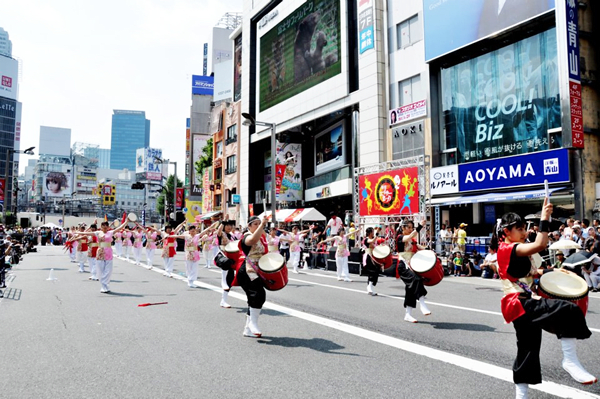
The "Shinjuku Eisa Festival" is an event where the traditional performing art of Eisa from Okinawa Prefecture is showcased on the main streets of Shinjuku.
Eisa is a traditional dance from Okinawa, one of Japan's most popular tourist destinations, performed to honor ancestors. Eisa is danced to Okinawa's unique folk songs, accompanied by Japanese drums, finger whistles, and the Sanshin, a traditional Okinawan percussion instrument.
The "Shinjuku Eisa Festival" began because Eisa's upbeat rhythm and bright atmosphere match the image of Shinjuku, one of Japan's representative entertainment districts. You can enjoy this lively festival where more than 20 Eisa teams dressed in colorful traditional costumes dance through the streets of Shinjuku.
Another attractive point of this event is that you can taste Okinawan specialty foods at the food booths. If you're interested in this special festival where Shinjuku is immersed in Okinawan culture for just one day, please participate.
Information:
- Dates: Late July 2026
- Access:
- Tokyo Metro "Shinjuku Station": 1-minute walk
- JR "Shinjuku Station" East Exit: 2-minute walk
- Toei Subway "Shinjuku-nishiguchi Station": 3-minute walk
- Seibu Railway "Seibu-Shinjuku Station": 5-minute walk
- Admission: Free
- Website: https://www.shinjuku-eisa.com/
June at Shinjuku Gyoen National Garden is One of the Peaceful Natural Landscapes Worth Seeing!
Source:Official website
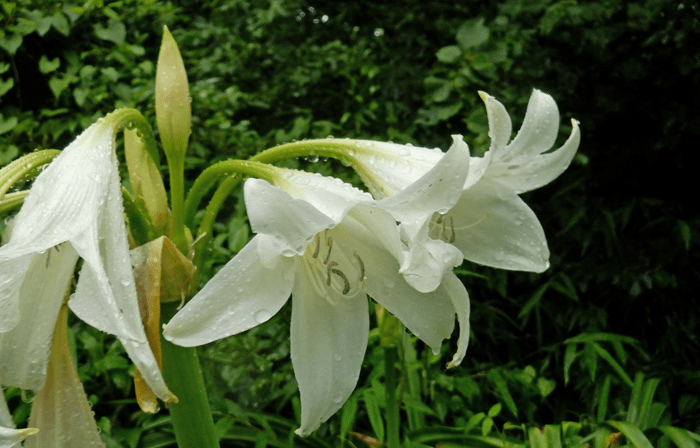
"Shinjuku Gyoen National Garden" opened in 1906 as an imperial garden. It is a beautiful garden that symbolizes "modern Western garden" with elements of Japanese and European gardens fused together.
This garden is currently open to the public and is a spot where you can enjoy seasonal flowers throughout the year - cherry blossoms in spring, tiger lilies in summer, osmanthus in autumn, and plum blossoms in winter.
Especially in June, the hydrangeas with their magnificent purple flowers reach their peak bloom. Hydrangeas, which bloom in humid environments, are representative flowers of June when there are many rainy days in Japan. You can enjoy flowers in various colors such as purple, blue, and white.
Another attractive point of "Shinjuku Gyoen National Garden" is that you can enjoy walks in a calm atmosphere. How about spending an elegant time fully enjoying Japanese nature in the "Japanese Garden" where carefully maintained trees line the surroundings of a large pond?
The Shinjuku Event in June 2026 offers tourists a wonderful opportunity to experience one of Tokyo's most beautiful gardens during the rainy season when hydrangeas are at their peak bloom, creating a uniquely Japanese landscape that draws many visitors.
<Information>
Schedule: June 2026
Access:
- 5 minutes walk from Tokyo Metro "Shinjuku-sanchome Station" Exit E-5
- 5 minutes walk from Tokyo Metro "Shinjuku-gyoenmae Station" Exit 1
- 5 minutes walk from Toei Subway "Shinjuku-sanchome Station" Exit C1/C5
Admission Fee: Adults 500 yen / Seniors (65+) 250 yen / Students (High school and above) 250 yen / Junior high school students and younger free
Website: https://www.env.go.jp/garden/shinjukugyoen/index.html
Three Recommended Tokyo Events for Visitors to Shinjuku in June
In June, various events are held in Tokyo besides Shinjuku. For example, there are highly notable traditional events in Tokyo, and seasonal nature events limited to this time of year.
Here are spots that are about 30 minutes by train from Shinjuku, so if you're visiting Shinjuku in June 2026, please check these out as well.
Sanno Matsuri Festival / Jinkou Sai Festival
Source:Official website
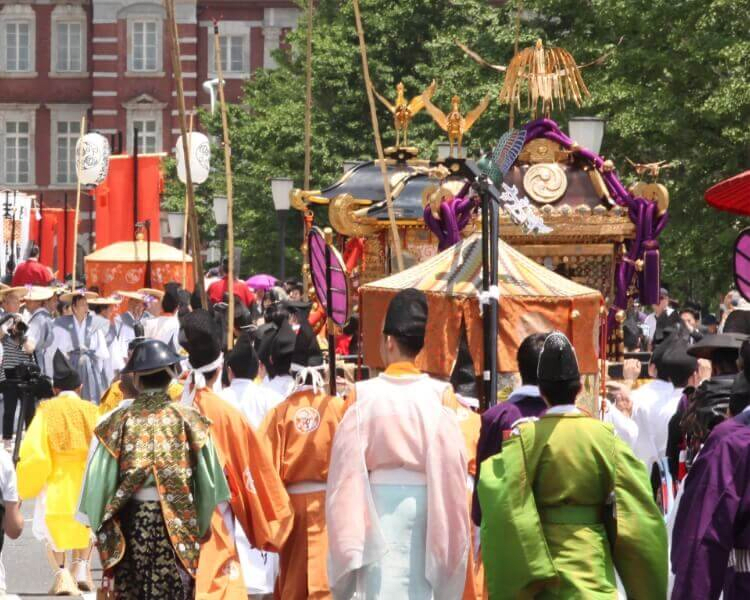
The "Sanno Matsuri Festival" of Hie Shrine is one of Japan's most well-known large-scale festivals.
Hie Shrine, famous as the guardian deity of the Imperial Palace, has long been cherished not only by the Imperial Palace but also by Tokyo residents for its benefits of warding off evil, matchmaking, and business prosperity.
The "Sanno Matsuri Festival" is the biggest traditional event of Hie Shrine, which can be called "the guardian deity of all Tokyo." In even-numbered years, the "Jinkou Sai Festival" features a grand procession of people in traditional costumes parading through the metropolis of Tokyo, including the Imperial Palace and Tokyo Station, offering a powerful festival experience.
In odd-numbered years, called "Yin Festival," the highlight is the "Child procession" which prays for the healthy growth of children. You can enjoy the unique and adorable festival scenery of children dressed in traditional costumes walking around.
If you're interested in one of Japan's greatest festivals, please participate.
<Information>
Schedule: Early to mid-June 2026
Access:
- 3 minutes walk from Tokyo Metro "Akasaka Station" Exit 2
- 3 minutes walk from Tokyo Metro "Tameike-sanno Station" Exit 7
Admission Fee: Free
Website: https://www.tenkamatsuri.jp/
Torikoe Festival
Source:Go Tokyo
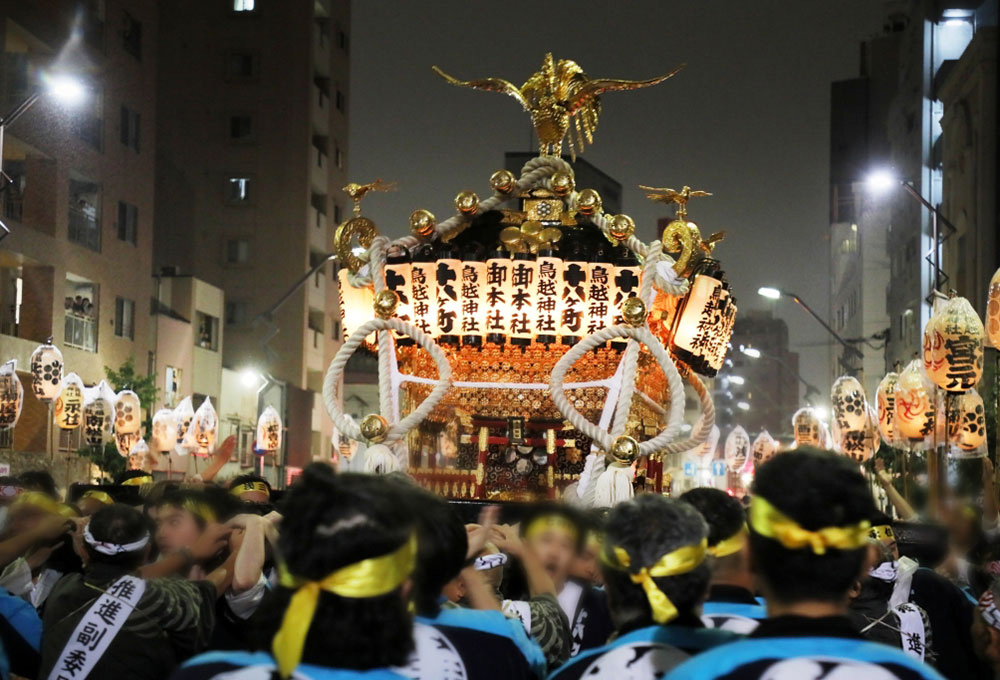
The "Torikoe Festival" is a grand festival with over 1,370 years of history at Torikoe Shrine. The shrine enshrines "Yamato Takeru," a hero from ancient Japanese legends, and is beloved by locals as a deity for warding off evil and promoting health.
At this traditional festival, visitors can experience the powerful spectacle of people carrying an incredibly heavy Mikoshi (portable shrine) - one of the heaviest in Tokyo - accompanied by loud chants. The sight of numerous adults working together to carry this magnificent Mikoshi, adorned with a golden phoenix on its roof, is truly impressive.
If you're planning to attend the Shinjuku Event in June 2026, the "Torikoe Festival" is a must-see for tourists looking to immerse themselves in authentic Japanese culture. The festival is particularly recommended in the evening when lanterns on the Mikoshi are lit, creating a magical atmosphere. The daytime's energetic ambiance transforms with an added solemnity in the evening, allowing you to enjoy Japanese traditions on a deeper level.
For those who want to experience a sacred yet lively Japanese festival, this is a perfect opportunity.
Information:
- Date: Early June 2026
- Access:
- 6 minutes walk from "Kuramae Station" on the Toei Subway
- 8 minutes walk from "Shin-Okachimachi Station" on the Toei Subway
- Approximately 8 minutes walk from the West Exit of "Asakusabashi Station" on JR
- Admission: Free
- Website: https://www.city.taito.lg.jp/event/kanko/torikoematsuri.html
Katsushika Iris Festival
Source:Official website
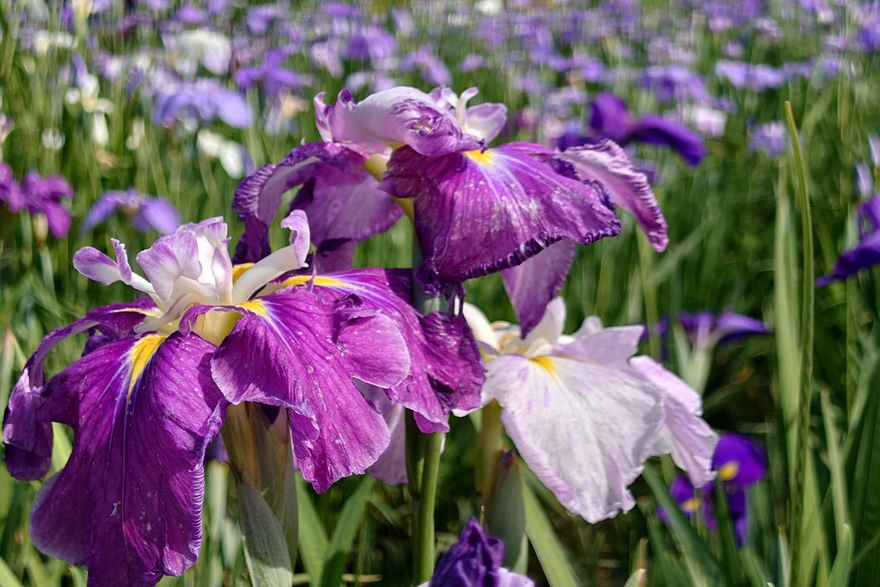
The Katsushika Iris Festival is a seasonal event where you can enjoy the elegant purple flowers of irises that reach their peak in June.
At the Katsushika Iris Festival, you can enjoy breathtaking views of 20,000 iris plants blooming across two venues: Horikiri Iris Garden and Mizumoto Park. With over 200 varieties of irises, one of the most attractive points of this event is being able to appreciate the various shades of purple flowers, from deep to light colors.
Another secret to the popularity of Horikiri Iris Garden is the ability to view both the beautiful iris flowers and Tokyo's landmark "TOKYO SKYTREE" simultaneously. Visitors can fully enjoy this unique scenery where Tokyo's representative cityscape merges with seasonal nature - a view that can only be experienced here.
Additionally, hydrangeas also reach their peak bloom in Mizumoto Park at the same time as the irises. Why not enjoy this seasonally limited, gorgeous natural landscape where these two elegant purple flowers collaborate? This would be an excellent addition to your itinerary while visiting the Shinjuku Event in June 2026.
Information:
- Date: Late May to mid-June 2026
- Access:
- [Horikiri Iris Garden] About 10 minutes walk from "Horikiri Shobu-en Station" on the Keisei Line
- [Mizumoto Park] Get off at "Kanamachi Station" on JR or Keisei Line, transfer to Keisei Bus, and get off at "Mizumoto Park" bus stop (about 5 minutes walk)
- Admission: Free
- Website: https://www.city.katsushika.lg.jp/tourism/1000064/1028427.html