Kanda Matsuri Guide: Tokyo's Ultimate Festival Experience for Visitors (History, Events & 2026 Dates)
Tokyo is home to countless spots, from bustling entertainment districts like Shibuya and Harajuku, to neighborhoods that come alive at night like Shinjuku and Roppongi, to areas that preserve traditional old-town charm like Asakusa and Kanda.
While Tokyo is a city packed with appeal, it's also true that increasing tourism development has made it harder for visitors to experience the "real Tokyo." In other words, instead of enjoying Tokyo like a local, tourists are often limited to experiencing only the touristy side of the city.
That's exactly why I want you to explore the city with locals who know the real Tokyo. With tours from Magical Trip—winner of Tripadvisor's The Best of The Best in both 2024 and 2025—you can make that happen.

The Tokyo Bar Hopping Night Tour in Shinjuku, a back-to-back winner of The Best of The Best for two consecutive years, lets you safely enjoy spots beloved by locals in famous Shinjuku areas like Kabukicho and Omoide Yokocho.
If you're interested in Japanese culture, I recommend the Tokyo Sumo Morning Practice Tour in Ryogoku, where you can visit a sumo stable—something even most Japanese people have never experienced—or the Asakusa Cultural Walk & Matcha Making Tour, where you can stroll through Asakusa while learning about Japanese culture from your guide.
If you want to create your own itinerary and explore Tokyo deeply and efficiently, choose Customized Private Tours of Japan with MagicalTrip's Top Guides, where you can craft a special itinerary tailored just for you with a local guide.
Introduction
Tokyo is the center of Japan's economy and culture, a city where the latest technology and innovations converge. At the same time, it is also a city where traditional culture and history remain deeply rooted, coexisting harmoniously with modern culture.
The eastern area of Tokyo, in particular, is a historic shitamachi (downtown) district where you can still feel the townspeople's culture that flourished from the 17th to 19th centuries.
In this article, we will introduce Kanda Matsuri, a famous festival held in Kanda, located in this very shitamachi area. We will explain the highlights to help you fully enjoy Kanda Matsuri, as well as the must-see events held during the festival period.
If you are interested in participating in a traditional festival in Tokyo, please use this guide as a reference and visit Kanda Matsuri.
Traditional Festivals Are Held at Shrines and Temples Throughout Tokyo
Traditional festivals are held at shrines and temples in various areas throughout Tokyo. Many of these festivals have histories spanning hundreds, and sometimes over a thousand years, and are conducted while preserving traditional customs.
Festivals have traditionally been held to pray for bountiful harvests and community safety, as well as to express gratitude to the guardian deities of each region. They are also important events that serve as an annual source of joy for the people living in these towns.
Even in modern Tokyo, festivals hold great significance for local communities, with children participating and adults spending months in preparation.
In many areas, traditional Mikoshi parades and food stalls are set up on the festival day, creating a lively and energetic atmosphere for everyone to enjoy.
Kanda Matsuri Is a Massive Festival Counted Among Japan's Three Great Festivals and Edo's Three Great Festivals
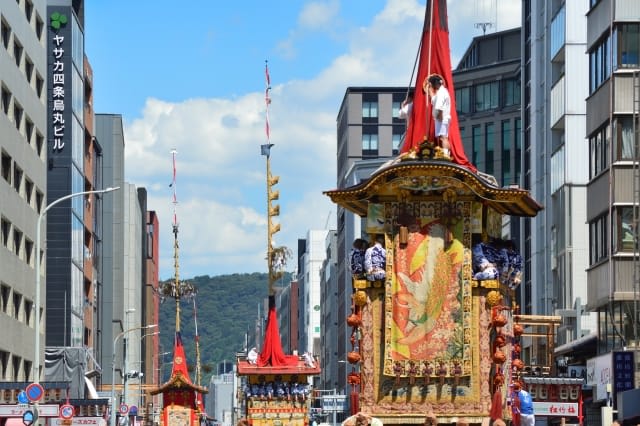
Among the festivals held in Tokyo, Kanda Matsuri in Kanda is counted as one of Japan's Three Great Festivals and one of Edo's Three Great Festivals, making it a massive event.
Kanda Matsuri is an event where a large-scale festival called "Hon-Matsuri" (main festival) is held once every two years. In the years when the main festival is not held, a smaller-scale festival called "Kage-Matsuri" (shadow festival) takes place.
The main festival period lasts one week, featuring various Shinto rituals at Kanda Myojin Shrine and parades in the area around Kanda, which can be considered the heart of Tokyo.
Most recently, a large-scale main festival was held in 2025, and a Kage-Matsuri is scheduled for 2026. Even in years when the Kage-Matsuri is held, you can still watch a traditional Mikoshi parade on a smaller scale and enjoy a festival that lets you experience local traditions.
- Date: May 8-15, 2025 (2026 dates to be determined)
- Access: 5-minute walk from Ochanomizu Station (Hijiribashi Exit) on the Chuo - Line and Sobu Line → Kanda Myojin Shrine (and other areas around Kanda)
- Admission: Free to watch
- Website: https://kandamatsuri.com/
What Are Japan's Three Great Festivals?

Japan's Three Great Festivals refer to festivals throughout Japan that are particularly large in scale and rich in history.
Currently, the festivals recognized as Japan's Three Great Festivals are Gion Matsuri in Kyoto, Tenjin Matsuri in Osaka, and Kanda Matsuri in Tokyo.
Among the countless festivals held throughout Japan, these three festivals are top-class in terms of splendor and recognition.
Even today, they are beloved as major events held in the large cities of Kyoto, Osaka, and Tokyo, attracting not only local residents but also many spectators from neighboring regions. In recent years, they have also become popular among travelers from overseas as events where one can experience traditional Japanese culture.
What Are Edo's Three Great Festivals?
Edo's Three Great Festivals refer to Fukagawa Hachiman Matsuri, Kanda Matsuri, and Sanno Matsuri.
Fukagawa Hachiman Festival is held at Tomioka Hachiman Shrine in Koto Ward, a shitamachi area of Tokyo. Kanda Matsuri, introduced in this article, is held at Kanda Myojin Shrine, a historic shrine in Kanda.
Sanno Festival is held at Hie Shrine in Chiyoda Ward and is a historic festival that began in the 17th century.
In Tokyo, during the period from the 17th to 19th centuries when Tokyo was called Edo, many splendid festivals were held for townspeople to enjoy, fostering a rich festival culture. Among the many festivals that emerged, Edo's Three Great Festivals are the ones that the people of Edo especially loved, and their vitality has been passed down to the present day.
What Is Kanda Myojin Shrine, the Venue for Kanda Matsuri?
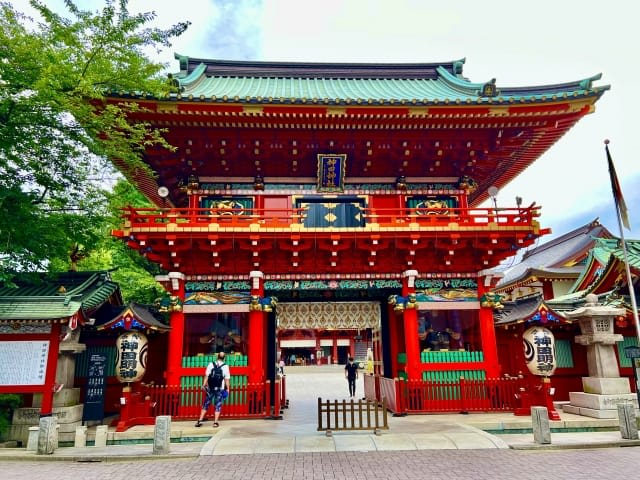
Kanda Myojin Shrine is a historic shrine located in the Kanda area. It is also close to Akihabara, a sacred place for pop culture, and has long been cherished by visitors to this region.
Kanda Myojin Shrine was founded in the 8th century and is one of the larger and more magnificent shrines in Tokyo. It is characterized by its beautiful shrine buildings painted in vivid vermilion.
Despite being located in a bustling metropolis, once you enter the shrine grounds, you can feel a quiet and sacred atmosphere as if you have stepped into another world. Whenever I visit Akihabara and have some time, I always stop by to take a moment to relax.
The shrine is also famous as the venue for Kanda Matsuri, which we are introducing here. During the festival, the atmosphere becomes completely different from usual—lively and filled with excitement.
- Address: 2-16-2 Sotokanda, Chiyoda-ku, Tokyo
- Hours: 24 hours
- Closed: Irregular holidays
- Phone: 03-3254-0753
- Official Website: http://www.kandamyoujin.or.jp/
Four Events Held at Kanda Matsuri
Edo Shitamachi Grand Parade: Horen/Mikoshi Procession Through the Streets for 30km
Source:Official website
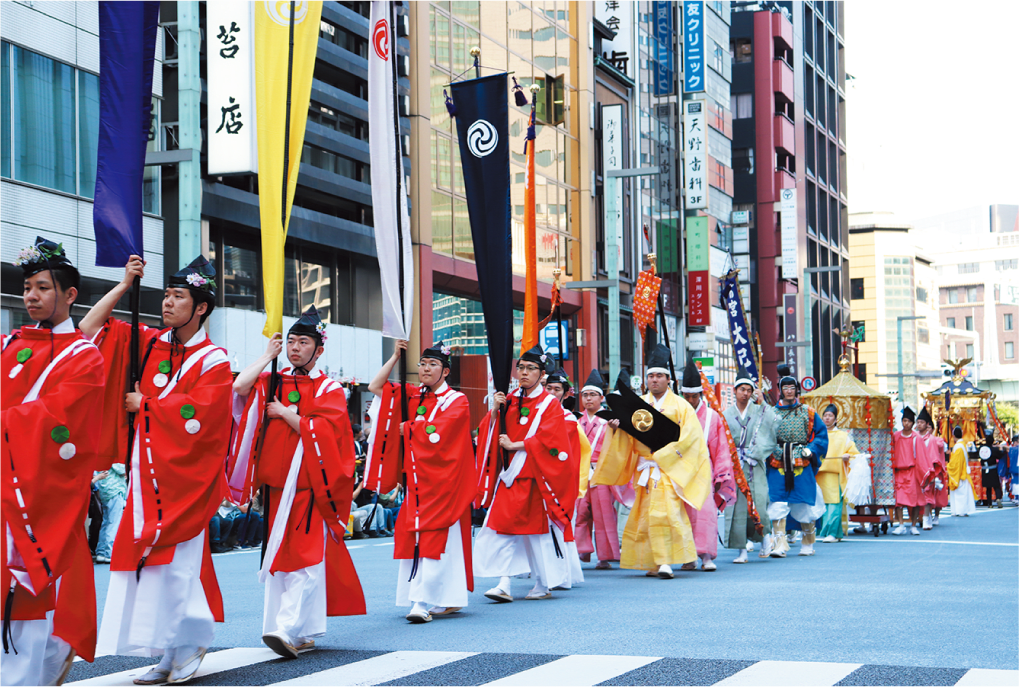
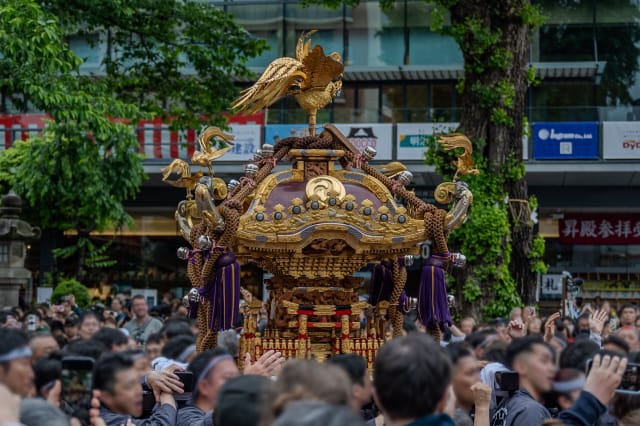
At Kanda Matsuri, you can watch a spectacular Mikoshi parade called the Edo Shitamachi Grand Parade.
Mikoshi are traditional Japanese festival cars, sacred vehicles believed to carry the Shinto deities. At Kanda Matsuri, three gorgeously decorated Mikoshi called Horen/Mikoshi are used.
The Mikoshi are carried by people as they parade through the streets of Tokyo, traveling approximately 30km through the areas around Kanda, including Nihonbashi, Otemachi—representative office districts of Tokyo—and Akihabara.
In addition to the people carrying the Mikoshi, many participants dressed in traditional costumes gradually join the procession, eventually forming a grand parade of several thousand people.
Mikoshi Lineup Festival: A Parade of Unique Mikoshi and Costumed Participants
Source:Official website

Among the events at Kanda Matsuri, the Mikoshi Lineup Festival is particularly popular with spectators. The Mikoshi Lineup Festival is a parade event that follows the Edo Shitamachi Grand Parade.
In this parade, many festival cars carrying unique objects make their appearance.
In most cases, the motifs used are familiar elements of Japanese culture, such as animal figures like catfish and characters from Japanese folklore.
Some are satirical of current events while others are humorous, and what you see varies from year to year. When I visited with my friend's family, the children were delighted by the cute and funny figures and watched with great enthusiasm.
Furthermore, in recent years, you can also see a costumed procession of Samurai wearing armor and riding horses.
Akihabara Electric Town Filled with Mikoshi, Bearers, and Spectators
Source:Official website
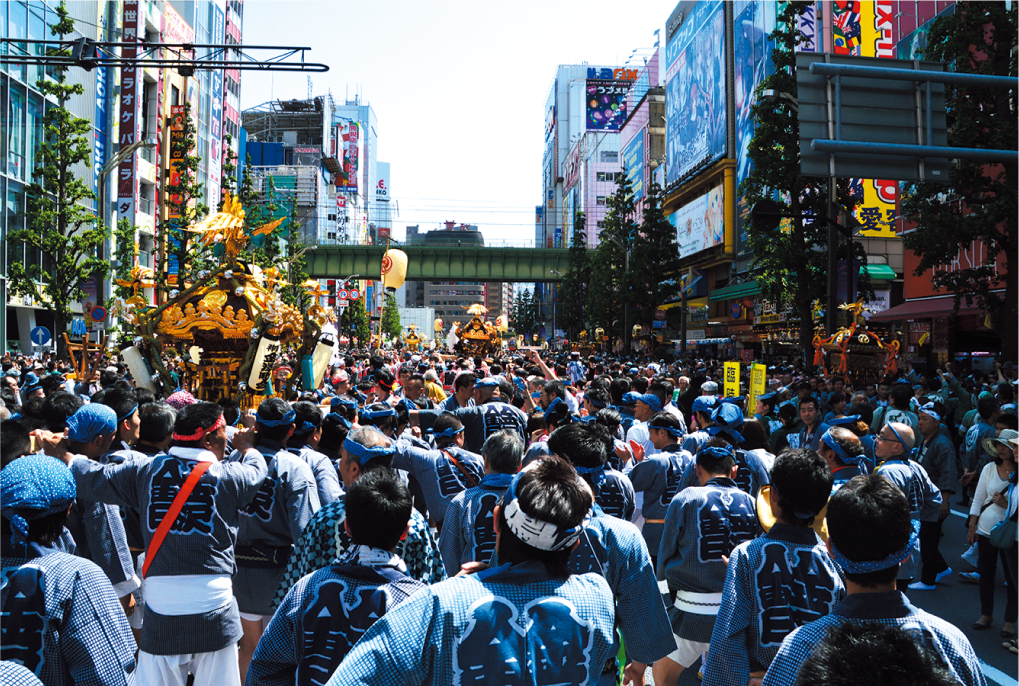
These parades take place not only in Tokyo's business districts but also in the electric town of Akihabara, known for its concentration of anime and game shops.
On festival days, Akihabara's main area, the electric town, is completely filled with Mikoshi, the people carrying them, and crowds of spectators.
Akihabara is usually known as a sacred place for pop culture, and Chuo Street in the electric town is particularly lined with buildings adorned with colorful signs and advertisements.
The sight of people dressed in traditional festival attire called Happi carrying Mikoshi through these streets is a unique spectacle that can only be seen at Kanda Matsuri.
When I visited previously, I was able to capture iconic photos of Tokyo that symbolize the coexistence of modern and traditional culture.
Miyairi to Kanda Myojin Shrine: The Biggest Highlight of Kanda Matsuri
Source:Official website
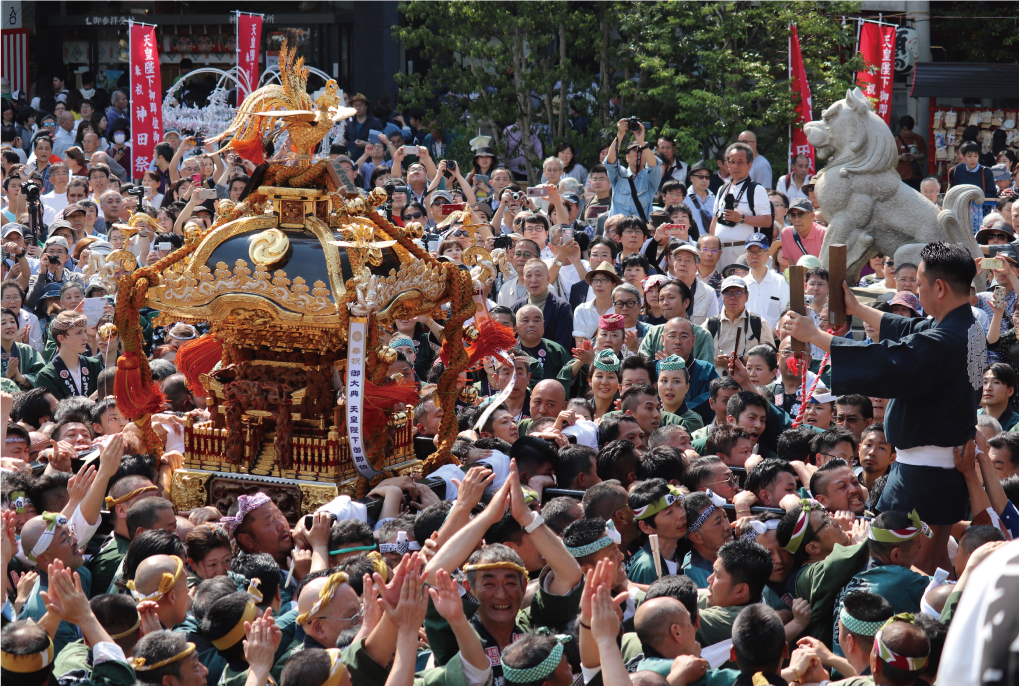
The biggest highlight of Kanda Matsuri is an event called Miyairi to Kanda Myojin Shrine. Over 200 Mikoshi from each neighborhood in the Kanda area are dedicated to Kanda Myojin Shrine after the parade.
This moment called Miyairi is when the festival reaches its peak excitement. The shrine becomes filled with people carrying Mikoshi while shouting loud chants and spectators watching them, creating an atmosphere charged with energy.
The Miyairi of Kanda Matsuri has inherited traditions from hundreds of years ago and is characterized by its overwhelming passion.
I waited at the entrance of the shrine, so I was able to witness the powerful sight of Mikoshi being energetically carried into the shrine one after another. Although it gets crowded, if you want to feel the excitement of the festival, I recommend waiting near the entrance of Kanda Myojin Shrine.
Must-See for Tourists! Four Events to Check Out at Kanda Matsuri
Horen Mikoshi Senza Festival
Source:Official website
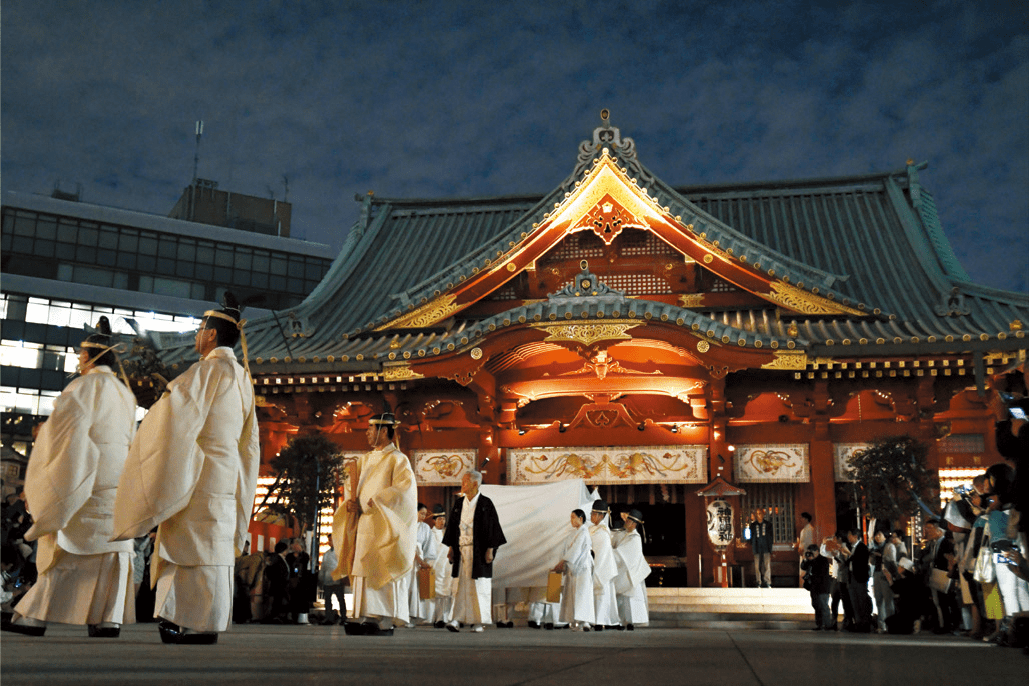
Horen Mikoshi Senza Festival is the first event held on the opening day of Kanda Matsuri. It takes place at Kanda Myojin Shrine from evening into night.
In Japan, Mikoshi used in traditional festivals are considered to be vehicles for the Shinto deities. The Horen Mikoshi Senza Festival is a sacred ritual to transfer the deities worshipped at Kanda Myojin Shrine into the Horen Mikoshi used during Kanda Matsuri.
When I visited to observe, the shrine at night illuminated by torchlight was incredibly mystical, and I felt a strong sense of sacredness as if I had entered another world.
The ceremony was performed while gagaku court music echoed throughout, and I watched with excitement, feeling that the week-long big event of Kanda Matsuri was about to begin. If you want to experience the mystical atmosphere, please observe quietly.
Shinko-sai
Source:Official website
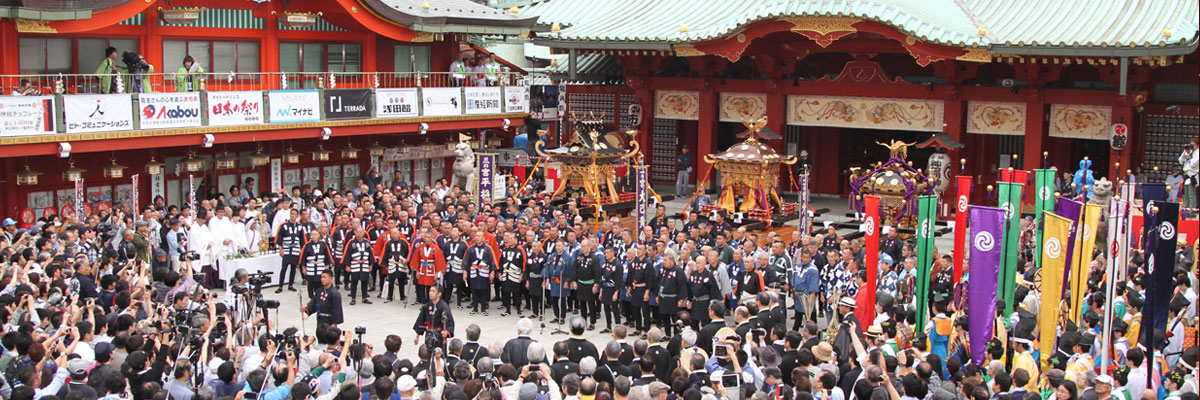
Shinko-sai can be called the main event of Kanda Matsuri. The Edo Shitamachi Grand Parade and Mikoshi Lineup Festival mentioned earlier are held as part of Shinko-sai day.
Shinko-sai is typically held over one full day around the third day of Kanda Matsuri. Many people who come to see Kanda Matsuri gather in Kanda, Nihonbashi, Akihabara, and other areas on Shinko-sai day.
Shinko-sai is usually held only once every two years during the main festival year. During the shadow festival years, smaller-scale Mikoshi parades are held that tour the neighborhoods of Kanda.
The Mikoshi parade during the shadow festival is also an event that local people look forward to, allowing visitors to experience the regional culture more closely. Since there are fewer crowds, you can view the magnificent Mikoshi decorated with traditional carvings up close.
Mikoshi Miyairi
Source:Official website

The Mikoshi Miyairi, which brings great excitement to Kanda Matsuri as mentioned earlier, is an event held during the main festival year. It is a day-long event where Mikoshi from each neighborhood in Kanda are dedicated to Kanda Myojin Shrine.
The more than 200 Mikoshi from each neighborhood first parade through the streets of Kanda before heading to the shrine. When the Mikoshi enter the shrine, crowds of dedicated Mikoshi bearers and spectators gather at the shrine, and the excitement reaches its peak.
Kanda Matsuri has a history of developing as a festival for the townspeople living in Tokyo's Shitamachi downtown area. Even today, the Miyairi of Mikoshi is a cherished event that local people pour their passion into. Please feel the energy of the people who carry the Mikoshi while sweating and shouting chants even as their voices grow hoarse.
Annual Festival
Source:Official website
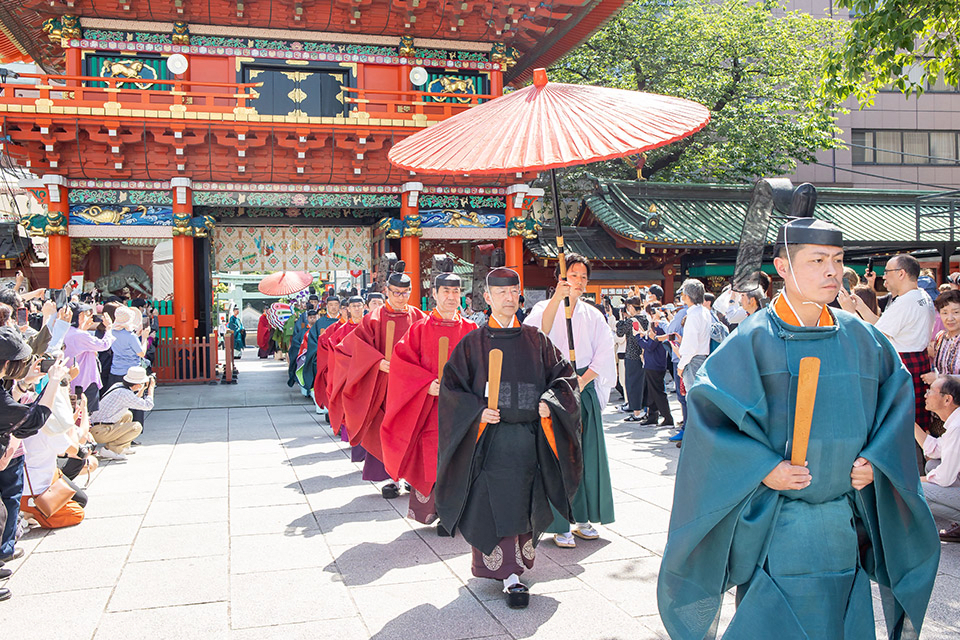
The Annual Festival is a ceremony held on the final day of the Kanda Matsuri period every year, taking place during both the main festival and shadow festival years.
On this day, people with deep connections to Kanda Myojin Shrine, including shrine priests and local residents, dress in traditional attire and gather at the shrine.
Throughout the day, traditional Shinto rituals and miko shrine maiden dances are performed to pray for the prosperity and peace of the nation. Unlike the lively parades mentioned earlier, this important ceremony concludes the festival in a solemn atmosphere.
This is also a valuable opportunity to observe traditional Shinto rituals and prayers up close. If you want to see the solemn ceremonies, please visit Kanda Myojin Shrine. Be sure to pay attention to the elegant and graceful miko dances as well.
If You're Interested in Japanese Traditions and Culture, Explore Historic Streets with a Local Guide

If you're interested in Japanese traditions and culture, why not explore some of Tokyo's most historic neighborhoods with a local guide?
By joining the Asakusa Cultural Walk & Matcha Making Tour, you can enjoy a guided stroll and lunch in Asakusa, a historic downtown area of Tokyo just like Kanda, which was introduced in this article. Kanda is famous for its Kanda Matsuri, one of Tokyo's three great festivals, making it a must-visit destination for those interested in traditional Japanese culture.
Asakusa is a neighborhood where Tokyo's traditional culture can be felt especially strongly, with more old alleyways and townscapes remaining compared to Kanda, which is now lined with modern buildings.
Take a walk through the historic Sensoji Temple, a symbol of the area, and the lively shopping streets while listening to explanations from a local guide.
Unlike superficial sightseeing tours that simply visit tourist spots, the guide will share the neighborhood's charm and fascinating information from a local's perspective in a friendly manner.
Information
- Meeting point: In front of Kaminarimon Police Box, Senso-ji
- Tour area: Asakusa
- Start time: 11:00
Recommended Traditional May Events for Those Who Want to Experience Japanese Festivals
Sanja Matsuri
Source:Official website
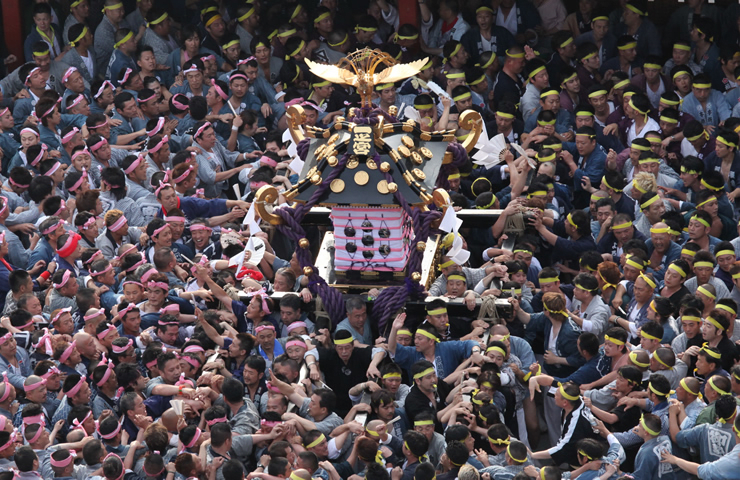
Sanja Matsuri is a traditional festival held at Asakusa Shrine in Asakusa. It takes place every year on the third Friday, Saturday, and Sunday of May, and is a large-scale festival that fills the streets of Asakusa with excitement.
The main highlight of Sanja Matsuri is the magnificent and spirited Mikoshi parade. Walking through the streets of Asakusa, you can see more than 100 Mikoshi parading through the area.
Especially on the third day, when the Mikoshi are dedicated to the shrine, as many as 100 people carry each Mikoshi, creating an atmosphere of excitement unmatched by any other festival in Tokyo.
In addition to the Mikoshi parade, there are parades of people dressed in traditional costumes and many traditional dance performances. There are also plenty of food stalls, so strolling through the streets while enjoying local delicacies is highly recommended.
Information
- Dates: May 15-17, 2026
- Access: 7 minutes walk from Asakusa Station on the Tokyo Metro Ginza Line
- Admission: Free
- Website: https://www.asakusajinja.jp/english/index.html
Meiji Shrine Spring Grand Festival
Source:Official website
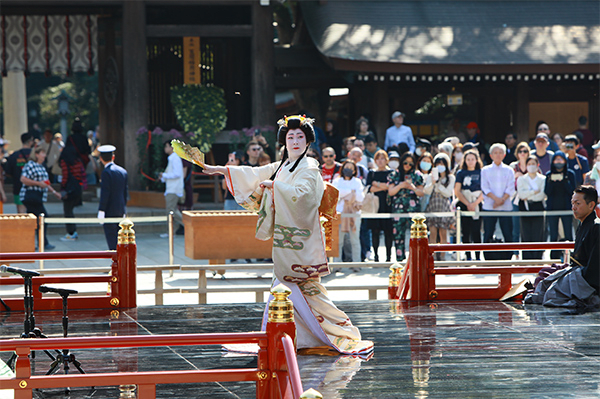
In May, traditional events are also held at Meiji Shrine in the Harajuku area. The Meiji Shrine Spring Grand Festival is held annually from late April to May and is an event where you can watch traditional performing arts such as Gagaku dance, Noh, and traditional musical instrument performances.
Meiji Shrine is known as an urban oasis, situated within a vast and lush forest despite being in a bustling downtown area. During the Spring Grand Festival, a special stage in traditional style is set up within the shrine grounds surrounded by forest, creating an even more elegant atmosphere than usual.
When I went to watch the Gagaku dance, it was very crowded with other spectators who had come to see it. You can see various types of dances, including solo performances and group performances, making it an event where you can fully enjoy the traditional beauty of Japan.
Information
- Dates: April 29, May 2, 3, 2025 (2026 dates to be determined)
- Access: 1 minute walk from Harajuku Station on the JR Yamanote Line → Meiji Shrine
- Admission: ¥3,000
- Website: https://www.meijijingu.or.jp/spring_taisai/
Tokyo Grand Sumo May Tournament
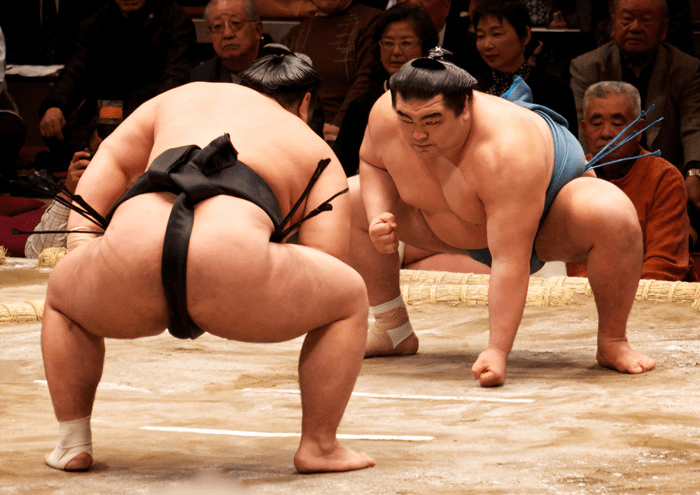
The Tokyo Grand Sumo Tournament is Japan's only official tournament featuring professional sumo wrestlers.
The Grand Sumo Tournament is held six times a year in various cities including Tokyo, Osaka, and Nagoya, with the January, May, and September tournaments held at Ryogoku Kokugikan, an event venue in Tokyo.
At Ryogoku Kokugikan, often called the sacred place of Sumo, you can enjoy thrilling matches with large sumo wrestlers colliding right before your eyes.
Sumo is a sport deeply connected to Japanese history and traditional culture. The unique rituals performed before and after matches carry meanings passed down from ancient times, such as praying for a bountiful harvest and offering gratitude to the gods.
If you're interested in Japanese culture, please pay attention to the traditional significance of Sumo while enjoying the matches.
Information
- Dates: May 10-24, 2026
- Access: 2 minutes walk from the west exit of Ryogoku Station on the JR Sobu Line
- Admission: D-seat seats ¥2,500~ / S-seat seats ¥15,000 (Prices vary depending on seat type and day of the week)
- Website: https://www.sumo.or.jp/Admission/schedule/