Tokyo Top 35 Must-Visit Autumn Leaves and Hidden Gems in Japan 2026
This article is inspired by my own wish to find a comprehensive guide to events at travel destinations. All the events I'm featuring here are ones that I personally recommend to international visitors, based on my experience born and raised in Shibuya.
Since Tokyo has so many must-see spots that it can be overwhelming, you need to plan efficiently to cover all the attractive locations. That's why Magical Trip offers various Tokyo tours guided by locals.
In particular, our "Tokyo Bar Hopping Night Tour in Shinjuku" (Ranked #1 among all TripAdvisor tours in 2024) and "Shibuya Bar Hopping Night Tour in Tokyo" take you to local favorites that tourists rarely discover on your own. When planning your Tokyo trip, include a Magical Trip tour in your itinerary.

Introduction
Tokyo is known as the center of Japanese politics and economy, spreading an urban atmosphere. On the other hand, there are many green spaces such as parks and gardens, and you can enjoy rich nature just a short distance from the city center.
Tokyo's climate is hot and humid in summer, dry with many clear days in winter, while spring and Fall are comfortable seasons perfect for tourism. The beautiful autumn foliage, which can only be enjoyed for a short period, is one of Japan's iconic Autumn traditions.
A characteristic of autumn foliage is that you can enjoy various colors depending on the trees, such as yellow, orange, and red, and during the period when the colors change, you can see beautiful gradations.
This time, we will introduce not only the famous Autumn foliage spots in Tokyo but also Hidden Gems where you can enjoy beautiful fall colors while avoiding crowds.
Expected Start Time and Peak Viewing Period for Tokyo's Autumn Foliage in 2026
| City | Expected Start of Color Change | Expected Peak Viewing |
|---|---|---|
| Tokyo | Late October to Early November | Late November to Mid-December |
The autumn foliage in Tokyo for 2026 is expected to reach its peak viewing period from late November to mid-December. Since autumn leaves change color when temperatures drop, a characteristic feature is that the foliage gradually spreads from high-altitude areas to lower areas, and from north to south.
Even within Tokyo, at locations such as Mt. Takao and Lake Okutama, leaves begin to change color from late October, with the best viewing period from early to mid-November. On the other hand, in central Tokyo, colors gradually begin to change from early November, reaching peak viewing from late November to early December.
The period for enjoying autumn foliage is said to be approximately 1 to 2 weeks, but you can enjoy it for a longer period by visiting different locations. Since the degree of foliage coloring changes depending on weather and temperature, it is advisable to check the latest information about each spot before visiting.
Details of Autumn Foliage Forecast in Japan
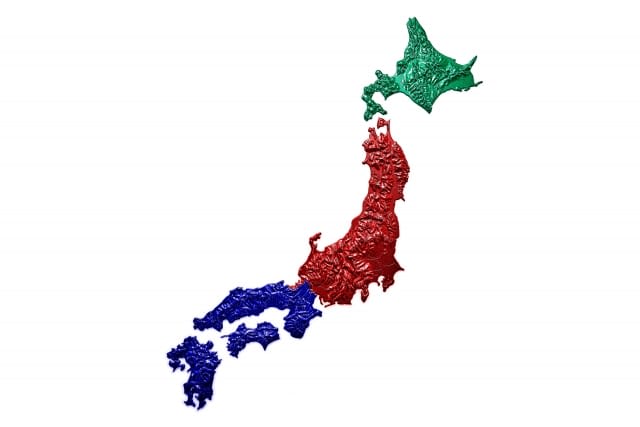
The expected dates for peak viewing of autumn red and yellow foliage in various cities across Japan for 2026 are as follows:
| City | Red Foliage Peak Forecas | Yellow Foliage Peak Forecas |
|---|---|---|
| Sapporo | November 9 (later than average) | November 7 (average) |
| Tokyo | December 1 (average) | November 27 (average) |
| Kanazawa | December 1 (later than average) | November 12 (average) |
| Kyoto | December 12 (later than average) | November 28 (average) |
| Hiroshima | November 29 (later than average) | November 21 (average) |
As explained earlier, tree leaves change color when temperatures drop, so autumn foliage begins earlier in colder regions. Colored leaves can be seen earlier in Sapporo in Hokkaido, which is north of Tokyo, and in Kanazawa along the Sea of Japan coast.
Additionally, autumn in 2026 is expected to be slightly warmer than usual across Japan during the same period. For this reason, the peak viewing period may be the same as average years or slightly later in all cities.
Furthermore, autumn foliage includes trees whose leaves turn red, such as maple, and those whose leaves turn yellow, such as ginkgo. Maples and ginkgos are common trees planted abundantly at Autumn Fall spots in Japan.
The Author's Recommendation is the Spectacular Collaboration of Mt. Fuji, Japan's Symbol, and Autumn Foliage
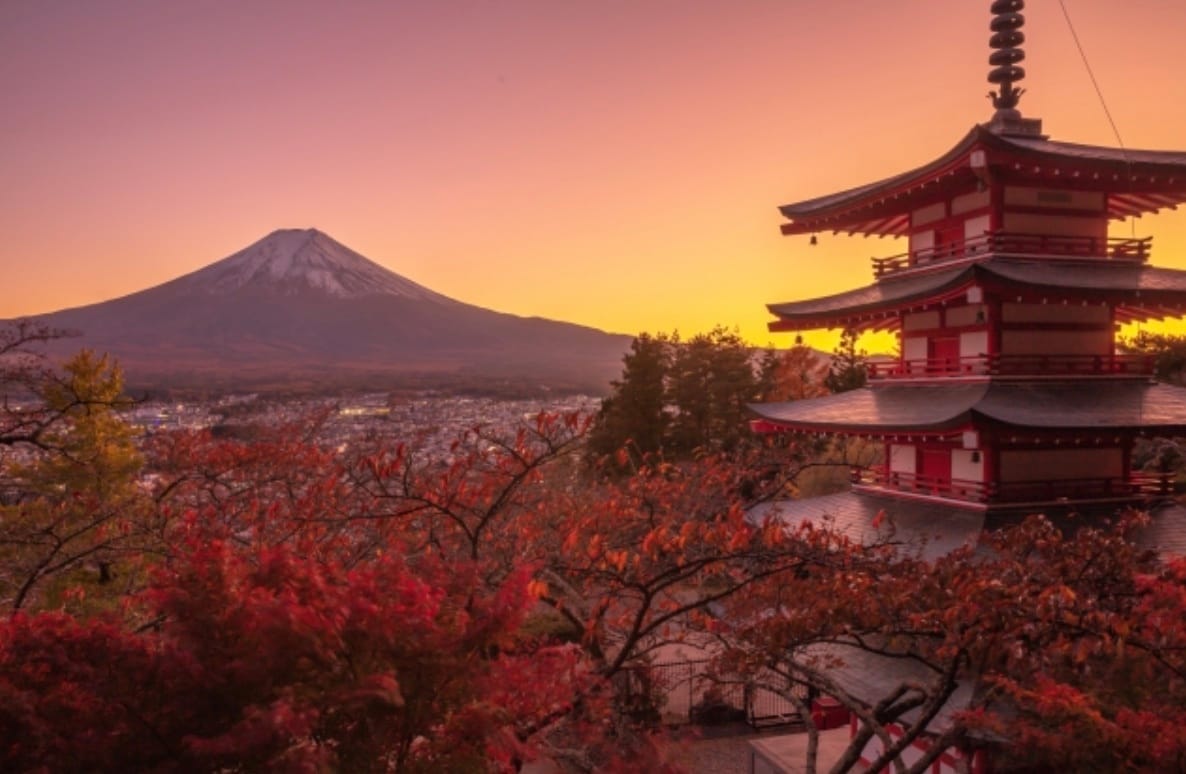
What I highly recommend to those visiting Tokyo in autumn is to enjoy the spectacular collaboration of Mt. Fuji, Japan's symbol, and autumn foliage.
By using Magical Trip's Mt. Fuji Full-day Day Trip Tour, you can depart from Tokyo in a private car and enjoy autumn foliage and many cultural experiences in the Mt. Fuji area together with a dedicated local guide.
The tour also stops at Arakura Sengen Shrine, famous as a scenic spot around Mt. Fuji. From here, you can view the autumn-colored trees together with the majestic Mt. Fuji and the traditional Five-storied pagoda, enjoying a spectacularly beautiful scene.
You can also leisurely and comfortably tour other Autumn Fall spots around Mt. Fuji where autumn nature is beautiful, in a private car without being rushed. Those staying in Tokyo during autumn should definitely use this private tour to enjoy the beautiful autumn foliage of the Mt. Fuji area.
<Information>
- Meeting point: Meeting at Shinjuku or hotel pick-up
- Tour area: Mt. Fuji area
- Start time: 8:00
13 Nationally Famous and Easily Accessible Autumn Foliage Spots in Tokyo for 2026 Events
Rikugien Garden
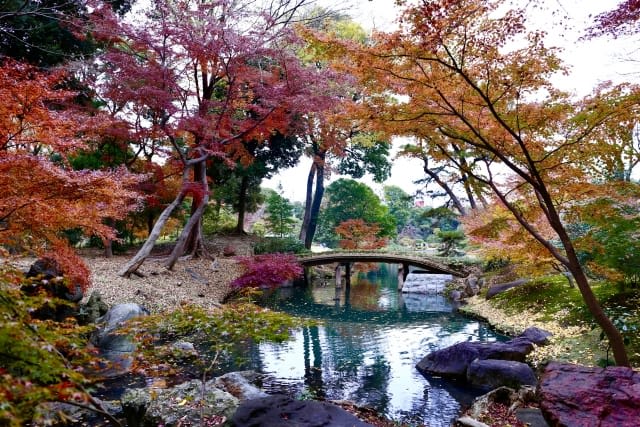
Rikugien Garden is a garden created about 300 years ago and is designated as an important cultural property of Japan. From mid-November to early December, about 560 trees including Japanese maple, ginkgo, and enkianthus in the garden are colored red and orange.
At Rikugien Garden, if you view from a spot called "Deshiominato" by the pond, you can enjoy a beautiful collaboration of autumn foliage reflected on the water surface and a Japanese-style bridge.
Every year from late November to early December, special night viewings are held, and you can enjoy the illuminated autumn foliage. At night, unlike the bright atmosphere created by vivid colors during the day, it becomes a fantastical atmosphere, which is my favorite point.
Rikugien Garden is perfect for those who want to enjoy the Japanese atmosphere and autumn foliage simultaneously in a quiet place, or for those who like photogenic spots.
Coloring begins: Early November
Peak period: Late November to early December
Address: 6-16-3 Honkomagome, Bunkyo-ku, Tokyo
Business hours: 9:00-17:00 (last entry at 16:30)
Closed: None
Phone number: 03-3941-2222
Official website: https://www.tokyo-park.or.jp/park/rikugien/index.html
Meiji Jingu Gaien Ginkgo Avenue
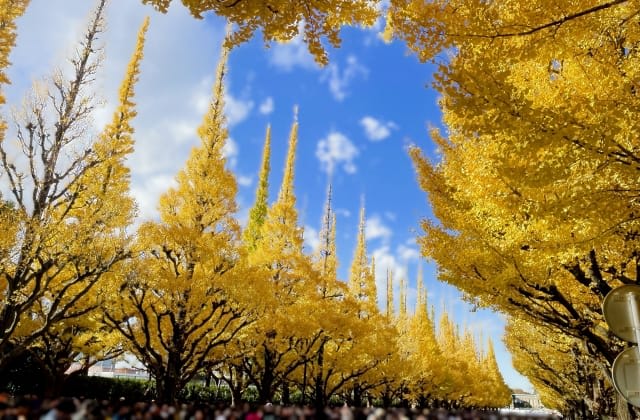
Meiji Jingu Gaien ginkgo avenue is an area created in 1926 to honor The Meiji Emperor. From mid-November to early December, 146 ginkgo trees planted along the approximately 300m road shine in golden splendor, making it one of Tokyo's most spectacular Fall spots for 2026.
My recommended photography spot at Meiji Jingu Gaien ginkgo avenue is the position where you can see the Meiji Memorial Picture Gallery at the end of the street. The ginkgo trees line up as if covering the building, creating a scene that looks just like a painting during the Autumn season.
During the peak foliage period, the annual "Ginkgo Tree Festival in Meiji Jingu Outer Garden" is held, where you can enjoy the autumn leaves while tasting Japanese street food. This is among the most anticipated Events of 2026 for leaf viewing.
Meiji Jingu Gaien ginkgo avenue is recommended for those who want to appreciate autumn leaves in a stylish atmosphere or enjoy both foliage and food.
Colors begin to change: Mid-November
Peak viewing period: Mid-November to early December
Address: Near 2-1 Kitaaoyama, Minato-ku, Tokyo
Opening hours: None
Closed days: None
Phone number: 03-3401-0312
Official website: http://www.meijijingugaien.jp/
Koishikawa Korakuen Gardens
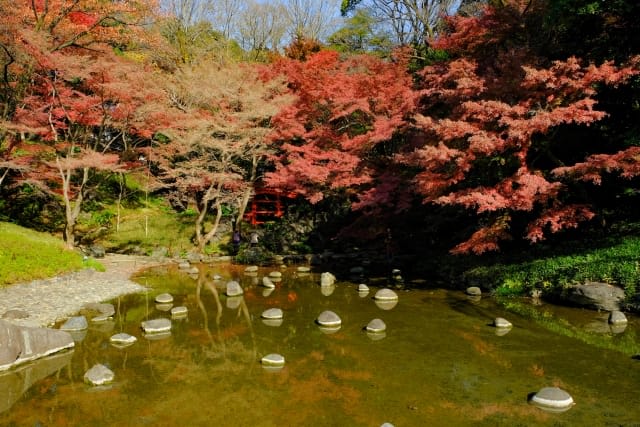
Koishikawa Korakuen Gardens, created in 1629, is one of Japan's oldest gardens and is designated as a national special historic site and special place of scenic beauty. From mid-November to early December, you can enjoy approximately 500 autumn foliage trees including Japanese maple, sumac, and zelkova trees, making it a prime Autumn destination in 2026.
In particular, the "Tsuten-kyo Bridge," modeled after the bridge of Tofukuji in Kyoto, and the surrounding autumn leaves are highlights. The combination of the atmospheric red Tsuten-kyo Bridge and orange autumn leaves is my favorite spot because it exudes Japanese essence.
Koishikawa Korakuen Gardens also hosts an annual autumn leaf festival with various Events to enjoy alongside the foliage in 2026.
For those who want to enjoy authentic Japanese gardens and autumn leaves while in the city, please visit this exceptional Fall spot.
Colors begin to change: Mid-November
Peak viewing period: Late November to early December
Address: 1-6-6 Koraku, Bunkyo-ku, Tokyo
Opening hours: 9:00-17:00 (Last entry at 16:30)
Closed days: Year-end and New Year holidays
Phone number: 03-3811-3015
Official website: https://www.tokyo-park.or.jp/park/koishikawakorakuen/index.html
Shinjuku Gyoen National Garden
Source:Official website
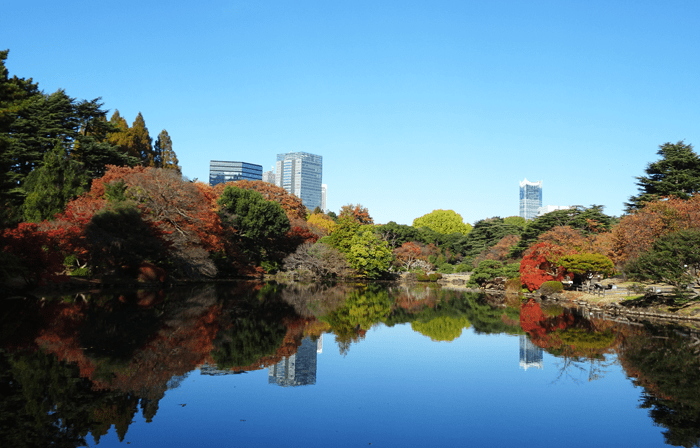
Shinjuku Gyoen National Garden was created as an imperial garden. It's a unique garden where you can see various garden styles including Japanese gardens, formal gardens, and landscape gardens. From late November to mid-December, autumn-colored ginkgo trees and maples can be seen throughout the park, making it one of the most diverse Fall viewing spots for 2026.
Particularly beautiful are the autumn leaves that line up like an arch near the Shinjuku Gate entrance and the autumn leaves around the tea house in the Japanese garden area.
Additionally, roses bloom from mid-October to mid-November, and the ability to enjoy both autumn leaves and roses simultaneously is a unique attraction of Shinjuku Gyoen National Garden. This special combination makes it a highlight among 2026 Autumn Events in Tokyo.
This is recommended for those who want to enjoy beautiful gardens and autumn leaves at once, or those who want to see autumn roses at the same time.
Colors begin to change: Mid-October
Peak viewing period: Late November to early December
Address: 11 Naito-machi, Shinjuku-ku, Tokyo
Opening hours: October 1 to March 14 → 9:00-16:00 (Gates close at 16:30), March 15 to June 30 & August 21 to September 30 → 9:00-17:30 (Gates close at 18:00), July 1 to August 20 → 9:00-18:30 (Gates close at 19:00)
Closed days: Every Monday (When Monday is a holiday, the following weekday), Year-end and New Year holidays
Phone number: 03-3350-0151
Official website: https://www.env.go.jp/garden/shinjukugyoen/
Ninomaru Gardens (Imperial Park)
Source:Official website
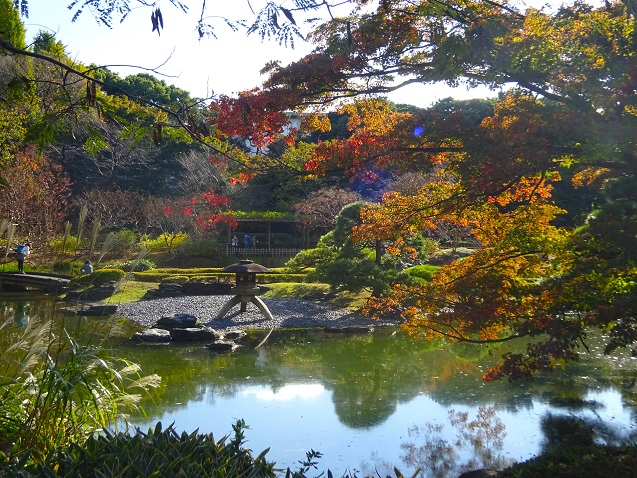
Ninomaru Gardens is a garden located within Imperial Park that recreates a traditional Japanese mixed forest. From mid-November to mid-December, oak trees, Japanese oak, and Japanese maple trees turn red and yellow.
In Autumn, an area called "Inui-dori," which is normally closed to the public, opens for general viewing where you can enjoy the fall foliage. My recommended spots are the collaboration between the fall colors and historical Japanese spots such as Otsybone-mon and Hasuikebori, where you can feel Japan's history.
Ninomaru Gardens is recommended for those who want to enjoy the fall foliage in a spot where you can experience Japanese history and atmosphere, or for those who want to be surrounded by nature while in the city.
When colors begin: Mid-November
Peak viewing period: Mid-November to mid-December
Address: Chiyoda, Chiyoda-ku, Tokyo
Hours: 9:00-16:00 (last entry 30 minutes before closing)
Closed: Monday, Friday, New Year holidays, and temporary closures
Phone: 03-3213-2050
Official website: https://www.kunaicho.go.jp/event/higashigyoen/higashigyoen.html
Hama-Rikyu Gardens
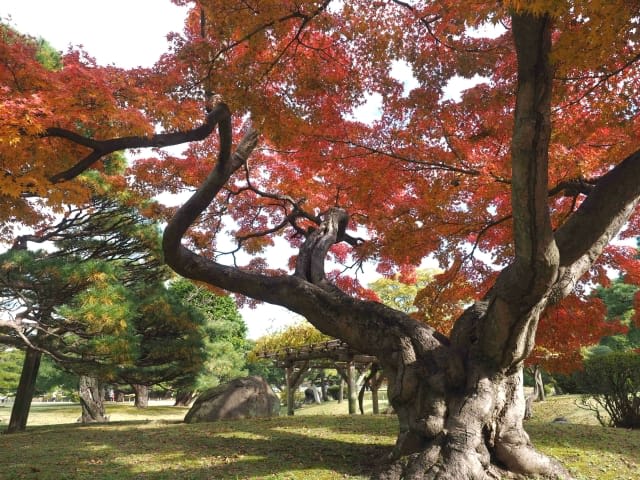
Hama-Rikyu Gardens is a garden facing Tokyo Bay and is the only spot in Tokyo with a seawater pond. The pond filled with seawater characteristically changes its appearance with the ebb and flow of the tide.
From mid-November to early December, you can see about 260 trees with autumn foliage, including maple and wax trees.
For the Autumn 2026 events, I recommend viewing the fall foliage at Hama-Rikyu Gardens from the teahouse standing by the pond. At this Japanese-style teahouse, you can enjoy matcha drinks and traditional Japanese sweets. Enjoying drinks and sweets while looking at the fall colors reflected in the pond is my favorite time to heal my heart.
Hama-Rikyu Gardens is recommended for those who want to enjoy Japanese gardens and fall foliage, or for those who want to enjoy food along with viewing the autumn colors.
When colors begin: Mid-November
Peak viewing period: Late November to early December
Address: 1-1 Hamarikyu Teien, Chuo-ku, Tokyo
Hours: 9:00-17:00 (last entry at 16:30)
Closed: New Year holidays
Phone: 03-3541-0200
Official website: https://www.tokyo-park.or.jp/park/hama-rikyu/index.html
Yoyogi Park
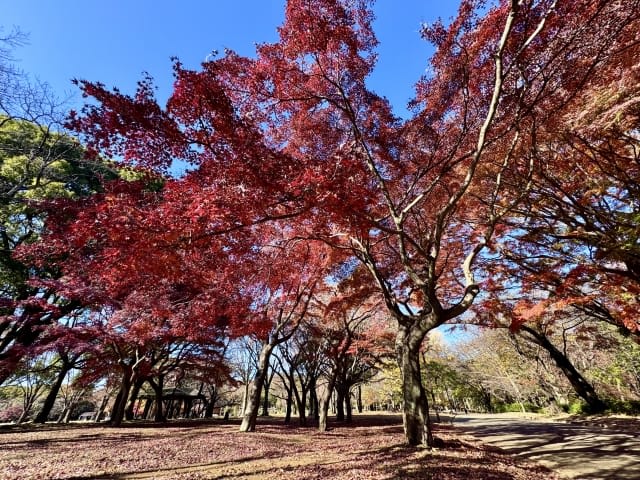
Yoyogi Park is a spacious park in Shibuya, Tokyo, and is easily accessible from Harajuku and Shibuya. Various events are held throughout the year, making it a popular park where many locals gather.
At Yoyogi Park, about 1,300 trees including zelkova, ginkgo, and maple turn colors. The characteristic feature is that various trees change colors at different times, allowing you to enjoy the fall foliage for an extended period from early November to early December.
Among the autumn foliage seen throughout the park, the contrast between the ginkgo avenue near Harajuku Gate and the red maples on the west side of the fountain pond are particularly noteworthy spots. Yoyogi Park has a large grassy area, so you can not only walk around to see the foliage but also enjoy it while having a picnic.
This is recommended for those who want to spend time in a spacious spot or those who want to see the gradation of fall colors.
When colors begin: Early November
Peak viewing period: Early November to mid-December
Address: Yoyogi Kamizonocho, Jinnan 1-chome, Jinnan 2-chome, Shibuya-ku, Tokyo
Hours: None
Closed: None
Phone: 03-3469-6081
Official website: https://www.tokyo-park.or.jp/park/yoyogi/index.html
Shōwa Memorial Park
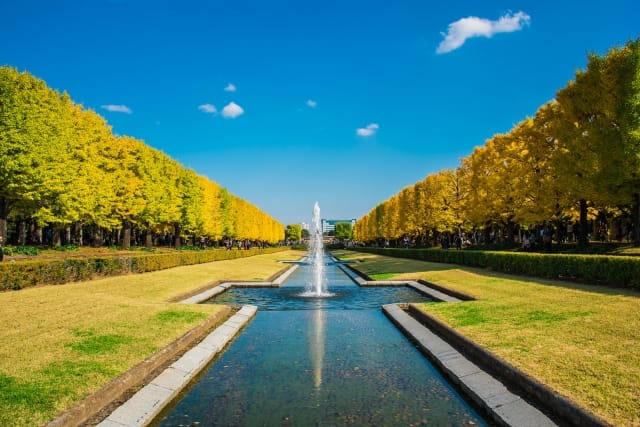
Shōwa Memorial Park is a national park located on the west side of Tokyo. With a total area of about 180 hectares and facilities including cafes and playgrounds, it's an Autumn 2026 spot where you can enjoy yourself all day long. From early to late November, approximately 300 maple trees and two ginkgo tree avenues in the park turn beautiful shades of yellow and orange.
My favorite Fall spots include the 200-meter-long ginkgo avenue near the Tachikawa entrance. Looking up, you'll be surrounded by a stunning world that feels like walking through a golden tunnel.
Shōwa Memorial Park typically hosts special illumination Events 2026 during the autumn foliage season, lighting up the Japanese garden and ginkgo avenues. The illumination of the Japanese garden and autumn leaves creates an atmosphere where you can experience authentic Japan, making it recommended for tourists who want to see quintessential Japanese scenery.
Leaves begin changing: Late October
Peak viewing period: Early to late November
Address: 3173 Midori-cho, Tachikawa, Tokyo
Hours: 9:30-16:30
Regular hours: 9:30-17:00 (16:30 closing November-February)
Phone: 042-528-1751
Official website: https://www.showakinen-koen.jp/
Ueno Park
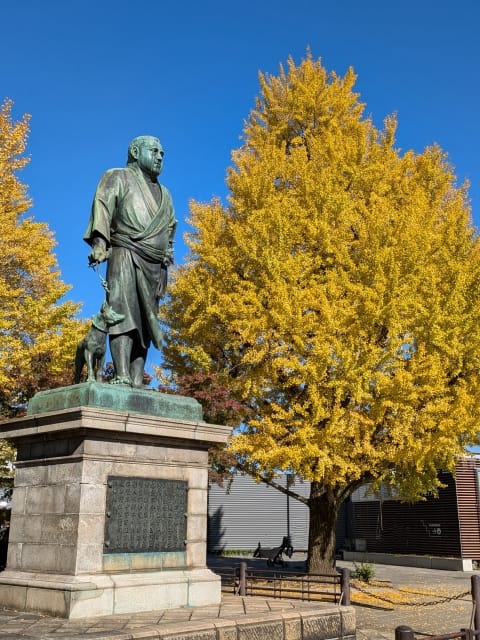
Ueno Park is a spacious park with museums and a zoo on its grounds, making it a representative spot in Ueno. From early November to mid-December, ginkgo trees, zelkova trees, and maples gradually change color, creating a gradient of autumn foliage.
Ueno Park has several perfect spots for viewing the fall colors. At the popular Shinobazu Pond, swan boats are available for rent. Being able to enjoy the autumn leaves while rowing a boat is one of Ueno Park's uniquely charming points for Autumn 2026 Events.
Around Kiyomizu Kannondo, you can enjoy the autumn leaves alongside traditional Japanese architecture.
Ueno Park is recommended for tourists who want to casually enjoy viewing autumn leaves along with Tokyo sightseeing, or those who want to view the fall foliage from a boat.
Leaves begin changing: Early November
Peak viewing period: Late-November to mid-December
Address: Ueno Park, Taito, Tokyo
Hours: 5:00-23:00
Closed: None
Phone: 03-3821-0755
Official website: https://www.tokyo-park.or.jp/park/ueno/index.html
Inokashira Park
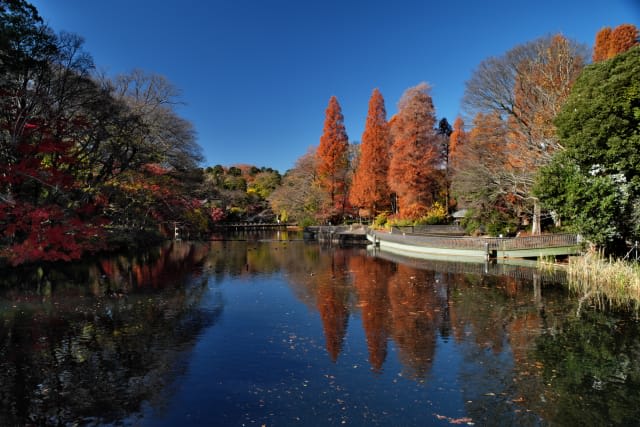
Inokashira Park, opened in 1917, is a representative park of the Musashino area. With a zoo and Studio Ghibli museum on its grounds, it's known as a spot where you can enjoy yourself all day.
At Inokashira Park, from mid-November to early December, you can view approximately 3,200 maple, zelkova, and other trees. One of the attractive Fall spots in Inokashira Park is the katsura trees, which are rarely seen in Tokyo and emit a sweet fragrance when their leaves turn yellow.
My favorite point about Inokashira Park is being able to enjoy the autumn leaves while rowing a boat on the pond. There are various types of boats available, including rowing boats, pedal boats, swan boats, and cycle boats, so please choose your favorite.
For tourists who want to enjoy autumn foliage along with sightseeing or those who want to leisurely appreciate the view while rowing a boat, be sure to visit Inokashira Park during the Autumn 2026 Events season.
Leaves begin changing: Mid-November
Peak viewing period: Late November to early December
Address: 1-chome Gotenyama, 1-chome Kichijoji Minami-cho, Musashino City, and 3-4-5-chome Inokashira, 1-chome Shimorenjaku, 4-chome Mure, Mitaka City, Tokyo
Hours: None
Closed: None
Phone: 0422-47-6900
Official website: https://www.kensetsu.metro.tokyo.lg.jp/jimusho/seibuk/inokashira/
Hibiya Park
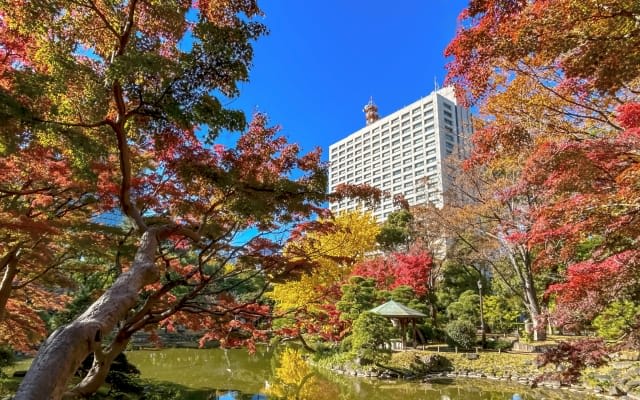
Hibiya Park is a Western-style park that combines Japanese gardens with Western culture, and was the first of its kind in Japan. The ginkgo tree-lined S-shaped pathway reaches its peak autumn colors from late November to early December.
One of the Fall highlights at Hibiya Park is the massive ginkgo tree called the "Head-staking ginkgo," which is over 400 years old. This legendary tree earned its name because the gardener declared "I'll offer my head if the transplantation fails" when planting it. Standing beneath this tree gives you an awe-inspiring experience.
My favorite spot is where the autumn colors of Hibiya Park contrast with the towering skyscrapers in the background. This quintessential Tokyo urban landscape with yellow ginkgo trees makes for photogenic pictures.
This location is recommended for those who want to see autumn foliage casually in a short time, especially if you're interested in ginkgo tree-lined avenues.
Color change begins: Early November
Peak viewing period: Late November to early December
Address: 1-6 Hibiya Park, Chiyoda-ku, Tokyo
Hours: 24 hours
Closed: None
Phone: 03-3501-6428
Official website: https://www.tokyo-park.or.jp/park/hibiya/index.html
Shiba Park
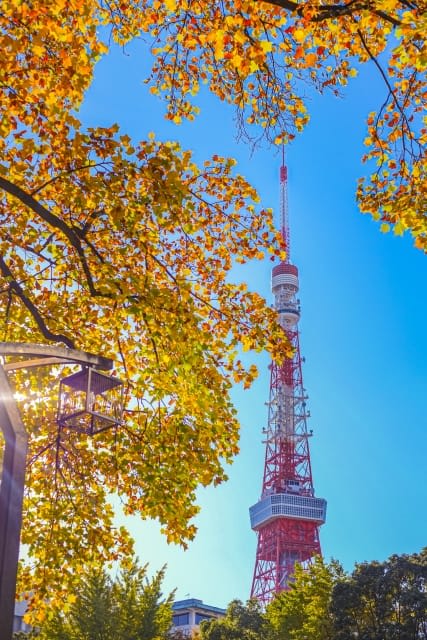
Shiba Park is a park located in Minato Ward, Tokyo. It's a park where you can enjoy abundant nature while being in the center of Tokyo, and it's located right next to Tokyo Tower, the iconic broadcasting tower that symbolizes Tokyo.
Shiba Park is planted with zelkova and ginkgo trees, and in autumn you can enjoy beautiful fall foliage while staying in the heart of the city.
For example, in the artificial valley area called "Momiji Valley" within the park, about 200 maple trees are planted, and in autumn you can casually stroll while enjoying the bright red maples and artificial waterfalls.
Additionally, in Area 4, there is a ginkgo tree-lined path where you can see the golden ginkgo trees framing Tokyo Tower like a picture frame.
Ginkgo trees are typically at their best around late November, while maples are at their peak from early to late December. If you're visiting nearby spots such as Tokyo Tower or Zojoji Temple, be sure to take a stroll through Shiba Park as well.
<Information>
Address: 4-chome, Shibakoen, Minato-ku, Tokyo
Business Hours: 24 hours
Closed: None
Phone Number: 0334314359
Official Website: https://www.tokyo-park.or.jp/park/siba/index.html
Institute for Nature Study, National Museum of Nature and Science
Source:Google Maps
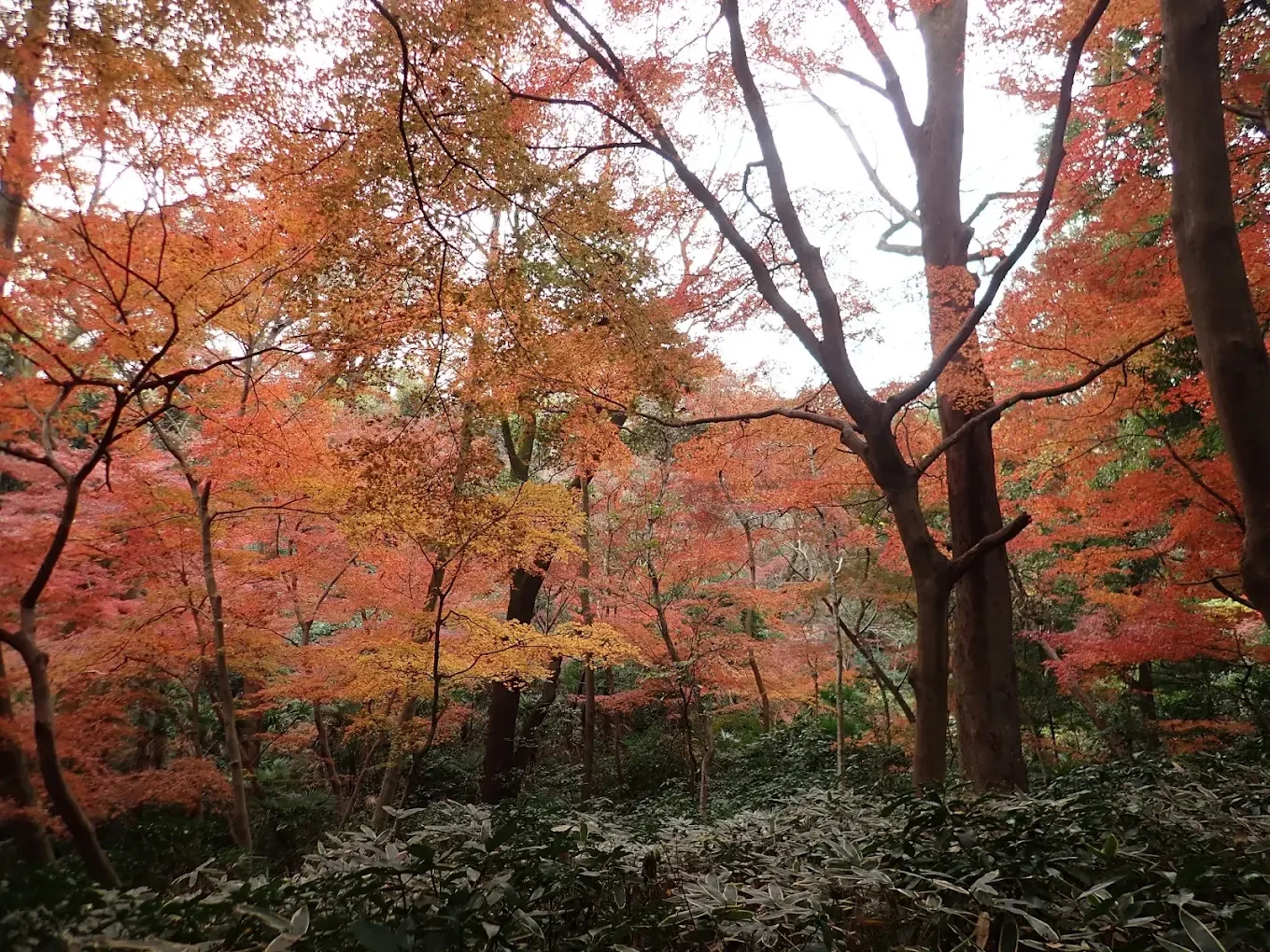
The Institute for Nature Study, National Museum of Nature and Science is a precious forest greenspace where abundant nature still remains, even though it's located in the heart of a major metropolis. Within the garden, you can see autumn foliage of Japanese maple, Japanese zelkova, Muku tree, and other species.
There is a walking path between the Roadside Botanical Garden and Aquatic botanical garden. The surrounding area is a popular spot for autumn foliage. Along the way, there is Hyotanike Pond, where you can enjoy the autumn leaves reflected on the water surface.
This park was an Ancient manor of the local warlord 400-500 years ago. During the Edo period, it became the mansion of Matudaira Yorisige, the feudal lord of Takamatsu Domain (present-day Kagawa Prefecture).
In the Meiji era, it served as an ammunition depot for the army and navy, and in the Taisho era, it became imperial property. Throughout these periods, the general public was not allowed to enter.
As a result, remarkably rich nature has been preserved here. Even today, it is operated with the philosophy of maintaining it in a state as close as possible to nature's original form.
Please take a stroll while viewing the autumn foliage in this precious forest that has been left to change naturally.
- Color begins: Late November
- Best viewing period: Late November to mid-December
- Location: Institute for Nature Study, National Museum of Nature and Science
- Opening hours:
September 1 - April 30: 9:00-16:30 (admission until 16:00)
May 1 - August 31: 9:00-17:00 (admission until 16:00)
- Closed: Every Monday (however, open on national holidays/holidays, closed on Tuesday instead)
Day after national holidays (however, open on Saturdays and Sundays)
Year-end and New Year holidays (December 28 - January 4)
- Access: 9-minute walk from JR "Meguro Station" / 7-minute walk from Tokyo Metro Namboku Line/Toei Mita Line "Shirokanedai Station"
- Admission: General/University students 320 yen, High school students and younger free
- Official website: https://ins.kahaku.go.jp/
If you want to enjoy autumn leaves in Japan, visiting beautiful spots with a local guide is recommended
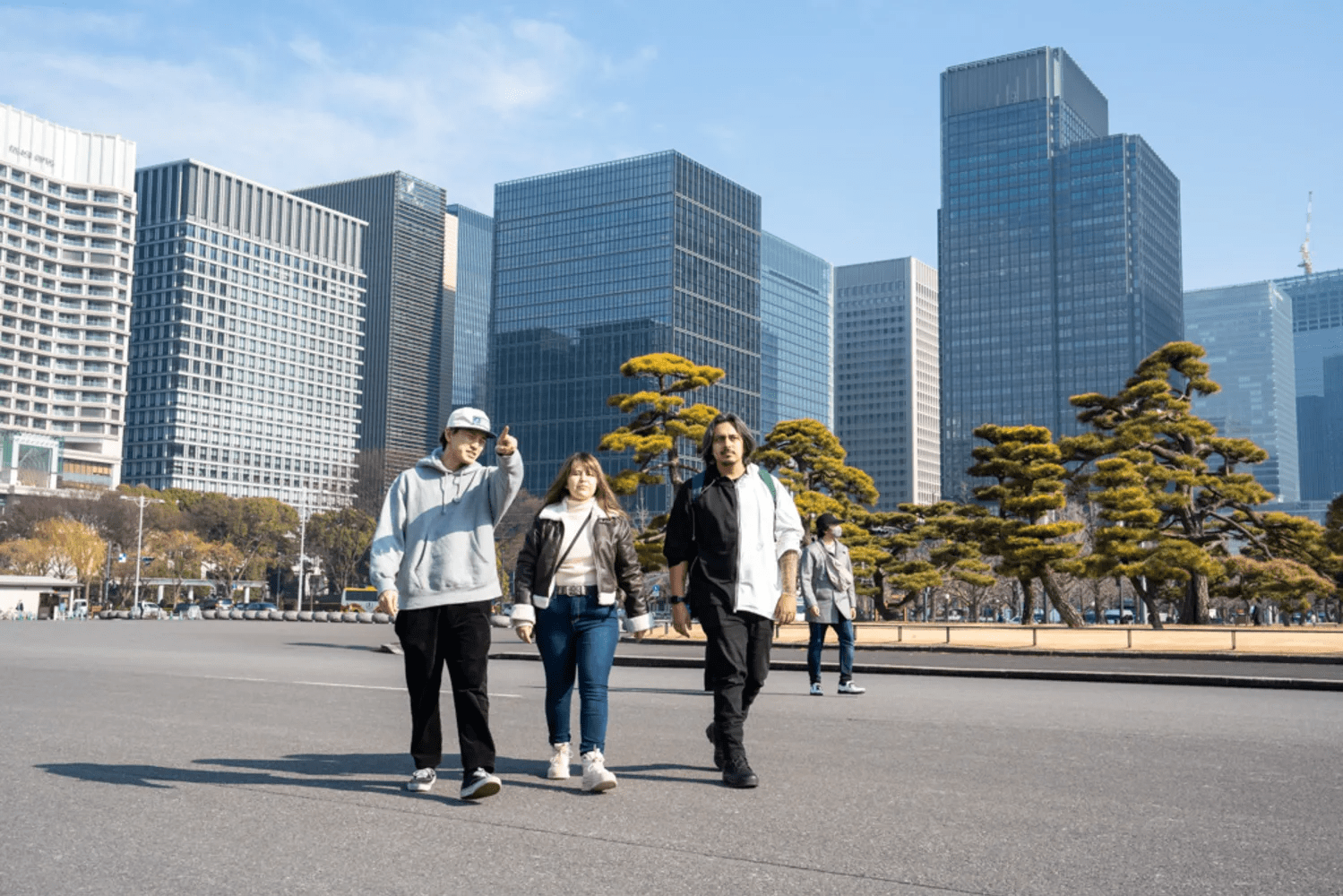
For experiencing the autumn foliage in Japan, it's recommended to visit beautiful Fall spots with a local guide who knows Tokyo well. With an English-speaking guide on a one-day Tokyo tour, you can experience various attractions in Tokyo in a single day, from shrines where you can learn about Japanese culture to autumn leaf viewing spots and gourmet experiences.
During the tour, you can visit Hama-Rikyu Gardens, which is beautiful with autumn colors, and enjoy matcha tea while looking at red and yellow trees. Another attractive point of the tour is that all entrance fees and meal costs are included, so you can enjoy sightseeing without worrying about expenses.
This is especially recommended for those who want a special experience during the autumn season. A pleasant aspect of the tour is that you can comfortably visit Tokyo's famous spots in a private vehicle. If you have limited time for sightseeing in Tokyo, participating in this tour allows you to sightsee efficiently.
Meeting point: Pick-up at your hotel within Tokyo's 23 wards or at a designated location
Tour area: Within Tokyo
Start time: 9:00
4 spots near Tokyo where you can enjoy beautiful autumn leaves in rich natural settings
Mt. Takao
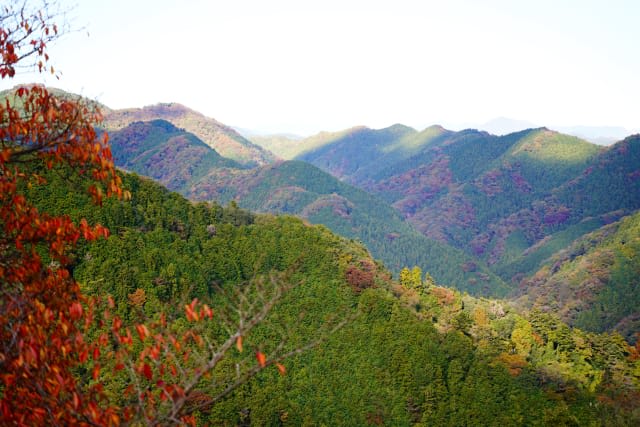
Mt. Takao is a 599-meter mountain that can be accessed from central Tokyo by train in about one hour. Japanese maple, beech, and Japanese beech trees color the mountain from mid-November to early December, making the entire mountain look like a patchwork of various colors.
When visiting Mt. Takao, I recommend seeing the autumn leaves from the cable car. The cable car connects Kiyotaki Station at the foot of Mt. Takao to Mt. Takao Station at an elevation of 472m, allowing you to experience passing through a tunnel of autumn foliage.
Also, when you reach the top of Mt. Takao, you might see Mt. Fuji, Japan's highest mountain, on clear days. If you're visiting, it's recommended to go all the way to the summit.
If you want to enjoy hiking and autumn leaf viewing together, or if you want to go to a place surrounded by nature, please visit Mt. Takao. This beautiful spot will be at its peak for the 2026 autumn Events season.
Color change begins: Mid-November
Peak viewing period: Mid-November to early December
Address: 2176 Takao-machi, Hachioji-shi, Tokyo
Hours: 24 hours
Closed: None
Phone: 042-673-3461
Official website: https://www.hkc.or.jp/takaosan/momiji_fes/
Autumn Foliage at Akigawa Valley
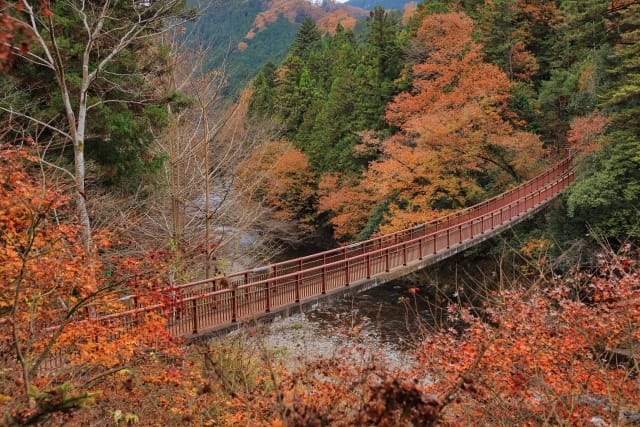
The lush, clear stream "Akigawa Valley" spreads from Akiruno City to Hinohara Village, about one hour west of central Tokyo by train. Akigawa is a tributary of the Tama River, and the approximately 20km valley area is a popular tourist spot where you can enjoy natural beauty throughout the four seasons.
As autumn deepens, the valley trees turn red, orange, and yellow, centered around Japanese maple, creating a magnificent contrast with the clear blue stream. The most famous spot is Ishifune Bridge, the symbol of Akigawa Valley. This 96-meter-long suspension bridge draws a gentle curve with an elegant form.
First, view the autumn foliage and valley stream from the bridge. A breathtakingly beautiful view spreads before you. The combination of autumn foliage and the bridge also creates a wonderful scene. Please capture it with your camera and preserve a photo commemorating nature-rich Japan.
Near Ishifune Bridge, there is a hot spring facility called "Akigawa Valley Seoto no Yu." It's about a 5-minute walk, so please stop by. You can soothe your travel fatigue in the free foot bath.
Besides this, many autumn foliage spots are scattered throughout Akigawa Valley. Kotokuji Temple, founded about 700 years ago, features two Ginkgo trees that shine golden when you pass through the mountain gate, creating a solemn atmosphere.
Also, the row of autumn leaves along the river viewed from Iwasekyo Kagetsu Bridge allows you to fully enjoy the valley's autumn beauty. We also recommend enjoying these spots while slowly strolling through the quiet nature.
The autumn foliage of Akigawa Valley is Tokyo's "hidden autumn spectacular scenery" that you can experience just by extending your journey a little from the city. Please spend a special moment surrounded by nature's quietness while viewing the landscape woven by clear streams and autumn foliage.
- Color begins: Early November
- Best viewing period: Mid to late November
- Address: Akiruno City and Hinohara Village, Tokyo
- Operating hours: 24 hours
- Closed: None
- Access: From JR "Musashi-Itsukaichi Station" bus stop "Platform 1," board the bus bound for "Akigawa Valley Seoto no Yu"
- Official website: https://www.city.akiruno.tokyo.jp/kanko/
Lake Okutama
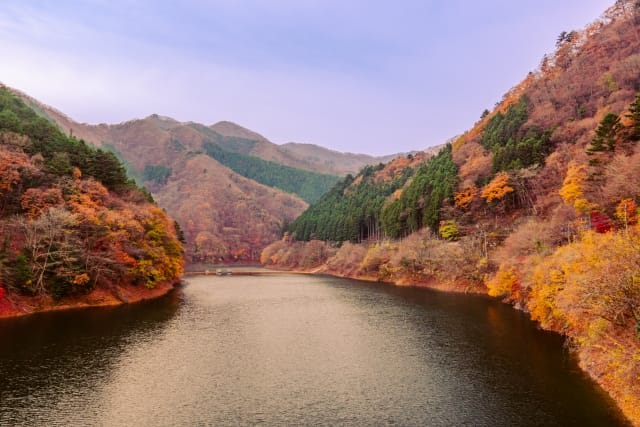
Lake Okutama is an artificial lake that spans across Tokyo and Yamanashi Prefecture. Despite being surrounded by rich natural beauty that's hard to imagine in Tokyo, it's a spot that can be enjoyed on a day trip from central Tokyo. From late October to mid-November, you can see maples, konara oaks, and ginkgo trees changing to red, orange, and yellow colors.
My recommended spot for viewing autumn foliage at Lake Okutama is "Tsukiyomi 1st Parking." From the parking area, you can see the fall colors reflected on the lake's surface. The emerald green water of Lake Okutama creates a beautiful contrast with the autumn leaves, making it a photogenic landscape.
There's also a walking path near the parking lot where you can enjoy a leisurely stroll surrounded by nature. Lake Okutama is recommended for those who want to quietly enjoy the autumn foliage away from the hustle and bustle of the city. It's one of the best fall spots for the 2026 autumn season.
Beginning of color change: Mid-October
Peak viewing period: Late October to mid-November
Address: Hara, Okutama-machi, Nishitama-gun, Tokyo
Hours: 24 hours
Closed: None
Phone: 0428-83-2152
Official website: None
Mount Mitake
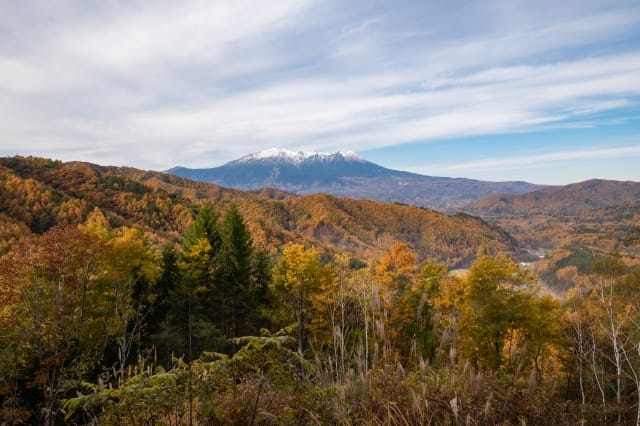
Mount Mitake is a 929-meter high mountain in Ome City, Tokyo. It can be easily accessed by cable car, making it enjoyable even for beginner hikers. Maples, ginkgo trees, and zelkova trees change colors from late October to mid-November.
When visiting Mount Mitake, I recommend viewing the autumn foliage from the approximately 4km walking path along Mitake Gorge. You can relax while looking at the fall colors while feeling the natural coolness and sounds of the valley.
Don't miss the approximately 30-meter tall giant ginkgo tree in front of Gyokudo Art Museum. There's also a limited-time light-up event from the evening, so please check it out. The 2026 autumn events at Mount Mitake will include special guided tours of these illuminated areas.
At Musashi Mitake Shrine at the top of Mount Mitake, you can enjoy the contrast between the more than 1,000-year-old giant cedar trees and the autumn leaves. This is recommended for those who want to enjoy nature unique to mountains along with the fall foliage.
Beginning of color change: Late October
Peak viewing period: Late October to mid-November
Address: Mitakesan, Ome City, Tokyo
Hours: 24 hours
Closed: None
Phone: 0428-78-9363
Official website: None
9 Hidden Gems in Tokyo to Enjoy Autumn Foliage in a Relaxed Atmosphere
Tokyo has many autumn fall spots with different atmospheres. If you want to enjoy autumn leaves in a peaceful setting rather than glamorous spots crowded with people, visit hidden gems of fall foliage beloved by locals.
Mizumoto Park
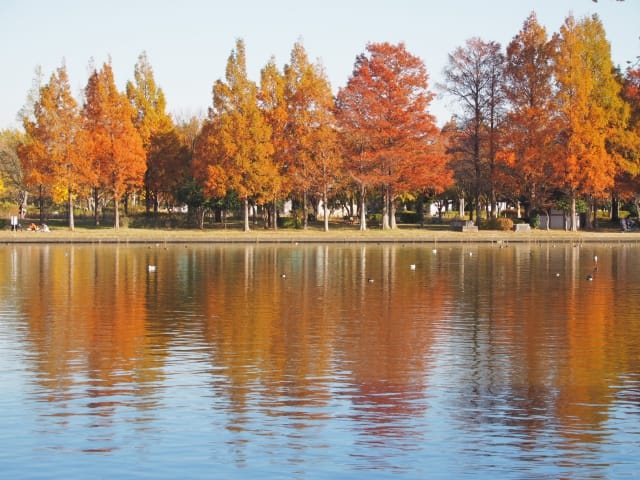
Mizumoto Park is known as the only park in Tokyo that utilizes water scenery as a water park. Sweet gum trees are at their best from late October to mid-November, while metasequoia, ginkgo, and poplar trees reach their peak from mid-November to mid-December.
My recommended highlight of Mizumoto Park is the "Metasequoia Forest" where about 1,500 metasequoia trees stand in a row. The entire forest is dyed in a vivid brick color, and the reflection in the water is spectacular. On sunny days, you can also enjoy the contrast with the blue sky. It's projected to be one of the most visited autumn spots for events in 2026.
Mizumoto Park also has playground equipment and restaurants for children, making it a perfect spot for families to relax. It's recommended for those who want to enjoy autumn foliage at a hidden spot with fewer tourists or families with children.
Beginning of color change: Late October
Peak viewing period: Early November to mid-December
Address: 3-2 Mizumoto Park, Katsushika-ku, Tokyo
Hours: 24 hours
Closed: None
Phone: 03-3607-8321
Official website: https://www.tokyo-park.or.jp/park/format/index041.html
Ginkgo Trees of the Hongo Campus, University of Tokyo
Source:Tokyo Shashin Cirtcle
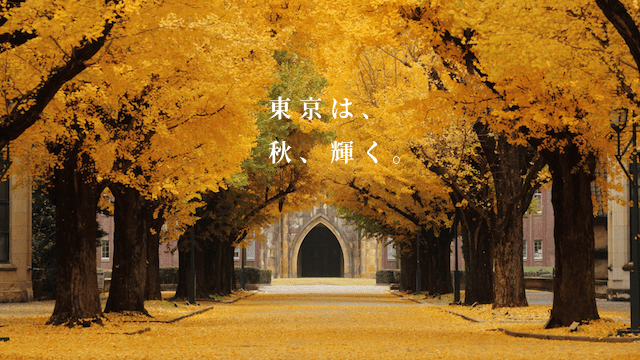
Hongo Campus, University of Tokyo is one of the campuses of the University of Tokyo, considered the pinnacle of Japan's national universities, and is open for anyone to visit. From late November to early December, the ginkgo tree avenues located throughout the campus are painted in vibrant yellow.
At Hongo Campus, University of Tokyo, the attractive point is being able to see both the autumn fall foliage and the university's historical buildings towering in the background simultaneously. The avenue of trees from Yasuda Auditorium, the symbol of Hongo Campus, to the main gate, and the ginkgo tree avenue extending from the vermilion-painted gate called the Red Gate are particularly spectacular spots for viewing the fall colors in 2026.
This is a perfect spot for those interested in Japanese university campuses or who want to enjoy autumn foliage viewing in a unique location. It's one of Tokyo's must-visit fall events in 2026.
When leaves begin changing: Mid-November
Peak viewing period: Late November to early December
Address: 7-3-1 Hongo, Bunkyo-ku, Tokyo
Hours: 7:00 - 22:00 (Main Gate)
Closed: Based on university schedule
Phone: 03-3812-2111
Official website: https://www.u-tokyo.ac.jp/ja/about/campus-guide/index.html
Kinuta Park
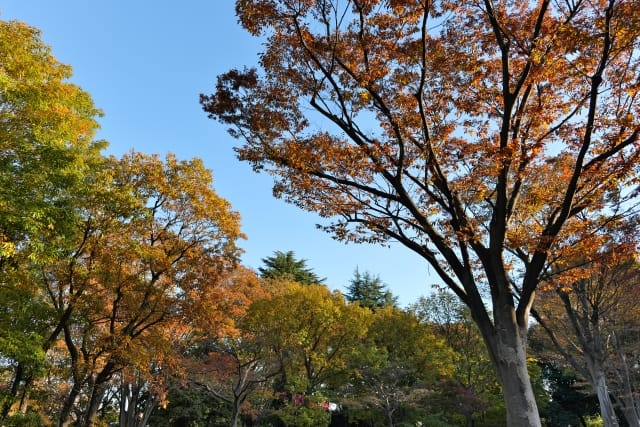
Kinuta Park is a spacious park surrounded by lawns and trees. About 1,000 trees including zelkova, ginkgo, and Japanese maple turn red and orange from late November to early December.
The unique highlight of Kinuta Park is the zelkova tree avenue near the main gate. When illuminated by the morning or evening sun, it creates a magical atmosphere, which is my favorite point. Another highlight is the sight of fallen leaves carpeting the ground, which can be seen when the autumn leaves start to fall.
Kinuta Park is known as one of Tokyo's most spacious parks, and since it's equipped with sports facilities and playground equipment, it's especially recommended for families. It's also a perfect spot for picnics on sunny days, making it enjoyable for those who want to leisurely appreciate the fall foliage during the autumn events of 2026.
When leaves begin changing: Late November
Peak viewing period: Late November to early December
Address: Kinuta Park, Okura 1-chome, Okamoto 1-chome, Setagaya-ku, Tokyo
Hours: 24 hours
Closed: None
Phone: 03-3700-0414
Official website: https://www.tokyo-park.or.jp/park/kinuta/
Kishimojin Temple
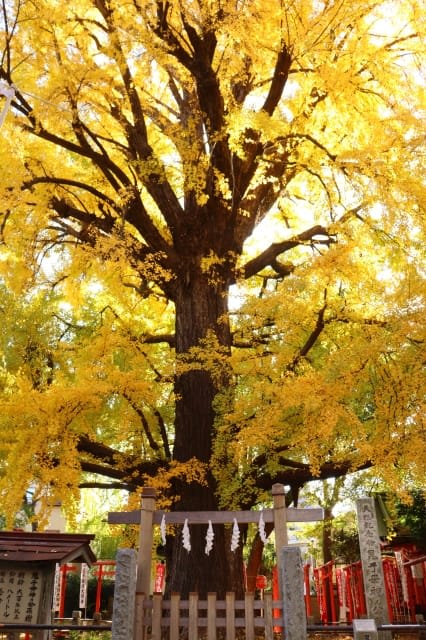
Kishimojin Temple is a temple dedicated to a deity who bestows power for safe childbirth and child-rearing. The zelkova tree avenue that is over 400 years old and a large ginkgo tree that is about 600 years old turn colorful from mid-November to early December.
In particular, the zelkova trees along the approach that turn orange create a tunnel-like formation and are popular as a photography spot for capturing the essence of fall. Also, when I visited previously as the autumn leaves were falling, the fallen leaves spread near the torii gate and the approach path, giving me the feeling of walking on a golden carpet.
There is a traditional candy store within the temple grounds where you can experience an old-fashioned retro Japanese atmosphere, so please be sure to visit when you come. This is recommended for those who want to see autumn foliage along with a temple, or for those who want to visit a local spot frequented by locals. It's one of the hidden autumn fall spots that tourists shouldn't miss during the autumn events of 2026.
When leaves begin changing: Mid-November
Peak viewing period: Late November to early December
Address: 3-15-20 Zoshigaya, Toshima-ku, Tokyo
Hours: 24 hours
Closed: None
Phone: 03-3982-8347
Official website: https://www.kishimojin.jp/
Kuhonbutsu Joshin-ji Temple
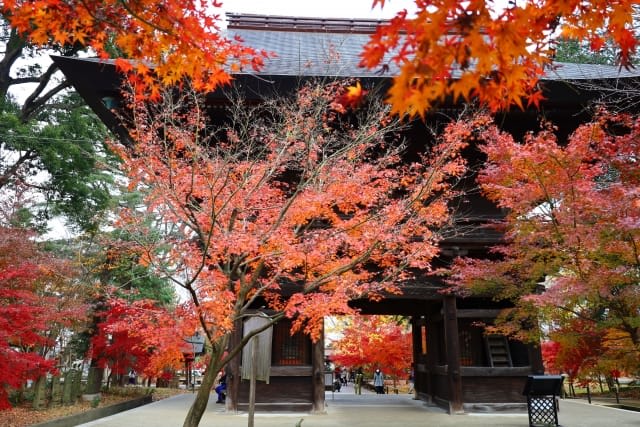
Kuhonbutsu Joshin-ji Temple is a temple named after the nine Buddha statues enshrined within. In late November to early December, the zelkova, ginkgo, and maple trees change color, creating a vibrant atmosphere throughout the temple grounds.
My favorite spot in Kuhonbutsu Joshin-ji Temple is the maple tunnel that stretches from the main gate to the approach. The red Autumn leaves fill the sky, and combined with the sacred atmosphere of the temple, the grandeur is overwhelming. This will certainly be one of Tokyo's most photogenic Fall spots for visitors in 2026.
The approximately 800-year-old Japanese nutmeg tree designated as a valuable tree and the large ginkgo tree are also highlights worth seeing.
If you enjoy a peaceful atmosphere, I recommend visiting Kuhonbutsu Joshin-ji Temple during the upcoming Fall Events 2026.
Beginning of color change: Late November
Best viewing period: Late November to early December
Address: 7-41-3 Okusawa, Setagaya-ku, Tokyo
Hours: 6:00-16:30
Closed: None
Phone number: 03-3701-2029
Official website: https://kuhombutsu.jp/
Mukojima-Hyakkaen Gardens
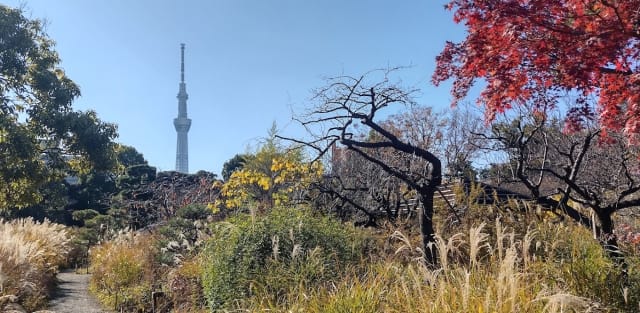
Mukojima-Hyakkaen Gardens is a Japanese garden located in Sumida Ward, Tokyo's downtown area. This quiet, small-scale garden is planted with seasonal flowers and offers beautiful scenery throughout the year.
In autumn, the many plum trees and zelkova trees planted in the garden turn beautiful fall colors. Additionally, many plants that have been cherished in Japan since ancient times, such as pampas grass, camellias, and chrysanthemums, are planted here, allowing you to enjoy the traditional Japanese autumn atmosphere.
Among locals, the garden is also known for its beautiful bush clover flowers in autumn. Bush clover is a flower that has been loved in Japan since ancient times during autumn, and the garden features a tunnel made of bush clover flowers.
When I walked through the tunnel, I enjoyed the beautiful sight of sunlight streaming through the green leaves and small pink bush clover flowers.
From within the garden, you can beautifully view Tokyo Skytree along with the autumn leaves and fall flowers, so taking photos is highly recommended.
<Information>
- Address: 3-18-3 Higashimukojima, Sumida-ku, Tokyo
- Business Hours: 9:00 AM - 5:00 PM
- Closed: Irregular holidays
- Phone Number: 0336118705
- Official Website: https://www.tokyo-park.or.jp/park/mukojima-hyakkaen/
Autumn Foliage at Kiyosumi Garden
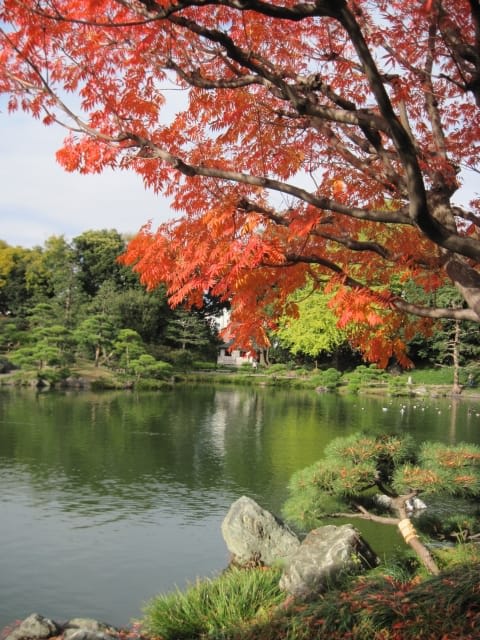
This is a garden centered around a pond with three islands and rocks, mainly featuring dry landscape elements. It inherits the style of Edo period daimyo gardens and Meiji period landscaping.
In autumn, trees such as Japanese wax tree, Ginkgo, and Japanese maple turn colorful. Rather than the entire garden turning colors, the feature is that it adds accent colors to the landscape.
In the calm atmosphere, slowly stroll around the pond. You can also enjoy autumn flowers and plants such as Bush Clover and Japanese silver leaf. Many wild birds also visit the pond. When you "discover" Japan's autumn scenery with your own eyes, please capture it in photos.
From November 22 to December 7, you can enjoy tea and sweets at the "Ryo-tei," which is built jutting out into the pond. The "Ryo-tei" is usually not accessible. Enjoying the view of the pond and autumn foliage from here is also a valuable experience.
On the west side of Kiyosumi Garden, Kiyosumi Park extends. Please stop by the park as well.
- Color begins: Mid-November
- Best viewing period: Mid-November to early December
- *November 22 (Sat) to December 7 (Sun), 2026
- Location: Kiyosumi Garden (3-3-9 Kiyosumi, Koto-ku)
- Opening hours: 9:00-17:00 (admission until 16:30)
- Closed: December 29 - January 1
- Access: Directly connected to Tokyo Metro Hibiya Line "Toranomon Hills Station" / Directly connected to Tokyo Metro Ginza Line "Toranomon Station"
- Admission: General 150 yen, 65 and over 70 yen, Elementary school students and younger, and junior high school students residing/attending school in Tokyo free
- Official website: https://www.tokyo-park.or.jp/park/kiyosumi/
Todoroki Fudoson Temple
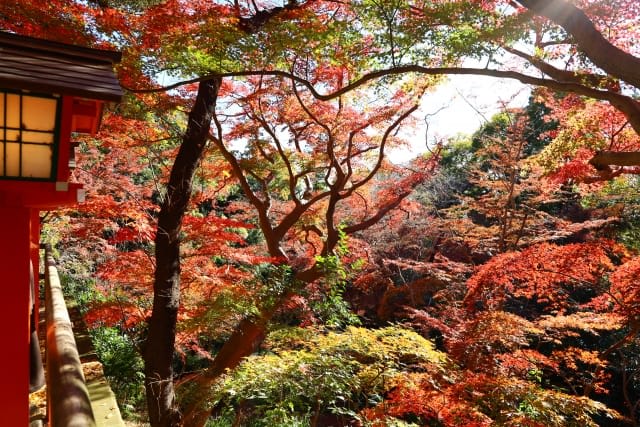
Todoroki Fudoson is a temple nestled in "Todoroki Valley," the only valley within Tokyo's 23 wards, and is a popular spot known for its beautiful autumn foliage. While located in the city center, rich nature and Japanese tradition coexist, bringing visitors a peaceful feeling.
When you enter the temple grounds, Ginkgo trees shining golden yellow welcome you. Their fallen leaves overlap on the ground like a carpet.
As you walk, sounds echo, so please listen carefully. Forgetting the hustle and bustle of the city, you can experience the arrival of autumn with both your eyes and ears. The contrast between the vermilion lanterns and yellow ginkgo is also magnificent.
Further inside the grounds, there is an observation deck overlooking the valley. The scene changes from golden yellow, and Japanese maple's crimson autumn foliage spreads throughout your field of vision.
The scenery woven by the red of autumn leaves, the blue of the sky, and green is truly spectacular. The observation deck's entry time is until 16:00, but please enjoy the autumn foliage illuminated by the soft light before sunset.
Todoroki Fudoson has gathered faith from people since ancient times. The spot's charm lies in its history, temple architecture, and the expressions of trees that change with the seasons. Please slowly feel the deepening of Japan's autumn. The beautiful autumn foliage and peaceful time will remain in your travel memories.
- Color begins: Late November
- Best viewing period: Late November to early December
- Address: 1-22-47 Todoroki, Setagaya-ku
- Operating hours: 9:00-16:30
- Closed: None
- Access: 10-minute walk from Tokyu "Todoroki Station" South Exit
- Official website:
Todoroki Fudoson: https://www.manganji.or.jp/
Todoroki Valley Park: https://www.city.setagaya.lg.jp/02075/9082.html
Jindai Botanical Garden
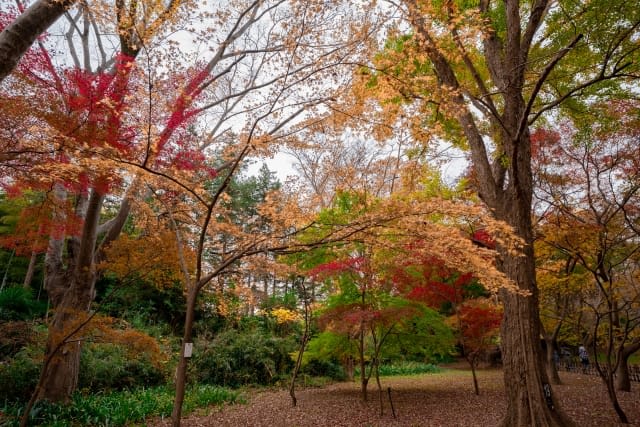
This park is land that was used for growing Tokyo's street trees and similar purposes. Currently, it is cherished as Tokyo's only botanical garden.
About 4,800 species and 100,000 trees are planted, and you can enjoy nature throughout the four seasons. The garden is divided into 30 blocks by plant type, and you can fully enjoy the colorful scenery while touring the areas with autumn foliage.
Among these, my recommendation is the "Kaede (Maple) Garden." Here, about 55 species and 100 Japanese maple trees are planted.
The most representative "Iroha Momiji" turns into rich gradations of crimson, orange, and golden yellow. The leaves are about 5cm in size with 3-7 splits. Please also refer to information boards in the Kaede Garden.
"Yama Momiji" is larger than this with 7-9 splits. The fallen autumn leaves at your feet are also beautiful, so as a travel souvenir, why not gently pick up and take home a favorite leaf?
Outside the Kaede Garden, you can see Metasekoia, Rakusho, and other trees dyed golden yellow, shining in the autumn sunlight. Roses, Sasanquas, and other autumn flowers are also at their peak. While slowly strolling through the garden, please enjoy the collaboration of autumn foliage and autumn flowers.
Walking through the garden surrounded by autumn foliage, sunlight filters through the trees, and leaves quietly flutter down as they sway in the wind. You can spend calm and luxurious time as if melting into nature.
While being easily accessible from central Tokyo, here you can forget the city's hustle and bustle and feel a quiet autumn moment.
Jindai Botanical Garden in autumn fully conveys the beauty of "Japanese autumn" to visitors. While walking among the colorful trees, please enjoy the time when your heart naturally becomes peaceful, making it one of the best Autumn Fall spots in Tokyo for Events 2026.
- Color begins: [Not specified in original]
- Best viewing period: [Not specified in original]
- Address: 5-31-10 Jindaiji Motomachi, Chofu City
- Operating hours: 9:30-17:00
- Closed: None
- Access: All buses get off at "Jindai Botanical Garden" bus stop
- Official website: https://www.tokyo-park.or.jp/park/jindai/index.html
5 Popular Tourist Destinations Near Tokyo Where You Can Enjoy Spectacular Autumn Foliage
If you're visiting Tokyo during autumn, why not combine Tokyo's popular tourist attractions with a trip to see the autumn foliage at nearby destinations accessible within 2 hours from Tokyo?
In fact, there are many spots near Tokyo with some of Japan's most beautiful autumn foliage, and many tourists who visit Tokyo also include the autumn fall spots we're about to introduce in their itinerary.
From here, I'll introduce carefully selected popular tourist destinations where you can enjoy spectacular autumn foliage.
Mt. Fuji Area
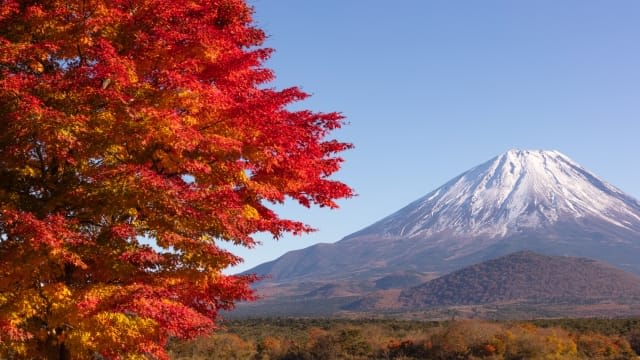
The Mt. Fuji area has many beautiful autumn foliage spots that enjoy tremendous popularity every year. The Mt. Fuji area is accessible from Tokyo in about 2 hours by express bus or car.
Arakura Sengen Shrine on Mt. Arakura in the Mt. Fuji area is an extremely popular scenic spot where you can view beautifully colored autumn trees and the majestic form of Mt. Fuji.
Additionally, the autumn foliage around Lake Kawaguchi near Mt. Fuji is also famous. About 500 trees along the lakeside turn colors all at once, creating a breathtaking spectacle.
The "Maple Corridor," where 100 ancient maple trees with brilliant red leaves form a tunnel-like passage, is also famous. I actually walked through the tunnel last year and was moved by the fantastical beauty created by nature.
At Lake Kawaguchi, the Autumn Leaves Festival is held every November, featuring nighttime illumination events and food stalls. If you're going to Lake Kawaguchi, I highly recommend visiting during this event period as one of the best autumn fall events 2026.
<Fujikawaguchiko Autumn Leaves Festival>
Event Period: November 1 - November 30
Official Website: https://fujisan.ne.jp/en/pages/433/
Mt. Fuji Full-day Day Trip Tour from Tokyo with a Private Car & Guide
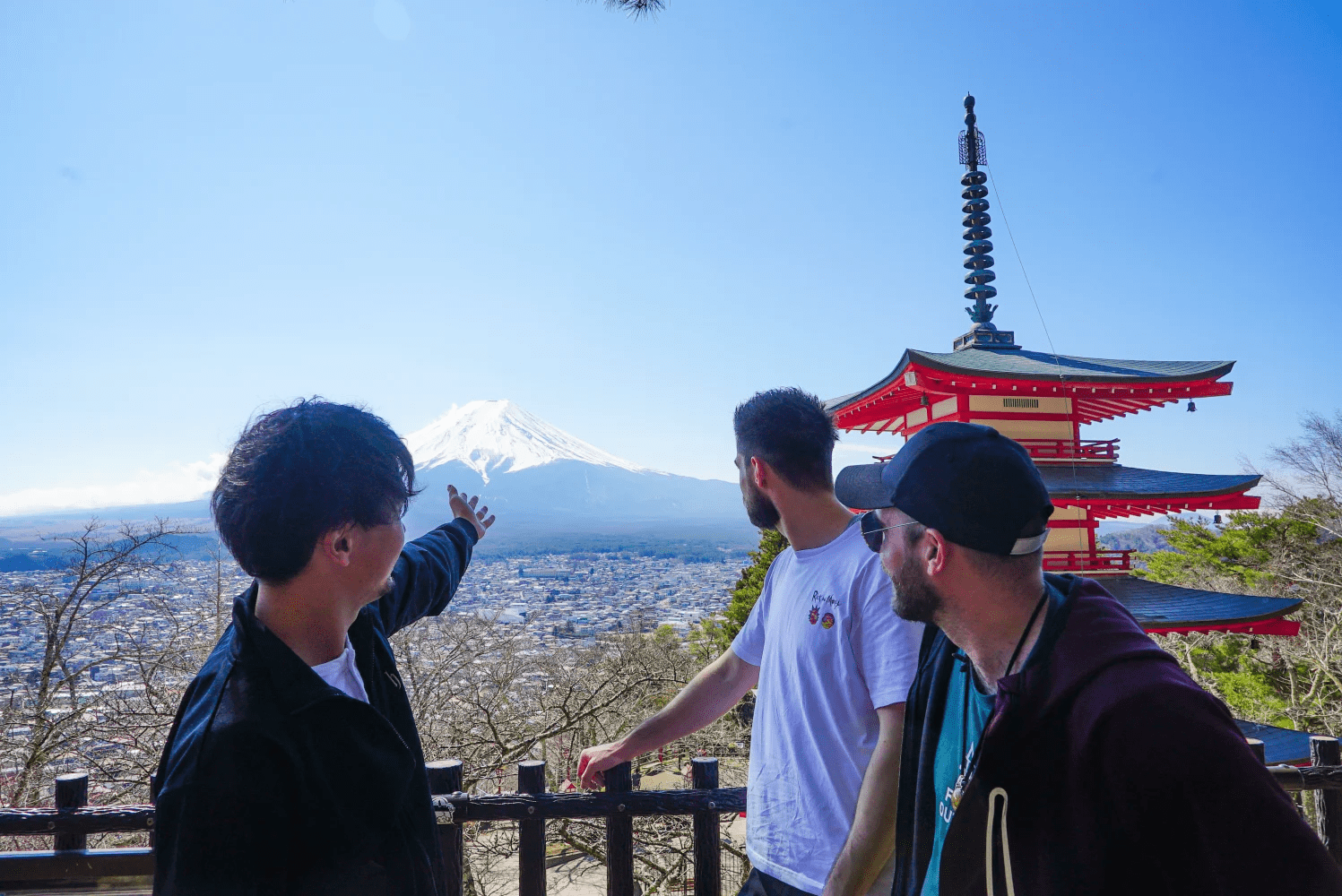
The first tour takes you around the natural and historical spots around Mt. Fuji.
A guide who knows Mt. Fuji area thoroughly will take you to photogenic spots where you can see the collaboration of a five-story pagoda and Mt. Fuji, waterfalls, and trees over 1,000 years old at shrines. During the Autumn season, you can enjoy the collaboration of Fall colors and historical spots.
This tour is perfect for those who want to enjoy the Mt. Fuji area in limited time or those interested in both nature and history.
The tour is led by a guide who knows the area well and will adjust the schedule according to the participants, so you can enjoy it at a relaxed pace without being rushed. This will be one of the most enriching Autumn Events in 2026.
Meeting point: Pick-up at your hotel or designated location within Tokyo's 23 wards
Tour area: Around Mt. Fuji
Start time: 8:00
Hakone
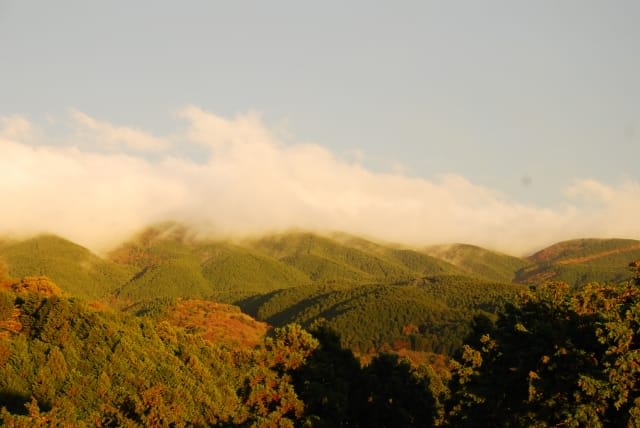
Hakone is also an area that enjoys high popularity during the autumn foliage season. Hakone is a hot spring resort located in Kanagawa Prefecture, which neighbors Tokyo, and is accessible in about 60 minutes from Tokyo by bullet train or about 90 minutes by car.
Hakone, being a mountainous area, has many spots where you can enjoy gorgeous autumn foliage. At Lake Ashi, the symbolic lake of Hakone, you can view beautiful Mt. Fuji over the autumn mountains adorned with fall colors.
Also, what I'd like to recommend is the Hakone Tozan Railway, which runs while climbing Hakone's mountains. From the slowly moving train windows, you can thoroughly enjoy the beautiful autumn foliage and autumn mountain plants.
Furthermore, in the Owakudani area, you can take a ropeway and look down at the vivid mountain autumn foliage from above. Around the high-altitude Lake Ashi, the autumn foliage can be enjoyed from early November, while at Hakone Yumoto located at the foot of the mountain, it can be enjoyed until early December.
Hakone Day Trip Tour from Tokyo with a Private Car & Guide
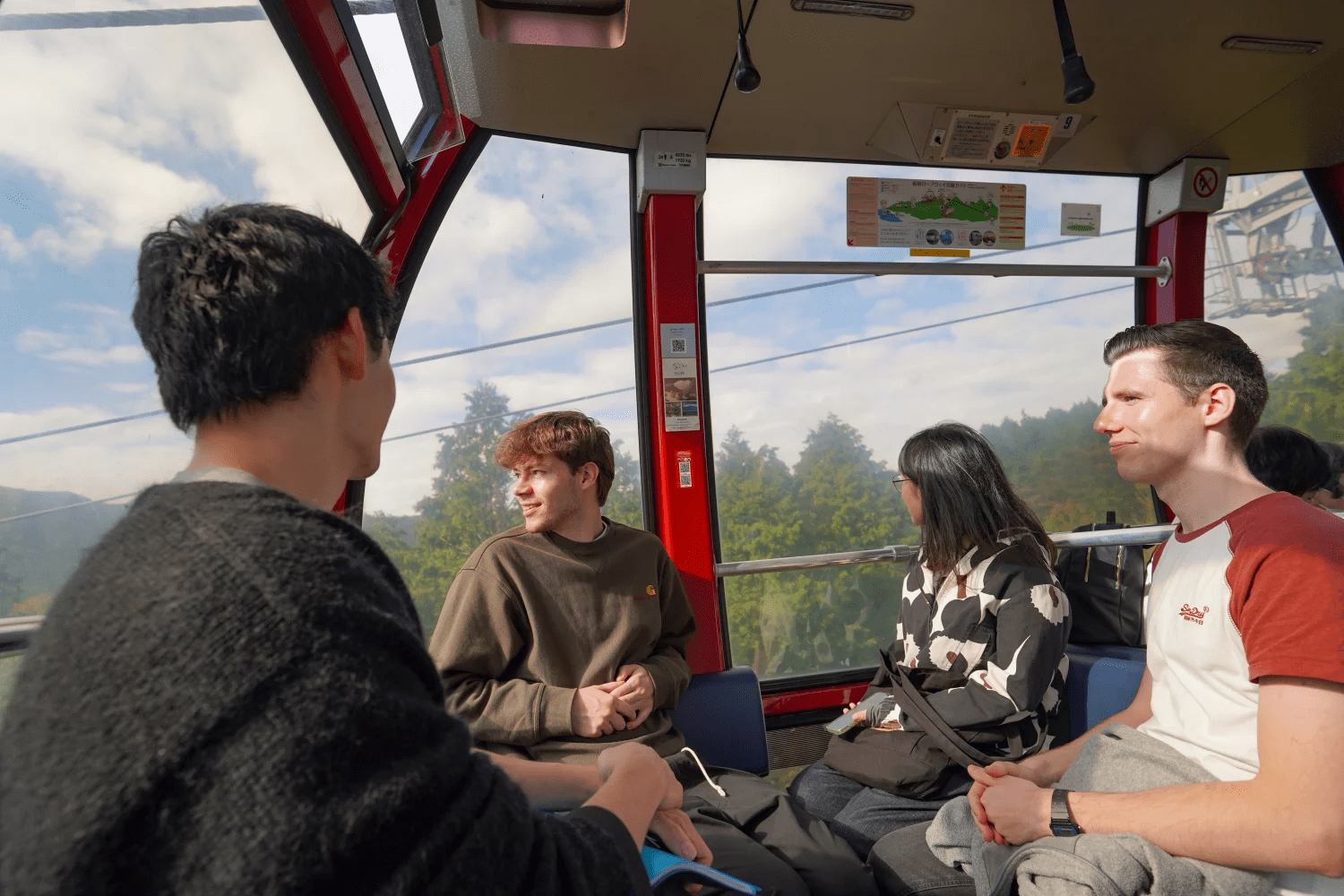
The second tour is a day trip that takes you around Hakone's shrines, Owakudani, museums, and hidden spots for Autumn leaves.
On the tour, you can enjoy viewing Fall colors at various spots, such as visiting Hakone Shrine adorned with maple trees over 300 years old, or taking a ropeway to see the Autumn leaves coloring the mountains. Also, as Hakone is known as a hot spring town, the guide will introduce you to hot spring cuisine that can only be tasted in Hakone. This tour covers some of the most beautiful Fall spots in the region for 2026.
This tour is recommended for those who want to enjoy various Autumn colors in one day or those who want to experience both nature and Japanese culture. The guide will gladly answer questions, so by participating in the tour, you can learn about Japan while sightseeing more than you would by going around on your own.
Meeting point: Pick-up at your hotel or designated location within Tokyo's 23 wards
Tour area: Hakone
Start time: 8:00
Oku-tama
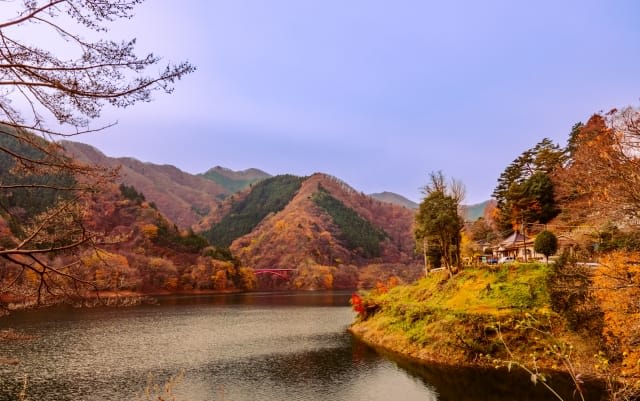
Oku-tama is a nature-rich area in the northwestern part of Tokyo. It's accessible in about 1.5 to 2 hours from Shinjuku in central Tokyo by train or bus.
In Oku-tama, you can enjoy beautiful autumn foliage every year along the shores of Lake Okutama, a dam lake. Lake Okutama is beautiful with its cobalt blue lake water, which beautifully highlights the surrounding red and orange autumn foliage.
If you have a car, driving along the Okutama Lake Circumferential Road around the lake allows you to fully enjoy the beautiful lakeside autumn foliage. Also, since there are several hiking courses along the lakeside, I recommend walking while enjoying the autumn foliage and clean air.
In Oku-tama, autumn foliage can typically be enjoyed from late October to mid-November. Let's leisurely enjoy the autumn foliage in Oku-tama, which is so rich in nature that it's hard to believe it's in Tokyo, making it one of the finest autumn fall spots near the city.
Kamakura
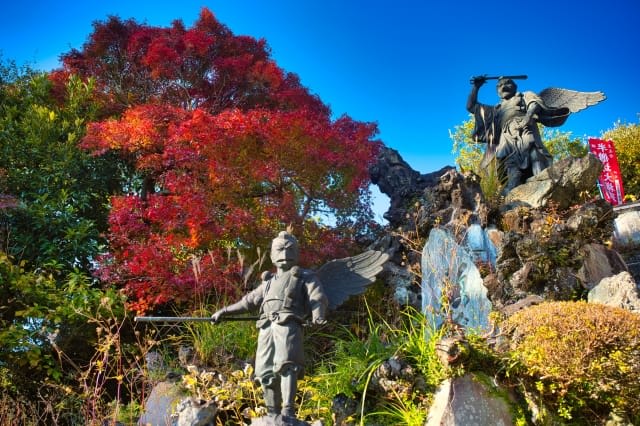
Kamakura, like Hakone, is a city in Kanagawa Prefecture, which neighbors Tokyo. It's a beach area city with a history of serving as the capital of the Samurai who ruled Japan in the 12th-13th centuries. It's accessible in about 1 hour by train from Shinjuku in Tokyo.
Kamakura, with its history as an ancient capital, has many traditional shrines and temples. At Hasedera Temple, famous for its beautiful seasonal flowers, you can enjoy fantastical autumn foliage in autumn along with autumn flowers such as sasanqua.
Also, at Meigetsu-in Temple, you can peek at the bright red maple trees outside through the round window of the temple built with traditional architecture. It's a popular spot where you can enjoy artistic beauty, and I absolutely love it and have visited many times.
The best time to see autumn foliage in Kamakura is from mid-November to early December. Since Kamakura has many beautiful temples, I recommend visiting many autumn fall spots while enjoying the beauty of autumn foliage at each one.
Nikko
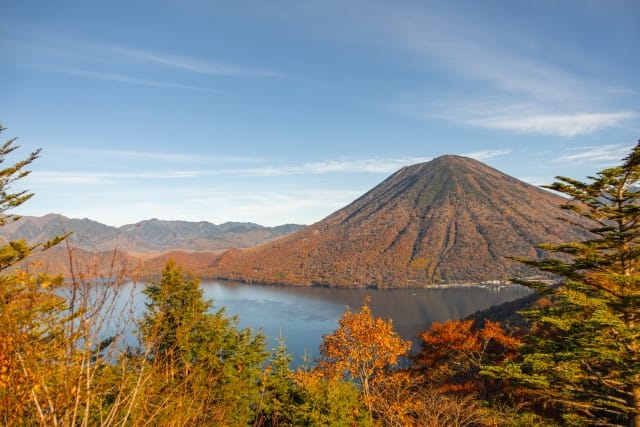
Nikko is an area historically famous as a renowned spot for autumn foliage. Located in Tochigi Prefecture near Tokyo, it's accessible from Tokyo in about 2 hours by bullet train. The best time to see autumn foliage is typically from late October to late November.
Nikko is a nature-rich area where you can enjoy majestic mountains, highlands, lakes, and waterfalls. On Irohazaka, a mountain road famous for its 48 consecutive sharp curves, you can enjoy magnificent mountain autumn foliage surrounding the road.
Also, the gorgeous autumn foliage visible at Kegon Falls, one of Japan's three major waterfalls, is a must-see. In addition, Nikko has many famous autumn foliage spots in Japan, including the historic Nikko Toshogu Shrine and Lake Chuzenji.
If you want to extend your trip from Tokyo to see autumn foliage in a nature-rich area, please access Nikko by bullet train to experience these exceptional autumn fall spots 2026 has to offer.
4 Selected Spots to Enjoy Tokyo's Autumn Foliage with Particularly Beautiful Illuminations
Tokyo Edo Open Air Architectural Museum
Source:Official website
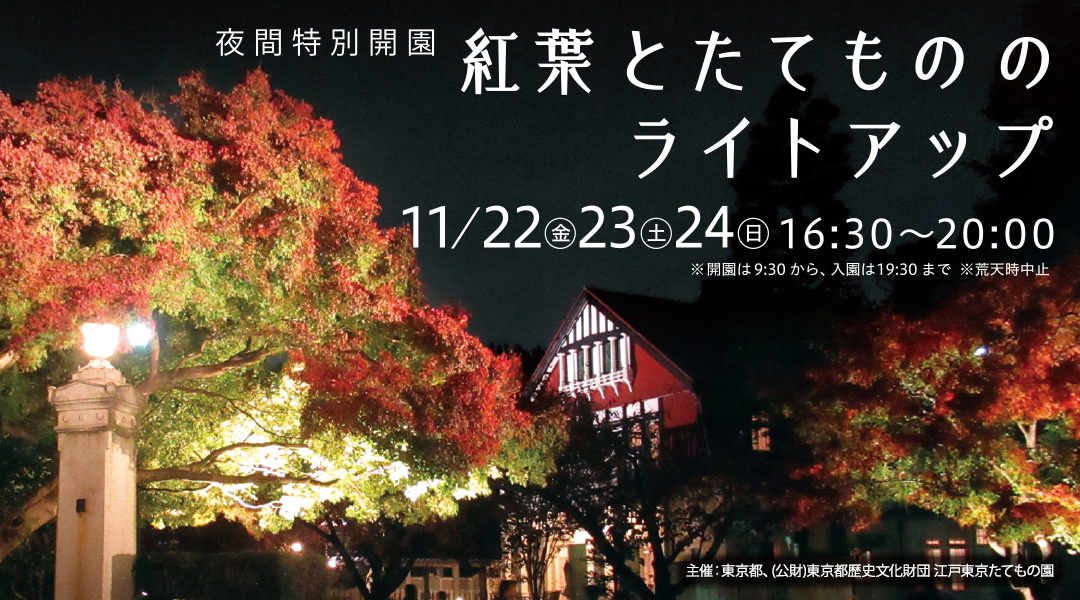
The Tokyo Edo Open Air Architectural Museum is an outdoor museum featuring 30 historical buildings reconstructed from approximately 300 to 75 years ago. In late November to early December, zelkova, sawtooth oak, and konara oak trees display their Fall colors.
At the Tokyo Edo Open Air Architectural Museum, you can enjoy the contrast between historical buildings and autumn foliage. Every year from mid to late November, the buildings and colorful leaves are illuminated. The illumination is professionally supervised by lighting experts, enveloping the entire garden in a fantastical atmosphere.
My favorite aspect of the Tokyo Edo Open Air Architectural Museum is experiencing the feeling of traveling back in time to old Japan. As one of Tokyo's premier Autumn spots for 2026, visitors can appreciate the colorful foliage while learning about Japanese history, making it highly recommended for those interested in Japanese culture.
Beginning of coloration: Late November
Peak viewing period: Late November to early December
Address: 3-7-1 Sakura-cho, Koganei City, Tokyo (inside Tokyo Koganei Park)
Hours: April-September 9:30-17:30 (last entry 17:00), October-March 9:30-16:30 (last entry 16:00)
Closed: Mondays (if Monday is a holiday or substitute holiday, closed the following day), New Year holidays
Phone: 042-388-3300
Official website: https://www.tatemonoen.jp/
Mejiro Garden
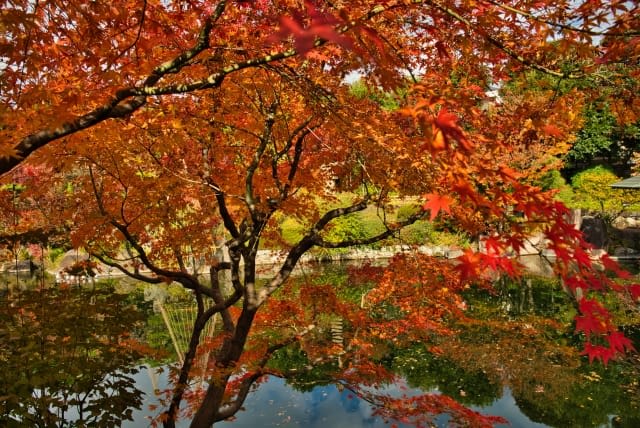
Mejiro Garden is a stroll garden with a central pond. With over 100 years of history, from mid-November to early December, Japanese maple trees turn red and yellow, creating beautiful reflections on the water surface.
The highlights of Mejiro Garden include the collaboration between the teahouse called "Sekichoan" and the Japanese-style building floating on the pond called "Rokkakuukimido" with the autumn foliage. This is recommended for those who want to visit spots that evoke Japanese traditional culture.
Every year from mid to late November, special evening openings and illuminations take place, making it one of Tokyo's most popular nighttime Fall foliage spots for the 2026 season.
Mejiro Garden is a small garden, so you can enjoy viewing the autumn leaves in a less crowded, peaceful atmosphere. It's perfect for those who want to photograph illuminated evening foliage or spend time in a quiet Japanese atmosphere.
Beginning of coloration: Mid-November
Peak viewing period: Late November to early December
Address: 3-20-18 Mejiro, Toshima-ku, Tokyo
Hours: 9:00-17:00
Closed: 2nd and 4th Monday of each month
Phone: 03-5996-4810
Official website: https://mejiro-garden.com/
Higo Hosokawa Garden
Source:PR TIMES
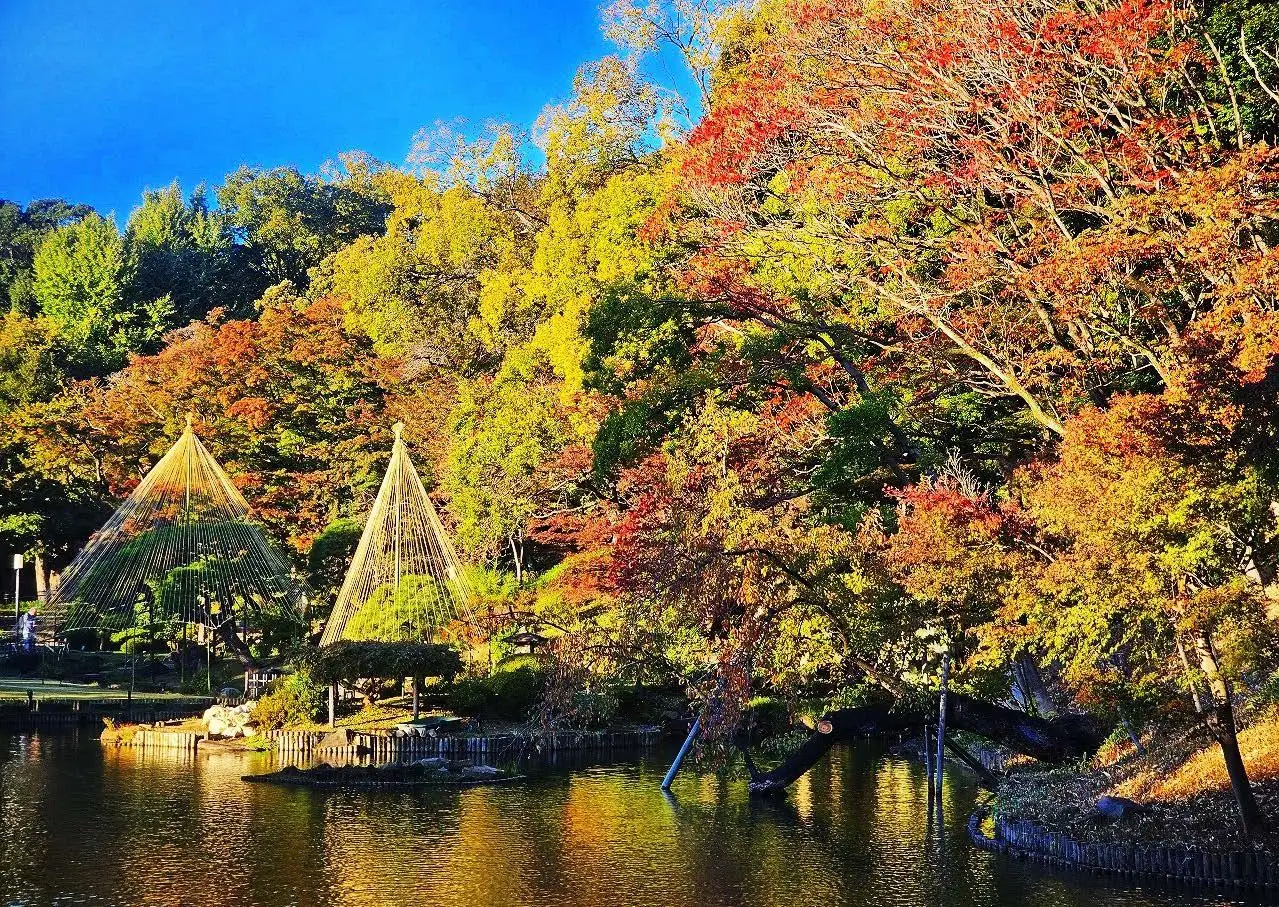
Higo Hosokawa Garden is a stroll garden located along the Kanda River that utilizes natural spring water. From late November to early December, Japanese maples, hackberry trees, and sumac trees turn red and orange.
At Higo Hosokawa Garden, you can enjoy the contrast between "Yukitsuri" (ropes and wires that support tree branches to prevent them from breaking under snow weight) and the autumn foliage. The sight of Yukitsuri and autumn leaves together is rare in Tokyo and will be among the special Events in Autumn 2026.
Additionally, from late November to early December, you can enjoy the collaboration between the autumn foliage and "Take-Akari," a traditional lighting art from Kumamoto where LED lights shine through holes made in bamboo.
This spot is recommended for those who want to see the combination of traditional art and nature, or those looking for photogenic autumn foliage spots.
Beginning of coloration: Mid-November
Peak viewing period: Late November to early December
Address: 1-1-22 Mejirodai, Bunkyo-ku, Tokyo
Hours: February-October: 9:00-17:00, November-January: 9:00-16:30
Closed: December 28-January 4
Phone: 03-3941-2010
Official website: https://www.prfj.or.jp/works/park/higohosokawa.html
Otaguro Park
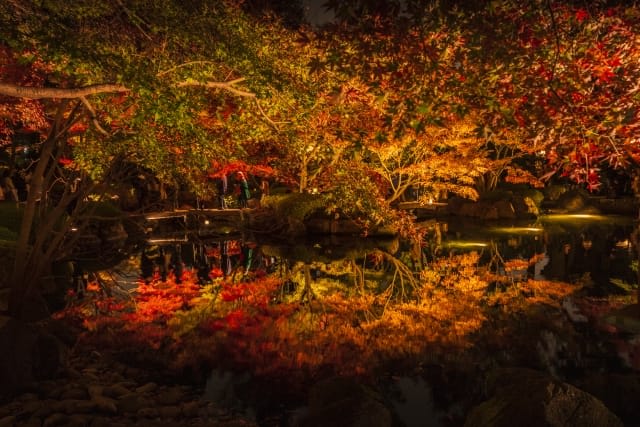
Otaguro Park is a Japanese garden in Suginami Ward, Tokyo, renovated from the estate of a renowned music critic. Large ginkgo trees over 100 years old, zelkova trees, and maple trees are planted here, and in autumn you can enjoy the fall foliage in the garden with its large pond.
At Otaguro Park, from late November to early December each year, the autumn-colored trees in the garden are specially illuminated as one of the autumn fall events 2026. The sight of the autumn leaves softly lit by approximately 100 lights reflecting in the garden's pond is truly fantastical.
Also, what I particularly loved at Otaguro Park was the zelkova tree-lined path near the entrance gate. The sight of 27 large zelkova trees, each about 100 years old, lined up and illuminated by lights was very mystical.
The garden is sized to be explored in about 30 minutes and is recommended for those who want to quietly enjoy autumn leaves and a leisurely walk. Please note that while admission is usually free, there is a 300 yen entrance fee during the illumination period.
<Information>
Address: 3-33-12 Ogikubo, Suginami-ku, Tokyo
Business Hours: 9:00 - 17:00
Closed: Wednesdays
Phone Number: 0333985814
Official Website: https://ogikubo3gardens.jp/ootaguro/
Illumination Period: November 30 - December 8, 2025 (2026 event dates TBD)