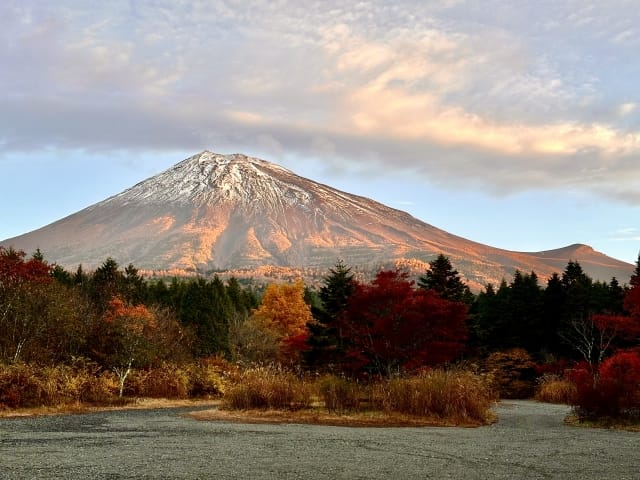
Mt. Fuji Events November 2026: Fujinomiya Matsuri, Autumn Leaves in Kawaguchi Lake & Best Local Festivals
Mount Fuji, a symbol of Japan, attracts countless tourists who visit Japan specifically to witness its majestic presence. However, given Mount Fuji's massive size and the numerous tourist attractions scattered around its vicinity, we've created this guide to help you explore the Mount Fuji area efficiently.
Additionally, Magical Trip, which won the #1 spot for all tours on Tripadvisor in 2024, has recently launched the Mount Fuji tours.

The "Mt. Fuji Full-day Nature Guided Tour with a Private Chartered Car & Guide" offers a stress-free experience exploring the Mount Fuji area, complete with private car transportation from Tokyo.
Even if you have limited time to explore the Mount Fuji region, this tour allows you to visit all the must-see spots with detailed guidance from your tour guide.
If you're interested in efficiently experiencing the essential locations while gaining deep insights from a knowledgeable local guide who knows the area inside and out, we highly recommend joining the "Mt. Fuji Full-day Nature Guided Tour with a Private Chartered Car & Guide."
We hope you'll have a wonderful time experiencing everything Mt.Fuji has to offer by joining a Magical Trip tour!
Introduction
Mt. Fuji, standing at 3,776 meters, is the tallest mountain in Japan. It is also a sacred peak that has been venerated since ancient times as a symbol of the Japanese spirit.
In the towns of Shizuoka and Yamanashi prefectures nestled at the foot of Mt. Fuji, two major events take place in November. In Fujinomiya City, Shizuoka Prefecture, the Fujinomiya Festival is held, while in Fujiyoshida City, Yamanashi Prefecture, the Fuji Kawaguchiko Autumn Leaves Festival takes place. The Mt. Fuji area is rich with events throughout the year — whether you are planning an autumn visit, there is always something spectacular to experience.
This article takes a close look at the highlights of these two major festivals around Mt. Fuji in November. It also introduces other traditional events and autumn foliage spots in the area during the same season.
If you are planning to visit the Mt. Fuji area in November, be sure to check the details below and make your way to these events.
Fujinomiya Festival: A Traditional Festival Registered as an Intangible Cultural Property of Shizuoka Prefecture (Fujinomiya City)
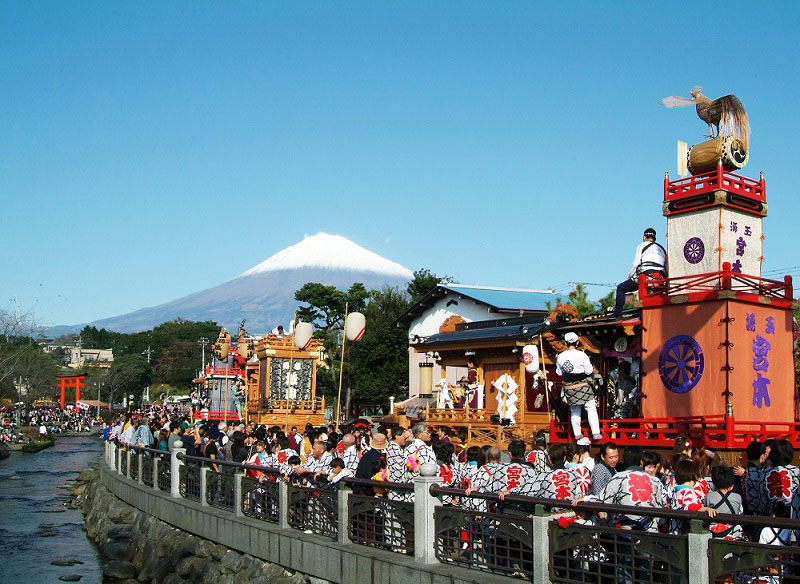
The Fujinomiya Festival is an autumn grand festival held at Fujisan Hongu Sengen Taisha, a shrine located at the foot of Mt. Fuji.
Fujisan Hongu Sengen Taisha is situated in Fujinomiya City, Shizuoka Prefecture, and is a historic shrine dedicated to Mt. Fuji, which has long been revered as a mountain where Shinto deities reside.
The Fujinomiya Festival is a vibrant celebration held over three days each November, with around 20 magnificent floats parading through the streets of the local town. The folk music performed at the festival has been designated as an Intangible Cultural Property of Shizuoka Prefecture in recognition of its high historical and cultural value.
- Date: Typically November 3–5
- Access: 10-minute walk from Nishi-Fujinomiya Station on the JR Minobu Line
- Admission: Free
- Website: https://akimiya.com/r7fmyotei
The "Floats" — The Festival's Star Attraction with Overwhelming Presence
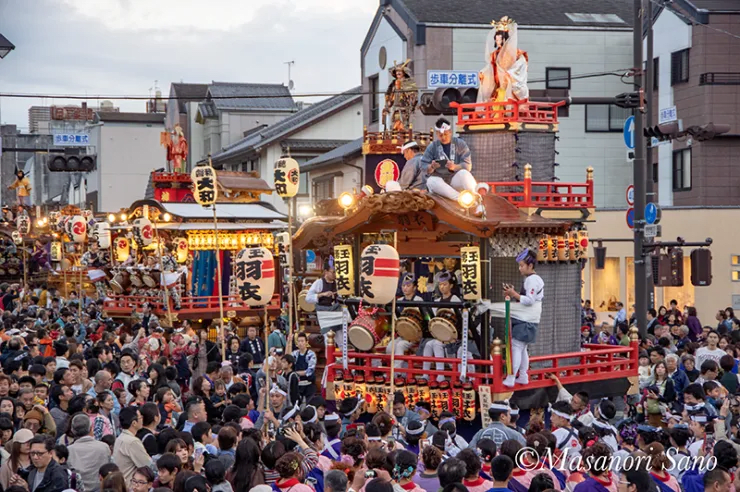
The biggest highlight of the Fujinomiya Festival is its spectacular and lavishly crafted floats. In the neighborhoods surrounding Sengen Taisha, each district brings out its own float and parades it through the streets. Around 20 floats built in the traditional Japanese style make their appearance from different areas across the city.
The floats are large enough to carry ornamental structures and figures, and can even accommodate around ten people at a time. They are adorned with intricate carvings and numerous lanterns that glow beautifully after dark. Watching these magnificent floats slowly move through the streets is a breathtaking sight in itself.
Each float carries performers playing traditional Japanese instruments such as taiko drums and transverse flutes. The festival music they perform, known as Fujinomiya Hayashi, has been passed down through this region since the 19th century.
Recognized for its outstanding historical value, it has been designated as an Intangible Cultural Property of Shizuoka Prefecture and is performed with great pride as a defining symbol of the Fujinomiya Festival.
Bold Competitions and Dances Performed with Each Town's Reputation on the Line
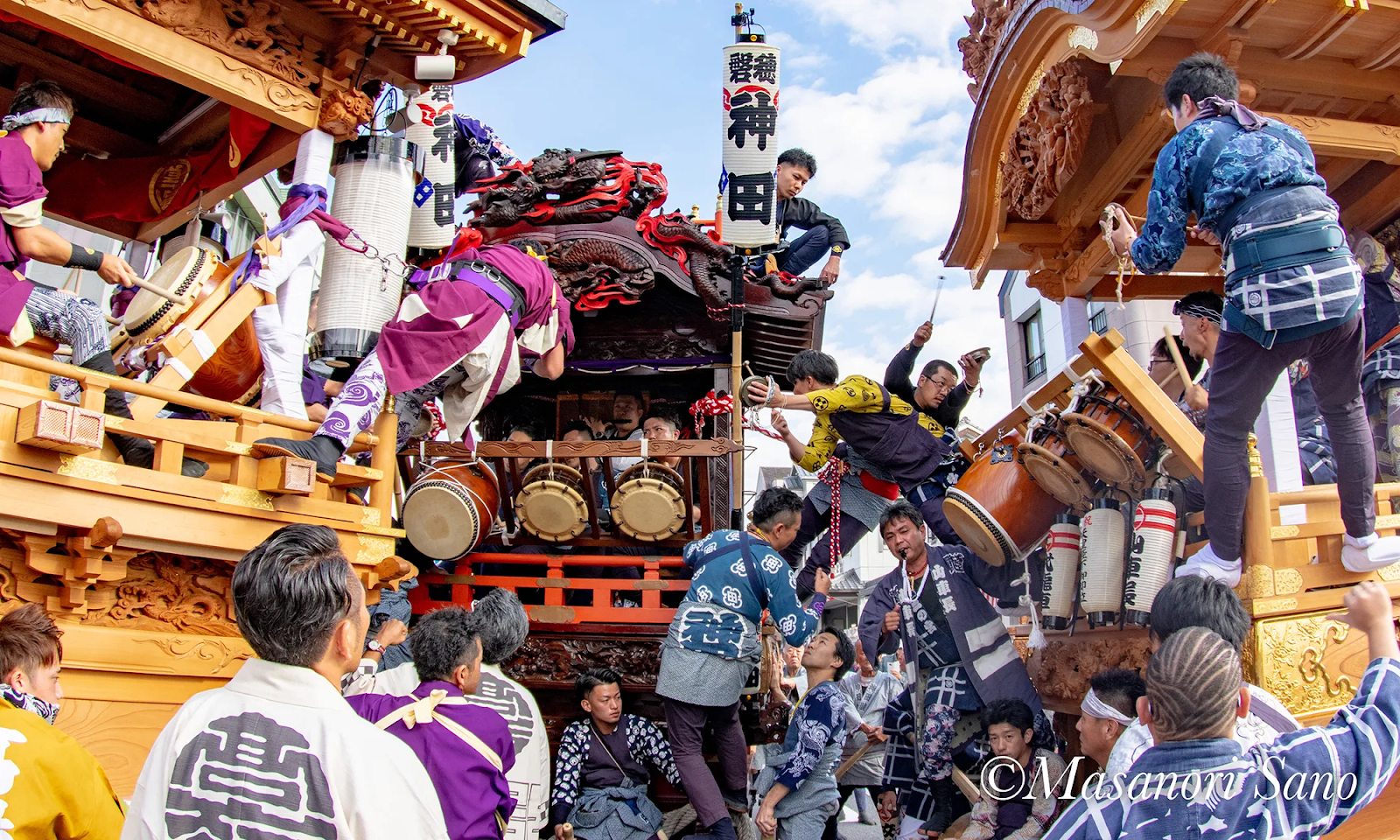
The floats engage in a ritual competition known as "seriai" on the streets of the city. As floats draw close to one another, the performers call out and play their festival music — known as "ohayashi" — in direct competition with each other.
Seriai is a ritual that tests energy, musical power, and unity, and each town takes part with its full pride on the line.
Watching a seriai up close, you can see the performers' intensely focused expressions as they play their ohayashi with full force, neither side willing to yield an inch. Seeing them compete with genuine pride while showing mutual respect was enough to stir something deep within me as a spectator.
On the evening of the second day, a communal dance known as "kyodo odori" is also performed around the floats, with participants dressed in traditional kimono.
Floats That Grow Even More Beautiful Under the Night Illuminations
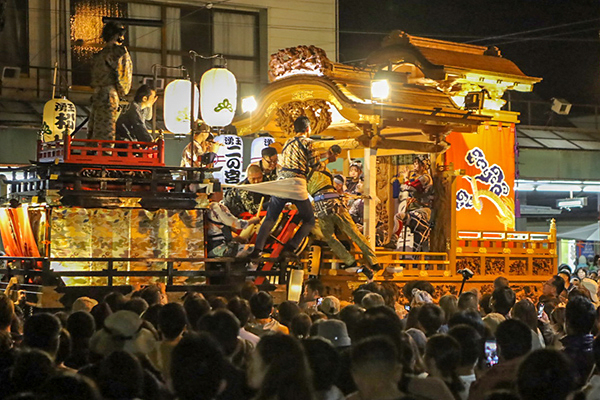
When night falls at the Fujinomiya Festival, the many lanterns and lights adorning the floats are illuminated, making them even more breathtaking than during the day.
On the evening of the second day, all 20 floats gather together for a large-scale seriai. This grand and spirited competition among 20 illuminated floats is the undisputed highlight of the entire festival.
As the ohayashi begins to play simultaneously and the competition gets underway, both the performers on the floats and the spectators are gradually swept up in the excitement, until the atmosphere reaches its absolute peak. The sound of ohayashi playing from 20 floats at once fills the air with tremendous volume, and simply being present is enough to feel the energy surge through you.
The night, when the floats are lit up and their magnificent forms emerge from the darkness, is the perfect moment for photography. Getting close to the floats to capture the serious expressions of the competing performers and the raw heat of the festival in a photograph is something that comes highly recommended.
Fuji Kawaguchiko Autumn Leaves Festival: Breathtakingly Beautiful Foliage That Has Captivated the Entire Nation (Fujiyoshida City)
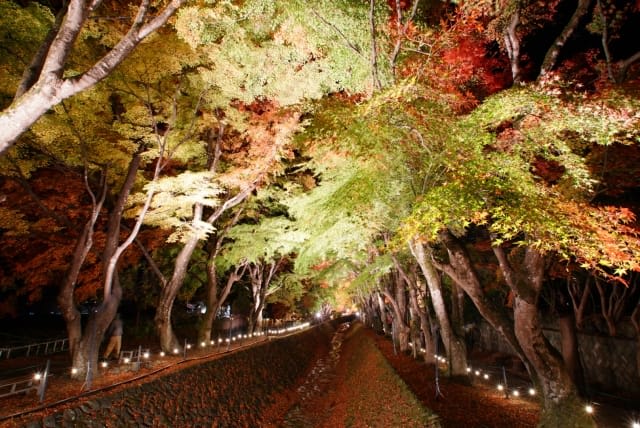
The Fuji Kawaguchiko Autumn Leaves Festival, where you can enjoy stunning autumn foliage, is held in Fujiyoshida City, Yamanashi Prefecture, at the foot of Mt. Fuji.
Along the shores of Lake Kawaguchi in Fujiyoshida City, around 500 trees burst into color simultaneously every autumn. It is one of Japan's most beloved spots for viewing autumn leaves, offering breathtakingly beautiful scenery with the lake and Mt. Fuji as a backdrop.
The Fuji Kawaguchiko Autumn Leaves Festival is held for one month every November, when the foliage along the shores of Lake Kawaguchi reaches its peak. Throughout the event period, beautiful nighttime illuminations are held every evening to further enhance the autumn leaf experience, alongside a wide variety of food and craft stalls.
<Information>
- Dates: Typically November 1–30, 9:00–19:00 (illuminations until 21:30)
- Access: A short walk from Kawaguchiko Station on the Fujikyu Railway Line
- Admission: Free
- Website: https://kitakawaguchiko.co.jp/archives/introduce/post31
What Is the Koyo Kairo (Autumn Leaf Corridor)?
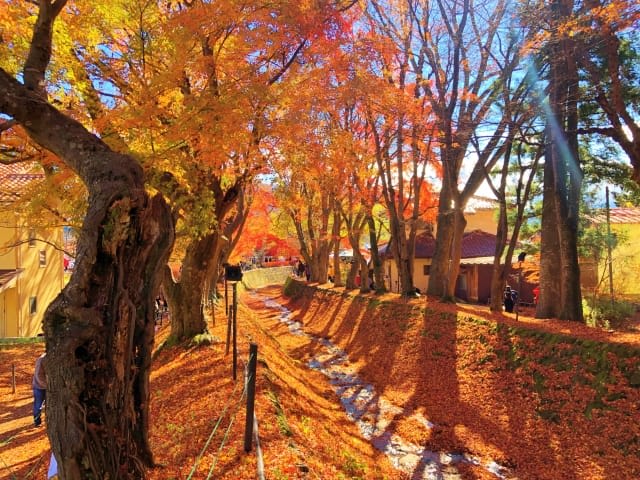
The main venue of the Fuji Kawaguchiko Autumn Leaves Festival is the Koyo Kairo (Autumn Leaf Corridor) on the northern shore of Lake Kawaguchi.
The Koyo Kairo is a spot where approximately 70 old maple trees line the banks of the Nashikawa River, which flows near Lake Kawaguchi. Some of these trees are over 100 years old, and walking through here during the autumn season offers a breathtaking view with the entire field of vision blanketed in vibrant fall colors.
The foliage reaches its peak during the festival period from early to late November. When I visited in late November, the surface of the river and the riverbanks were covered in fallen leaves, and I was treated to a scene that felt like being enveloped in crimson foliage from overhead to underfoot.
During the event period, many food stalls as well as stalls selling gifts and crafts are also set up around the Koyo Kairo.
The Illuminated Koyo Kairo at Night — A Scene So Beautiful It Has Become Famous
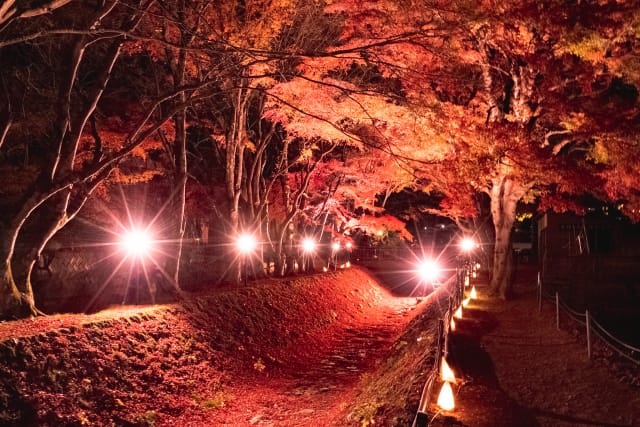
The Koyo Kairo is illuminated every evening from around 4:30 p.m. during the event period. The fantastical sight of the autumn leaves bathed in light has been described as "too beautiful to believe," drawing visitors from all over Japan and the world every year, making it an enormously popular destination.
As night falls and the illuminations begin, the red of the autumn leaves appears even more vivid, and you will be struck by the almost painting-like hues and scenery. When I caught a glimpse of Mt. Fuji glowing in the darkness beyond the illuminated leaves, I was deeply moved by the mystical sight.
Since temperatures drop considerably at night, those wishing to enjoy the evening illuminations should make sure to bring warm clothing. I dressed warmly in a thick coat and scarf, and spent a thoroughly satisfying evening enjoying the night foliage to my heart's content.
Countless Stalls Offering the Best of Yamanashi Cuisine
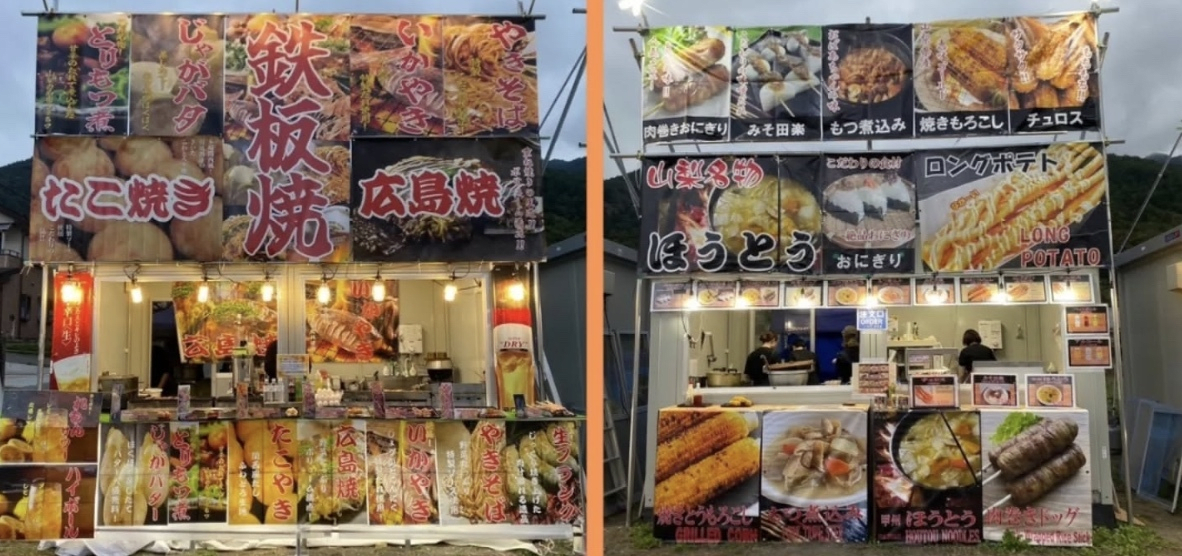
At the Fuji Kawaguchiko Autumn Leaves Festival, numerous food stalls are set up mainly around the Koyo Kairo, where you can enjoy traditional Japanese snacks and the finest local cuisine.
Near the "Music Forest Museum," just a few minutes' walk from the Koyo Kairo, a stall village is set up. Here, a variety of food stalls gather, including those serving "hoto," a beloved local specialty of Yamanashi Prefecture.
Hoto is a regional dish made by simmering flat wheat noodles with miso and local vegetables. The piping hot miso soup warms you from the inside out, making it a perfect meal for November.
Nearby, a craft market is also set up, selling woodwork, silver accessories, glassware, and other items. Local crafts are also on offer, so be sure to check it out if you are looking for souvenirs.
For Efficiently Visiting Only the Must-See Sights Around Mt. Fuji, a Hire Car Tour Is the Best Option!
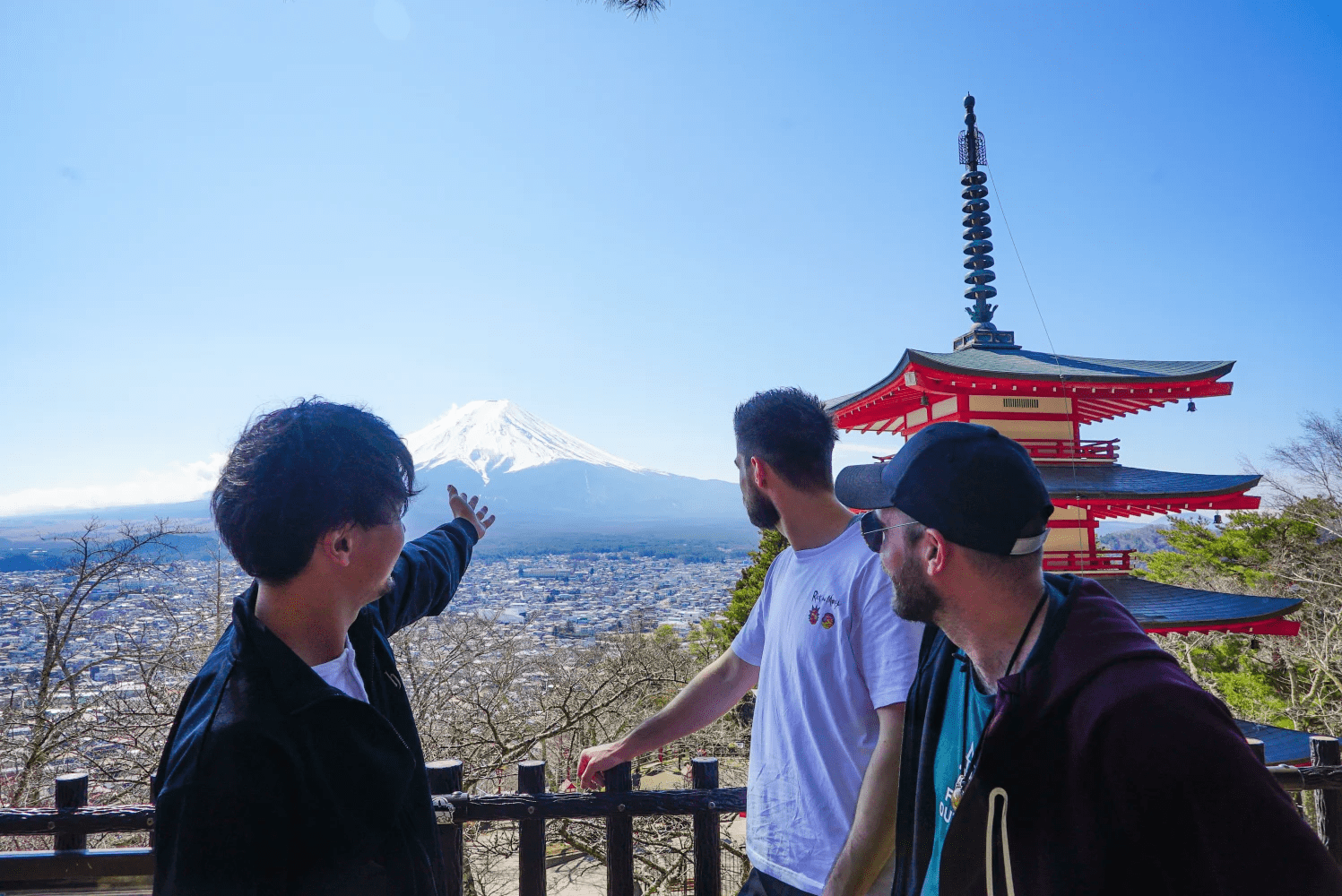
The area around Mt. Fuji is home to vast natural landscapes, towns with fascinating culture, and countless highlights worth seeing. Whether you are heading out for the spectacular autumn season, there is no shortage of ways to explore this iconic region.
For those who want to efficiently enjoy only the must-see spots around Mt. Fuji, the Mt. Fuji Full-day Day Trip Tour from Tokyo with a Private Car & Guide is highly recommended.
This tour departs from Tokyo in a dedicated hire car and takes you to the Mt. Fuji area in comfort. From there, you will efficiently visit popular spots by hire car, including the unmissable Arakura Sengen Shrine, as well as Oshino Hakkai and the Fifth Station of Mt. Fuji.
As additional experiences, you can also enjoy a harvest activity at a local wasabi farm and sample local cuisine. Make the most of a single day by packing in the very best of the Mt. Fuji area with a dedicated hire car.
<Information>
- Meeting point: Hotel pickup available, primarily within the 23 wards of Tokyo
- Tour area: Around Mt. Fuji
- Start time: 8:00
Events to Enjoy Around Mt. Fuji (Fujinomiya) in November 2026
Nobunaga-ko Koyo Matsuri (Lord Nobunaga Autumn Leaves Festival)
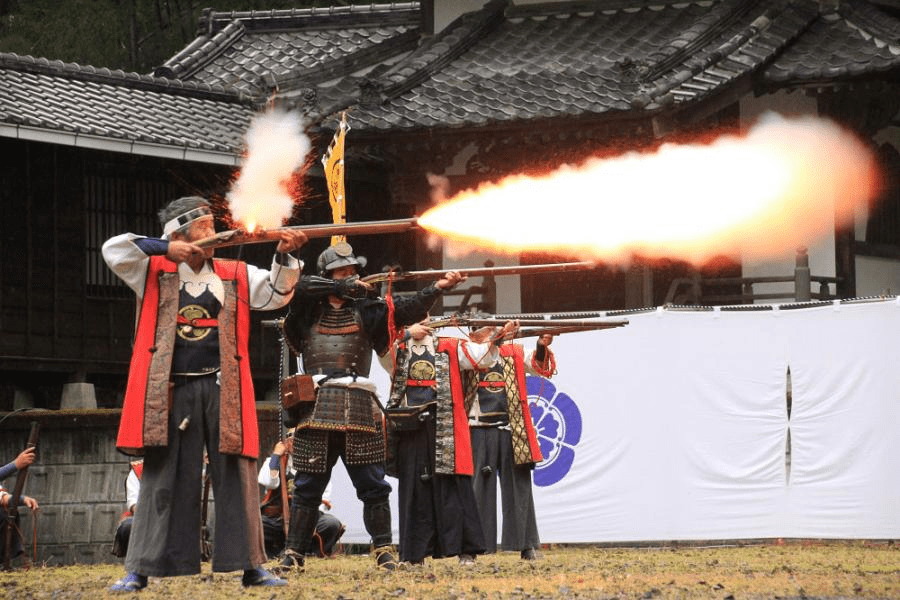
The Nobunaga-ko Koyo Matsuri is a festival honoring Oda Nobunaga, one of Japan's most famous samurai.
Oda Nobunaga was one of Japan's most celebrated samurai, active during the 16th century. There is a legend that Nobunaga's remains were secretly buried beneath a 500-year-old holly tree at Nishiyama Honmonji Temple in Fujinomiya City.
The Nobunaga-ko Koyo Matsuri is a festival inspired by this legend. Food stalls and local craft shops are set up in the temple grounds, and various performances related to samurai culture are held, including sword-fighting demonstrations and traditional dance.
The highlight of the event is a matchlock gun demonstration performed by people dressed in samurai attire. It is a thrilling performance with the thunderous sound of gunfire echoing through the air.
You can also enjoy the sight of a large ginkgo tree displaying beautiful autumn colors in the temple grounds. If you have an interest in samurai culture, be sure to enjoy this festival celebrating Oda Nobunaga, one of Japan's most iconic samurai figures.
<Information>
- Dates: November 9, 2025 (2026 date TBD)
- Access: 15-minute walk from the "Nishiyama Kuromonguchi" bus stop on the Miya Bus
- Admission: Free
- Website: https://www.city.fujinomiya.lg.jp/1025200000/event/p000049.html
Yuno-no-Sato Jomon Festival
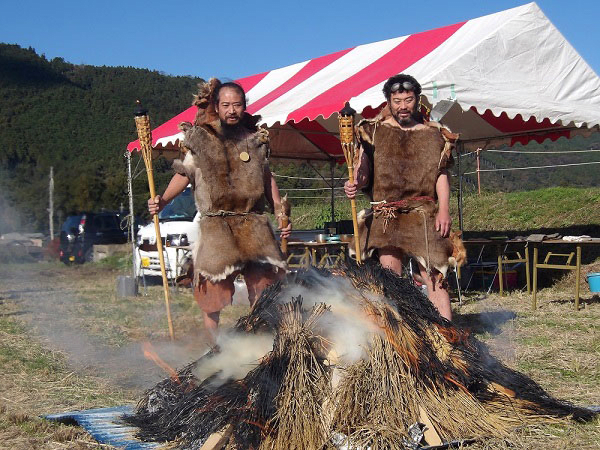
Shibakawa Biyori — The Yuno-no-Sato Jomon Festival is a festival held at the Oshikakubo Site, a Jomon-period archaeological site located in Fujinomiya City.
The Oshikakubo Site is a remnant of a settlement from approximately 13,000 years ago. The period from around 16,000 to 2,300 years ago is known in Japan as the "Jomon Period," during which a unique culture considered to be the foundation of modern Japanese culture is believed to have flourished.
At this festival, visitors can take part in events and stage performances that offer hands-on experiences with Jomon culture, such as pottery making. Local vegetables and gourmet foods are also available for purchase.
One of the most iconic elements of Jomon culture is "Jomon pottery," characterized by cord-pattern designs. At the Jomon Festival, participants can try making Jomon-style pottery from clay under the guidance of a professional ceramicist. In addition, there are many unique experiences that bring ancient life to life, such as stone tool making and fire-starting activities.
Whether you have a love of history or an interest in Japan's ancient civilizations, this is a festival well worth dropping by.
- Date: November 22, 2025 (2026 date TBD)
- Access: 6-minute walk from the Fujikyu Shizuoka Bus "Higashimura" bus stop
- Admission: Free
- Website: https://www.city.fujinomiya.lg.jp/1025200000/event/p000052.html
Shiraito Falls Illumination
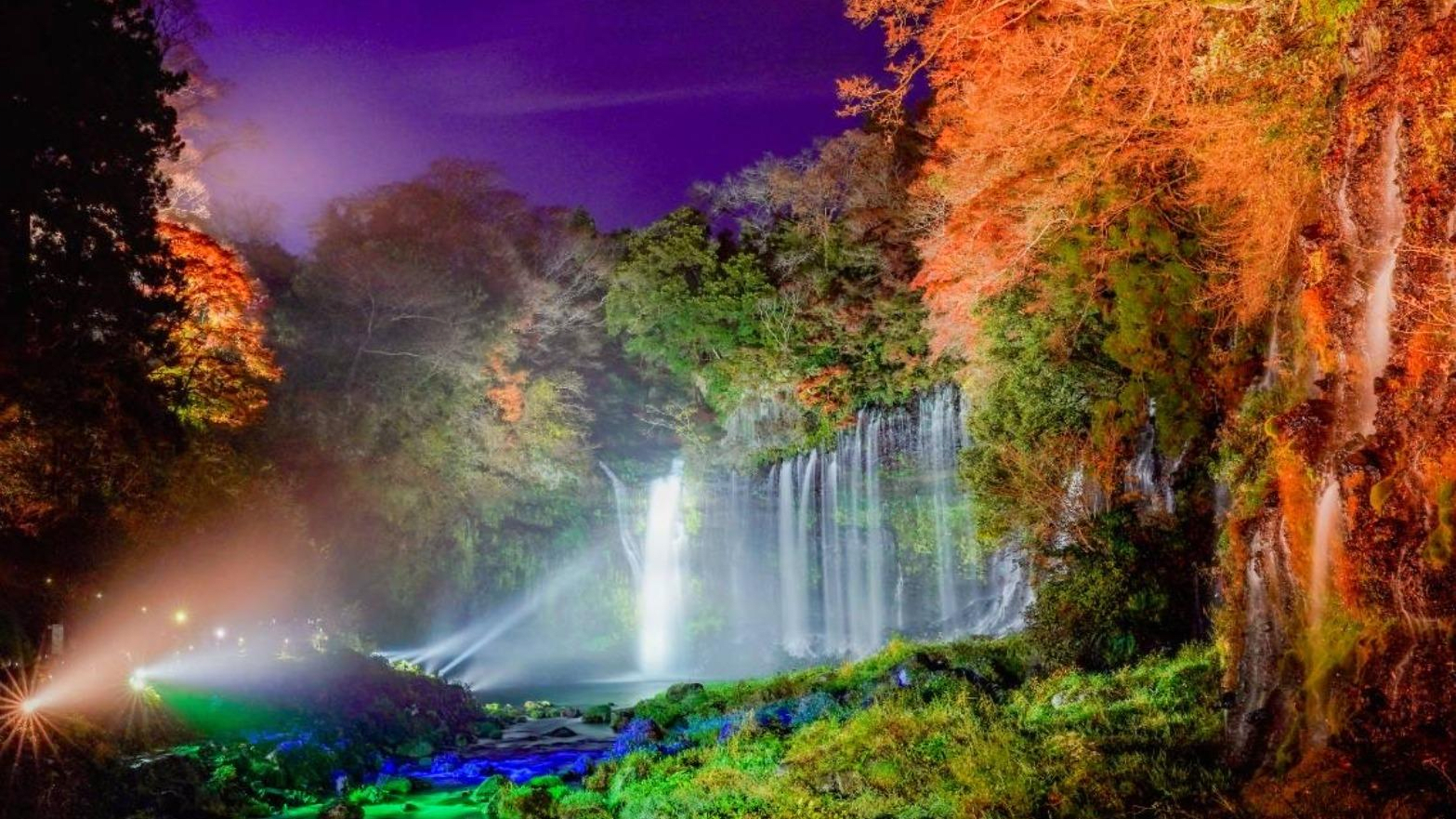
Shiraito Falls is a magnificent waterfall where snowmelt from Mt. Fuji cascades down a sheer cliff face 20 meters high and 150 meters wide, and is known as one of the finest scenic spots at the foot of Mt. Fuji. For two nights each November, a special illumination is held exclusively during this season.
The name "Shiraito Falls" means "white thread waterfall" in Japanese. The falls earned this name because countless streams of water, large and small, flow down the curved cliff face and resemble delicate threads.
When illuminated at night, the cascading streams reflect the light and shimmer brilliantly, appearing just like beautiful threads of silk. The combination with the autumn foliage surrounding the cliff creates a breathtaking scene of remarkable beauty.
From nearby observation decks, there are spots where both the falls and Mt. Fuji can be seen together in perfect view. Many visitors come with cameras in hand to capture photographs that are unique to this season — the falls, the autumn leaves, and Mt. Fuji all in one frame.
If you are looking to capture stunning nature photographs around the Mt. Fuji area, be sure to visit the Shiraito Falls Illumination.
- Date: November 21–22, 2025 (2026 date TBD)
- Access: 5-minute walk from the Fujikyu Shizuoka Bus "Shiraito Falls Tourist Information Center" stop
- Admission: Free
- Website: https://fujinomiya.gr.jp/xo_event/shiraitonotaki_lightup2025/
Mt. Fuji Event November 2026 and Other Events to Enjoy Around Mt. Fuji (Fujiyoshida)
Fuji Ebisu-ko Festival
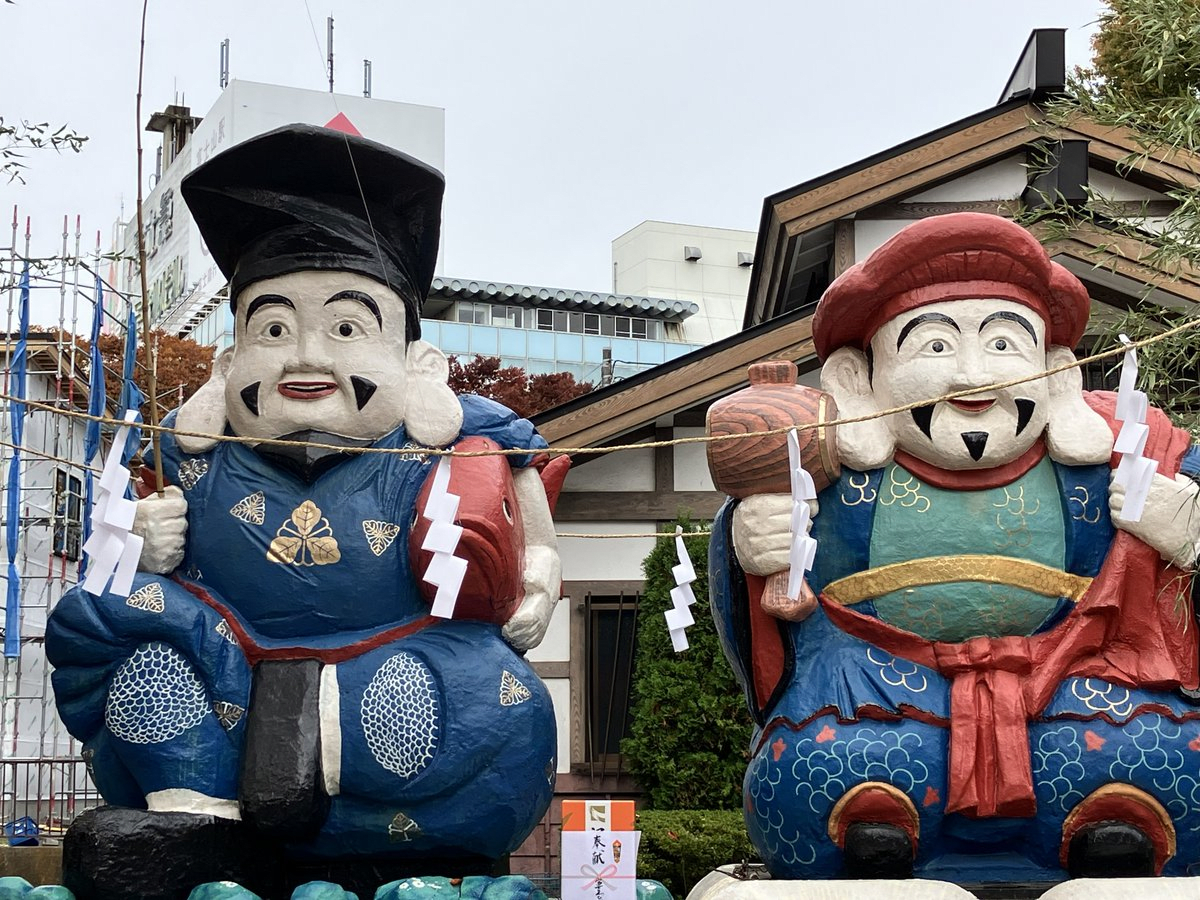
The Fuji Ebisu-ko Festival is an annual autumn festival held in the local shopping district. A giant Ebisu statue is erected in the Fuji Ebisu Shopping Association in Fujiyoshida City, and the event features a wide range of food stalls from local restaurants as well as game stalls.
The Fuji Ebisu shopping district is known as the town closest to Mt. Fuji, and its charm lies in its retro atmosphere with rows of old-fashioned shops. Kintorii Citizens Park, the main venue for the festival, is located just a 5-minute walk from Fujisan Station on the Fujikyu Railway Line, making it very easy to access.
When I visited, I enjoyed the laid-back atmosphere of a local community festival — snacking on light refreshments and playing games in the park decorated with the large Ebisu statue. Ebisu is a deity worshipped in Japan as a bringer of good fortune.
Just next to the park stands the "Kintorii," a famous scenic spot where the massive form of Mt. Fuji can be seen framed through a large torii gate. Taking photos here is highly recommended.
- Date: November 9, 2025 (2026 date TBD)
- Access: 5-minute walk from Fujikyu Railway "Fujisan Station"
- Admission: Free
- Website: https://fujiyoshida.net/event/709
FUJI TEXTILE WEEK

FUJI TEXTILE WEEK is a textile art festival held every November in Fujiyoshida City. Fujiyoshida is a traditional center of textile production, with an industry history spanning over 1,000 years.
During the event period, numerous exhibitions themed around fabric are held in shops, homes, and former factory buildings throughout the city.
Most of the exhibitions take place in the Shimoyoshida district around Shimoyoshida Station on the Fujikyu Railway Line, and the venues are concentrated enough that nearly all exhibitions can be toured on foot. Some venues are renovated traditional Japanese folk houses, where textile artworks featuring embroidery and drawing are displayed.
What moved me most during my visit last year was an artwork displayed in an old private home that once served as a kimono fabric shop. A large piece of fabric had been decorated with a felting needle to create patterns that expressed a sense of devotion and reverence toward Mt. Fuji in a deeply mystical way.
Every work is highly distinctive and compelling, each expressing a longing or awe toward Mt. Fuji. If you are an art lover or someone drawn to the mystical nature of Mt. Fuji, this is an event you are sure to enjoy.
- Date: November 22 – December 14, 2025, 10:00–17:00 (2026 date TBD)
- Access: 5-minute walk from Fujikyu Railway "Shimoyoshida Station"
- Admission: General ¥2,500 / Students ¥2,000
- Website: https://fujitextileweek.com/en/outline/
The Author Also Recommends a Hakone Hire Car Tour to Enjoy Nature and Tradition
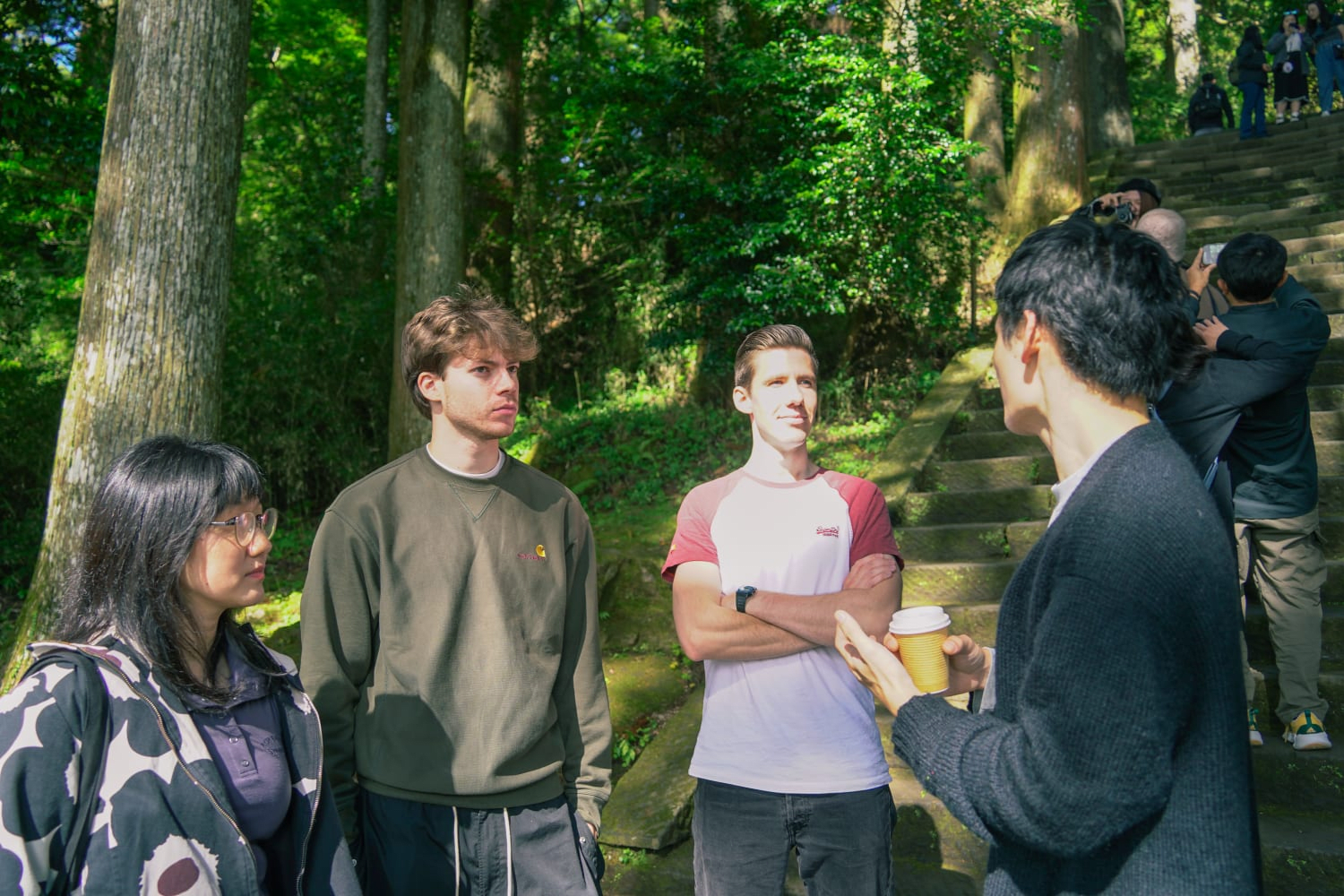
If you are interested in the Mt. Fuji area, exploring the neighboring Hakone area is another excellent option to consider.
The Hakone Day Trip Tour from Tokyo with a Private Car & Guide is a hire car tour that lets you enjoy the nature and traditions of Hakone in just one day. The standard plan departs from Tokyo in a private vehicle with a dedicated guide and heads to the Hakone area.
The tour takes you to the historic Hakone Shrine on the shores of Lake Ashi, where you can also enjoy a cruise on the lake. You will then take in the dramatic, smoke-filled spectacle of Owakudani, where volcanic activity is still ongoing, before visiting popular art museums, gourmet spots, and hot spring facilities throughout Hakone.
Hakone is a region brimming with grand natural scenery that rivals even the Mt. Fuji area, and offers its own unique traditional culture to explore. Take advantage of this comfortable and efficient hire car tour to experience all that Hakone has to offer in a short amount of time.
- Meeting Point: Pick-up available at hotels within the Tokyo 23 wards and surrounding areas
- Tour Area: Throughout Hakone
- Start Time: 8:00