Hakone Events November 2026: Daimyo Gyoretsu Parade, Fall Foliage Spots & Local Tips
Throughout Japan, including Hakone, Magical Trip offers guided tours where you can explore local history, traditions, and food culture in depth with local guides.(Hakone Full Day Chartered Private Tour: Art & Nature)
Our most popular tour "Tokyo Bar Hopping Night Tour in Shinjuku" was ranked as Tripadvisor's #1 tour in 2024.

For tourists visiting Tokyo, why not try a private car tour that lets you efficiently visit multiple attractions in a single day? With expert guides who know all the best spots, you can fully experience the region's traditions and rich food culture even in just one day.
These tours include hotel pickup and drop-off service, allowing you to visit attractions stress-free and efficiently. If you're interested in nature-rich destinations like Hakone and want to explore Japan's history and traditions while avoiding crowds, these tours are perfect for you.
・Hakone Full Day Chartered Private Tour: Art & Nature
・Mt. Fuji Full-day Nature Guided Tour with a Private Chartered Car & Guide
Introduction
Hakone, located near Tokyo, is a popular resort area known for its hot springs. It is also a land with a rich history, home to Hakone Shrine, which was founded in the 8th century and has long been revered as a sacred site.
In Hakone, a mountainous area, November brings a beautiful season when the mountains all burst into autumn foliage at once. In addition, the beloved annual event "Hakone Daimyo Procession," which draws enormous crowds of spectators, also takes place during this time.
This article introduces the highlights and ways to enjoy the Hakone Daimyo Procession, along with traditional events and autumn foliage spots to explore in Hakone in November.
Hakone is a destination packed with experiences throughout the year — whether you are already planning to attend Hakone Events in autumn season, there is always something worth discovering. If you are planning a sightseeing trip near Tokyo in November, please use this article as your guide.
In November 2026, Hakone Hosts the Historic "Hakone Daimyo Procession"
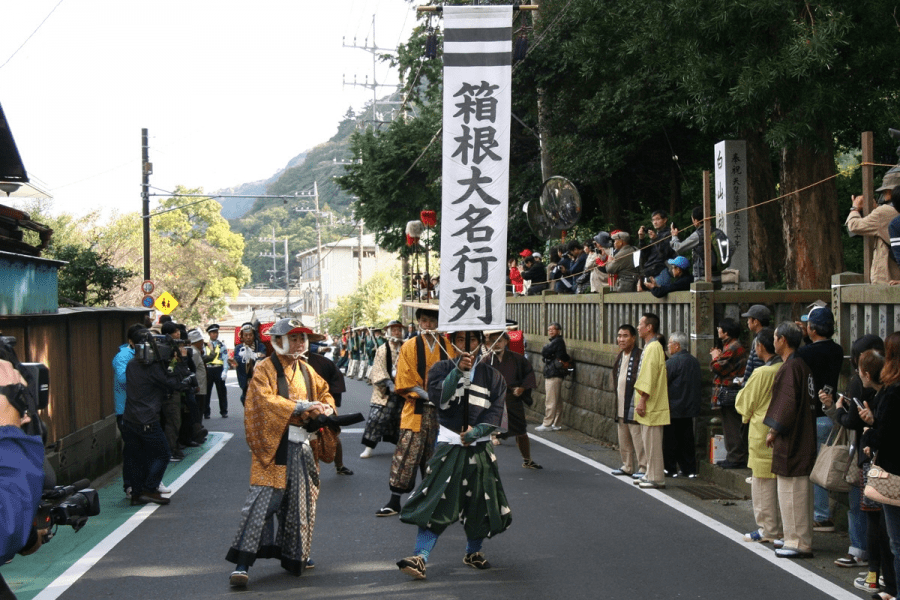
In November 2026, the historic event "Hakone Daimyo Procession" will be held in Hakone.
The Hakone Daimyo Procession is a popular annual event held in Hakone every November, recreating a samurai parade from over 150 years ago. People dressed in costumes from the era when samurai were active march in procession, presenting a variety of performances including songs, dances, and martial demonstrations using firearms.
It is a must-see event for travelers, offering a chance to experience the history of Japan set against the backdrop of Hakone's stunning autumn foliage.
- Date: November 23
- Access: (Parade starting point: Hotel Nanpuso) 19-minute walk from Hakone-Yumoto Station / (Parade ending point: Yumoto Fujiya Hotel) 1-minute walk from Hakone-Yumoto Station [Hakone direction bus stop]
- Admission: Free
- Website: https://www.hakone.or.jp/6321
What Is the Hakone Daimyo Procession?
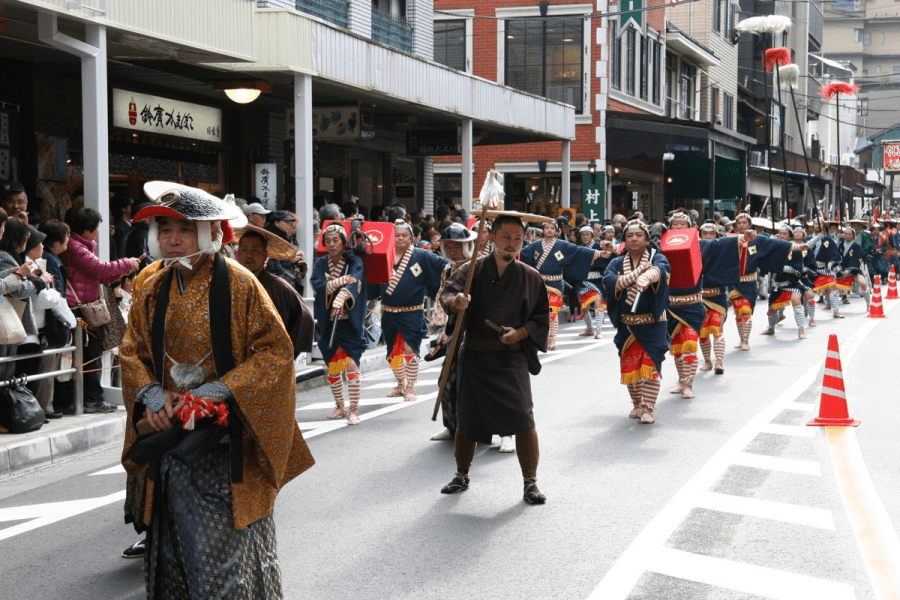
The Hakone Daimyo Procession is a recreation of the parade of the "Odawara Domain," which ruled Hakone during the Edo period from the 17th century to the mid-19th century. It is held every year on the public holiday of November 3rd and has been continued in Hakone for over 90 years.
Between 100 and 200 people dressed in Edo period costumes walk through the streets of the Hakone-machi hot spring district, faithfully recreating the original parade from the costumes down to the movements, with participants marching while calling out distinctive chants.
Furthermore, folk songs passed down through Hakone are sung to entertain spectators, and performances using spears and firearms are also presented.
Hakone, being a mountainous area, enters a beautiful season in November when the mountains all turn to vivid autumn colors at once. It is an event where you can enjoy emotionally rich historical scenery together with breathtaking autumn foliage, and many spectators visit every year.
History of the Hakone Daimyo Procession
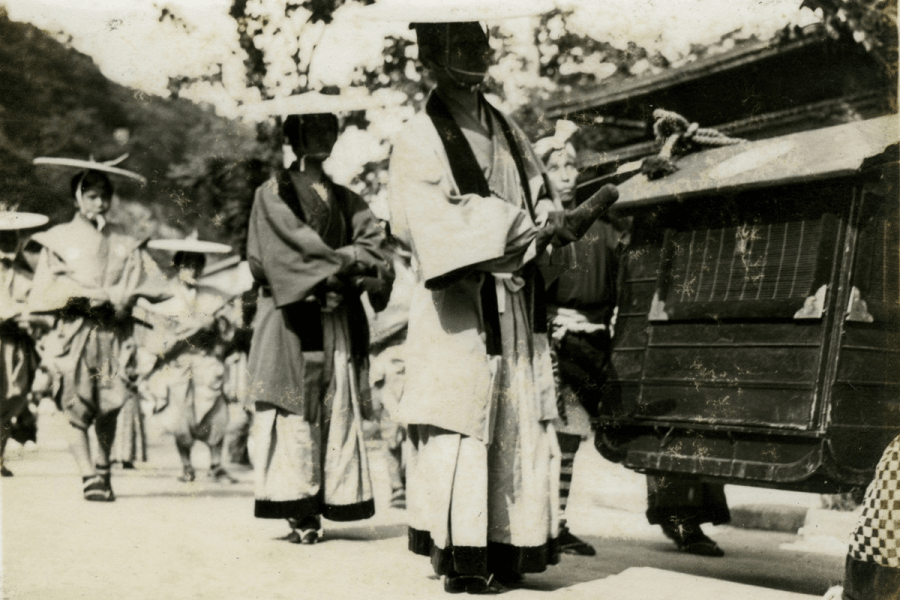
During the Edo period, spanning from the 17th century to the mid-19th century, samurai followed a system known as the Sankin-kotai system. At the time, powerful samurai clans who governed domains across the country were called "Daimyo."
Under the Sankin-kotai system, Daimyo had the custom of traveling from their domains throughout the country to Edo (present-day Tokyo), where the central government was located, parading with their full retinues.
Hakone was a major post town at the time, and the Sankin-kotai parade performed by the Odawara Domain that ruled Hakone was a remarkably grand affair. The Hakone Daimyo Procession is a recreation of these Sankin-kotai Daimyo processions.
In order to pass on the history of Hakone to future generations, local people planned and launched the recreation parade in the 1930s. It has continued for 90 years to this day, entertaining the many tourists who visit Hakone, a celebrated hot spring resort destination.
Local Insider Tips! Highlights and How to Enjoy the Hakone Daimyo Procession
The Daimyo Procession Featuring the Yakkoburi Tradition Passed Down Through the Generations
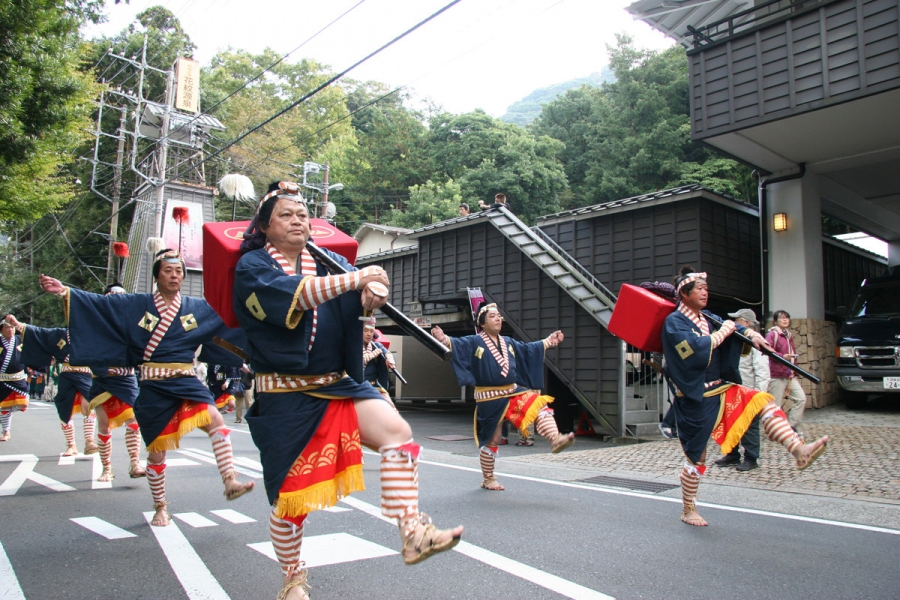
One of the headline performances at the Hakone Daimyo Procession is a spear performance called "Yakkoburi."
Yakkoburi is a performance in which performers toss back and forth, while marching, a long spear measuring up to 3 meters in length with a fur decoration at the tip. This movement was actually practiced in samurai processions prior to the Edo period, using spears and other important weapons of the warrior class.
The highly skilled Yakkoburi has been faithfully passed down through the generations, and every year a magnificent performance is presented at the Hakone Daimyo Procession.
When I attended last year, each time the people wearing the traditional short coat called Happi lightly tossed the long spears adorned with red fur decorations while walking, loud cheers erupted from the crowd.
It is a performance where you can feel the tradition of samurai culture and its distinctive grandeur. When you spot the procession, make sure to watch Yakkoburi first.
Thrilling! The Matchlock Rifle Martial Arts Demonstration by the Hojo Tepposhu
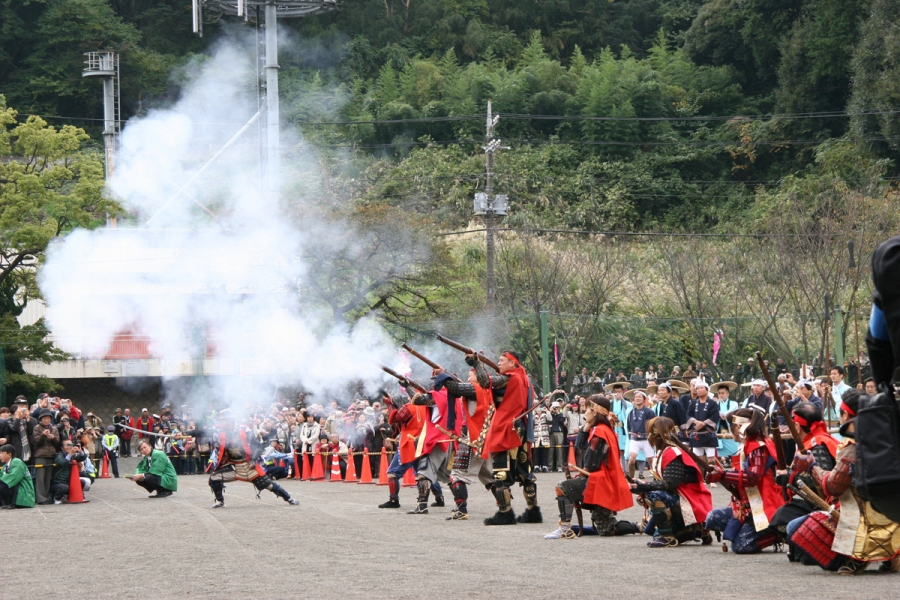
Another headline performance at the Hakone Daimyo Procession is the matchlock rifle martial arts demonstration.
The lord of the Odawara Domain, which once ruled the Hakone area, belonged to the Hojo clan — a famous samurai family that left a lasting mark on Japanese history. This performance recreates the rifle corps of the Hojo clan, performed in the armor and battle surcoat called Jinbaori that samurai of the time wore.
The rifle corps fires matchlock rifles — which arrived in Japan from the West in the 16th century and were actually used in battle by samurai — into the sky. When you watch it in person, what strikes you first and foremost is just how loud the gunshots are, and the impact is truly extraordinary.
I personally enjoy watching the dignified armor and battle dress of the samurai as well, and every year I find myself deeply excited, as though I were witnessing the heroic samurai of several hundred years ago in the flesh.
Every year, I watch from Katakura Bridge in the Hakone-Yumoto hot spring district. Many hot spring inns are clustered nearby, making it easy to access, and it is a recommended spot where you can watch in comfort.
An Original Women's Daimyo Procession (Parade)
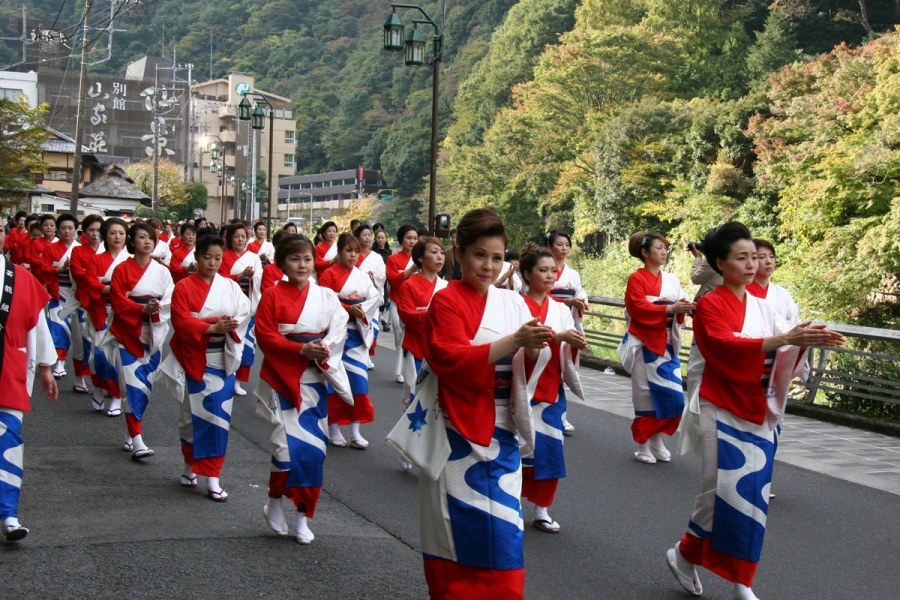
The colorful women's parade at the Hakone Daimyo Procession is another crowd favorite. Historically, women did not participate in Daimyo processions, but the Hakone Daimyo Procession features an elegant women's parade especially created to entertain tourists.
The women parade dressed as "Koshimoto" — the ladies-in-waiting who served the nobility during the Edo period. Be sure to pay attention to the traditional and refined kimono styling of the Koshimoto, as well as their distinctive upswept hairstyles.
At the head of the Koshimoto group walks a woman dressed as an Edo period princess. Celebrities such as Japanese actresses sometimes make special appearances, showcasing gorgeous kimono outfits.
Furthermore, a parade of geisha who are active in Hakone on a daily basis is also held. They deliver an elegant performance, dancing traditional Japanese dance while wearing beautiful kimono.
Overview and Access for the Hakone Daimyo Procession
- Date: November 23
- Access: (Parade starting point: Hotel Nanpuso) 19-minute walk from Hakone-Yumoto Station / (Parade ending point: Yumoto Fujiya Hotel) 1-minute walk from Hakone-Yumoto Station [Hakone direction bus stop]
- Admission: Free
- Website: https://www.hakone.or.jp/6321
If You Want to Explore All of Hakone's Highlights in One Day, a Private Car Tour is Also Recommended
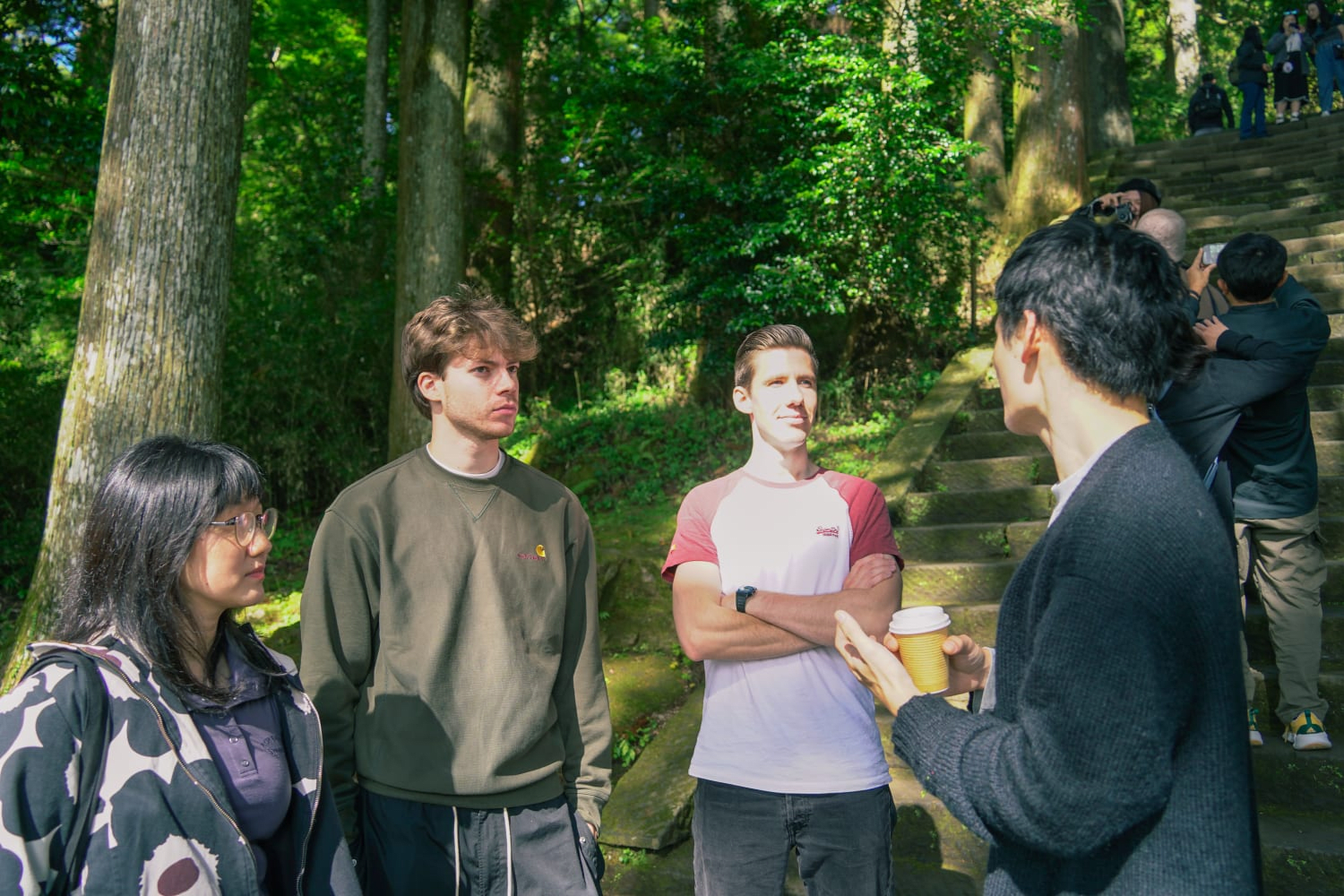
For those who want to pack in all of Hakone's highlights in a short amount of time, consider a day trip by private car tour.
The Hakone Day Trip Tour from Tokyo with a Private Car & Guide is a hired car tour that departs directly from your hotel in Tokyo.
Traveling in a private car, you can visit popular spots scattered across the vast area — including Hakone Shrine, Owakudani, and art museums — and efficiently enjoy Hakone's beautiful nature, culture, and cuisine all in one day. Whether you are planning around Hakone and visiting in the autumn months, this tour is a flexible and rewarding way to see the region.
If you use this tour in November, you can also enjoy the beautiful autumn foliage at Lake Ashi and Owakudani, which are introduced later in this article. At Owakudani, ride the ropeway to take in the spectacular views and try the local specialty "Kuro-tamago" (black eggs).
Driving through autumn-colored Hakone is breathtakingly beautiful, and the travel time itself is sure to become a cherished memory of your trip.
- Meeting point: Pickup available at hotels mainly within the 23 wards of Tokyo
- Tour area: Throughout Hakone
- Start time: 8:00
Other Traditional Events to Enjoy in Hakone in November 2026
Niiname-sai (Harvest Festival)
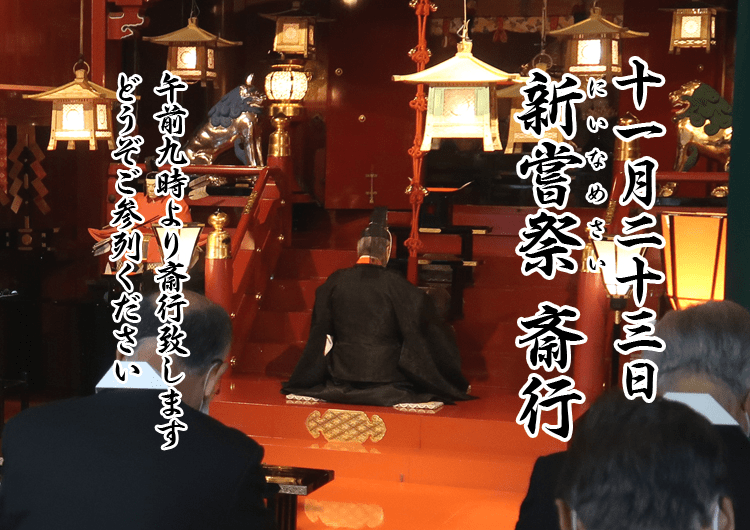
At Hakone Shrine, located on the shores of Lake Ashi, a traditional Shinto ceremony called "Niiname-sai" is held in November.
Niiname-sai is an autumn religious ceremony held to give thanks to the gods for an abundant harvest and the development of industry. It is an extremely important observance in Shinto, and on November 23, the ceremony is held simultaneously at shrines across Japan.
Visitors are welcome to observe the Niiname-sai at Hakone Shrine. During the ceremony, rice ears harvested that year, along with sake and salt, are offered at the shrine, and prayers of gratitude are made. Shrine priests dressed in Shinto's most formal attire recite prayers and perform a dedicatory dance.
Niiname-sai is one of Japan's oldest religious ceremonies, appearing in the Nihon Shoki — Japan's oldest historical record, written in the 8th century. If you are interested in Japanese tradition and history, take the opportunity to witness an authentic ceremony at beautiful Hakone Shrine in November.
- Date: November 23, 2026, from 9:00
- Access: 10-minute walk from Hakone Tozan Bus "Moto-Hakone-ko" stop
- Admission: Free
- Website: https://hakonejinja.or.jp/info/20251116_1717/
Tonosawa Hibuse Kannon Bosatsu Reitaisai (Annual Grand Festival)
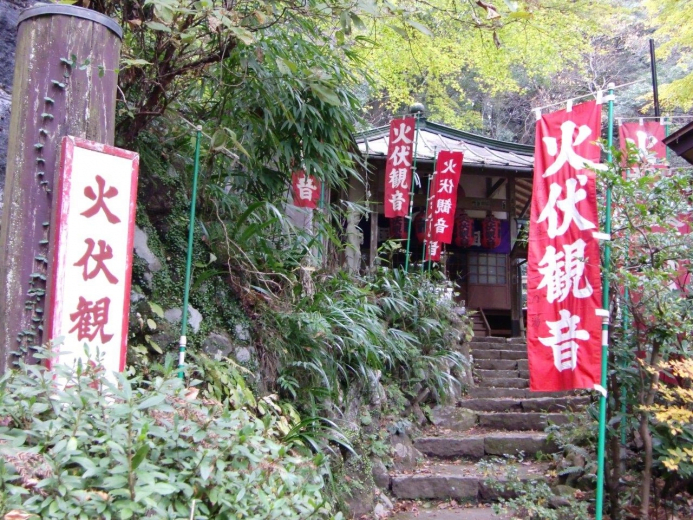
Tonosawa Hibuse Kannon Bosatsu is a small temple located near Tonosawa Station on the Hakone Tozan Railway. Enshrined here is a Kannon Bosatsu believed to protect people from fire.
Every year on November 17, a special event called "Reitaisai" is held. The temple grounds are decorated with colorful lanterns, creating a festive atmosphere unique to this time of year.
Hibuse Kannon is a small temple nestled in the mountains, surrounded by Hakone's great nature. When I visited, I was struck by the mysterious sight of many Buddhist statues, including Kannon figures, standing among the lush greenery.
You can also enjoy a light hike in the surrounding mountains. Please note that the paths are not well-maintained and can be difficult to walk, so take care when exploring the area.
- Date: November 17
- Access: Just a short walk from Tonosawa Station on the Hakone Tozan Railway
- Admission: Free
- Website: http://www.hakoneyumoto.com/exp/10
5 Spots to Enjoy Beautiful Nature and Autumn Foliage in Hakone in November 2026
Hakone is a destination that captivates visitors throughout the year — whether you're joining the lively Hakone Event or savoring the breathtaking scenery that arrives with autumn. In November, the region transforms into a world of golden and crimson beauty. Here are five spots where you can experience the season at its finest.
"Sengokuhara Pampas Grass Field" Glowing in Gold
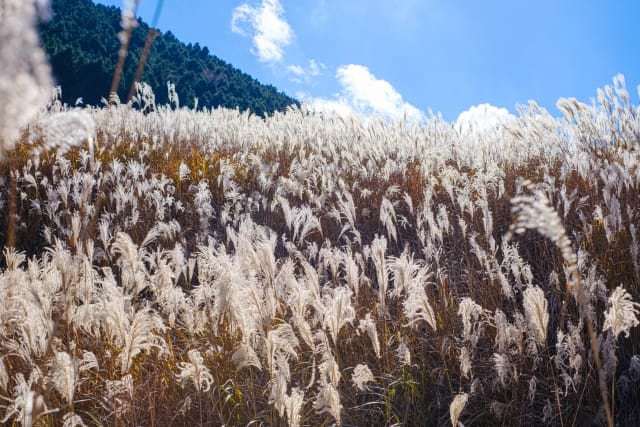
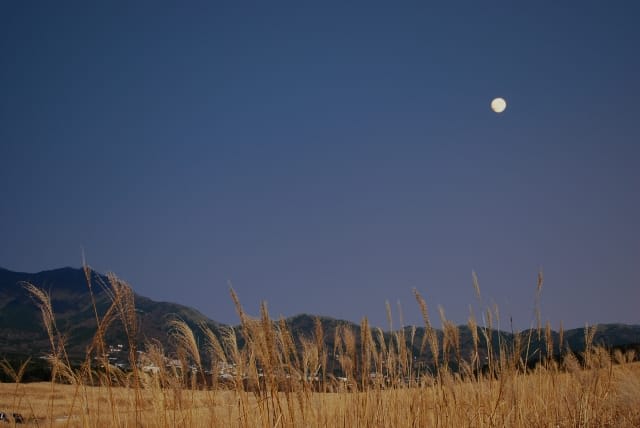
In the Sengokuhara area of Hakone, you can enjoy the spectacular sight of the pampas grass field turning golden in November.
In Hakone, pampas grass was once cultivated as a material for roofing traditional houses. The pampas grass fields created for industrial purposes still remain in various parts of Hakone today. In particular, in Sengokuhara, the fields spreading across an entire hillside have become a popular scenic spot.
Pampas grass, whose tips turn a warm brown in autumn, has long been cherished as a plant that symbolizes the beauty of Japanese fall. In November at the Sengokuhara grassland, the pampas grass stretches out like an endless sea, and when the wind picks up, golden waves ripple across the landscape in a breathtaking display.
It captures the emotionally rich, quintessentially Japanese beauty of autumn, and is one of the author's personal favorite sights in Hakone. It is also immensely popular as a photogenic spot, drawing many professional photographers as well.
If you want to enjoy the beautiful nature of Hakone in November or capture some wonderful photographs, be sure to visit Sengokuhara Highland.
Information:
- Best time to see pampas grass: September to November
- Access: 5-minute walk from Hakone Tozan Bus "Sengoku Kogen" stop
- Admission: Free
- Website: https://www.hakone.or.jp/526
Lake Ashi
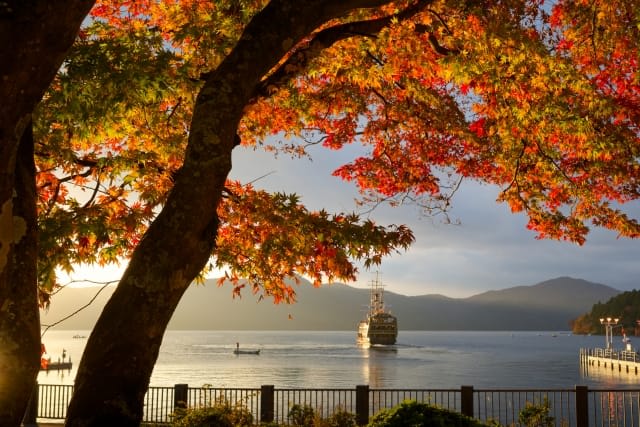
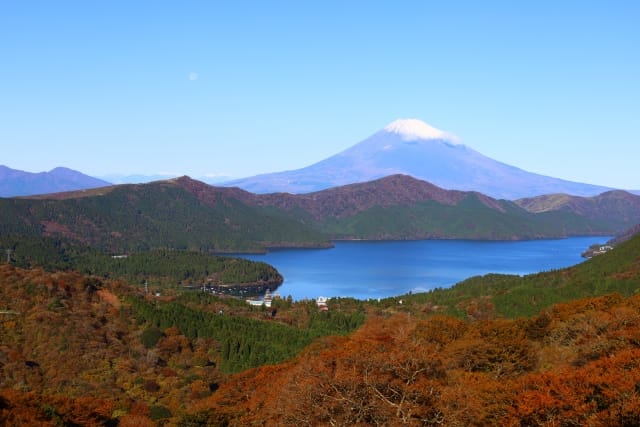
Beautiful autumn foliage can also be seen at Lake Ashi — the very symbol of Hakone — when November arrives.
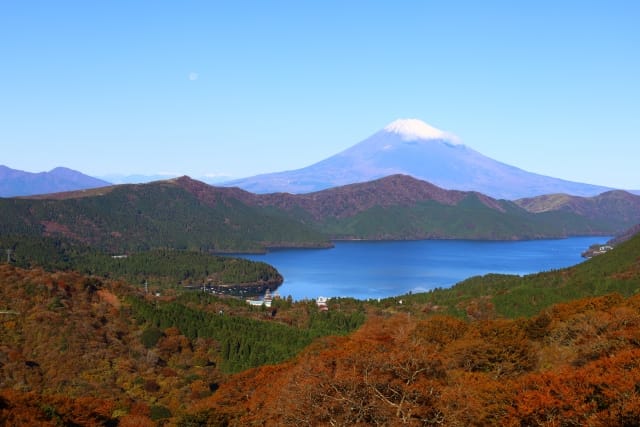
Lake Ashi is a large caldera lake surrounded by the mountains of Hakone. On its shores stands Hakone Shrine, a place of deep reverence in the region since ancient times. Beyond the layered mountains, the grand form of Mt. Fuji is also visible.
The autumn foliage at Lake Ashi typically peaks in early November. When this season arrives, the mountains surrounding the lake are set ablaze with reds and yellows all at once, and you can enjoy a stunning combination of autumn foliage, the lake, and Mt. Fuji.
Around the lake, you will find gift shops and restaurants, along with well-maintained walking paths and benches. Take a leisurely stroll around the lake or hop aboard one of the pirate ship-style sightseeing cruises to fully immerse yourself in the spectacular scenery.
Information:
- Best time for autumn foliage: Early November
- Access: Just a short walk from Hakone Tozan Bus / Izu-Hakone Bus "Moto-Hakone-ko" stop
- Admission: Free
- Website: https://www.hakone.or.jp/6317
Hakone Wetlands Botanical Garden
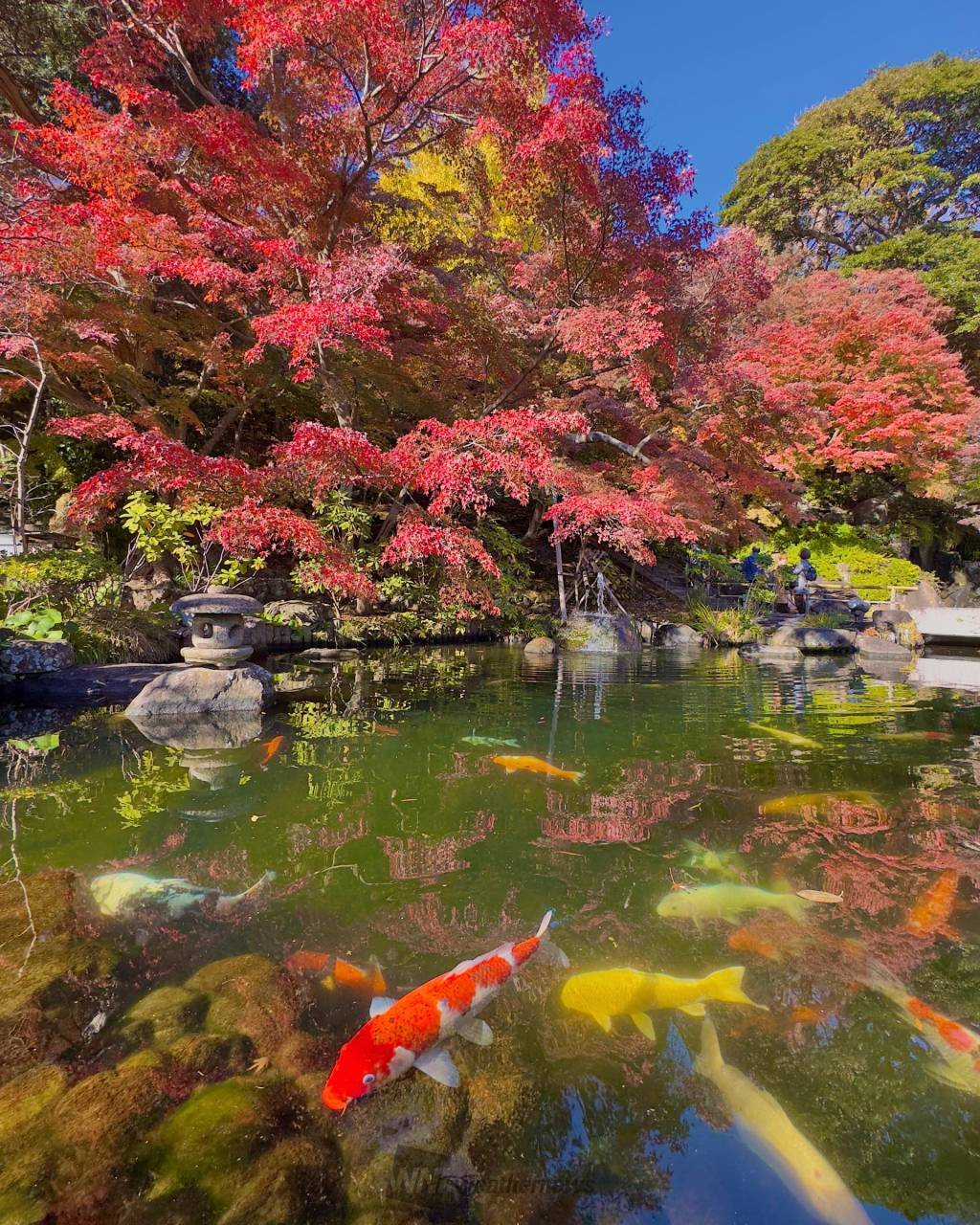
Hakone Wetlands Botanical Garden is a botanical garden where you can enjoy a wide variety of aquatic plants that grow in marshlands, rivers, and lakes. It brings together 1,700 species of plants, including aquatic and wetland plants that grow in the many marshy areas of Hakone — starting with the Sengokuhara Wetland — as well as throughout Japan, along with alpine plants.
November in Hakone can be quite cold, so many flowers have already passed their peak, but the pampas grass turns a rich golden color and reaches its prime. When I visited last year, I was also able to see the Sengokuhara pampas grass highland — introduced in the previous section — spreading out beyond the garden's own pampas grass thicket.
You can also witness "kusa-momiji" (grass autumn color), where the foliage of wildflowers and grasses turns red and brown, and I thoroughly enjoyed the quiet, distinctly autumnal scenery blended with dried grasses.
If you love plants or are looking for a peaceful, unhurried time, be sure to visit Hakone Wetlands Botanical Garden in November.
Information:
- Schedule: Open for entry until November 30 (closed for the winter season thereafter)
- Access: 8-minute walk from Hakone Tozan Bus "Sengoku Annaisho-mae" stop
- Admission: Adults ¥700 / Elementary school students ¥400
- Website: https://hakone-shisseikaen.com/
Owakudani
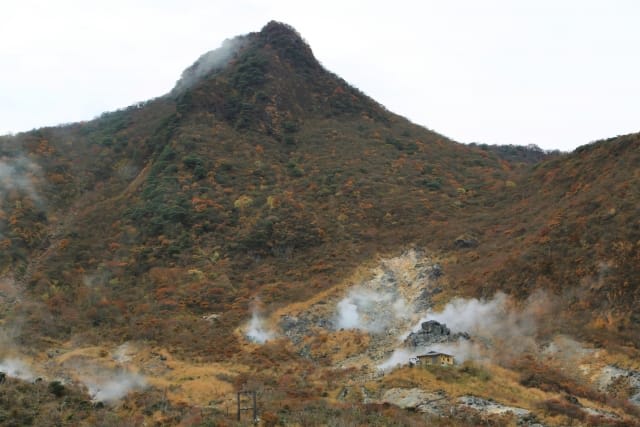
Owakudani is a spot that embodies the volcanic character of Hakone, situated at a volcanic crater formed some 3,000 years ago. White plumes of smoke still rise here today, and the scent of sulfur fills the air — it is a place where you can take in a truly dramatic natural spectacle.
At Owakudani, the autumn foliage reaches its peak around mid-November. My personal recommendation is to enjoy the foliage from the Hakone Ropeway, which carries you on a sky journey at an altitude of 1,000 meters. Looking down from the ropeway, you can enjoy both the colorful autumn foliage blanketing the mountains and valleys, and the awe-inspiring natural scenery of white volcanic smoke rising below.
A specialty of Owakudani is the soft-boiled "onsen tamago" (hot spring eggs) prepared using the natural geothermal waters. Eating piping-hot onsen tamago in the chilly November air is sure to warm you up from the inside. Don't miss the chance to try them!
Information:
- Best time for autumn foliage: Mid-November
- Access: 3-minute walk from Owakudani Station
- Ropeway round-trip fare: ¥3,000
- Website: https://www.hakonenavi.jp/spot/1362
- Hakone Ropeway website: https://www.hakonenavi.jp/transportation/ticket/ropeway/
Autumn Foliage & Autumn Roses at Gora Park
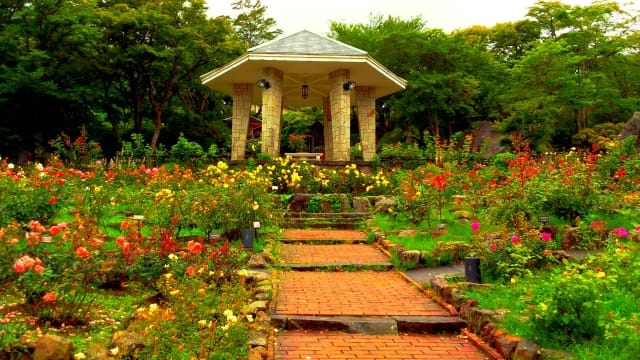
Gora Park is a nature park located in the Gora area of Hakone. Filled with many varieties of flowers that can be enjoyed each season, it is a beloved destination for visitors. The park also offers a wealth of facilities for travelers, including beautiful gardens, a tropical botanical garden, a traditional Japanese tea house, and a workshop where you can try your hand at crafts.
From late October to early November, the roses in the park's Rose Garden reach their blooming peak. When I visited in early November, roses in a range of colors — yellow, pink, and red — were in full, gorgeous bloom throughout the garden.
Beyond the visual beauty, the sweet fragrance of roses drifted through the air, and I found myself wonderfully soothed by the scent as well. Until early November, the "Jugatsu-zakura" (October cherry blossoms), a variety of autumn cherry, also blooms beautifully within the park.
Situated at a higher elevation, Gora Park sees its autumn foliage peak in late November. During this period, you can enjoy a striking combination of red maple leaves, trees turned a warm yellow, and the lingering roses past their prime bloom.
Information:
- Best time for roses: Late October to early November
- Best time for autumn foliage: Mid to late November
- Access: 1-minute walk from Hakone Tozan Cable Car "Koen-shita" stop
- Admission: ¥650
- Website: http://www.hakone-tozan.co.jp/gorapark
A Luxury Hire Car Tour for a Deep and Efficient Exploration of the Mt. Fuji Area is Also Recommended
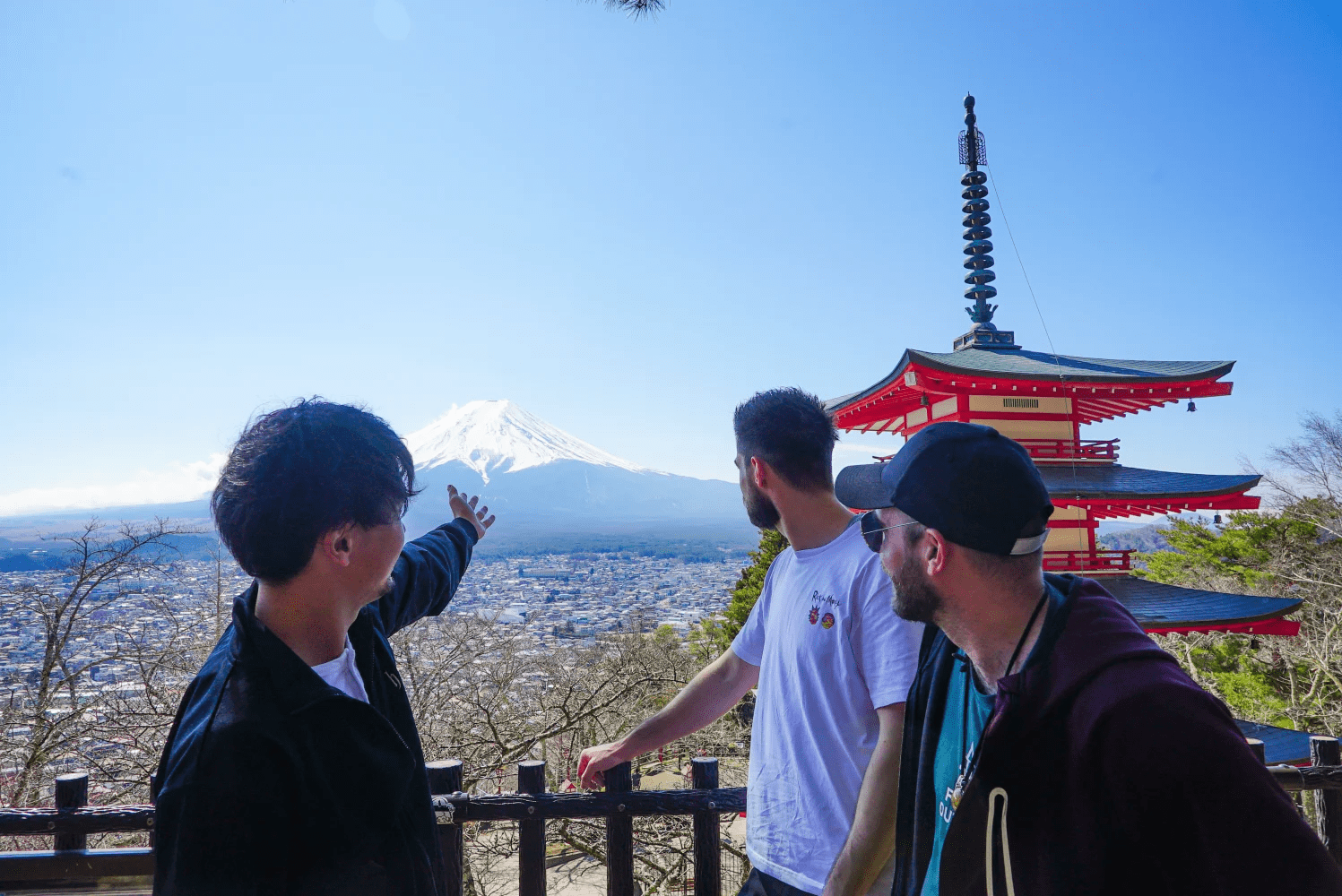
Those who are drawn to the nature and traditional culture of Hakone may find the neighboring Mt. Fuji area equally captivating.
With the Mt. Fuji Full-day Day Trip Tour from Tokyo with a Private Car & Guide, you can enjoy a comfortable full-day journey through the nature-rich Mt. Fuji area in a chauffeured hire car.
Together with a dedicated guide, start your day at Arakurayama Sengen Shrine — a popular spot offering spectacular views of Mt. Fuji framed by a traditional five-story pagoda. In November, you can take in the breathtaking combination of a snow-capped Mt. Fuji and vivid autumn foliage.
From there, visit a local wasabi farm for a hands-on harvesting experience, and savor local cuisine at a café or restaurant. The tour also takes you comfortably and efficiently to other popular destinations such as Oshino Hakkai and the 5th Station of Mt. Fuji.
This is a highly recommended luxury tour for anyone who wants to fully experience the beautiful nature and local traditional culture of the Mt. Fuji area.
Information:
- Meeting point: Pickup available at accommodation hotels, primarily within the 23 special wards of Tokyo
- Tour area: The entire Mt. Fuji surrounding region
- Start time: 8:00