Ginkakuji Temple in Kyoto 2026: The Silver Pavilion in Northern Higashiyama
I visited Kyoto several times between August and October 2025. I'm updating this article to share the new charms of Kyoto I discovered and to recommend the latest spots worth visiting. In this update, I've also included the newest information about Kyoto for 2026.
Another reason for this update is the growing interest in tours that allow visitors to fully experience Kyoto's traditions and culture.
Due to Kyoto's deep history and traditions, first-time visitors often find it challenging to explore the city efficiently while gaining a deeper understanding. This has led to increasing popularity of guided tours like those offered by Magical Trip, where local guides help tourists navigate the city.
Notably, Magical Trip's tour, which was ranked No.1 among all tours on Tripadvisor in 2024, is experiencing high demand in 2026.

For those interested in Kyoto's traditions and culture, we recommend the following tours where you can experience authentic Kyoto tea ceremonies and Zen meditation:
• Kyoto Tea Ceremony & Kiyomizu-dera Temple Walking Tour
• Kyoto Zen Meditation & Garden Tour at a Zen Temple, including a traditional vegetarian lunch
If you love visiting shrines and temples, try the "Fushimi Inari Hidden Hiking Tour" to discover the hidden charms of Fushimi Inari Shrine.
Whichever tour you choose, it's sure to be an unforgettable experience!
Introduction
Kyoto, a city abundant with shrines and temples, is one of the symbols of Japanese culture and history. In 794, "Heian-kyo" was established, and for over 1000 years, it served as the residence of the emperor and developed as the capital of Japan.
Today, it's a popular tourist destination for foreigners as the city where you can most feel the elegant atmosphere of Japan. Many shrines and temples have centuries of history, and many people make visiting these sites the purpose of their Kyoto trip.
While Kiyomizu-dera and Kinkaku-ji (Golden Pavilion) are generally famous, we highly recommend "Ginkakuji" (Silver Pavilion) to tourists. Although Ginkakuji might seem modest at first glance, it's actually a spot filled with the essence of Kyoto.
In this article, we'll introduce the charm points of Ginkakuji and the best seasons to visit in detail!
What is "Ginkakuji," often compared to Kinkaku-ji?
Source: Official website
Ginkakuji was founded during the Muromachi period (1336-1573) by the 8th shogun, Ashikaga Yoshimasa. After losing his power as shogun in the "Onin War," a conflict over succession, Yoshimasa decided to withdraw from politics and built this temple as his mountain villa.
Its official name is "Higashiyama Jisho-ji temple," but it came to be called "Ginkakuji" (Silver Pavilion) during the Edo period (1600-1868).
Ginkakuji, symbolizing the modest and tasteful "Higashiyama Culture," is characterized by its profound appearance. It's often contrasted with "Kinkaku-ji" (Golden Pavilion), built by Yoshimasa's grandfather, the 6th shogun Ashikaga Yoshimitsu, and both have become representative tourist spots in Kyoto.
The birthplace of the traditional Japanese aesthetic sense "Wabi-Sabi"
Have you heard of the term "Wabi-Sabi"? It's a word that expresses the modest aesthetic sense of the Japanese people.
"Wabi" represents the simple and calm beauty felt because something is lacking. "Sabi" is an expression that means the profound beauty felt in old things.
It's thought that the existence of Ginkakuji, which seems modest compared to the gorgeous Kinkaku-ji, gave birth to the culture of "Wabi-Sabi". The humble and calm appearance of Ginkakuji itself embodies the "Wabi-Sabi" that Japanese people cherish.
The surprising reason why it's called "Ginkakuji" (Silver Pavilion) despite not being silver
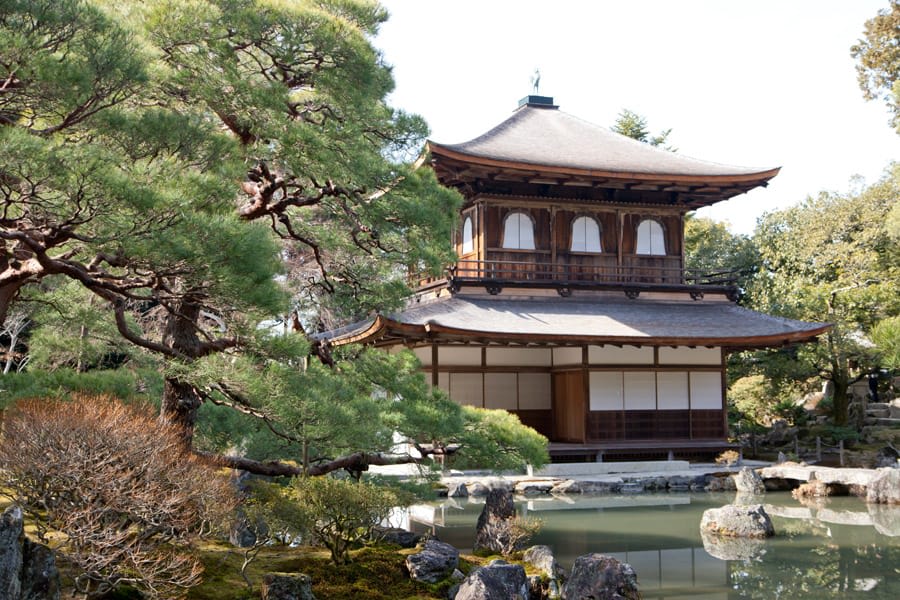
Why is "Ginkakuji" called the Silver Pavilion when it's not silver in color?
One reason is that many parts of "Ginkakuji" are modeled after "Kinkaku-ji" (Golden Pavilion), and it was named in contrast to the gorgeous "Kinkaku-ji" to highlight its simple and profound appearance.
There's also a theory that it was named so because "it looked silver when illuminated by moonlight." I prefer this explanation as it's more romantic.
In the past, it was said that "the silver foil that was once applied has peeled off," but later investigations found no evidence of this. In fact, the shogunate at the time of construction was financially strained and didn't have the budget for silver foil.
Access and Visiting Information for Ginkakuji Temple
Address: 2 Ginkakuji-cho, Sakyo-ku, Kyoto City
Phone number: 075-771-5725 (Jisho-ji Temple Office)
Access: Get off at "Ginkakuji-michi" bus stop on Kyoto City Bus (routes 5, 7, 32, 102, 203, 204)
Visiting hours: Summer (3/11-11/30) 8:30-17:00 / Winter (12/1-2/28) 9:00-16:30
Closed: Open all year round
Admission fee: Adults (High school students and above) 500 yen / Elementary and junior high school students 300 yen
Official website: https://www.shokoku-ji.jp/en/ginkakuji/
5 Must-See Spots When Visiting Ginkakuji
The National Treasure "Kannonden" (Silver Pavilion)
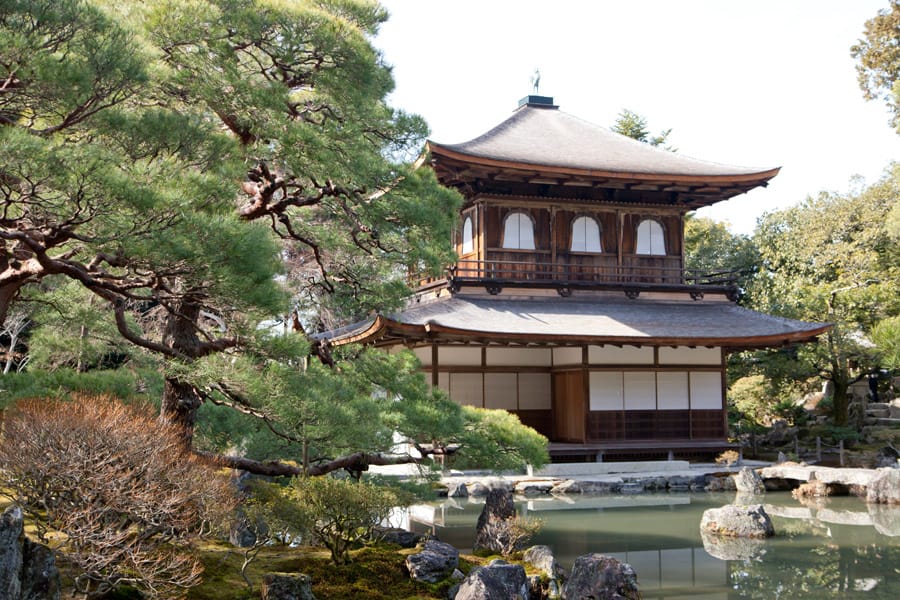
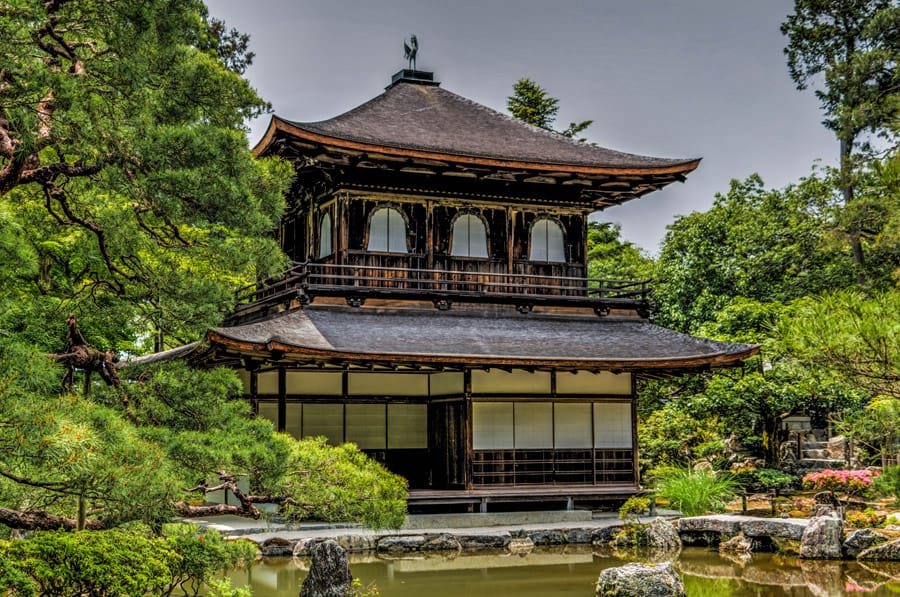
The first place you should visit at Ginkakuji is the Kannonden, which houses the Kannon statue. Designated as a National Treasure, Kannonden is called the "Silver Pavilion" and has become the symbol of the temple. The two-story pavilion style with a roof is an architectural style that symbolizes the Japanese culture of this era and is one of the highlights.
A unique feature of the Silver Pavilion is that it turns its back to the west, where Kyoto city is located, with the east side as its front. It's said that this might be because Shogun Yoshimasa, who built Ginkakuji, was disillusioned with the political world and wanted to turn his back on the capital.
Unfortunately, the Kannonden (Silver Pavilion) is not open to the public, and you cannot tour inside. It might be interesting to imagine Shogun Yoshimasa sitting on the veranda, leisurely gazing at the pond.
The Garden, designated as a Special Historic Site and Special Place of Scenic Beauty
Source: Official website
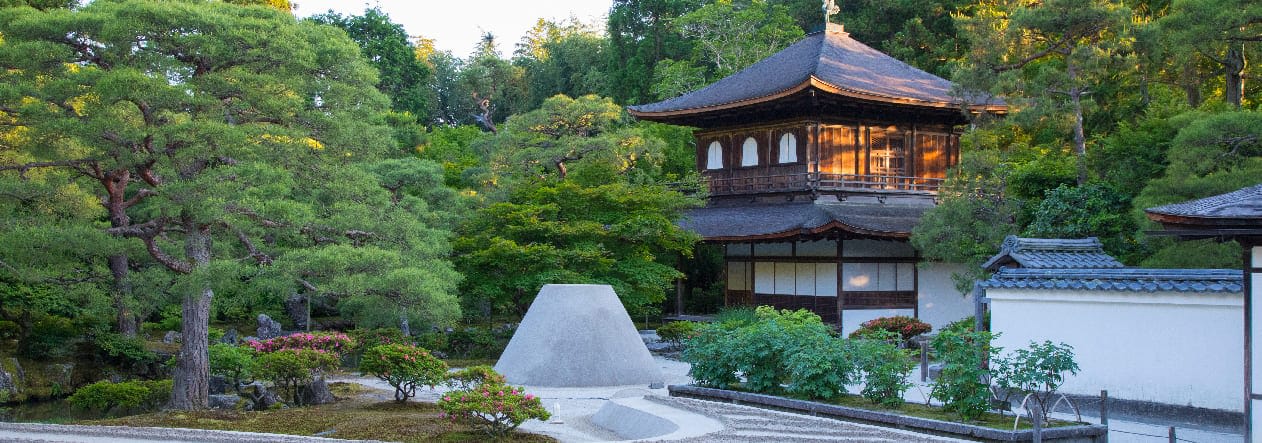
The garden surrounding the Kannonden is also a highlight of Ginkakuji. The garden of Ginkakuji is designated as a "Special Historic Site" and "Special Place of Scenic Beauty," which indicates its high value academically and scenically, comparable to National Treasures.
The garden spreads around the Kinkyochi pond in front of the Kannonden, designed so that the image of the Kannonden is reflected in the pond. The view of the Kannonden alongside the pond is a symbolic sight of Ginkakuji and is definitely a highlight to enjoy.
What particularly catches the eye in the garden is the "Kogetsudai," a sand mountain shaped like Mount Fuji. It's said to be a platform for viewing the moon.
What fascinated me the most was the "Ginshadan," where white sand is piled high to represent waves and open sea. It's said to have the role of reflecting moonlight to illuminate the main hall, and its fantastical charm is captivating.
The Traditional Tea Room "Togudo," designated as a National Treasure
Source: nikkei.com
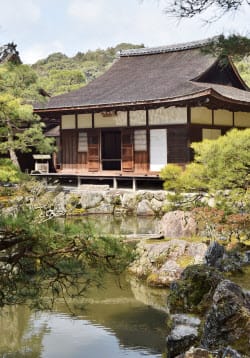
The "Togudo," which was also used as Shogun Yoshimasa's residence, is another must-visit spot at Ginkakuji. The Togudo, designated as a National Treasure, is square-shaped and divided into four parts.
The hiwadabuki roof, made using cypress resin, is a traditional Japanese construction method. It's a great place to feel traditional Japanese culture, so be sure to pay attention to it.
The room called "Dojinsai" is considered the origin of traditional Japanese tea rooms and is a space where you can truly feel "Wabi-Sabi." When you open the sliding doors, a garden view spreads out, creating a space that looks like a postcard or painting.
When I visited in August, I couldn't enter, but it's specially open to the public only in spring and autumn. It's recommended to plan your travel schedule around these times.
The "Viewpoint" overlooking Ginkakuji and Kyoto city
Source: imamiya
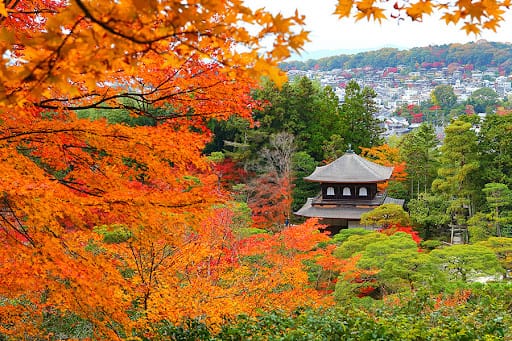
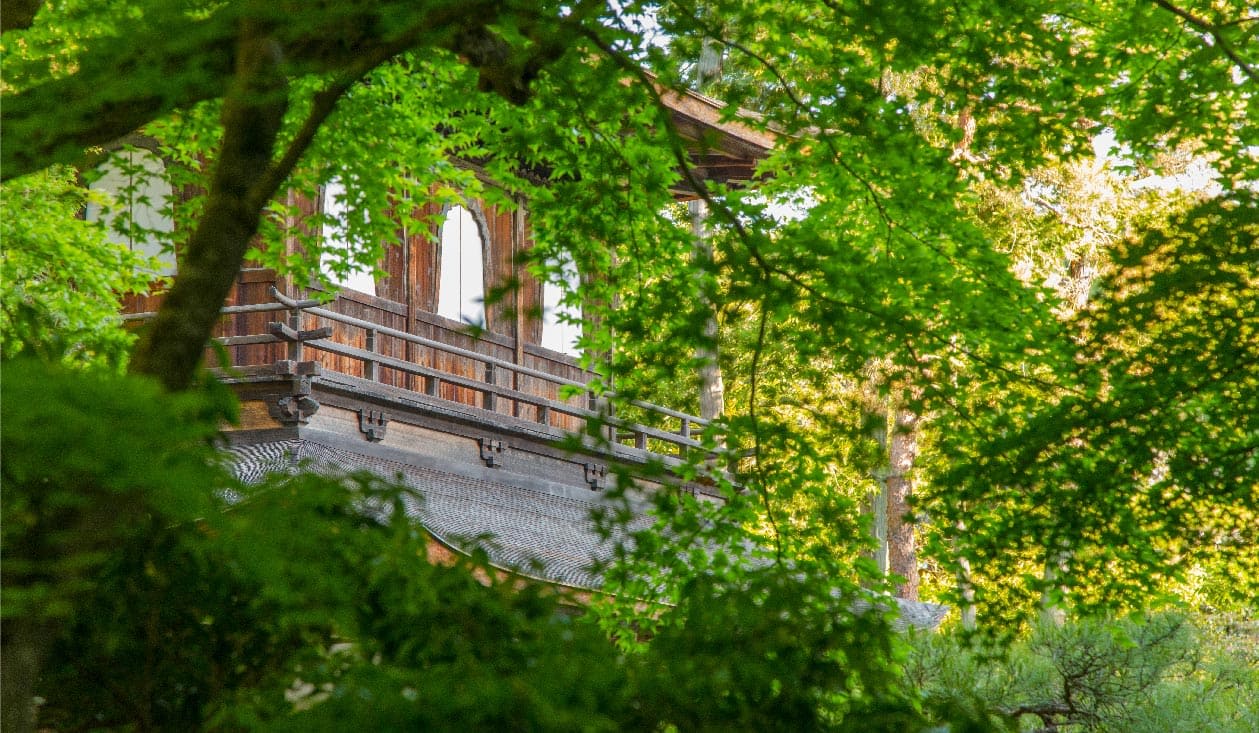
A hidden gem at Ginkakuji is the viewpoint. As you proceed to the back of the premises and climb up a well-maintained gentle slope, you'll find a viewpoint overlooking the entire temple and garden. The Silver Pavilion (Kannonden) seen from afar has a different flavor, with a humble yet dignified appearance.
One of its charms is that it can be less crowded at certain times of the day as it's away from the popular main buildings. Enjoy the beautiful scenery that changes with the seasons at your leisure.
On the day I visited, it was sunny, and I could see a bit of Kyoto city in the distance. The trees and mountains surrounding Ginkakuji seemed to be protecting its existence from the city.
Ginkakuji viewed at twilight has an even more profound atmosphere, and you'll catch glimpses of "Wabi-Sabi" here and there.
The "Main Hall (Hojo)" with a solemn atmosphere
Source: Official website

The "Main Hall" is where the "Honzon," the most revered Buddha statue in the temple, is enshrined. It also serves as the "Hojo," a place used for receiving guests, practicing, and as living quarters.
Sliding door paintings by Yosa Buson, a famous Japanese haiku poet and painter, and Ikeno Taiga are displayed and are designated as Kyoto City Cultural Properties. The paintings spread across the entire sliding door are impressively powerful. While you usually can't tour inside, it's specially open to the public in spring and autumn.
Although it might seem a bit plain compared to other spots like the Silver Pavilion (Kannonden) and the garden, it's very beautiful in combination with the white sand art "Ginshadan" spread out in front of it. In fact, this is my favorite spot.
If you point your camera towards the Kannonden from in front of the Main Hall, you can take a lovely photo with the Kannonden in the distance beyond the "Ginshadan."
The "Autumn Foliage" season is recommended to enjoy Ginkakuji
Source: caede-Kyoto
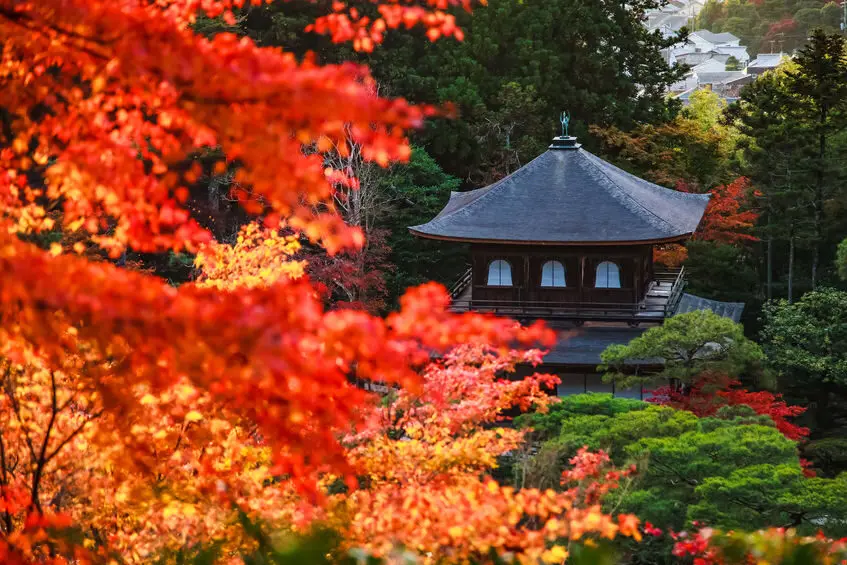
While the lush green season and snowy winter landscapes of Ginkakuji are beautiful, the autumn foliage season is particularly recommended. There are many spots to view the autumn leaves around Ginkakuji, including the street leading to the gate and the garden.
The contrast between the vivid red, orange, and yellow trees and the unadorned Ginkakuji is beautiful, allowing you to feel the autumn in Kyoto.
During the crowded autumn foliage season, it's recommended to visit right after opening or just before closing. Right after opening is relatively less crowded compared to the afternoon, and you can feel the refreshing morning air, which is also charming.
Although it's crowded just before closing, the autumn leaves and Ginkakuji against the sunset sky exude "Wabi-Sabi." This time at Ginkakuji, with the melancholy of the day ending and night approaching, is my absolute favorite.
Check the Real-Time Crowd Status of Ginkakuji Temple and Visit During Less Crowded Times
When visiting Ginkakuji Temple, checking the crowd status in advance allows you to take your time appreciating the architecture and gardens in a peaceful atmosphere. Especially during spring when cherry blossoms bloom along the approach path and autumn when the foliage is beautiful, tourists tend to concentrate, so if you want to avoid crowds, it is recommended to plan your visit time accordingly.
The LIVE CAMERA images published on the official website are useful for checking the crowd status at Ginkakuji Temple.
Since the images showing the temple grounds are updated every 3 minutes, you can enjoy Ginkakuji Temple comfortably by avoiding crowded times and visiting during less busy hours.
Ginkakuji Temple LIVE CAMERA:
https://www.shokoku-ji.jp/en/ginkakuji/#:~:text=in each season.-,LIVE CAMERA,-Ginkaku-ji’s live
Recommended Times to Visit Ginkakuji Temple at a Leisurely Pace
For those who want to fully enjoy Ginkakuji Temple in a quiet environment, the early morning hours right after the gates open are recommended. Ginkakuji Temple opens at 8:30 during summer and 9:00 during winter.
Since relatively few tourists visit during these hours, you can leisurely stroll around the grounds and take your time capturing photos with careful attention to composition.
The late afternoon near closing time is also an ideal time to visit Ginkakuji Temple. During this time, tourists gradually begin to leave, making it easier to enjoy a relaxed viewing experience with less crowding than during the day. Please experience the enchanting atmosphere as the orange-tinted sky enhances the simple beauty of Ginkakuji Temple.
Enjoy Kyoto's UNESCO World Heritage Sites Twice as Much with a Local Guide!

For those who want to experience Kyoto's World Heritage shrines and temples more deeply, we recommend a tour accompanied by a knowledgeable local guide.
The "1-Day Kyoto UNESCO World Heritage Site Tour with a Private Car and Guide" takes you to Kyoto's representative World Heritage Sites, including Kinkakuji Temple and Kiyomizu-dera Temple, all in one day.
What I recommend about this tour with a local guide is that you can learn in-depth knowledge not found in guidebooks and discover the best photo spots. Additionally, since hotel or Kyoto Station pickup and drop-off is included, you can enjoy comfortable sightseeing in Kyoto while avoiding crowded public transportation.
This tour can also accommodate vegetarian and vegan lunch options. However, please let us know in advance if you have any meal requests.
- Meeting point: Your accommodation hotel within the area or Kyoto Station
- Tour area: Within Kyoto City
- Start time: From 9:00
It's also recommended to visit "Kinkaku-ji" after seeing Ginkakuji
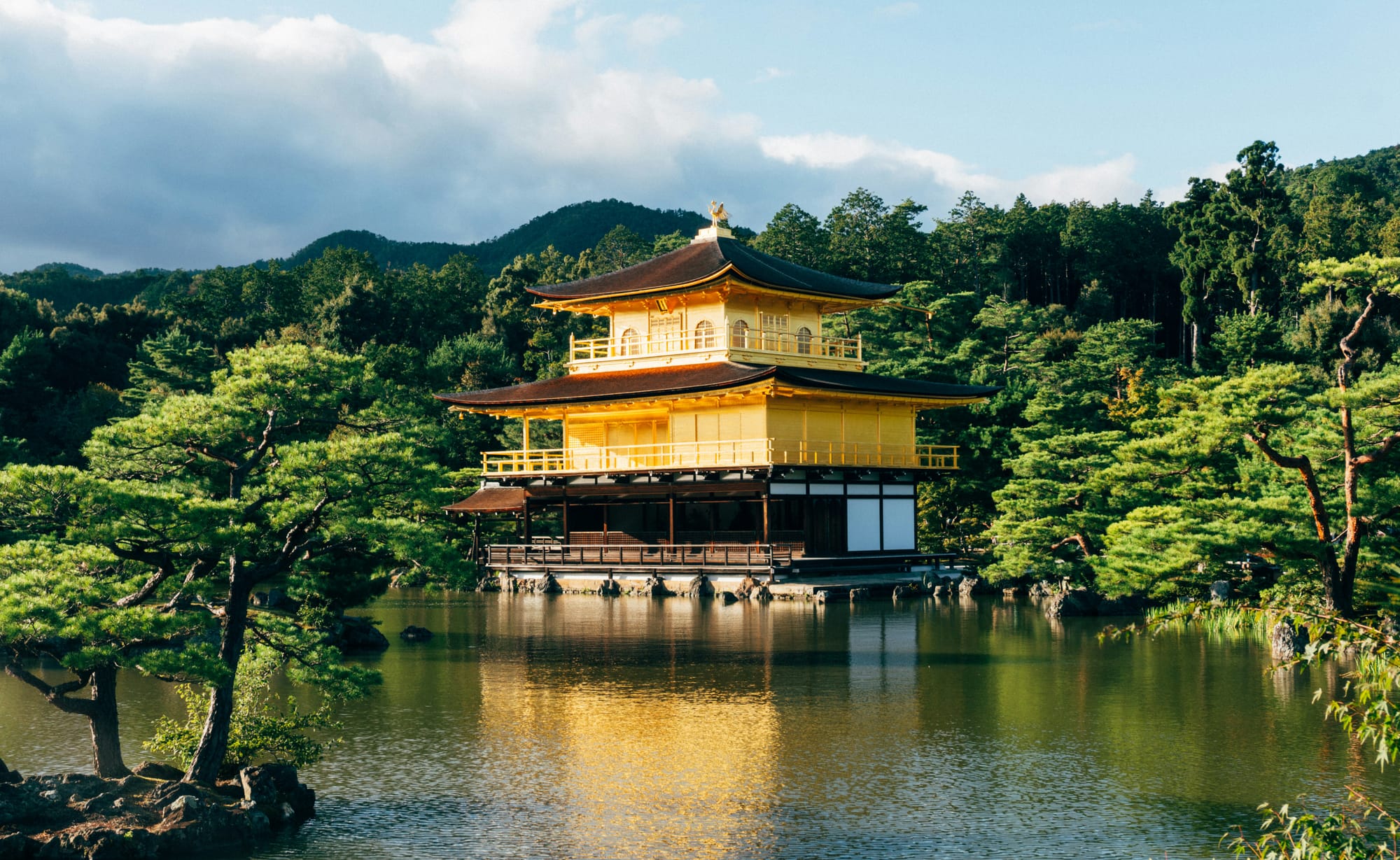
While many people visit both "Kinkaku-ji" and "Ginkakuji" when coming to Kyoto, I recommend seeing "Ginkakuji" first. This is because Ginkakuji, with glimpses of "Wabi-Sabi" everywhere, allows you to feel the Japanese and Kyoto-like taste more deeply.
Also, Shogun Yoshimasa referred to "Kinkaku-ji" in some aspects during construction. The Kannonden adopts the architectural style of the "Shariden" of "Kinkaku-ji," and having a pond in front is also the same style.
By visiting the profound and modest "Ginkakuji" before touring the glittering "Kinkaku-ji," you can discover new interesting aspects in their similarities.
5 Recommended Nearby Attractions to Visit Along with Ginkakuji Temple
Around Ginkakuji Temple, in addition to Kinkakuji Temple, there are many attractive tourist destinations where you can experience Kyoto's history and culture. By combining tourist spots that are easily accessible from Ginkakuji Temple, you can enjoy efficient Kyoto sightseeing within a limited time.
Below, we introduce in detail five recommended tourist destinations that are within walking distance from Ginkakuji Temple or easily accessible by bus.
Heian Jingu Shrine
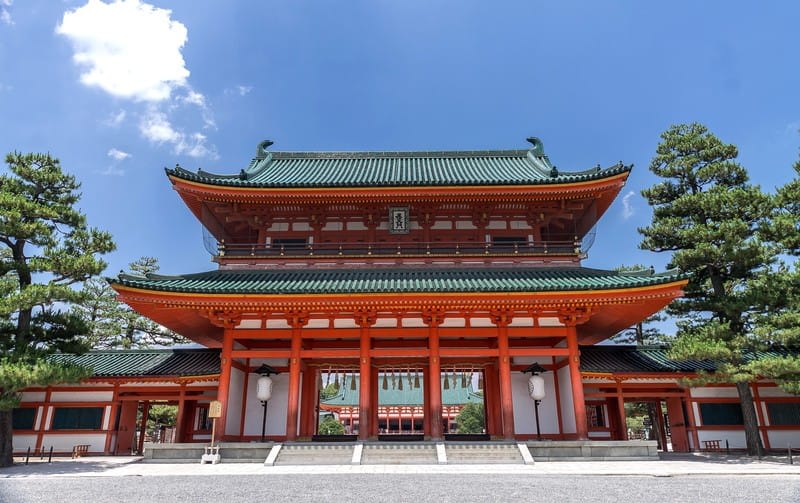
Heian Jingu Shrine is a shrine founded in 1895 to commemorate 1,100 years since the capital was moved to Kyoto. It features magnificent vermillion-colored shrine buildings, offering a sense of splendor that contrasts with the "wabi-sabi" aesthetic of Ginkakuji Temple.
At Heian Jingu Shrine, the elegant shrine architecture is a must-see, as well as the beautiful Japanese garden within the grounds. You can enjoy quintessentially Japanese scenery created by the refined garden and seasonal nature, including weeping cherry blossoms in spring, irises in early summer, and autumn foliage.
After savoring the beauty of tranquility at Ginkakuji Temple, please experience the dynamic and magnificent atmosphere of Heian Jingu Shrine and feel Kyoto's diverse aesthetic sensibilities firsthand.
<Information>
- Address: 97 Okazaki Nishitenno-cho, Sakyo-ku, Kyoto City, Kyoto Prefecture
- Hours: [March–September] 6:00–18:00 / [October] 6:00–17:30 / [November–February] 6:00–17:00
- Closed: None
- Phone: 075-761-0221
- Official website: https://www.heianjingu.or.jp/
- Access from Ginkakuji Temple: Take Kyoto City Bus (routes 5, 100, or 110) and get off at "Okazaki Koen Bijutsukan / Heian Jingu-mae" bus stop (approximately 5 minutes on foot)
Philosopher's Path
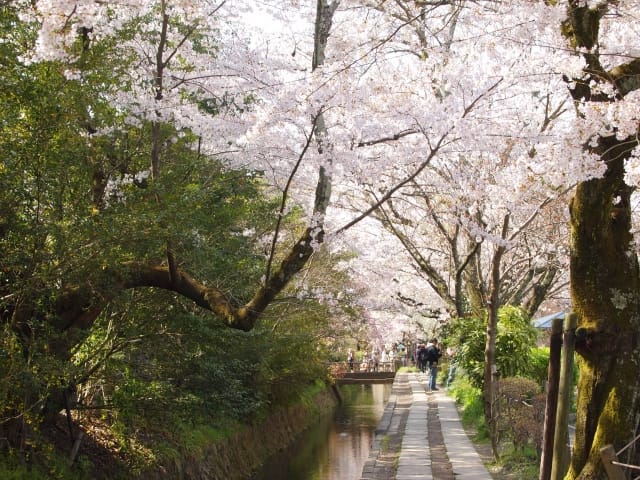
The Philosopher's Path is a approximately 2km walking trail connecting Ginkakuji Temple and Nanzen-ji Temple. It was named after the philosopher Kitarō Nishida, who was active in the early 20th century and would deepen his thoughts while walking along this path.
The canal running alongside the Philosopher's Path carries water drawn from Lake Biwa, Japan's largest lake. In spring, approximately 400 cherry trees form a tunnel covering the walking path and waterway, making it one of Kyoto's most famous cherry blossom viewing spots.
After experiencing Japan's serene culture at Ginkakuji Temple, why not take a leisurely stroll along the Philosopher's Path and enjoy Japan's beautiful nature as it changes with each season?
<Information>
- Address: Shikanogadani Teranomae-cho, Sakyo-ku, Kyoto City, Kyoto Prefecture
- Hours: 24 hours
- Closed: None
- Phone: 075-761-1944
- Official Website: https://tetsugakunomichi.jp/
- Access from Ginkakuji Temple: Approximately 3 minutes on foot
Nanzen-ji Temple
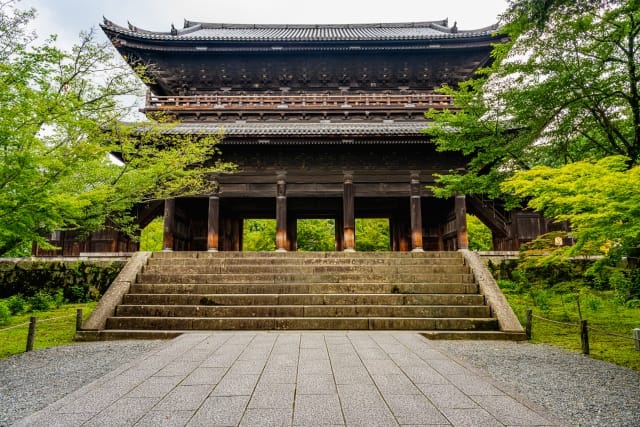
Nanzen-ji Temple is a Zen temple located at the end of the Philosopher's Path from Ginkakuji Temple. My favorite aspect of this temple is that it preserves magnificent traditional architecture, including the main gate "Sanmon Gate," which was rebuilt in 1628, and the "Chokushimon Gate," which has approximately 400 years of history.
At Nanzen-ji Temple, you can tour the interior of the "Hojo," the building where monks resided. The "Hojo" displays wall paintings that have been restored to their original colors. You can experience quintessentially Japanese art created by the combination of traditional architecture and splendid paintings characterized by gold leaf backgrounds and powerful brushwork.
The temple grounds also feature Japanese gardens where you can feel the same sense of "wabi-sabi" as at Ginkakuji Temple. I highly recommend visiting both temples together to be soothed by their respective tranquil atmospheres.
<Information>
- Address: Nanzenji Fukuchi-cho, Sakyo-ku, Kyoto City, Kyoto Prefecture
- Hours: [December–February] 8:40–16:30 [March–November] 8:40–17:00
- Closed: December 28–31
- Phone: 075-771-0365
- Official Website: http://www.nanzen.net/
- Access from Ginkakuji Temple: Take Kyoto City Bus (Routes 5, 32, 203, 204) and get off at "Higashitennocho" bus stop (approximately 10 minutes on foot)
Kyoto Museum of Crafts and Design
Source:Official website
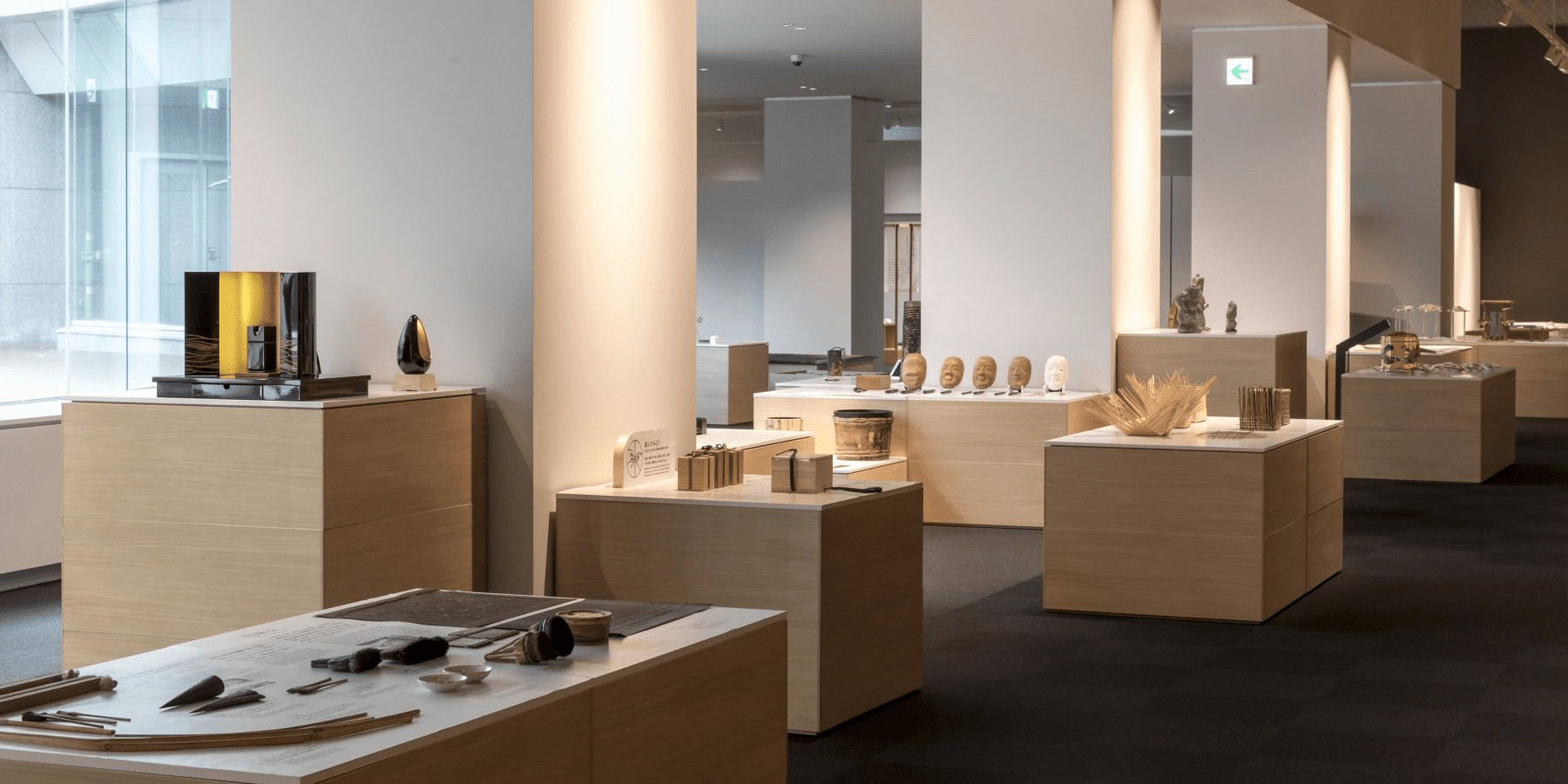
The "Kyoto Museum of Crafts and Design" is a specialized museum exhibiting 74 types of Kyoto's traditional crafts. Inside the museum, you can view panel exhibitions and video materials summarizing the production processes of traditional industries, from textile products such as Nishijin-ori and Kyo-Yuzen to ceramics such as Kyo ware and Kiyomizu ware.
This museum also features a corner where you can actually touch the materials used in making traditional crafts, as well as exhibits displaying the actual tools used in production, allowing you to experience the production process and techniques firsthand. I also recommend the demonstrations by artisans, where you can observe traditional craftsmanship up close.
After experiencing the elegant and simple "Higashiyama culture" at Ginkakuji Temple, why not deepen your experience of Kyoto's traditional craft techniques and aesthetic sensibilities at the "Kyoto Museum of Crafts and Design"?
<Information>
- Address: 9-1 Okazaki Seishoji-cho, Sakyo-ku, Kyoto City, Miyako Messe B1F
- Hours: 10:00–18:00 (Last admission at 17:30)
- Closed: Irregular holidays
- Phone: 075-762-2670
- Official Website: https://kmtc.jp/
- Access from Ginkakuji Temple: Take Kyoto City Bus (Routes 5, 105, EX100) and get off at "Okazaki Koen Bijutsukan / Heian Jingu-mae" bus stop (approximately 5 minutes on foot)
Eikandō Temple
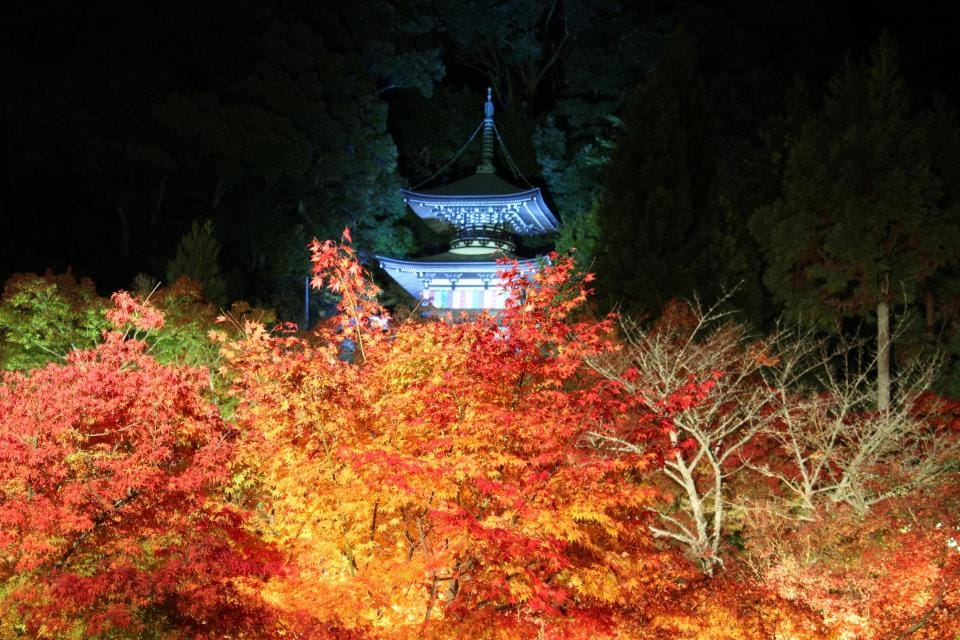
Eikandō Temple, officially known as "Zenrin-ji," is the head temple of the Jodo sect Seizan Zenrinji school, founded in 853. It is known as Kyoto's premier autumn foliage destination, with approximately 3,000 maple trees coloring the grounds of Eikandō Temple from mid-November.
The main hall enshrines a rare standing statue of Amitabha Buddha called "Mikaeri Amida Nyorai (Amitabha looking back)," which appears to be looking back over its shoulder. Created approximately 800 years ago, you can experience the craftsmanship of artisans from that era, with its refined facial features and richly expressed folds and decorations of the garments.
Another secret to Eikandō Temple's popularity is the view from the multiple-treasure pagoda on the hilltop. Especially if you visit in autumn, please enjoy the spectacular view overlooking Kyoto City while surrounded by gorgeous autumn foliage.
<Information>
- Address: 48 Eikando-cho, Sakyo-ku, Kyoto City, Kyoto Prefecture
- Hours: 9:00–16:00 (Gate closes at 17:00)
- Closed: None
- Phone: 075-761-0007
- Official Website: https://www.eikando.or.jp/
- Access from Ginkakuji Temple: Take Kyoto City Bus (Route 5) and get off at "Nanzenji・Eikando-michi" bus stop (approximately 3 minutes on foot)