Mysterious Aokigahara Forest 2026: Complete Guide to Mt. Fuji's Sea of Trees & Access from Tokyo
Due to Mount Fuji's massive size and the scattered tourist spots around its base, planning an efficient itinerary can be quite challenging for visitors. I remember when I first visited the Mount Fuji area, I wasn't able to efficiently visit the surrounding attractions, which left me feeling like I hadn't fully experienced what the region had to offer.
As a result, tours that offer an efficient and immersive way to experience the Mount Fuji area are gaining popularity. Private tours led by guides who know the Mount Fuji region inside and out are especially in demand, as they're known for allowing small groups to fully enjoy both the cultural and natural attractions around the mountain.
Magical Trip, which boasts having the #1 rated tour of 2024, launched a new tour in November 2024 called "Mt. Fuji Full-day Nature Guided Tour with a Private Chartered Car." On this tour, a driver and an expert local guide take you to carefully selected must-see spots around Mt. Fuji while explaining the local culture and traditions.

Since the tour starts and ends at your Tokyo hotel, you can explore the Mt. Fuji area hassle-free. If you're interested in Mt. Fuji but don't have time for an extended stay in the area, consider this efficient sightseeing tour.
Introduction
The Aokigahara Jukai, spreading to the northwest of Mt. Fuji, is a forest that holds mystical beauty and unique charm. For me, who has been visiting Mt. Fuji for 10 years through all seasons, this sea of trees is a special place.
While it's true that sensational online information and urban legends can sometimes create an image of a "dangerous place," when you actually visit, you'll find a serene space that surpasses imagination.
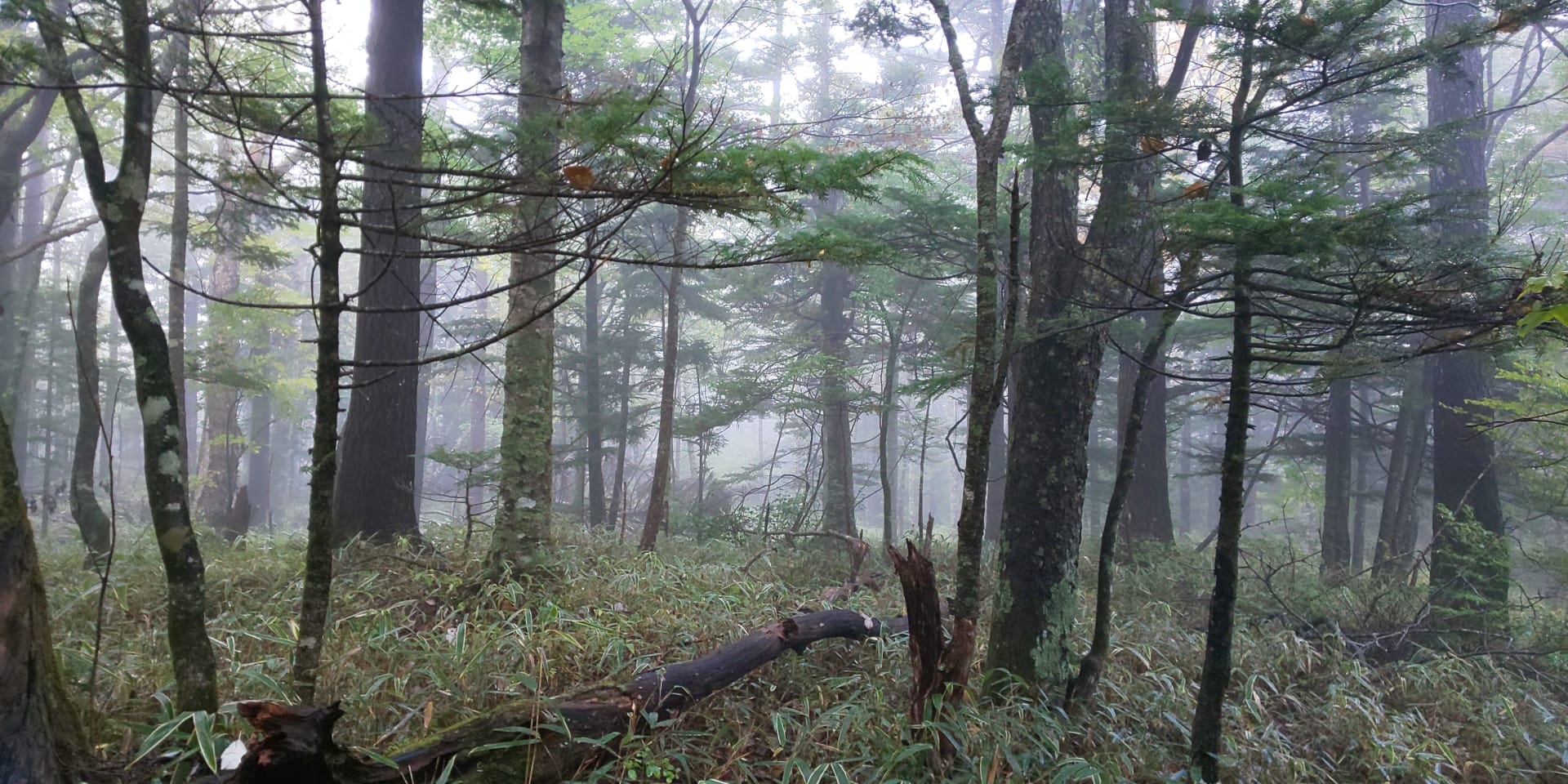
The unique terrain formed on lava, rocks covered with moss, the rustling of trees swaying in the wind... This primeval forest encapsulates the essential beauty of Japan's nature.
Walking with a local guide allows you to safely experience the true charm of the Jukai. The occasional glimpse of Mt. Fuji through the densely packed trees has an ink painting-like quality that captivates visitors' hearts. Experiences unique to this place, such as cave exploration and forest bathing, await you.
I'll share advice based on my 10 years of experience while introducing you to all the charms of the Aokigahara Jukai!
Table of Contents
・What is Mt. Fuji's Aokigahara Jukai?
・Is Mt. Fuji's Aokigahara Jukai a Dangerous Place?
・Activities to Enjoy in Mt. Fuji's Aokigahara Jukai
・How to Access Mt. Fuji's Aokigahara Jukai from Tokyo
・Spots to Visit Along with Aokigahara Jukai at Mt. Fuji
・Frequently Asked Questions About Mt. Fuji's Aokigahara Jukai
What is Mt. Fuji's Aokigahara Jukai?
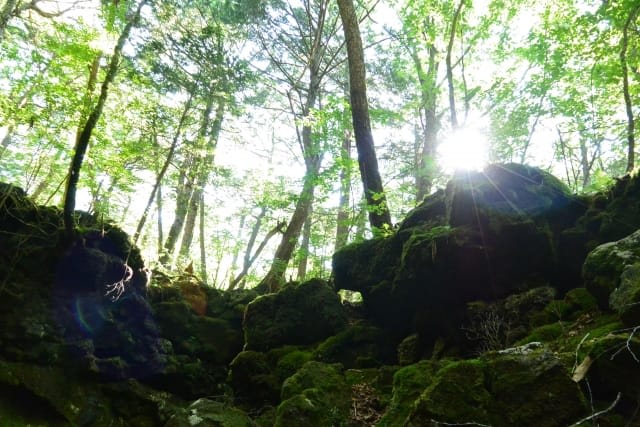
The Aokigahara Jukai is a vast primeval forest spreading to the northwest of Mt. Fuji.
It has a globally rare forest ecosystem formed on lava flows from Mt. Fuji's eruption about 1,200 years ago. When I first visited here, I was overwhelmed by the sight of densely growing trees stretching out like waves. The scenery that spreads out is truly like a vast green ocean, perfectly fitting the name "Jukai" (sea of trees).
This place is not just a tourist spot. It has been the setting for many literary works and art pieces, and is gaining worldwide attention as a representative of Japan's mystical nature. Every time I visit, I make new discoveries and realize the depth of Japan's nature.
It also has very interesting ecological features. The forest formed on the lava terrain is home to hundreds of species of flora and fauna. The calls of birds unique to this area further enhance the forest's mystical atmosphere.
Is Mt. Fuji's Aokigahara Jukai a Dangerous Place?
Based on my 10 years of visiting experience, I'll explain the "dangers" of the Jukai and points for enjoying it safely.
Rumors and Images Surrounding the Jukai
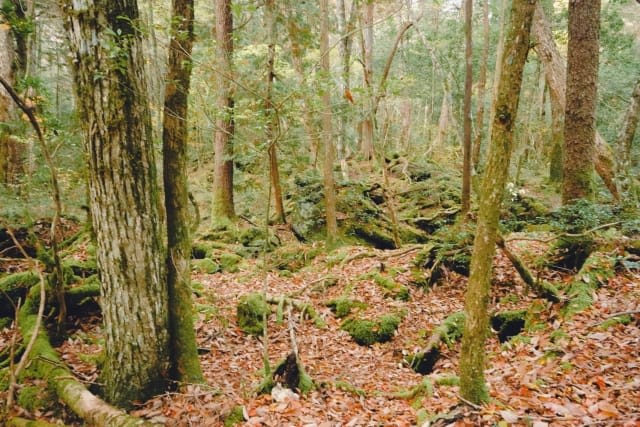
Due to its mystical atmosphere, various dark stories and urban legends have emerged about the Aokigahara Jukai.
However, when you actually visit, you'll find Japan's rich nature and a serene space spreading out. In recent years, well-maintained walking paths and information facilities have been developed, making it a popular spot attracting many tourists from around the world.
I visit the Jukai through all seasons, and every time I make new discoveries. The unique terrain created by lava, rare plants, and scenery changing with the seasons make it a very interesting place from a natural science perspective. Especially early in the morning when mist lingers, the mystical atmosphere intensifies, making it the best time for photography.
Actual Points of Caution
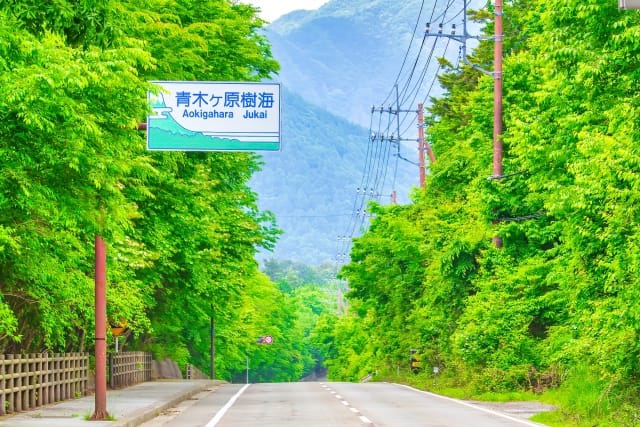
Although it's developed as a nature park, the Aokigahara Jukai is still a primeval forest. From my experience, the following points require special attention:
Due to the undulating lava terrain and densely packed trees, it's easy to lose your sense of direction if you stray from the walking paths. Also, mobile phone signals are often unstable inside the Jukai, and the weather has the characteristic changeability of Mt. Fuji.
Particular caution is needed regarding the unevenness of the ground due to the lava terrain. Even though I've visited many times, I walk carefully, especially in rainy conditions. Also, sudden weather changes typical around Mt. Fuji, especially fog formation, require vigilance. Based on experience, I can't recommend nighttime visits as visibility becomes extremely poor.
Points for Enjoying Safely
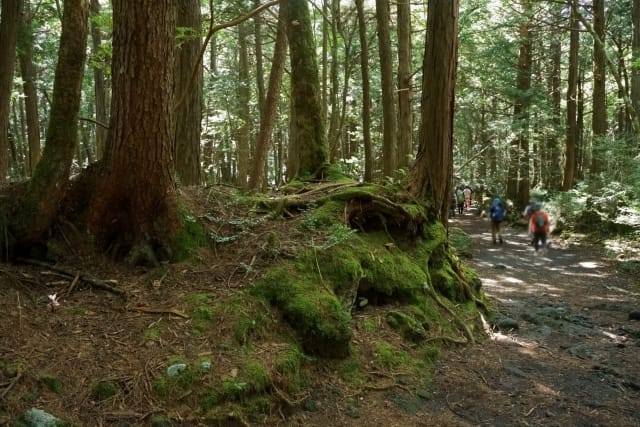
I'll share the points I particularly emphasize based on my years of visiting experience.
First, always stick to the maintained walking paths. There are regular guide signs along the paths, allowing you to enjoy sightseeing safely. For first-time visitors, I recommend tours with local guides.
In terms of equipment, ensuring foot safety is particularly important. As the lava terrain can be slippery, I always choose shoes with good grip, like trekking shoes. Also, bringing warm clothing is essential as temperature changes around Mt. Fuji can be significant. I bring a long-sleeved outer garment regardless of the season.
If you happen to get lost, staying in place is the safest option. From my experience, moving around aimlessly can potentially worsen the situation. I recommend always informing someone of your destination before visiting.
How to Access Mt. Fuji Jukai (Aokigahara Forest) from Tokyo
I'll introduce the optimal access methods based on my 10 years of experience.
Using Train and Bus
For train travel, I recommend the route using the JR Chuo Line limited express from Shinjuku Station.
It takes about 1 hour to reach Otsuki Station, then change to the Fujikyu Line for about 50 minutes to Kawaguchiko Station. Also, using the limited express "Fuji Kaiyuu" from Shinjuku allows you to go directly to Kawaguchiko. This is convenient for avoiding crowds during tourist seasons.
From Kawaguchiko Station, buses run regularly to Aokigahara Jukai, taking about 30 minutes. When I want to enjoy the early morning forest, I sometimes stay in Kawaguchiko the night before. The transportation cost from Shinjuku to the Jukai is about 3,000 to 4,000 yen one way.
I recommend making reservations in advance for limited express trains and sightseeing buses, as they can get crowded, especially on weekends.
Going by Car
When driving from Tokyo, use the Chuo Expressway and exit at Kawaguchiko IC. It's about a 2-hour drive from the city center. From Kawaguchiko IC to Aokigahara Jukai is about a 20-minute drive.
My favorite is the early morning road. The view from the road running along the foothills of Mt. Fuji is exceptional, especially on clear early mornings when you can see Mt. Fuji's figure clearly. There are spacious parking lots at Narusawa Ice Cave and Fugaku Wind Cave, where many tour buses also stop.
Including highway tolls and gas, it costs about 5,000 yen one way. The view of Mt. Fuji from Dangozaka Service Area along the way is also wonderful, making it a recommended rest stop.
If You Want to Skip the Hassle of Planning Itineraries and Figuring Out Access, a Private Hire Tour Is Recommended!
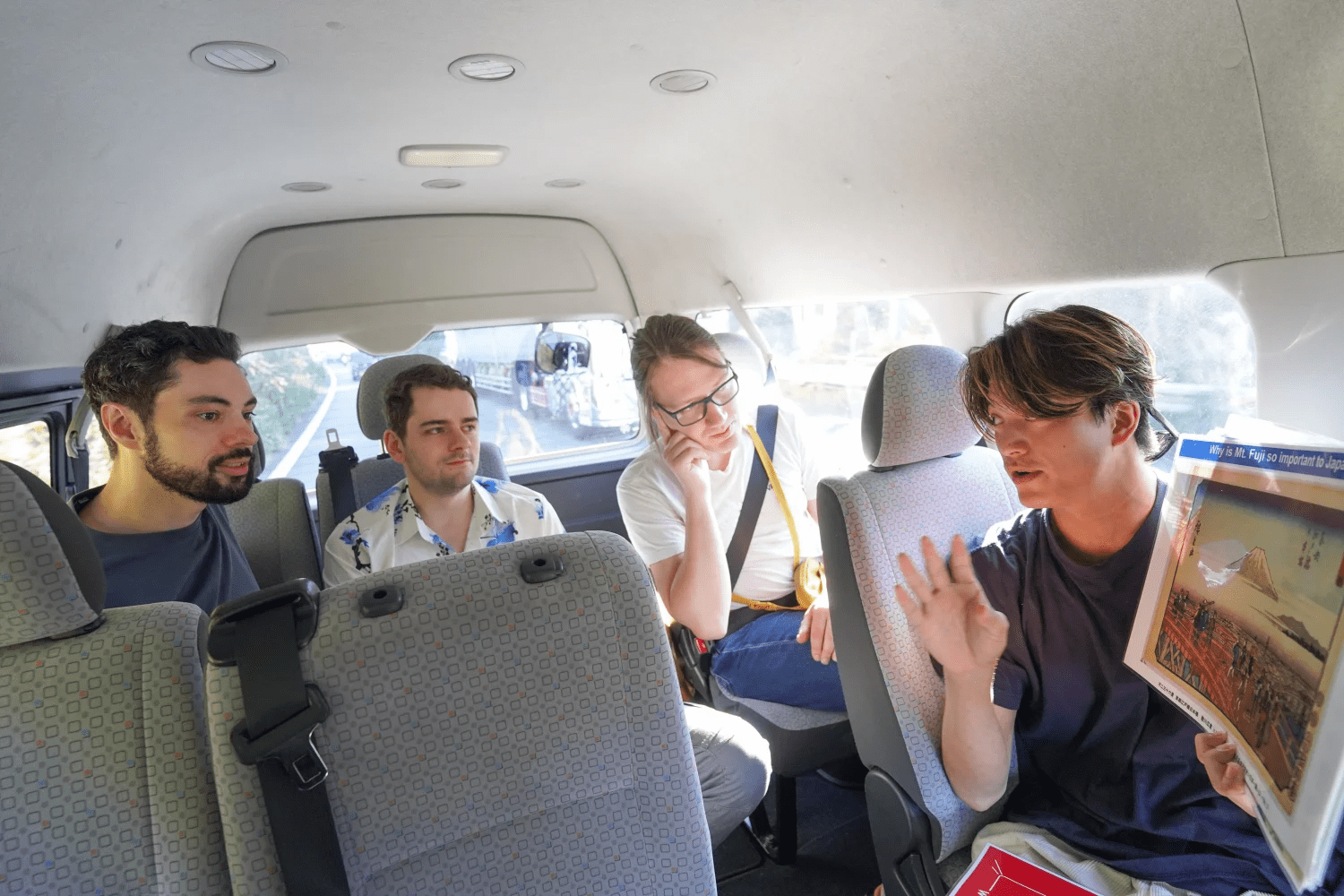
Public transportation options around Mt. Fuji are limited, and covering a wide area in a single day is not easy—even for those of us who know the region well. That's why we recommend a private hire tour that efficiently takes you to only the key destinations.
Magical Trip offers a 1 Day Private Hire Tour departing from and returning to Tokyo, where guides take you efficiently to carefully selected highlights of Mt. Fuji.
On the tour, you'll efficiently visit spots where you can fully experience the charm of Mt. Fuji, including spring water sites where you can appreciate the blessings of water, and shrines with views of Mt. Fuji that are popular on social media. Additionally, the tour includes an exclusive wasabi farm harvesting experience and a lunch featuring local seasonal flavors, ensuring a fulfilling day from start to finish.
However, please note that an Aokigahara (Mt. Fuji Jukai) walk is not included by default, so if you really want to visit the forest, please consult with your guide in advance. Depending on the season and reservation availability, it may not always be possible to accommodate your request, so be sure to discuss this at the time of booking.
- Meeting point: Shinjuku or hotel pick-up
- Tour area: Around Mt. Fuji
- Start time: 8:00
Activities to Enjoy in Mt. Fuji's Aokigahara Jukai
I'll introduce the attractive activities unique to the Jukai that I've experienced over 10 years of visits.
Walking the Trails
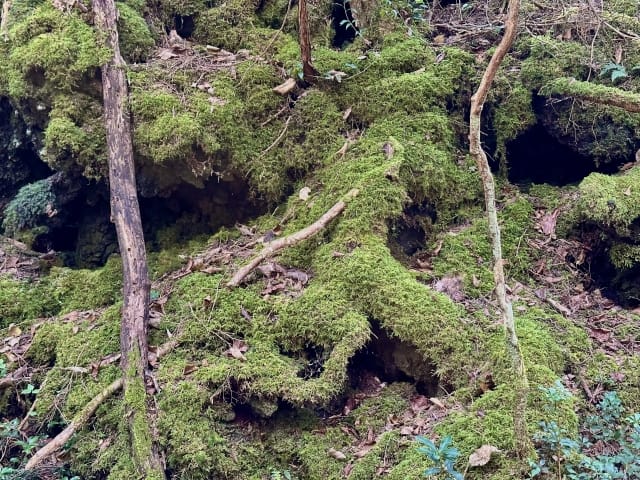
What I find most appealing is walking the trails. The well-maintained walking paths are safe even for beginners and allow you to fully enjoy the Jukai's nature. Particularly impressive is the silence unique to primeval forests.
The experience of walking while listening only to the whispers of trees and bird songs, away from urban noise, refreshes both mind and body.
Each season has its own charm, and I visit every season. Spring's fresh greenery is full of vitality, summer forms a deep green tunnel bringing coolness.
In autumn, you can enjoy the color contrast between the black lava and the autumn foliage, and winter shows yet another face with frost-covered trees and snowy landscapes.
For photography enthusiasts, there are scattered perfect spots for shooting with Mt. Fuji in the background.
Course from Saiko Nature Center
Source:Google Maps
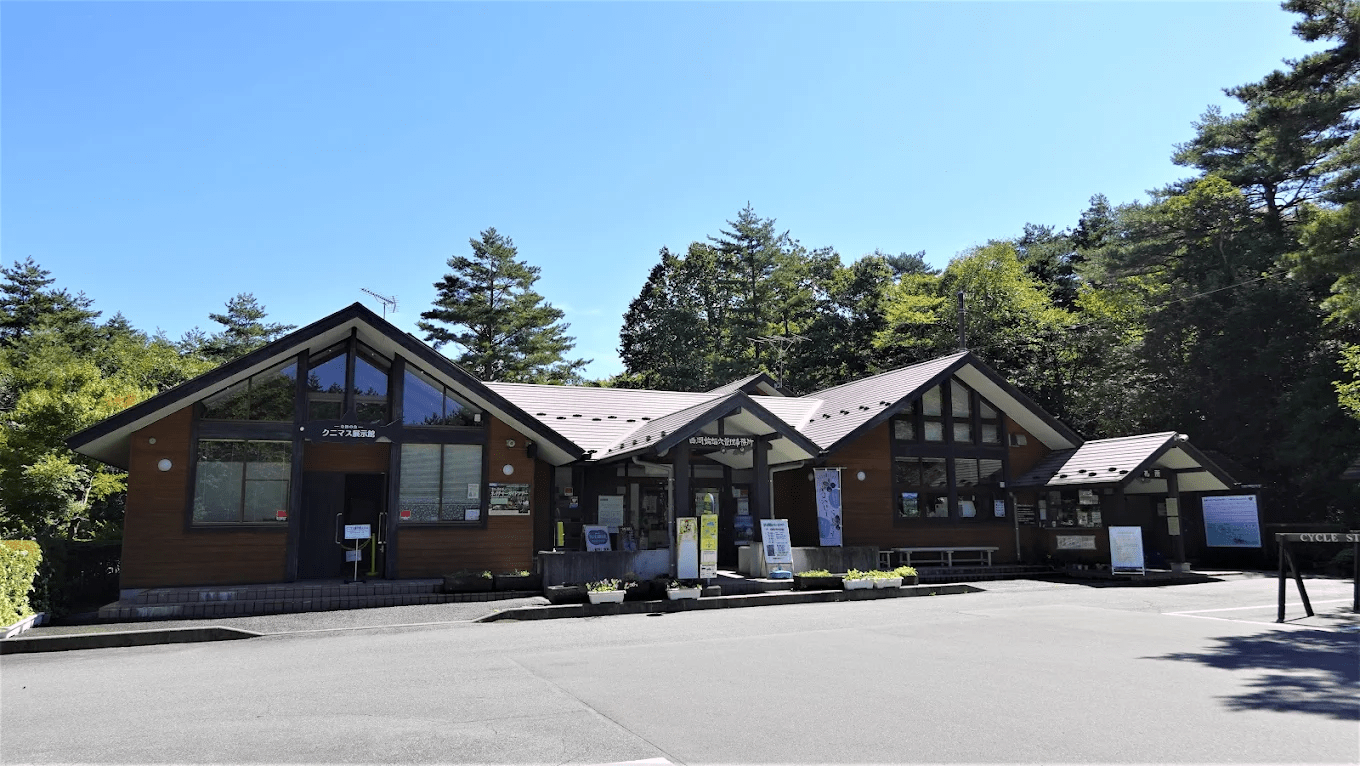
The course starting from Saiko Nature Center is convenient as a starting point because it has access to a large parking lot, and guided tours are also available.
This course takes you on a loop through the gentle mountain trails of the forested area that forms the Mt. Fuji Jukai, and the walk takes approximately one and a half hours. At the starting point, you can visit the mystical Lake Saiko Bat Cave to observe the lava terrain and the bats living inside the cave before heading into the forest.
In the forested area where moss-covered lava rocks are scattered, birdsong echoes through the trees, and sunlight filters through the branches, allowing you to enjoy a refreshing walk. This course is recommended for those who want to refresh themselves by walking through the forest.
Course from Wind Cave Shop
Source:Google Maps
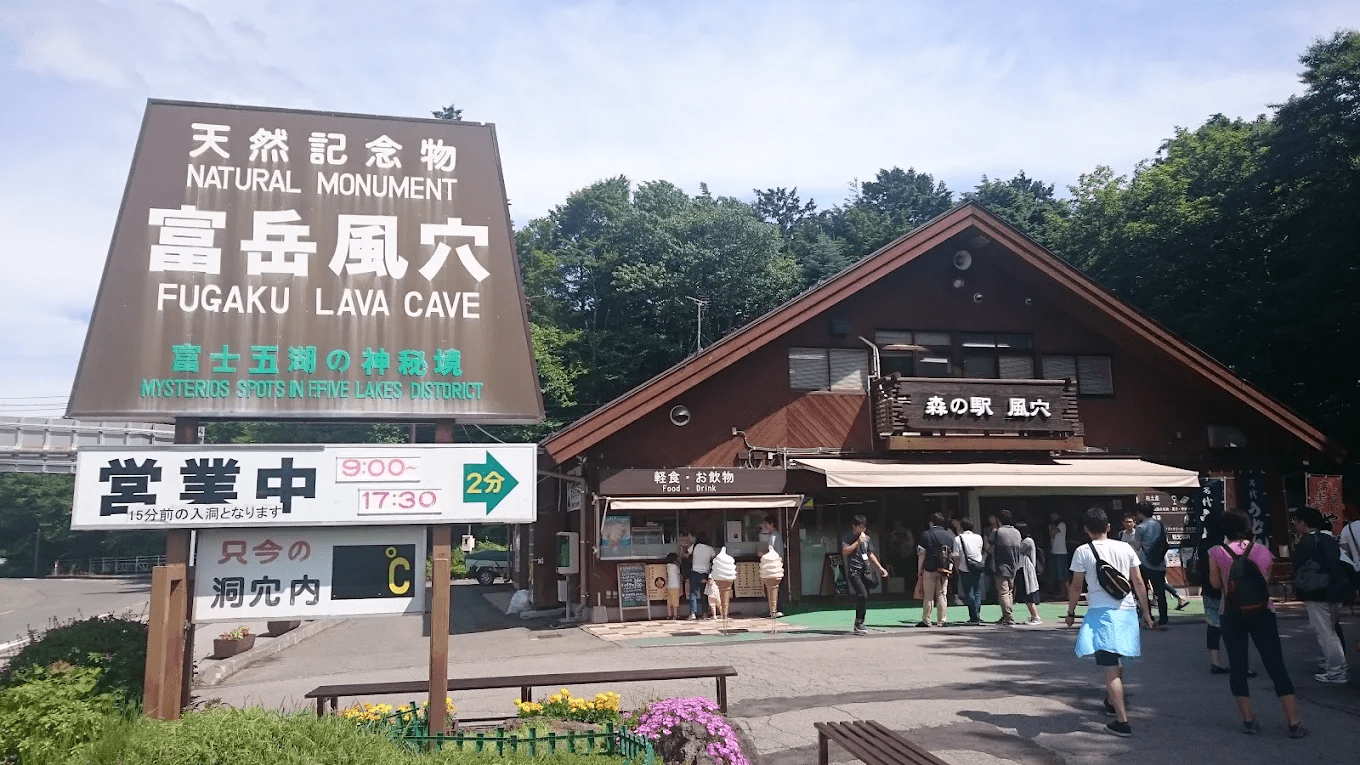
The course starting from Wind Cave Shop is recommended for those who want to enjoy exploring the wind cave. With a parking lot available, as well as a restaurant and gift shop, it's convenient for walking the trails.
Guided tours are also offered, so even those who feel uneasy about walking alone can enjoy exploring the Mt. Fuji Jukai with peace of mind.
The course looping around Fugaku Wind Cave takes about 1 hour, while the course that includes both Fugaku Wind Cave and Narusawa Ice Cave takes about 2 hours.
The quiet forested area covered with moss unique to the Mt. Fuji Jukai offers a relatively cool environment for trekking even in summer. This course is especially recommended for those seeking an adventurous experience.
Cave Exploration
The cave network spreading under the Jukai is also one of my favorite spots. Especially the Narusawa Ice Cave is a mysterious space that maintains a temperature around 32°F (0°C) year-round. The mystical terrain created by lava and the beauty of ice pillars formed in winter are must-sees.
The Fugaku Wind Cave is also not to be missed. It has historical value, having been used to preserve silkworm eggs in the past. The tunnel-like cave formed by lava is a valuable spot where you can feel the Earth's workings firsthand.
For both caves, safety equipment like helmets and flashlights are provided on tours, allowing even first-timers to enjoy exploration safely. They're also popular with families with children and are attracting attention as living teaching materials for natural science.
Website: https://www.mtfuji-cave.com/en/
Highlight 1: Narusawa Ice Cave
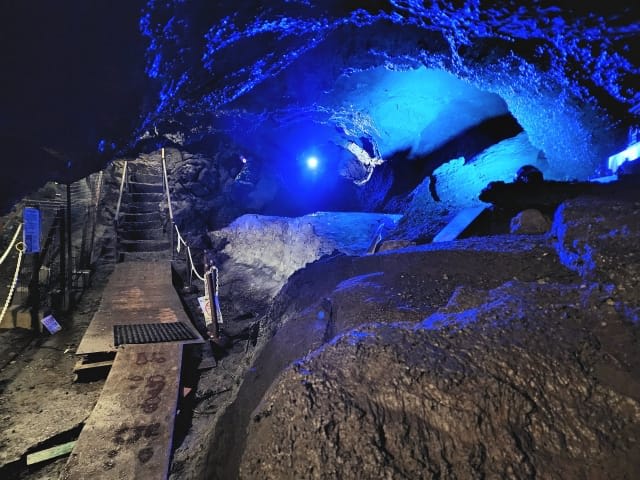
Narusawa Ice Cave is a vertical ice cave formed approximately 1,150 years ago following an eruption of Mt. Fuji. Due to its structure that traps cold air, the interior maintains a temperature of approximately 0°C (32°F) year-round.
Inside the cave, you can observe natural phenomena such as icicles extending from the ceiling and ice stalagmites forming upward from the ground. These ice formations are a sight unique to underground environments where light has minimal influence.
Particularly from April to early summer, icicle growth accelerates, making it possible to see large icicles. Since the environment remains very cool even in summer, be sure to bring a jacket when exploring.
Highlight 2: Fugaku Wind Cave
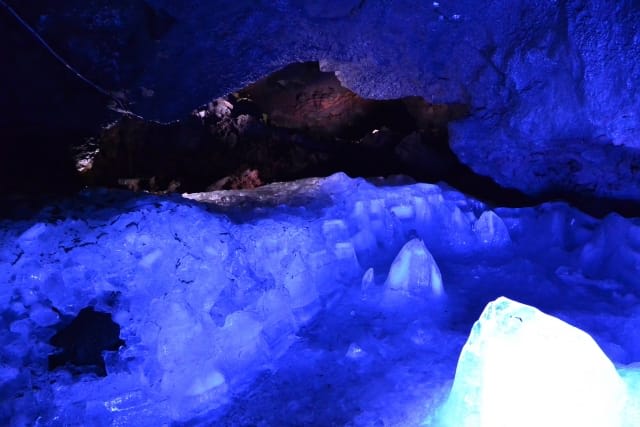
Fugaku Wind Cave is a horizontally elongated wind cave with a total length of 201 meters. The footing is relatively stable, making it safe for small children and elderly visitors to explore.
The interior temperature is maintained at approximately 3°C (37.4°F) throughout the year, and since it stays cool even in summer, it's possible to see icicles. Taking advantage of this environment, sericulture was practiced here until the 1950s. Today, you can still see remnants of the facilities from that era.
Deep inside the cave, you can observe the wall formations created by lava flow and luminous moss (Hikari-goke) that grows in limited light conditions, allowing you to explore while understanding the characteristics of volcanic terrain.
Highlight 3: Lake Saiko Bat Cave
Source:Google Maps
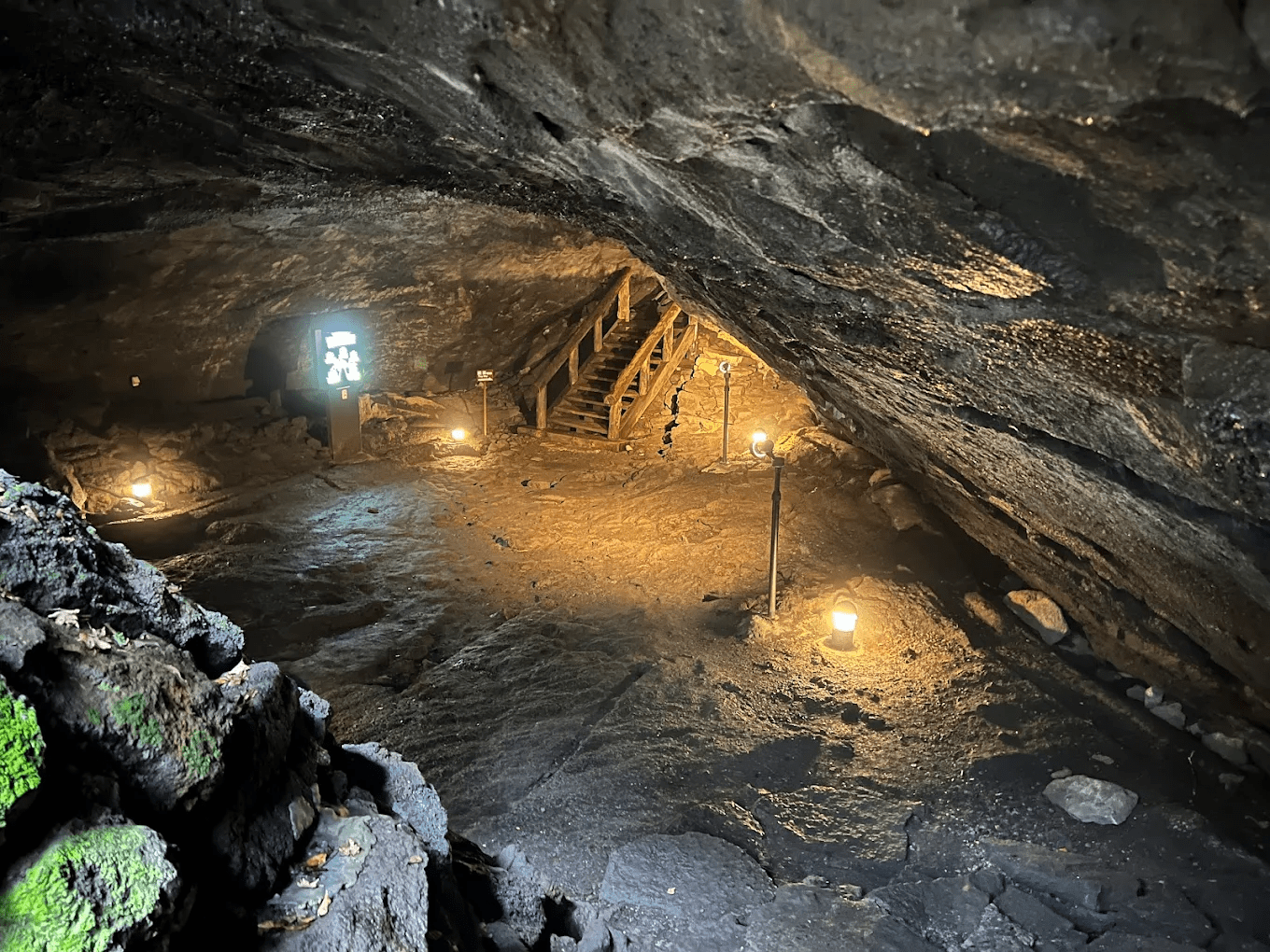
Lake Saiko Bat Cave is one of the largest caves in this area, with a total length of over 350 meters.
Because ice does not form here, the temperature doesn't drop as much as in ice caves, and many bats once inhabited this cave. Currently, the deepest section is a protected area, and visitors rarely encounter bats in the accessible sections.
Inside the cave, there are routes where the ceiling becomes low, and you can proceed while observing the terrain created by lava flow. This course offers a moderate sense of adventure and is recommended for those who want to experience some thrills.
Highlight 4: Motosu Wind Cave
Source: Google Maps
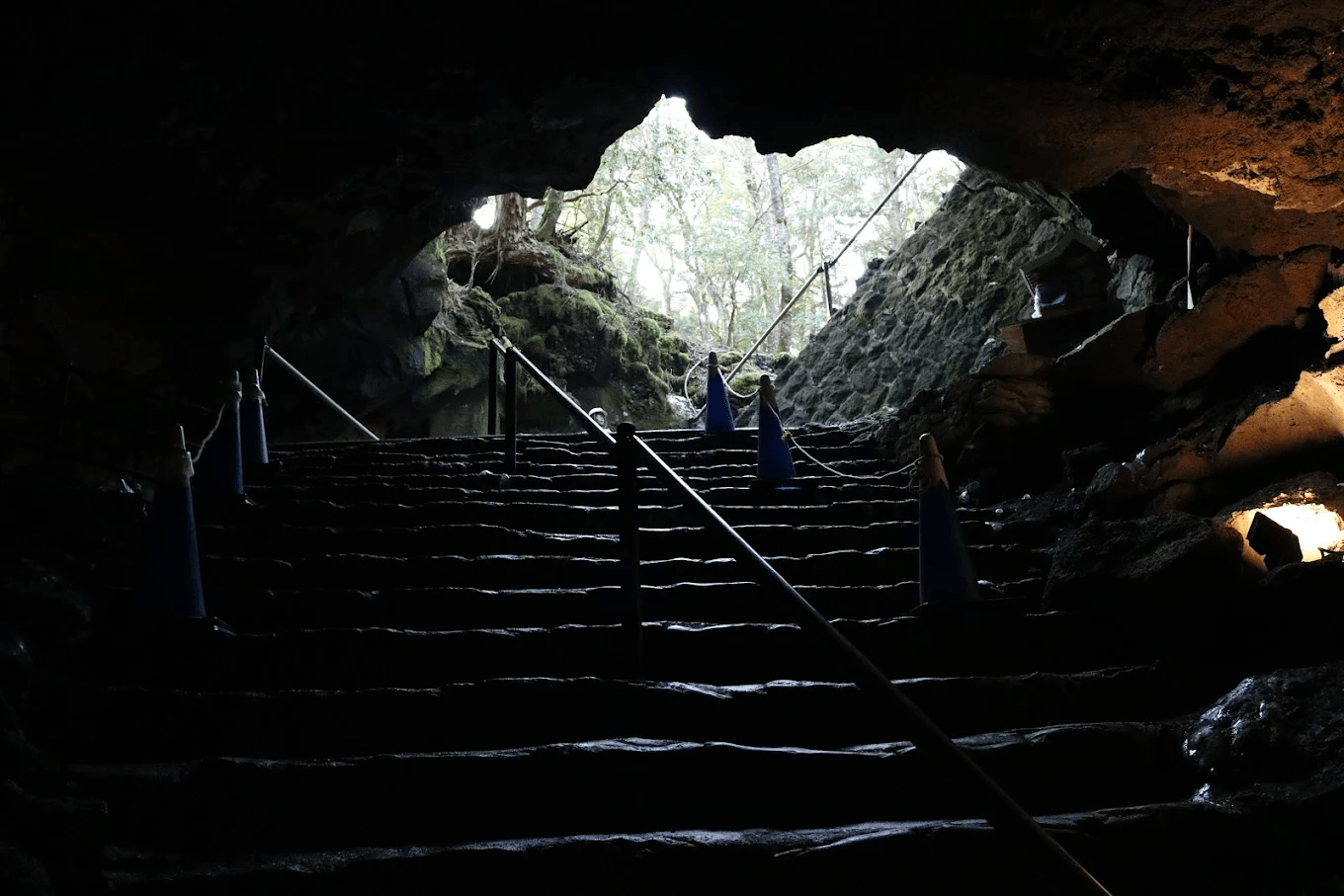
Motosu Wind Cave is a wind cave located deep within the forested area of Mt. Fuji Jukai. Although it is a large-scale wind cave extending 494.3 meters in total length, scattered lava inside makes it dangerous, and entry is currently prohibited.
The entrance is relatively small and blends into the surrounding forest, giving it a very different atmosphere from other caves open for tourism.
While you cannot actually enter, you can feel the romance of nature created by volcanic activity up close from the entrance. It's a recommended spot to stop by while walking through the Mt. Fuji Jukai to learn about the diversity of terrain created by nature.
Nature Observation
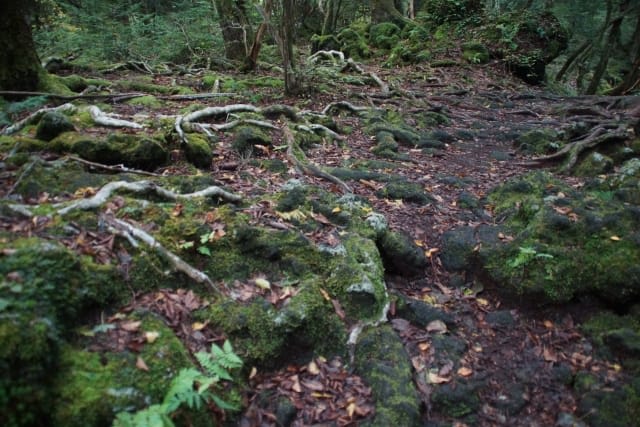
What I find particularly moving is the Jukai's unique ecosystem. The vitality of plants adapted to the lava terrain never fails to amaze me. The diversity of moss species is especially impressive, and the way they grow clinging to rock surfaces makes me feel the mystery of life.
Encounters with wildlife are also part of the Jukai's charm. If you visit early in the morning, you might see squirrels and wild birds. The chirping of wild birds beautifully echoes through the silent air of the Jukai.
The changing of seasons is also magnificent. In spring, new buds sprout; in summer, a deep green tunnel forms. Autumn foliage creates a beautiful contrast with the blackness of the lava terrain, and in winter, a solemn snowy landscape spreads out. It's also an unparalleled subject for nature photography enthusiasts.
Highlight 1: Saiko Wild Bird Forest Park
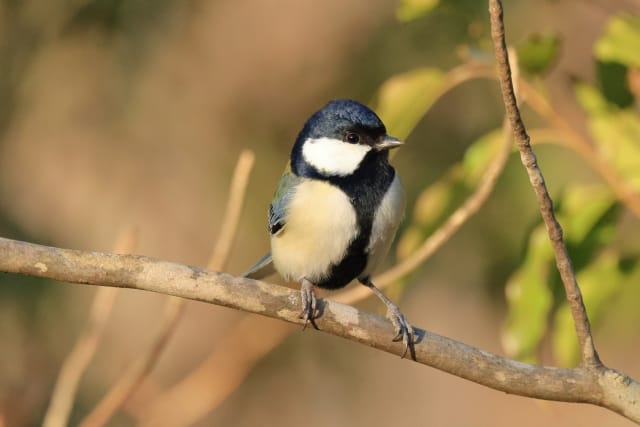
Saiko Wild Bird Forest Park is a park featuring an impressive vast lawn area where you can encounter over 60 species of wild birds.
Birdhouses and feeding stations are set up throughout the park, and visitors can observe wild birds using the special feed sold on-site.
Varied Tits and Great Tits sometimes come up close, allowing you to leisurely observe wild birds in a nature-surrounded environment. You can also encounter rare birds such as Blue-and-White Flycatchers, making this a recommended spot for those who want to enjoy bird watching.
Highlight 2: Koyo-Dai
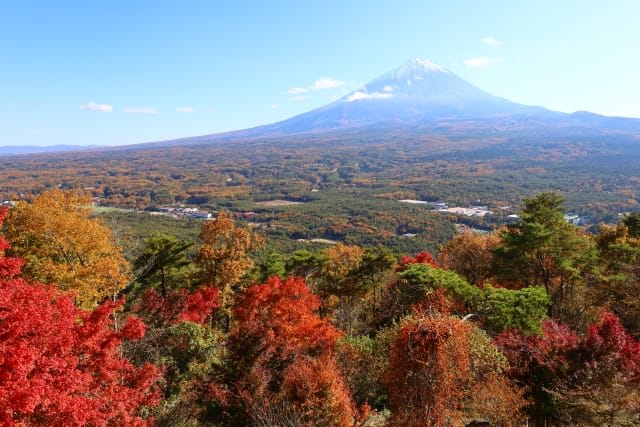
Koyo-Dai is an observation deck offering panoramic views of Mt. Fuji and the Mt. Fuji Jukai. Located at an elevation of 1,165 meters, the second floor of Koyodai Tenbo Resthouse offers an open 360-degree panoramic view.
In early summer, fresh greenery spreads across the landscape, and during autumn foliage season, the scenery becomes vivid with reds and yellows, allowing visitors to overlook the forest's changing expressions throughout the seasons.
The summit is accessible by car, but the road is narrow, so those unfamiliar with driving may feel more comfortable walking from the bus stop at the base. On foot, it takes about 40 minutes along a hiking course where you can enjoy nature while heading to the observation deck.
Highlight 3: Saiko Iyashi-no-Sato Nemba
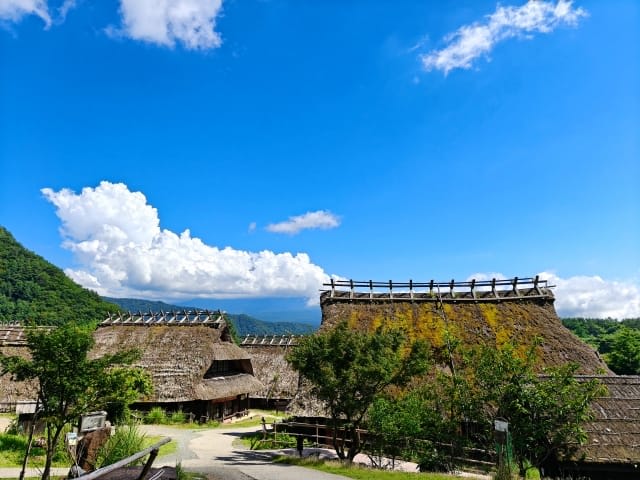
Saiko Iyashi-no-Sato Nemba is a spot that recreates a thatched-roof village that once existed in this area. Located at the foot of Mt. Fuji, walking through this village where Japan's original landscape has been reproduced evokes a nostalgic atmosphere.
Within the village, visitors can enjoy workshops such as pottery painting and solid perfume making, and the restaurant serves local cuisine. You can spend a relaxed time wandering through houses with thatched roofs and traditional folk houses built with thick pillars.
This is a recommended spot for those who want to experience traditional Japanese lifestyle and architecture.
Highlight 4: Akaike
Source:Google Maps
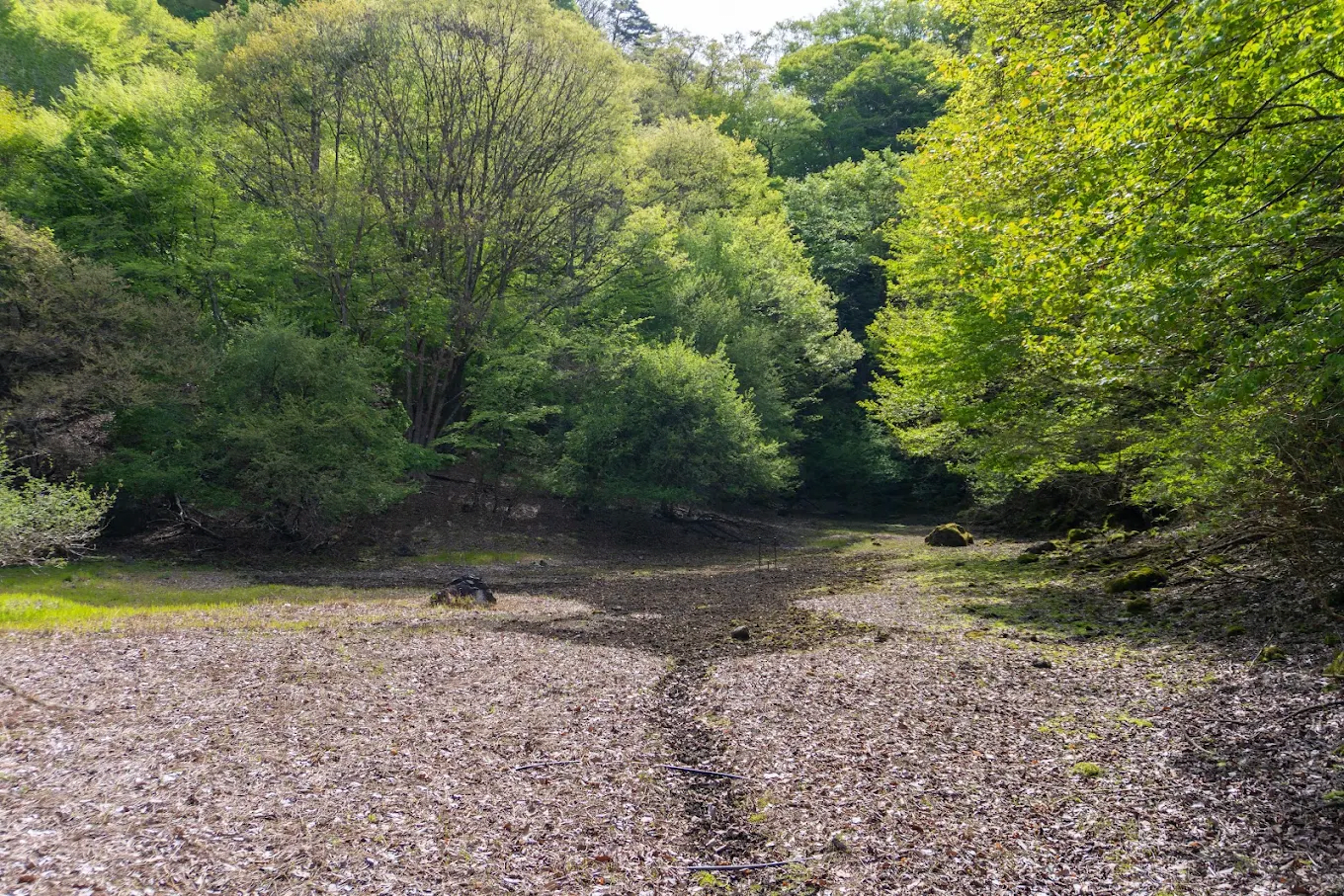
Akaike is a pond with a diameter of approximately 70 meters where water appears only once every few years (7 to 8 years). Located near Lake Shojiko, the lake surface is usually not visible because the water has dried up.
The mechanism behind its appearance has not been clearly understood, but it is suggested that it may be related to the water level of Lake Shojiko, and it is thought to be influenced by an underground connection between the two.
The lake surface last appeared in 2021, and if natural conditions align, it may appear again. If you are fortunate enough to visit at the right timing, you can witness an extremely rare sight.
Spots to Visit Along with Aokigahara Jukai at Mt. Fuji
After enjoying the charms of the Jukai, please visit these nearby tourist spots as well.
Lake Kawaguchi
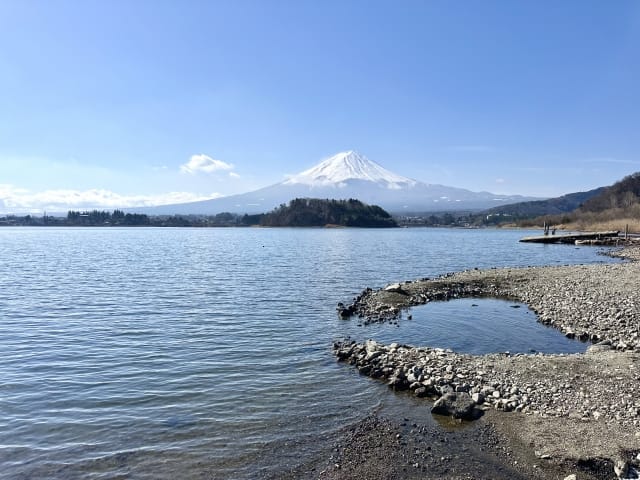
Lake Kawaguchi is my go-to spot for Mt. Fuji sightseeing. The reflection of Mt. Fuji on the lake surface is truly a spectacular view. Especially the inverted image of Mt. Fuji in the early morning is perfect for photography. You can enjoy sightseeing boats and rental boats on the lake, and the view of Mt. Fuji from the lake is also impressive.
The surrounding area is full of hot spring facilities and restaurants, perfect for relaxing. I always make sure to rest here after walking through the Jukai. There are many restaurants using local ingredients, so you can enjoy the local cuisine as well.
Mt. Fuji Panoramic Ropeway
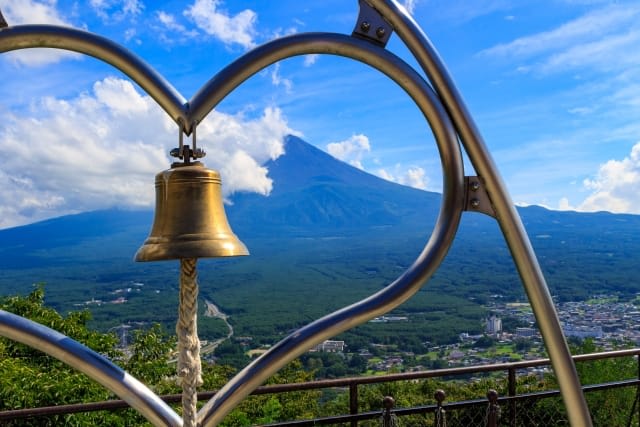
The Mt. Fuji Panoramic Ropeway to Mt. Tenjo is a place I often visit after touring the Jukai. The view from the summit is breathtaking, especially on clear days when you can see Mt. Fuji and Lake Kawaguchi at a glance. The "Bell of Tenjo" at the top is also popular as a power spot for love fulfillment, making it recommended for couples sightseeing.
It's conveniently located within walking distance from Kawaguchiko Station. My recommendation is to visit at dusk. The sight of the sun setting behind Mt. Fuji is a beauty that moves my heart no matter how many times I see it.
Oshino Hakkai
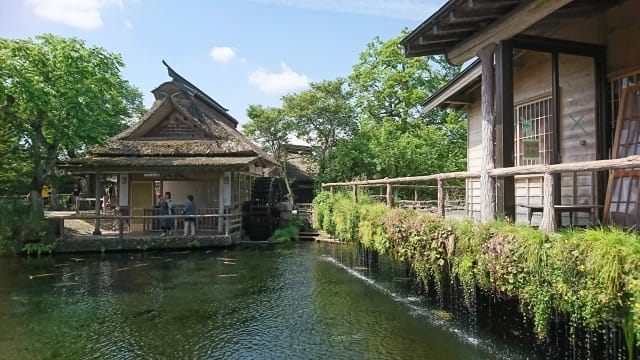
Oshino Hakkai is a mystical spot where 8 ponds of Mt. Fuji's spring water are scattered. What particularly moves me is the beauty of the highly transparent water. The clear water through which you can see the bottom of the pond clearly is truly a blessing from Mt. Fuji.
It's also known as a place where traditional Japanese landscapes remain, with old houses and waterwheels scattered around, providing many picturesque spots. It's also popular among photography enthusiasts, and I often visit to capture the changing expressions of the seasons. Early morning is especially popular among photographers, as you can sometimes capture the inverted image of Mt. Fuji reflected on the water surface.
Frequently Asked Questions About Mt. Fuji's Aokigahara Jukai
I'll answer common questions based on my 10 years of visiting experience.
When is the Best Time to Visit the Jukai?
I recommend spring and autumn. Spring is beautiful with fresh greenery, and the temperature is comfortable. May in particular has stable weather and is ideal for walking through the Jukai. Autumn offers a spectacular contrast between the fall colors and the lava terrain, with late October to early November being the best season. However, this period is also crowded with tourists, so I recommend visiting in the morning.
How Long Does Cave Exploration Take?
Narusawa Ice Cave and Fugaku Wind Cave can each be toured in about 30-40 minutes. However, from my experience, if you include time for photography and observing the terrain, it's best to allow about an hour for each cave. The experience becomes even more fulfilling if you listen to the guide's explanations.
Is It Possible to Camp in the Jukai?
Camping inside the Jukai is prohibited. However, there are several wonderful, well-equipped campsites in the surrounding area. I recommend campsites around Lake Shoji or Lake Motosu where you can enjoy views of Mt. Fuji. They require advance reservations, but the facilities are well-developed and comfortable.
Can Children Enjoy It Too?
Yes, the walking paths and cave exploration can be thoroughly enjoyed by children. I sometimes visit with friends' families, and the children are especially fascinated by the cave exploration. However, adult supervision is always necessary, and care must be taken not to stray from the walking paths.
The Aokigahara Jukai is a special place where you can experience the mystery and beauty of nature. Through my 10 years of visits, I have been captivated by its charm many times.
With proper preparation and caution, you can safely have a wonderful experience. Please come and visit this wonderful forest landscape created by Japan's nature.